
Unlocking Next-Generation Financial Operations: Agentic AI in Payment Investigations with PEGA Technology
Harnessing autonomous AI to revolutionize efficiency, accuracy, and risk management in the financial sector. My knowledge cutoff is 2025-05-09.
Key Insights at a Glance
- Autonomous Power: Agentic AI systems operate independently, making decisions and executing complex, multi-step tasks in dynamic environments with minimal human oversight, marking a significant leap from traditional AI.
- Transformative Use Cases: In payment investigations, Agentic AI offers profound potential, from real-time fraud detection and automated case analysis to enhanced regulatory compliance and personalized customer interactions.
- Strategic PEGA Integration: Leveraging PEGA's robust BPM and case management capabilities, Agentic AI can be seamlessly integrated via APIs and embedded workflows to create powerful, intelligent automation solutions.
Deciphering Agentic AI: The Dawn of Autonomous Intelligence
Agentic AI represents a paradigm shift in artificial intelligence, moving beyond systems that merely process data or generate content to those that can autonomously act and make decisions to achieve specific goals. These AI "agents" are designed to understand context, interpret complex objectives, reason through multi-step problems, learn from interactions, and adapt their actions based on new information or changing circumstances in real-time. Unlike traditional AI models that often require explicit instructions for each step, Agentic AI systems exhibit a degree of agency, enabling them to pursue goals with limited human supervision.
They often leverage a combination of advanced AI techniques, including machine learning, large language models (LLMs), generative AI, reinforcement learning, and even evolutionary algorithms. This allows them to navigate dynamic and ambiguous environments effectively. The core idea is to mimic sophisticated human decision-making processes to solve problems, manage complex tasks like strategic planning, orchestrate multi-step automation, and provide dynamic problem-solving with significantly reduced oversight. This capability has led to its recognition as a pivotal technology trend with the potential to transform numerous industries, particularly finance.
Core Attributes of Agentic AI:
- Autonomy: The ability to operate independently, make decisions, and take actions without constant human intervention.
- Goal-Oriented: Designed to understand and pursue predefined objectives, breaking them down into actionable steps.
- Adaptability: Capable of learning from new data and experiences, adjusting strategies in response to evolving environments.
- Reasoning & Planning: Employs sophisticated logic to plan sequences of actions and solve complex, multi-step problems.
- Context Awareness: Understands and interprets the surrounding environment and situational nuances to inform decisions.
- Interaction: Can interact with external systems, data sources, tools, and even other AI agents to achieve its goals.
In essence, while generative AI focuses on creating novel content, Agentic AI focuses on *doing* – taking actions in the digital or physical world to accomplish tasks.
Crafting an AI Agent: A Strategic Blueprint
Developing an effective AI agent, especially an agentic one for a critical domain like payment investigations, is a structured endeavor. It requires careful planning, robust data handling, appropriate technology selection, and iterative refinement.
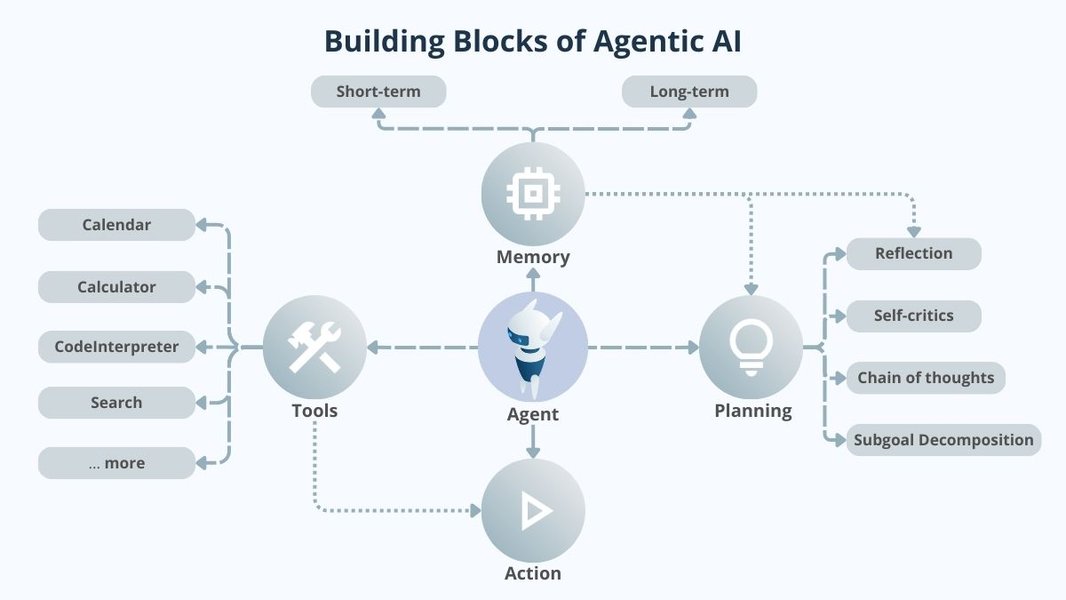
Conceptual illustration of the core components involved in constructing an Agentic AI system.
The Lifecycle of AI Agent Creation
-
Define Purpose and Scope
Clearly articulate the specific business problem the AI agent will address (e.g., identifying fraudulent payment patterns, automating initial investigation steps). Define clear objectives, success metrics, boundaries for autonomy, and the operational environment, such as the PEGA ecosystem.
-
Data Collection and Preparation
Agentic AI heavily relies on high-quality, relevant data for learning and decision-making. Gather and curate comprehensive datasets, including historical transaction data, payment logs, investigation outcomes, customer profiles, and compliance records. Ensure data quality, integrity, and adherence to privacy regulations (e.g., GDPR, PCI DSS).
-
Technology and Framework Selection
Choose the appropriate AI/ML frameworks, tools, libraries, and platforms. This might involve leveraging existing AI platforms (e.g., Azure AI Foundry, Oracle Fusion AI), specialized agent development frameworks (e.g., LangChain, Anthropic's agent principles), or building custom solutions. The technology stack must support reasoning, planning, and integration capabilities.
-
Agent Development and Logic Implementation
Design the agent's architecture, including its decision-making algorithms, learning mechanisms, and interaction protocols. Program the agent with reasoning and planning modules. Embed domain-specific knowledge and rules relevant to payment investigation workflows. This involves training the agent using supervised, unsupervised, or reinforcement learning techniques, or a hybrid approach.
-
Integration with External Systems and Tools
To enhance functionality, AI agents often need to connect with external tools, services, databases, and APIs. This is crucial for accessing real-time data, interacting with other enterprise systems (like PEGA), or executing transactions.
-
Rigorous Testing and Validation
Thoroughly test the AI agent in simulated and controlled environments. Use historical data and synthetic scenarios (e.g., simulated payment fraud cases) to evaluate its performance, accuracy, adaptability, and reliability. Validate its decisions against human expert outcomes and refine the models based on feedback.
-
Deployment and Continuous Monitoring
Deploy the agent into the production environment (e.g., integrated within PEGA workflows). Continuously monitor its performance, decision accuracy, and operational impact. Implement feedback loops for ongoing learning and adaptation to new patterns, threats, and evolving business requirements.
Agentic AI in Action: Revolutionizing Payment Investigations
Within a major financial institution's payment investigation area, particularly one leveraging PEGA technology, Agentic AI offers a multitude of transformative use cases aimed at enhancing efficiency, accuracy, and risk management.
Key Application Areas
-
Automated Fraud Detection and Proactive Investigation
Agentic AI can analyze vast streams of transaction data in real-time, identifying subtle anomalies and suspicious patterns indicative of fraud or errors far quicker than manual methods. Upon detection, it can autonomously initiate investigations, gather relevant contextual data from disparate internal and external systems, and even propose preliminary findings or escalate complex cases to human investigators with a comprehensive summary.
-
Intelligent Case Triage and Prioritization
Based on predefined risk parameters, regulatory urgency, and the potential financial impact, AI agents can automatically triage incoming investigation cases. They can prioritize high-risk or time-sensitive cases, ensuring they receive immediate attention, and intelligently route them to the appropriate teams or PEGA work queues.
-
Automated Information Gathering and Augmentation
Instead of investigators manually sifting through multiple systems, an AI agent can autonomously collect all necessary documentation and data pertinent to a payment investigation. This includes transaction details, customer history, correspondent bank messages (e.g., SWIFT), KYC documents, and relevant internal policies, presenting it in a structured format within the PEGA case file.
-
Enhanced Regulatory Compliance and Reporting
Agentic AI can continuously monitor transactions and investigation processes for adherence to complex and evolving financial regulations (e.g., AML, KYC, Sanctions screening). It can flag potential deviations, assist in generating compliance reports, and maintain auditable records of actions taken, thereby reducing compliance risks.
-
Streamlined Workflow Automation and Resolution
Routine and repetitive tasks within the payment investigation lifecycle, such as data entry, document verification, status tracking, and simple query resolution, can be automated. For straightforward cases with clear patterns, agents might even manage the end-to-end resolution process within PEGA workflows.
-
Predictive Risk Analysis and Prevention
By analyzing historical investigation data, transaction patterns, and fraud typologies, Agentic AI can identify emerging trends and potential vulnerabilities in payment processes or systems. This allows the institution to proactively implement preventative measures before significant issues arise.
The following mindmap illustrates the interconnected facets of deploying Agentic AI within a financial investigations context, covering its core nature, development, integration, applications, and risk considerations.
This holistic view helps in understanding the multifaceted approach required for successfully leveraging Agentic AI.
Synergizing Agentic AI with PEGA Technology
Integrating Agentic AI with PEGA, a platform renowned for its powerful Business Process Management (BPM) and Case Management capabilities, offers a compelling synergy for financial institutions. PEGA's architecture, focused on orchestrating workflows and managing complex cases, provides an ideal foundation for deploying and managing the actions of AI agents.

PEGA's capabilities in process orchestration can be significantly enhanced by integrating intelligent AI agents.
Strategies for Effective Integration
-
API-Driven Connectivity
Leverage PEGA's robust Pega API and other integration services (like Connect REST, Connect SOAP) to establish seamless communication between Agentic AI systems and PEGA applications. This allows PEGA workflows to trigger AI agent actions (e.g., request a risk score, initiate data gathering) and for AI agents to push data, decisions, or updates back into PEGA cases.
-
Embedding AI Logic within PEGA Process Flows
Integrate AI decision logic directly into PEGA flow rules, stages, and steps. For instance, a PEGA process for payment investigation could call an AI agent at a specific step to analyze transaction data and recommend the next best action or flag a case for review. This combines PEGA's rule-based automation with the probabilistic decision-making of AI.
-
Event-Driven Architecture
Design Agentic AI agents to react to specific events occurring within the PEGA platform. For example, the creation of a new high-value payment investigation case in PEGA could trigger an event that activates an AI agent to immediately begin its analysis and information gathering tasks.
-
Augmenting PEGA's Case Management
Utilize PEGA's sophisticated case management capabilities to manage, monitor, and provide context for AI agent tasks. The PEGA case can serve as the central hub, holding all relevant information, tracking the agent's progress, and recording its findings and decisions for auditability and human review.
-
Orchestration of Multi-Agent Systems
For complex investigations requiring diverse specialized tasks, PEGA's process orchestration capabilities can be used to coordinate the activities of multiple AI agents. Each agent might specialize in a sub-task (e.g., data extraction, pattern recognition, compliance checking), with PEGA ensuring their collaborative efforts align to achieve the overall investigation goal.
-
Real-Time Data Exchange and Synchronization
Ensure seamless and real-time data flow between the Agentic AI systems and PEGA's data structures (e.g., data pages, database tables) through connectors, data virtualization, or event-driven data synchronization mechanisms. This keeps both systems updated with the latest information.
-
Human-in-the-Loop (HITL) Interactions
Design PEGA user interfaces (portals, dashboards) that allow human investigators to review suggestions, decisions, and actions taken by AI agents. Provide mechanisms for oversight, intervention, and the ability to override AI-driven outcomes when necessary, ensuring transparency and control.
-
Leveraging PEGA AI Capabilities
Explore how PEGA's own AI and decisioning components (e.g., Pega Predictive Diagnostic Cloud, Customer Decision Hub, Next-Best-Action AI) can complement external Agentic AI models, potentially serving as a foundational layer or an integrated part of the broader intelligent automation solution.
Navigating the Landscape: A Balanced Risk Assessment
The implementation of Agentic AI in a critical financial domain like payment investigations, especially within a PEGA-driven environment, offers substantial benefits but also introduces complexities and risks that must be carefully managed. A thorough assessment is crucial for successful adoption.
Comparative Impact of Agentic AI
The radar chart below offers a visual comparison of key operational aspects, contrasting the current state (often manual or reliant on traditional systems) with the projected potential of Agentic AI, both with and without robust governance structures. This highlights areas of significant improvement and aspects requiring careful management. (Scale: 1=Low, 10=High; for Implementation Ease, higher is better).
As illustrated, while Agentic AI promises significant uplifts in efficiency, accuracy, and scalability, its implementation ease is perceived as more challenging than traditional systems. Robust governance is key to maximizing benefits and improving risk control.
Pros, Cons, Risks, and Mitigation Strategies
The following table provides a structured overview of the advantages, disadvantages, inherent risks, and potential mitigation strategies associated with deploying Agentic AI in payment investigations:
| Aspect | Description | Mitigation Strategies (for Risks) |
|---|---|---|
| PRO: Increased Efficiency | Automation of complex, repetitive, and time-consuming tasks significantly speeds up investigation processes and reduces operational costs. | N/A |
| PRO: Improved Accuracy & Consistency | AI agents can process vast amounts of data without human fatigue or error, leading to more accurate identification of issues and consistent application of rules. Reduces human bias. | N/A |
| PRO: Faster Resolution Times | Autonomous actions, quicker information gathering, and real-time analysis drastically reduce the time taken to resolve investigations. | N/A |
| PRO: Enhanced Scalability | Agentic AI systems can handle significantly larger volumes of cases and data fluctuations, especially during peak periods, without a linear increase in human resources. | N/A |
| PRO: Deeper Insights & Predictive Capabilities | AI can uncover hidden patterns, correlations, and emerging fraud typologies that might be missed by manual analysis, leading to better fraud detection and proactive risk management. | N/A |
| PRO: Resource Optimization | Frees up human investigators from mundane tasks to focus on more complex, nuanced cases requiring strategic judgment and human interaction. | N/A |
| CON: High Development & Implementation Costs | Building, training, and integrating sophisticated Agentic AI systems requires significant investment in technology, specialized expertise, and infrastructure. | N/A |
| CON: Complexity in Design & Management | Designing, training, maintaining, and managing truly autonomous and adaptive AI agents can be technically challenging and require ongoing expert oversight. | N/A |
| CON: Dependence on Data Quality | The effectiveness of Agentic AI is highly contingent on the quality, quantity, and relevance of the data it is trained on and operates with. Biased or poor data leads to flawed outcomes. | N/A |
| CON: Explainability and Transparency Challenges | Understanding *why* an AI agent made a specific decision (the "black box" problem) can be difficult, which is crucial for regulatory compliance, audit trails, and building trust in financial services. | N/A |
| CON: Ongoing Maintenance and Updates | AI models require continuous monitoring, maintenance, and retraining with new data to remain effective as financial products, fraud patterns, and regulations evolve. | N/A |
| CON: Integration Hurdles | Integrating complex AI systems with existing legacy systems and platforms like PEGA can present technical challenges and require significant customization. | N/A |
| RISK: Regulatory and Compliance Violations | Ensuring autonomous AI actions consistently comply with strict financial regulations (e.g., AML, KYC, data privacy) is paramount. Lack of transparency can hinder audits and prove non-compliance. | Implement robust governance frameworks, embed compliance checks in AI decision pipelines, ensure auditable AI actions, and maintain human oversight for critical regulatory decisions. Utilize explainable AI (XAI) techniques. |
| RISK: Security Vulnerabilities | AI agents, especially those connected to external systems via APIs or handling sensitive financial data, can be targets for cyberattacks, data breaches, or malicious manipulation. | Implement strong cybersecurity measures, data encryption (in transit and at rest), secure API gateways, access controls, and regular security audits for AI systems and integrations. |
| RISK: Algorithmic Bias and Unfair Outcomes | If training data contains historical biases, the AI agent may perpetuate or amplify these biases in its decisions, leading to discriminatory outcomes in investigations or customer treatment. | Carefully curate and pre-process training data to mitigate bias, implement fairness metrics in model development, conduct regular bias audits, and ensure diverse representation in development teams. |
| RISK: Errors, False Positives/Negatives, and Unintended Consequences | Autonomous systems can make mistakes. In finance, errors (e.g., wrongly flagging legitimate transactions or missing actual fraud) can have significant financial, reputational, and customer impact. | Implement rigorous testing and validation, establish clear thresholds for AI autonomy vs. human review, design robust exception handling, and conduct continuous performance monitoring with feedback loops. Maintain human-in-the-loop for critical or ambiguous decisions. |
| RISK: Systemic Risk and Operational Over-Reliance | Over-reliance on autonomous AI for critical processes could introduce systemic risk if the AI system fails, malfunctions, or behaves unexpectedly across multiple instances simultaneously. Reduced human vigilance is also a concern. | Develop comprehensive contingency plans, avoid single points of failure, diversify AI models/approaches where possible, and maintain adequate human expertise and oversight capabilities. Conduct regular stress tests. |
| RISK: Governance and Control Challenges | Monitoring, controlling, and adapting the behavior of evolving, autonomous AI agents requires robust governance processes and can be challenging. | Establish clear governance structures, ethical guidelines, and accountability frameworks for AI development and deployment. Regularly review and update these policies. |
Visualizing Agentic AI: Concepts and Explanations
To further understand the nature of Agentic AI, the following video provides a general overview of what these systems are and how they differ from other forms of artificial intelligence. It touches upon their ability to act autonomously and pursue goals.
This video offers an accessible explanation of Agentic AI, suitable for a broad audience.
This type of AI holds the promise of not just assisting humans but actively collaborating with them and taking on complex tasks independently, which is particularly relevant in dynamic fields like financial payment investigations.
Frequently Asked Questions (FAQ)
Recommended Further Exploration
To delve deeper into the nuances of Agentic AI and its application in financial services, consider exploring these related queries:
- Explore real-world examples of Agentic AI reducing fraud in financial institutions.
- Discover best practices for ensuring ethical AI and mitigating bias in payment processing systems.
- Understand the detailed technical architecture for integrating autonomous AI agents with PEGA BPM and case management.
- Investigate future trends in Agentic AI and their projected impact on the evolution of financial services and regulatory technology.
References
Last updated May 9, 2025