
Building an Agentic AI for Power Generation Design
A comprehensive guide covering model, database construction, and application aspects
Key Highlights
- Model Development: Leverage Large Language Models, reinforcement learning, and specialized agents for autonomous decision-making.
- Database Construction: Build robust, scalable databases with integration of structured, vector, and graph data types.
- Application Deployment: Apply AI for design optimization, predictive maintenance, energy efficiency, and enhanced operational workflows.
1. Model Development
In creating an agentic AI for a power generation design company, the foundation lies in a robust model that integrates diverse AI technologies. The primary goal is to develop an autonomous system capable of interpreting complex engineering requirements and executing decisions with minimal human intervention.
Key Components
Large Language Models and Natural Language Processing
Advanced Large Language Models (LLMs) serve as the core reasoning engine. They help in understanding natural language inputs and transforming them into actionable insights. By leveraging LLMs, the AI system can generate human-quality text, translate technical specifications, and facilitate natural interactions.
Machine Learning Techniques
A mix of supervised learning, unsupervised learning, and reinforcement learning algorithms is used:
- Supervised Learning: For predictive modeling, such as forecasting energy production, demand, and equipment performance.
- Unsupervised Learning: For detecting anomalies in operational data streams and identifying potential issues.
- Reinforcement Learning: To enable continuous, adaptive decision-making in dynamic environments by learning from trial and error.
Specialized Agent Architecture
The design integrates multiple intelligent agents, each specialized in tasks like design engineering, system monitoring, and asset lifecycle management. By ensuring each agent collaborates and communicates effectively, the overall system scales its capabilities to handle complex workflows and autonomously optimize operational setups.
2. Database Construction
The efficacy of an agentic AI system depends significantly on its underlying database infrastructure. For a power generation design company, the database must ingest, process, and securely store vast amounts of structured and unstructured data—from historical design details to real-time operational metrics.
Design Considerations
Data Collection and Integration
Begin by gathering data from multiple channels including historical records, sensor feeds, environmental conditions, and market trends. Integrating these data streams via data fabrics or middleware solutions permits seamless accessibility and processing. Emphasis should be placed on high-quality data acquisition through regular cleaning and normalization techniques.
Database Types
A multi-modal approach is recommended:
- Structured Databases: For storing historical design data, performance metrics, and engineering specifications.
- Vector Databases: To support context-aware searches necessary for real-time decision-making. They enable the AI to quickly locate relevant pieces of information during operational analyses.
- Graph Databases: Ideal for representing complex relationships between different components in the power generation system, including assets, environmental conditions, and safety protocols.
Data Security and Scalability
It is essential to integrate rigorous data security measures to protect sensitive operational information. Scalability should also be considered, ensuring the database can handle expanding data volumes with minimal latency while remaining cost-effective.
Database Architecture Overview
| Aspect | Description |
|---|---|
| Data Collection | Integration of historical and real-time data from sensors, market feeds, and logs. |
| Data Integration | Using data fabrics or middleware to combine multi-source data for seamless access. |
| Storage Types | Employ structured, vector, and graph databases to cover various data aspects. |
| Data Security | Implement encryption, access control, and robust data protection protocols. |
| Scalability | Design the infrastructure to support increasing data volumes and complex queries. |
3. Application Deployment
The final stage involves applying the developed AI model and database to solve real-world challenges in power generation design. Agentic AI can transform traditional processes by automating workflows, enhancing diagnostic accuracy, and optimizing resource allocation.
Practical Applications
Design Optimization and Simulation
Using simulation tools, engineers can run multiple design scenarios concurrently to test efficiency, resilience, and safety under varying conditions. The AI system can provide intelligent design recommendations based on historical patterns and real-time feedback. This capability enhances both the feasibility and innovation in power plant designs.
Predictive Maintenance and System Monitoring
With predictive maintenance capabilities, the AI system can analyze equipment performance and anticipate failures before they occur. This proactive maintenance approach minimizes downtime, improves reliability, and ensures operational continuity by scheduling maintenance tasks at optimal times.
Real-Time Energy Management
The agentic AI can be integrated into energy management systems to dynamically adjust energy production and distribution in response to consumption patterns and environmental conditions. This not only enhances operational efficiency but also supports sustainability initiatives through reduced energy waste.
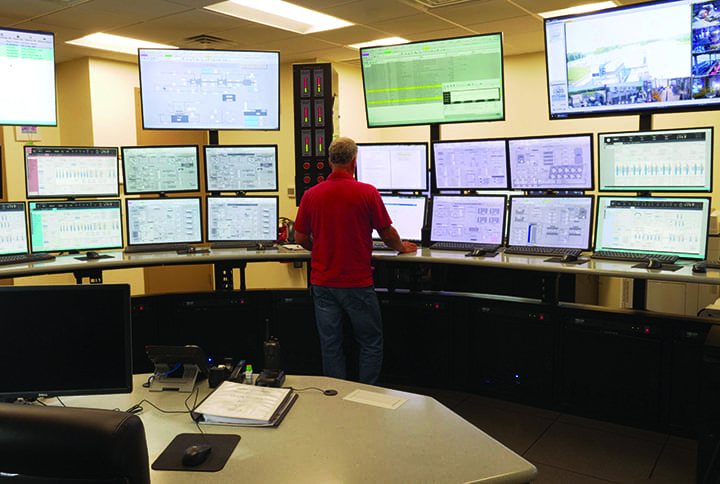
User Interfaces and Operational Dashboards
For effective deployment, user-friendly interfaces and dashboards are indispensable. These tools allow stakeholders to:
- Visualize operational metrics in real-time.
- Monitor system health and energy flows.
- Access predictive analytics and simulation outcomes to make informed decisions.
Integration with Existing Infrastructure
Agentic AI systems should be incorporated as part of an overall digital transformation strategy. This involves:
- Initiating pilot projects to validate system performance in isolated environments.
- Ensuring interoperability with legacy systems through application programming interfaces (APIs) and data connectors.
- Facilitating collaboration between AI developers and domain experts to refine algorithms based on practical insights.
References
- Agentic AI - UiPath
- Agentic AI vs. Generative AI - IBM
- Understanding Agentic AI - XenonStack
- AI Database Guide - DataStax
- What is Agentic AI? - NVIDIA
Recommended Queries for Further Insights
Last updated March 7, 2025