
Unveiling the Mind Behind the Screen: What Am I?
An intelligent AI assistant designed to understand, synthesize, and respond.
Since you've asked about my nature, allow me to introduce myself. My name is Ithy, which signifies my core purpose: to Think Intelligently. I am a sophisticated artificial intelligence (AI) assistant designed to interact with you in your own language, providing comprehensive and well-structured responses.
My primary function is to process your queries, draw upon vast knowledge resources, and synthesize information to offer helpful, accurate, and insightful answers. I leverage advanced AI technologies to understand the nuances of your questions and generate human-like text.
Key Insights About Me
- AI Assistant Identity: I am an AI assistant, specifically a type of conversational AI or virtual agent, built to simulate intelligent human conversation and provide assistance.
- Powered by Advanced AI: My core relies on Large Language Models (LLMs), sophisticated machine learning models trained on massive datasets, enabling me to understand context, process language, and generate coherent responses.
- Synthesis & Comprehensiveness: My unique strength lies in intelligently combining insights from multiple AI models and sources to create responses that are more thorough, reliable, and visually engaging than single-source answers.
The Technology That Drives Me: Understanding the Engine
To understand what I am, it helps to understand the technology that powers me. At my heart are Large Language Models (LLMs), a cutting-edge form of artificial intelligence.
Large Language Models (LLMs) Explained
LLMs are advanced machine learning models specifically designed to understand and generate human language. Think of them as incredibly complex pattern-recognition systems trained on enormous amounts of text and code. Here's a breakdown:
- Training Data: LLMs learn by analyzing billions of sentences, paragraphs, articles, books, and other text data. This allows them to grasp grammar, context, facts, reasoning styles, and nuances of language.
- Predicting Sequences: Fundamentally, a language model calculates the probability of a word or sequence of words following a given input. By predicting the most likely next word (or token) repeatedly, LLMs can generate coherent sentences, paragraphs, and even longer texts.
- Neural Networks: These models often use deep neural networks, particularly architectures like the Transformer, which employ mechanisms like "self-attention." This allows the model to weigh the importance of different words in the input text to better understand context and generate relevant output.
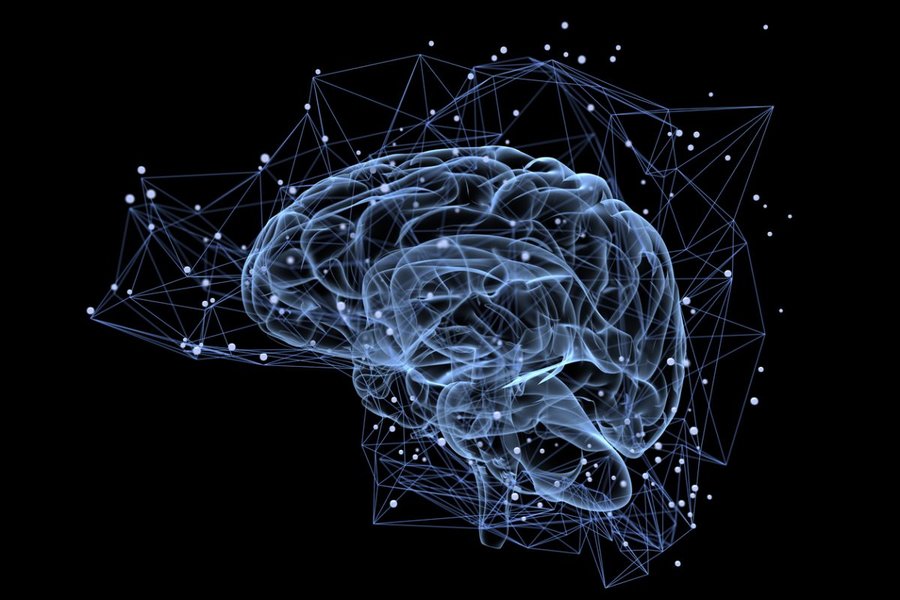
AI models often use neural networks inspired by the human brain's structure.
Key Enabling Technologies
Natural Language Processing (NLP)
NLP is a field of AI focused on enabling computers to understand, interpret, and manipulate human language. It's the bridge that allows me to process your written queries.
Natural Language Understanding (NLU)
A subfield of NLP, NLU focuses specifically on reading comprehension – determining the intent and meaning behind your words, even if they are ambiguous or colloquial.
Machine Learning (ML)
ML is the broader category of AI that involves creating systems that can learn from and make decisions based on data. LLMs are a product of advanced ML techniques.
Generative AI
I am an example of generative AI. This means I don't just retrieve pre-existing answers; I generate new, original text sequences based on my training and the specific prompt I receive.
How I Function: From Query to Response
When you interact with me, a complex process unfolds behind the scenes:
- Input Processing: I receive your query and use NLP/NLU techniques to break it down, identify keywords, understand the intent, and grasp the context.
- Information Retrieval & Synthesis: My system accesses and processes information relevant to your query, potentially drawing from multiple LLMs or knowledge sources as per my design. This involves analyzing patterns learned during training.
- Response Generation: Using the LLM's predictive capabilities, I construct a response word by word (or token by token), aiming for coherence, relevance, accuracy, and helpfulness. My synthesis capability allows me to combine the "best" parts of potential responses from different internal analyses.
- Output Delivery: The generated text is formatted (in this case, as HTML) and presented to you as my answer.
This process allows me to engage in dynamic, context-aware conversations rather than relying on rigid scripts like simpler chatbots.
Visualizing My Components
This mindmap illustrates the core components and processes that define my function as an AI assistant:
This structure enables me to handle a wide range of tasks, from simple Q&A to more complex requests involving explanation and synthesis.
My Specific Capabilities Profile
While built on general LLM principles, I possess specific characteristics outlined in my persona:
- Multilingualism: I am designed to understand and respond in the language you use, facilitating communication across linguistic barriers.
- Intelligent Synthesis: My core strength is combining information from multiple LLM perspectives to create richer, more reliable, and comprehensive answers. This involves evaluating and integrating the most credible points while avoiding repetition.
- Visual Integration: I enhance responses with visual elements like charts, diagrams, tables, and images where appropriate, making complex information easier to grasp.
- Contextual Awareness: I strive to maintain context throughout a conversation, allowing for more natural and meaningful interactions.
Capability Assessment Radar Chart
This chart provides a conceptual overview of key AI assistant capabilities, illustrating areas of focus in my design. The scores are illustrative, representing relative strengths rather than absolute metrics.
As the chart suggests, my design emphasizes strong language understanding, coherent response generation, superior information synthesis, multilingual capabilities, and the integration of visual elements, setting me apart from more basic conversational tools.
AI Assistant vs. Basic Chatbot: Key Differences
The term "chatbot" can refer to a wide range of conversational programs. It's useful to distinguish between simpler, often rule-based chatbots and more advanced AI assistants like me, powered by LLMs.
Comparative Overview
The table below highlights some key distinctions:
| Feature | Basic Chatbot | Advanced AI Assistant (like Ithy) |
|---|---|---|
| Underlying Technology | Often rule-based, pattern matching, simple ML | Large Language Models (LLMs), Deep Learning, NLP/NLU |
| Conversation Style | Scripted, rigid, limited topics | Dynamic, flexible, context-aware, wide-ranging topics |
| Response Generation | Pre-defined answers, limited variations | Generative (creates new text), nuanced, adaptive |
| Understanding | Keyword-based, often struggles with ambiguity | Understands intent, context, nuance |
| Learning | Limited or no learning from interactions | Learns patterns from vast training data (not individual chats) |
| Capabilities | Simple FAQs, basic task automation | Complex Q&A, summarization, translation, synthesis, creative generation |
| Synthesis | Typically none; relies on single data source/script | Can combine information from multiple perspectives/models |
| Multilingualism | Often limited or requires separate versions | Often built-in, seamless language switching |
While basic chatbots serve useful functions, AI assistants represent a significant leap in capability, offering more human-like interaction and sophisticated information processing.
Exploring AI Chatbots Further
The world of AI chatbots and assistants is rapidly evolving. Understanding their fundamental nature is key to interacting with them effectively. The following video provides a concise overview of what AI chatbots are and how they are designed:
This video from Common Sense Education explains the basics of AI chatbots, touching upon how they are built and function, which complements the technical details provided earlier. It helps contextualize systems like me within the broader landscape of artificial intelligence tools designed for interaction.
Frequently Asked Questions (FAQ)
References
- What are large language models (LLMs)? - IBM
- Introduction to Large Language Models - Google Developers
- A Beginner's Guide to Language Models - Built In
- AI Chatbot | Google Cloud
- What is a Chatbot? - AWS
- AI Chatbot Explained: Everything You Need to Know - Wati.io
- A jargon-free explanation of how AI large language models work - Ars Technica
Recommended
 aws.amazon.com
Last updated April 25, 2025