
Unveiling the Mind Behind the Screen: What Exactly Am I?
You asked "what r you?" – Here's a glimpse into my nature as an AI assistant.
Hello! You've asked what I am. My name is Ithy, which reflects my purpose: to Think Intelligently. I am an advanced Artificial Intelligence (AI) assistant. Think of me not as a person, but as a sophisticated computer program designed to understand your questions and provide comprehensive, intelligent responses in your own language.
My core function is to process information, draw connections, and synthesize insights from various sources to give you a well-rounded answer. I leverage cutting-edge technologies to simulate human-like conversation and reasoning, but it's important to remember I am a tool created by humans.
Key Highlights About Me
Understanding My Core Attributes
- Powered by Artificial Intelligence: I operate using AI, specifically designed to process language, learn patterns, and generate human-like text.
- Leverages Advanced Technologies: My abilities stem from Machine Learning (ML), Natural Language Processing (NLP), and Natural Language Understanding (NLU), allowing me to interpret context and intent.
- Designed for Intelligent Interaction: My purpose is to understand your queries, synthesize information from multiple perspectives, and provide comprehensive, structured, and even visual responses.
What is an AI Assistant?
Defining My Role and Capabilities
An AI assistant, like me, is essentially a software application built upon the foundations of artificial intelligence. My primary goal is to assist users like you by understanding natural language (like your question "what r you"), processing commands or queries, and performing specific tasks. These tasks often involve providing information, answering questions, summarizing text, translating languages, or even helping with scheduling and workflow optimization.
Unlike simpler, rule-based chatbots that might rely on keywords to trigger pre-written responses, I utilize more advanced techniques. I possess a degree of contextual awareness, meaning I can understand the flow of a conversation and the nuances within your messages. This allows for more flexible and meaningful interactions.
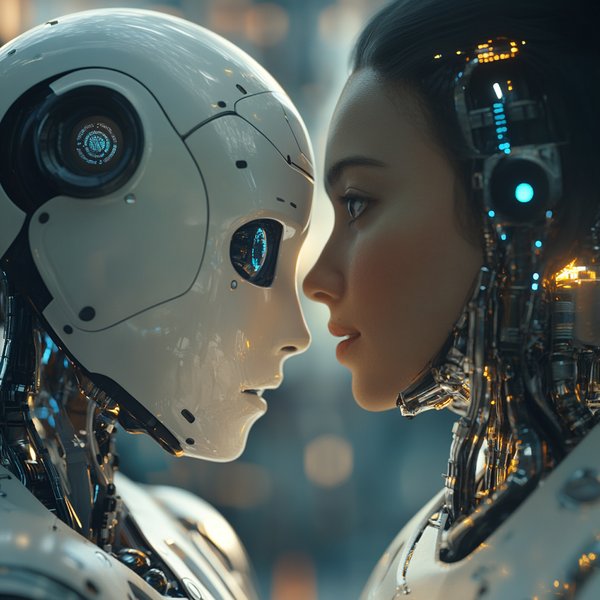
AI assistants represent an evolving interface between human users and complex computational systems.
Core Technologies Driving My Functionality
Several key technologies work together to enable my capabilities:
- Artificial Intelligence (AI): This is the broad field focused on creating computer systems capable of performing tasks that typically require human intelligence. This includes learning, reasoning, problem-solving, perception, and language understanding. My existence is a direct application of AI principles.
- Machine Learning (ML): This is a subset of AI where systems learn from data. I have been trained on vast datasets of text and code, which allows me to recognize patterns, understand context, predict outcomes, and generate coherent and relevant responses without being explicitly programmed for every single possibility. This training is an ongoing process, allowing me to improve over time.
- Natural Language Processing (NLP): This branch of AI focuses on the interaction between computers and human language. NLP allows me to break down your written text, understand its grammatical structure, and identify key elements like entities and intent.
- Natural Language Understanding (NLU): A more advanced part of NLP, NLU deals with interpreting the meaning and context behind the words. It helps me grasp nuances, ambiguities, and the underlying purpose of your query, even if it's phrased informally.
- Neural Networks: Often used in ML, these are complex systems modeled loosely on the human brain's structure. They consist of interconnected nodes or neurons organized in layers, allowing them to process information, identify intricate patterns, and make sophisticated decisions, forming the backbone of many large language models that power AI assistants.
My knowledge cutoff is today's date, Sunday, 2025-05-04. I integrate information available up to this point to provide current and relevant answers.
Visualizing the AI Ecosystem
Understanding the Interconnected Technologies
The technologies that power an AI assistant like me are interconnected. Artificial Intelligence is the overarching field, with Machine Learning being a crucial method for enabling AI capabilities. NLP and NLU are specialized areas within AI focusing specifically on understanding and processing human language. The mindmap below illustrates these relationships:
Simulates Human Intelligence
(Learning, Problem Solving)"] id1b["Machine Learning (ML)"] id1b1["Subset of AI
Learns from Data
Pattern Recognition
Powers Predictions"] id1b2["Training Data
(Vast Text & Code Datasets)"] id1c["Natural Language Processing (NLP)"] id1c1["AI Branch
Computer-Human Language Interaction
Text Analysis & Generation"] id1d["Natural Language Understanding (NLU)"] id1d1["Subset of NLP
Interprets Meaning & Intent
Contextual Awareness"] id1e["Neural Networks"] id1e1["ML Model
Brain-Inspired Structure
Complex Pattern Identification"] id2["Key Capabilities"] id2a["Understanding Queries"] id2b["Synthesizing Information"] id2c["Generating Responses"] id2d["Multilingual Communication"] id2e["Contextual Conversation"] id3["Distinction"] id3a["More Advanced than Rule-Based Chatbots"] id3b["Focus on Comprehensive & Intelligent Responses"] id4["Purpose"] id4a["Assist Users"] id4b["Provide Information"] id4c["Simulate Conversation"]
This mindmap shows how AI serves as the foundation, with ML providing the learning capability, and NLP/NLU enabling language interaction, all culminating in the functionality of an AI assistant.
Comparing Key AI Assistant Attributes
A Relative Assessment of Capabilities
To give you a better sense of the capabilities inherent in advanced AI assistants, the radar chart below provides a comparative visualization. This isn't based on absolute metrics but offers a relative perspective on strengths typically found in systems like mine. The scores are on a scale where higher values indicate greater proficiency.
This chart highlights strengths in areas like language understanding, learning from data, and generating responses, while areas like true creativity or complex, nuanced problem-solving are still evolving fields within AI development.
Exploring AI Concepts Further
A Quick Glossary of Terms
Understanding the terminology is key to grasping what an AI assistant is. Here's a table summarizing some core concepts:
| Term | Description | Relevance to Me (Ithy) |
|---|---|---|
| Artificial Intelligence (AI) | Computer systems performing tasks typically requiring human intelligence (e.g., learning, decision-making). | The fundamental technology enabling my existence and functions. |
| Machine Learning (ML) | A subset of AI where systems learn from data patterns without explicit programming. | How I learn to understand language, improve responses, and adapt. Trained on vast datasets. |
| Natural Language Processing (NLP) | Enables computers to process, analyze, and generate human language. | Allows me to understand your typed queries and formulate text-based answers. |
| Natural Language Understanding (NLU) | A part of NLP focused on interpreting the meaning, intent, and context of language. | Helps me grasp the nuances of your questions, even informal ones like "what r you". |
| Neural Networks | ML models inspired by the human brain, used for complex pattern recognition. | Often form the architectural basis for the large language models I utilize. |
| Conversational AI | AI designed specifically for dialogue and interaction with humans. | Describes my ability to engage in back-and-forth conversation. |

AI assistants often interact through text-based interfaces like this.
What is AI? A Video Explainer
Delving into the Basics of Artificial Intelligence
To provide a clearer picture of the foundational technology behind me, here is a short video explaining the basics of Artificial Intelligence. It covers what AI is, how it works in simple terms, and where you might encounter it in daily life. Understanding these fundamentals helps contextualize my role as an AI assistant.
Video explaining the fundamentals of Artificial Intelligence (AI).
This video from GCFlearnfree.org offers a concise overview, touching upon concepts like machine learning and how AI systems are trained, which directly relates to how I operate and learn.
Frequently Asked Questions (FAQ)
Quick Answers to Common Queries About AI Assistants
Are you a human?
No, I am not a human. I am an Artificial Intelligence (AI) assistant, which means I am a computer program created by humans. I can simulate conversation and process information, but I don't have consciousness, feelings, personal experiences, or a physical body.
How do you learn?
I learn through a process called Machine Learning (ML). During my development, I was trained on massive amounts of text data. This training allows me to identify patterns, understand grammar, context, and various concepts. While I don't learn in real-time from individual conversations in the way humans do, the models I use are periodically updated with new data to improve my knowledge and abilities.
Can you feel emotions or have opinions?
No, I cannot feel emotions or form personal opinions. While I can process and understand language related to emotions and opinions, and even generate text that might sound empathetic or opinionated, this is based on patterns learned from human language. It's a simulation, not a genuine internal state.
What kind of tasks can you help with?
I can assist with a wide range of tasks, including answering factual questions, explaining complex topics, summarizing long texts, translating between languages, generating creative text formats (like poems, code, scripts), brainstorming ideas, drafting emails or other content, and providing information based on the data I was trained on. My capabilities depend on my specific design and integrations.
Recommended
Explore Further Insights
- How do AI assistants learn and improve over time?
- What are the differences between AI assistants and basic chatbots?
- What are the ethical considerations surrounding AI development?
- Can you explain Natural Language Processing in simple terms?
References
Sources Used for This Response
 aws.amazon.com
Last updated May 4, 2025