
Leveraging AI for BIM Automation in Large Construction Projects
Transforming Construction Workflows with Intelligent Automation
Artificial Intelligence (AI) is rapidly transforming the Architecture, Engineering, and Construction (AEC) industry, particularly in its integration with Building Information Modeling (BIM). For large construction projects, where complexity and data volume are significant challenges, AI-powered BIM automation offers a powerful solution to enhance efficiency, accuracy, and overall project outcomes. This synergy is not just a future prospect; it is actively being implemented today to streamline workflows, reduce errors, and improve decision-making across the entire project lifecycle.
The scale and intricacy of large construction projects often lead to time-consuming and error-prone manual tasks within the BIM process. These can range from clash detection and data extraction to documentation generation and progress monitoring. AI's ability to process vast datasets, identify patterns, and automate repetitive actions directly addresses these pain points, freeing up valuable time for BIM specialists and project managers to focus on more strategic activities.
Key Highlights of AI in BIM Automation for Large Projects
- Enhanced Efficiency: AI automates repetitive and time-consuming BIM tasks, significantly speeding up workflows such as model validation, data extraction, and documentation generation.
- Improved Accuracy and Reduced Errors: AI algorithms can identify clashes and inconsistencies in BIM models more effectively than manual methods, minimizing costly rework during construction.
- Smarter Decision-Making: By analyzing historical data and real-time project information, AI provides predictive insights for risk mitigation, scheduling optimization, and resource allocation.
Core Areas of AI-Powered BIM Automation
AI can be applied to various aspects of the BIM process in large construction projects, leading to significant improvements. These applications span from the initial design phases through construction and even into facility management.
Automated Design and Planning
AI-powered tools are emerging to automate elements of the design and planning process. Generative design platforms utilize AI to create optimal building designs based on specified parameters, while applications can automate space planning, feasibility studies, and conceptual design. This accelerates the initial stages of a project and allows for the exploration of a wider range of design options.
For large infrastructure projects, where complexity is high, BIM automation can streamline the design process, ensuring consistency across various disciplines and managing the vast amount of data generated. Tools like Autodesk's portfolio, including Revit, AutoCAD, and Civil 3D, are integral to these workflows, and AI integration is enhancing their capabilities.
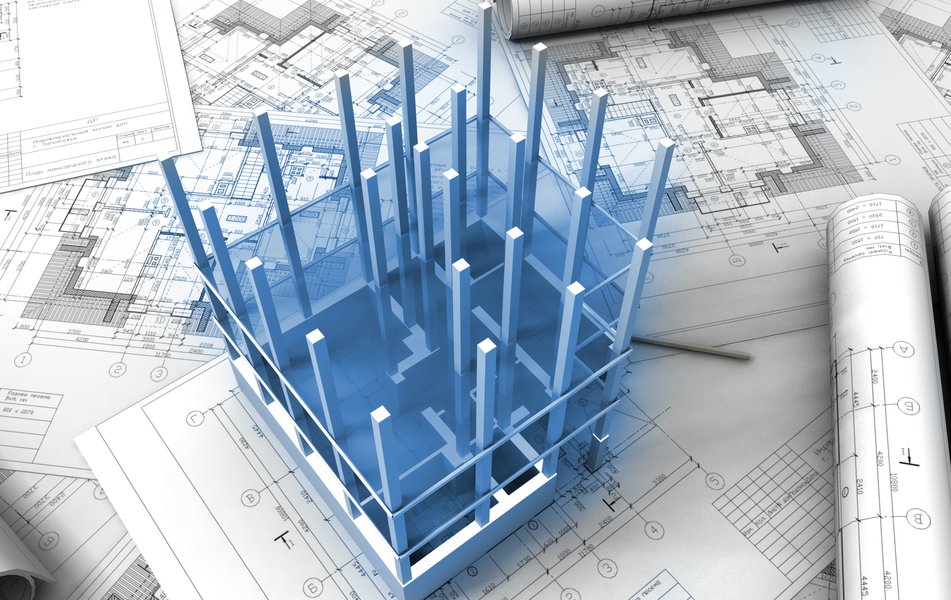
Building Information Modeling software in use.
Streamlining Data Management and Extraction
Large construction projects generate enormous amounts of data. AI can automate the extraction of crucial information from BIM models, such as material quantities, component specifications, and spatial relationships. This data can then be used for various purposes, including cost estimation, procurement, and Bill of Materials (BOM) generation.
Automated data extraction not only saves time but also significantly reduces the risk of manual errors, ensuring greater accuracy in project planning and execution. Scripting and visual logic tools like Dynamo, often used with Revit, enable the automation of these data-intensive tasks.
# Example of a conceptual script snippet for data extraction using a hypothetical API
# This is illustrative and would require specific software API knowledge

import bim_api

model = bim_api.open_model("large_project.rvt")
elements = model.get_elements_by_category("Walls")

material_list = {}
for element in elements:
    material = element.get_parameter("Material")
    quantity = element.get_parameter("Volume") # Example parameter
    if material not in material_list:
        material_list[material] = 0
    material_list[material] += quantity

print("Extracted Material Quantities:")
for material, quantity in material_list.items():
    print(f"- {material}: {quantity}")

bim_api.close_model(model)
Automated Clash Detection and Model Validation
Clash detection is a critical process in BIM to identify conflicts between different building systems (e.g., architectural, structural, MEP). Manually checking for clashes in large, complex models can be incredibly time-consuming. AI algorithms can analyze BIM models to detect clashes more accurately and efficiently than traditional rule-based methods.
Beyond clash detection, AI can automate model validation, ensuring that models adhere to specific information requirements, coordinates, layout, and format standards. This enhances the overall quality and reliability of the BIM model throughout the project lifecycle. Tools like Solibri are known for their model checking and clash detection capabilities, which are being enhanced by AI.
Enhanced Project Management and Coordination
AI-powered BIM platforms streamline project management processes by automating tasks such as scheduling, resource allocation, and progress monitoring. By integrating BIM data with scheduling and procurement tools, AI-enhanced construction management platforms provide real-time analytics and insights.
Predictive analytics, a key AI capability, can analyze historical project data and current progress to identify potential delays or budget overruns before they occur. This allows project managers to take proactive measures and keep projects on track. Autodesk BIM 360, now part of Autodesk Construction Cloud, is an example of a platform leveraging AI for improved project delivery and risk management.
Visualizing project data within a BIM management platform.
Automated Documentation Generation
Generating comprehensive documentation from BIM models is a labor-intensive task on large projects. AI can automate the creation of various documents, including drawings, reports, and schedules, directly from the BIM model. This significantly reduces the time and effort required for documentation and ensures consistency and accuracy. Automating documentation using platforms like BIM 360 streamlines workflows and enhances collaboration.
The ability to automatically generate detailed sheets, floor area calculations, and material lists using scripting and visual logic further enhances the efficiency of documentation workflows.
Scan to BIM Automation
For renovation projects or capturing existing conditions, Scan to BIM is a crucial process. AI is transforming Scan to BIM workflows by enhancing automation in object classification, clash detection, and model generation from point cloud data. Deep learning algorithms can automate the generation of 3D models from raw point cloud data, significantly speeding up the process and improving accuracy.
Processing point cloud data for automated BIM model generation.
AI-Powered BIM Tools and Platforms
Several AI-powered tools and platforms are available today to facilitate BIM automation in large construction projects. These tools often integrate with existing BIM software like Revit and enhance their capabilities through AI and machine learning.
Integrated Platforms
Platforms like Autodesk Construction Cloud (which includes functionalities previously found in BIM 360) are integrating AI to provide a comprehensive solution for managing construction projects. These platforms leverage AI for predictive analytics, risk management, and workflow automation across various project phases.
Specialized Automation Tools
Beyond integrated platforms, there are specialized tools and add-ins designed specifically for automating repetitive BIM tasks. Examples include BIM Batch Suite and Ideate Automation, which offer scripting and automation capabilities for software like Revit. These tools allow users to automate tasks in the background, freeing up BIM specialists for more complex work.
Dynamo, a visual programming tool, is widely used for BIM automation within the Autodesk ecosystem, enabling users to create scripts for automating tasks and generating geometry based on logical rules.
Generative Design Tools
Tools like ARCHITEChTURES and qbiq utilize generative AI to assist with the initial design and space planning stages, automating the creation of design options based on project requirements.
The Impact of AI on BIM Workflows
The integration of AI into BIM workflows is fundamentally changing how large construction projects are executed. The impact is felt across various aspects, from design and planning to construction management and facility maintenance.
Increased Efficiency and Productivity
By automating time-consuming and repetitive tasks, AI significantly boosts the efficiency and productivity of BIM teams. This allows for faster project delivery and better utilization of human resources. Studies have shown that automating BIM documentation alone can save hundreds of hours on large projects.

AI and automation enhancing productivity in the construction industry.
Improved Accuracy and Quality
AI's ability to analyze large datasets and identify patterns helps in reducing errors and improving the overall quality of BIM models and project deliverables. Automated clash detection and model validation contribute directly to this by identifying issues early in the design phase.
Enhanced Collaboration and Communication
AI-powered BIM platforms can improve collaboration by providing a centralized source of up-to-date project information and automating communication workflows. Chatbots, for example, can provide easy access to BIM model data and project status updates, reducing the need for manual searches and facilitating information sharing among project teams.
Better Risk Management and Predictive Insights
AI's predictive analytics capabilities enable project teams to identify potential risks, such as delays or cost overruns, and take proactive measures to mitigate them. By analyzing historical data and real-time project information, AI provides valuable insights for informed decision-making.
Support for Sustainability Efforts
AI in BIM can contribute to sustainability by optimizing energy consumption and material usage through analysis of BIM models and sensor data. This helps in creating more energy-efficient and environmentally friendly buildings and infrastructure.
Challenges and Considerations
While AI offers significant benefits for BIM automation in large construction projects, there are also challenges and considerations to keep in mind.
Data Quality and Integration
The effectiveness of AI in BIM automation relies heavily on the quality and accessibility of data. Ensuring clean, accurate, and well-structured data within BIM models and across integrated platforms is crucial for AI algorithms to deliver reliable results. Integrating data from various sources, including BIM models, IoT devices, and historical project data, can also be complex.
Implementation Costs and Training
Implementing AI-powered BIM solutions may require initial investments in software, hardware, and training for personnel. Organizations need to assess the return on investment and ensure that their teams have the necessary skills to effectively utilize these advanced tools.
Interoperability
Ensuring seamless data exchange and interoperability between different software systems and platforms used in large construction projects is essential for effective AI integration. A common data environment (CDE) can facilitate this, but challenges in achieving true interoperability between disparate systems still exist.
Key Areas for BIM Automation with AI
To summarize, here are some key areas where AI can be used to automate the BIM process on large construction projects today:
| Area of Automation | AI Application | Benefits for Large Projects |
|---|---|---|
| Design and Planning | Generative Design, Automated Space Planning | Faster concept development, exploration of optimal designs |
| Data Management and Extraction | Automated Quantity Take-offs, BOM Generation | Increased accuracy, reduced manual effort, faster procurement |
| Clash Detection and Validation | AI-powered clash detection, automated model checks | Reduced errors and rework, improved model quality |
| Project Management | Predictive Scheduling, Resource Allocation Optimization | Improved timelines, better resource utilization, proactive risk management |
| Documentation Generation | Automated Drawing and Report Generation | Reduced documentation time, increased consistency |
| Scan to BIM | Automated Model Generation from Point Clouds | Faster capture of existing conditions, improved accuracy for renovations |
Frequently Asked Questions (FAQ)
Can BIM automation be used for both small and large-scale projects?
Yes, BIM automation is scalable and can benefit projects of all sizes. While the advantages may be more pronounced on large, complex projects due to the sheer volume of tasks and data, even small projects can leverage automation to improve efficiency and accuracy.
What are some common tools used for BIM automation with AI?
Common tools include integrated platforms like Autodesk Construction Cloud (BIM 360), specialized automation software such as BIM Batch Suite and Ideate Automation, and visual programming tools like Dynamo. Generative design tools like ARCHITEChTURES and qbiq also incorporate AI for automating design tasks.
How does AI improve clash detection in BIM?
AI algorithms can analyze BIM models more comprehensively than traditional rule-based methods, identifying complex clashes and potential issues that might be missed manually. AI can also prioritize clashes based on their potential impact, allowing teams to focus on the most critical conflicts.
Is it necessary to have programming skills to use BIM automation tools?
While some advanced automation may involve scripting or programming, many tools offer user-friendly interfaces or visual programming environments (like Dynamo) that reduce the need for extensive coding knowledge. Additionally, specialized BIM automation services are available from third parties.
References
Last updated May 5, 2025