
Unlock Peak Performance: Building Your AI-Powered, SEO-Perfect Local Directory
Leverage Artificial Intelligence to transform your raw data into a high-ranking, engaging online local business directory.
You possess the essential ingredients: comprehensive raw business data and a clear vision for your local business directory. Now, let's explore how Artificial Intelligence (AI) can be the catalyst to construct not just any directory, but one that is meticulously optimized for search engines (SEO) right from the foundation.
Highlights: Key AI Advantages for Your Directory
- Automated Data Perfection & Structuring: Utilize AI to cleanse, standardize (especially NAP: Name, Address, Phone), categorize, and enrich your raw business data, creating a solid, consistent foundation crucial for local SEO success.
- Intelligent Content & SEO Automation: Employ AI to generate unique, engaging, keyword-rich descriptions for each listing, automate on-page SEO tasks like meta tag creation, and implement structured data (Schema) markup effortlessly.
- Streamlined Development & Enhanced User Experience: Leverage AI-powered website builders or integrate AI APIs to accelerate development, create intuitive navigation, implement smart search features, and ensure mobile responsiveness for optimal user engagement and SEO ranking.
Phase 1: AI-Driven Data Preparation and Structuring
Transforming Raw Data into an SEO-Ready Asset
The quality and consistency of your business data are paramount for local SEO. Inconsistencies, especially in Name, Address, and Phone number (NAP), can significantly harm your search rankings. AI offers powerful solutions to refine your existing dataset.
Automated Data Cleansing and Standardization
Before importing data into your directory platform, AI tools can meticulously clean and normalize it. This involves:
- Duplicate Removal: Identifying and eliminating duplicate business listings.
- NAP Standardization: Ensuring uniform formatting for all addresses (e.g., "Street" vs. "St.") and phone numbers across every single listing. AI algorithms excel at recognizing and correcting these variations.
- Data Enrichment: AI can analyze existing data and potentially suggest or even auto-populate missing information, such as operating hours or service offerings, by cross-referencing with public data sources or patterns observed in similar businesses within your dataset.
Intelligent Categorization and Tagging
Manually categorizing hundreds or thousands of businesses is time-consuming and prone to inconsistency. AI, particularly Natural Language Processing (NLP) models, can:
- Analyze Descriptions: Read through business descriptions or service lists in your raw data.
- Assign Relevant Categories: Automatically assign businesses to the most appropriate predefined categories and subcategories within your directory structure.
- Suggest Tags: Identify relevant keywords or features (e.g., "pet-friendly," "outdoor seating," "free Wi-Fi") and suggest appropriate tags for enhanced filtering and searchability. This structured approach helps search engines understand the content context, boosting relevance.
Phase 2: AI-Powered Website Construction and Architecture
Building the Framework for SEO Success
With clean data, the next step is building the directory website itself. AI can significantly accelerate this process, whether you opt for no-code solutions or custom development, while embedding SEO best practices from the start.
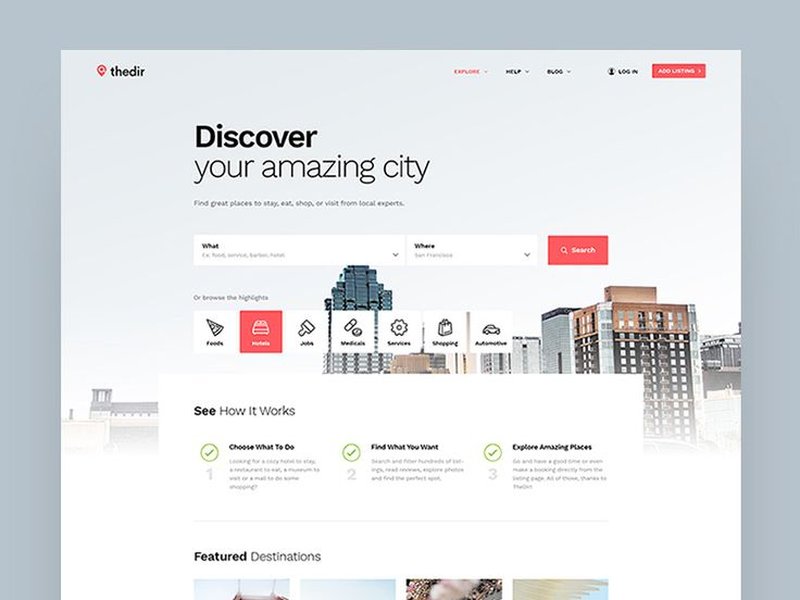
Conceptual design for a modern directory website interface.
Leveraging AI Website Builders
Several platforms now offer AI-driven website builders specifically designed for directories:
- Rapid Prototyping & Build: Tools like Mobirise AI or Builder.ai allow you to input your requirements and structured data, and the AI generates a functional website layout, including listing pages, category pages, search functions, and contact forms.
- Automated Design: AI can suggest layouts, color schemes, and typography, ensuring a professional look and feel. It often incorporates responsive design principles automatically, guaranteeing your directory works flawlessly on desktops, tablets, and smartphones – a critical factor for Google's mobile-first indexing.
Optimizing Website Architecture with AI
A logical site structure is crucial for both users and search engine crawlers. AI can assist in:
- SEO-Friendly URL Generation: Automatically creating clean, descriptive URLs for categories and individual listings (e.g.,
yourdirectory.com/city/category/business-name). This makes URLs more understandable and provides contextual clues to search engines. - Intuitive Navigation: Based on your categories and data, AI can help structure menus and internal linking hierarchies, ensuring users can easily find information and search engines can efficiently crawl and index your entire site.
- Schema Markup Automation: This is a vital SEO element. AI tools can automatically generate and implement
LocalBusinessschema markup (structured data) for each listing using your standardized data. This helps search engines understand the specifics of each business (address, hours, reviews, etc.) and can lead to rich results (like map packs or review stars) appearing in search results, significantly improving visibility.
Phase 3: AI-Driven Content Generation and Optimization
Populating Your Directory with Unique, Engaging, and Optimized Content
Content is king, even in directories. Duplicate or thin content can severely damage SEO. AI excels at generating unique content at scale, tailored to your needs.
Generating Unique Business Descriptions
Using generative AI models (like GPT-based technologies), you can:
- Create Unique Profiles: Feed the AI the raw data points for each business (name, services, location, unique selling points). The AI can then draft unique, human-readable descriptions for every single listing, avoiding the duplicate content penalty.
- Incorporate Keywords Naturally: Instruct the AI to subtly weave in relevant local and niche keywords (identified through AI-assisted keyword research or tools like SEMrush/Ahrefs) into the descriptions, improving the SEO value of each listing page.
Automating On-Page SEO Elements
AI can automate the creation of critical on-page SEO components:
- Meta Titles & Descriptions: Generate compelling and keyword-optimized meta titles and descriptions for category pages and individual business listings, improving click-through rates from search results.
- Header Tags (H1, H2, etc.): Structure content logically on each page using appropriate header tags, with AI suggesting relevant, keyword-inclusive headings.
- Image Alt Text: If your data includes images, AI image recognition tools can analyze the image content and generate descriptive alt text, improving accessibility and image SEO. AI can also assist with image compression for faster page load speeds.
- FAQ Generation: AI can analyze common search queries related to the businesses or categories in your directory and generate relevant FAQ sections for pages, capturing long-tail keyword traffic and providing value to users.

Interface example of a popular directory theme, showcasing listing layouts.
Content Strategy and Expansion
Beyond individual listings, AI can help build out supporting content that attracts users and search engines:
- Blog Posts & Articles: Generate articles about local events, industry trends relevant to the listed businesses, neighborhood guides, or "best of" lists, establishing your directory as a valuable local resource.
- Multilingual Content: If required, AI translation tools can adapt your directory content for different language audiences, potentially expanding your reach.
Phase 4: Advanced SEO Optimization with AI
Fine-Tuning for Maximum Local Visibility
Building the site and content is just the start. Continuous SEO optimization is key, and AI provides powerful tools for this.
Local SEO Enhancement
- Citation Consistency Management: AI tools can monitor your listed businesses' NAP details across the web (other directories, social media) and flag inconsistencies that could harm local rankings. Some platforms can even automate the process of correcting these citations.
- Google Business Profile (GBP) Integration: While direct AI management of GBP is limited by Google's policies, AI can analyze GBP performance data, suggest optimization strategies, help draft posts, and monitor reviews. Ensuring your directory data aligns with GBP data is crucial.
- Review Management: AI sentiment analysis tools can monitor reviews associated with businesses in your directory (or reviews left directly on your site). They can categorize feedback, identify trends, and even draft response suggestions, helping maintain a positive online reputation.
Technical SEO Monitoring
- Performance Analysis: AI-driven analytics tools can continuously monitor site speed, mobile usability, crawl errors, and other technical SEO factors, providing alerts and actionable recommendations for improvement.
- Internal Linking Optimization: AI can analyze your site structure and content to suggest relevant internal linking opportunities, helping distribute link equity and improve crawlability.
- Dynamic Sitemaps: Ensure your XML sitemap is automatically updated whenever new listings are added or removed, facilitating efficient indexing by search engines.
Keyword Research and Tracking
While foundational keyword research might be done initially, AI can provide ongoing insights:
- Local Intent Analysis: AI can analyze search trends and user behavior to identify emerging local keywords and search queries (including voice search queries) that your directory should target.
- Rank Tracking: Monitor your directory's ranking for target keywords across different locations, with AI identifying significant changes and potential causes.
AI's Impact Across Directory Development Stages
Visualizing AI Effectiveness
Artificial Intelligence offers varying levels of impact across the different stages of building and optimizing your local business directory. This radar chart visualizes the estimated effectiveness of AI in key areas, based on current capabilities. Areas like Data Processing and Content Generation see significant automation potential, while Strategic SEO Planning still benefits greatly from human oversight combined with AI insights.
Enhancing User Experience (UX) with AI
Creating an Engaging and Intuitive Directory
A directory that ranks well but frustrates users won't succeed long-term. AI can help create a stickier, more engaging experience:
AI-Powered Search and Filtering
- Smarter Search Results: Implement AI-driven search algorithms that understand natural language queries and user intent better than basic keyword matching.
- Personalization: AI can learn user preferences based on their location, search history, and interactions within the directory to personalize search results and recommendations.
- Advanced Filtering: Beyond basic categories, AI-generated tags allow for more granular filtering options (e.g., "find restaurants with outdoor seating open now near me").
Interactive Features
- Chatbots: Implement AI chatbots to answer common user questions, help navigate the directory, or assist businesses listed on the site.
- Recommendation Engines: Suggest related businesses or categories based on user browsing behavior.
Process Overview: From Data to Optimized Directory
A Mindmap of the AI-Driven Workflow
This mindmap illustrates the interconnected stages involved in using AI to build your SEO-optimized local business directory, starting from your raw data and detailed scope.
(URLs, Navigation)"] id3d["Mobile-First Design"] id4["AI Content & On-Page SEO"] id4a["Unique Description Generation"] id4b["Meta Tag & Header Automation"] id4c["Image Alt Text & Optimization"] id4d["Schema Markup Implementation"] id4e["Keyword Integration"] id5["AI Local & Technical SEO"] id5a["Citation Monitoring & Management"] id5b["GBP Data Alignment"] id5c["Review Sentiment Analysis"] id5d["Performance Monitoring (Speed, Mobile)"] id5e["Rank Tracking"] id6["AI for UX & Engagement"] id6a["Intelligent Search & Filtering"] id6b["Personalization"] id6c["Chatbots & Support"] id7["Ongoing AI Maintenance"] id7a["Automated Listing Updates"] id7b["Continuous SEO Refinement"] id7c["Performance Analytics & Reporting"]
AI Tasks and Potential Tools/Techniques
Matching AI Capabilities to Directory Needs
The following table outlines specific tasks in building and optimizing your directory where AI can be applied, along with examples of the types of tools or techniques involved. Note that specific tool names may change, but the underlying AI capabilities remain relevant.
| Task Area | AI Application / Capability | Example Tools / Techniques |
|---|---|---|
| Data Preparation | NAP Standardization & Cleaning | AI Data Cleansing Platforms, Custom Python Scripts (e.g., using libraries like pandas, fuzzywuzzy) |
| Data Preparation | Automated Categorization/Tagging | NLP Models (e.g., BERT, GPT-based classifiers), AI Classification APIs |
| Website Build | No-Code Directory Generation | Mobirise AI, Builder.ai, MakeADir.com (Conceptual examples) |
| Content Generation | Unique Business Descriptions | Generative AI APIs (OpenAI GPT series, Anthropic Claude), Jasper, Copy.ai |
| Content Generation | Blog Posts & Articles | AI Content Generation Platforms (integrated with SEO tools like SurferSEO or Clearscope) |
| On-Page SEO | Meta Tag & Header Automation | AI SEO Tools (integrated into builders or standalone), Custom Scripts using Generative AI |
| On-Page SEO | Schema Markup Generation | Schema Generation Tools with AI capabilities, Custom Scripts (Python + spaCy for entity recognition) |
| Local SEO | Citation Monitoring & Consistency | Local SEO Platforms (e.g., BrightLocal, Yext - check for AI features), Custom AI monitoring scripts |
| Local SEO | Review Sentiment Analysis | AI Sentiment Analysis APIs, Reputation Management Platforms with AI |
| Technical SEO | Performance & Error Monitoring | AI-powered SEO Audit Tools, Analytics Platforms with AI insights (e.g., Google Analytics anomaly detection) |
| User Experience | Intelligent Search Functionality | AI Search Platform integrations (e.g., Algolia AI), Custom-built search using ML models |
| Maintenance | Automated Listing Updates | AI-Automated Directory Platforms (e.g., Driftscape concept), Custom data synchronization scripts |
Visualizing the AI Build Process
Building a Directory Website with AI Tools
Seeing the process in action can be incredibly helpful. This video demonstrates how AI tools can be used to build a directory website, often with minimal coding, showcasing the potential speed and efficiency AI brings to the table. It walks through creating a functional directory using AI, highlighting steps similar to those discussed, such as leveraging AI for content and structure.
Frequently Asked Questions (FAQ)
Quick Answers to Common Questions
Can AI completely replace human SEO experts for my directory?
How does AI ensure the content it generates is accurate and high-quality?
Which AI tools are best for building a directory website?
How can AI help keep my directory listings up-to-date?
Recommended Next Steps
Explore Further Insights
- How do I choose the best AI website builder specifically designed for local directories?
- What are the most crucial Schema markup types to implement on a local business directory for maximum SEO impact?
- Can you compare the pros and cons of using AI versus manual writing for creating unique descriptions for thousands of directory listings?
- What advanced local SEO techniques, beyond basic NAP consistency, can AI help implement for an online directory?
References
Sources Used for This Analysis
Last updated May 5, 2025