
Beyond Calculation: Witness AI's Leap into Intelligent Partnership
Explore the stunning capabilities AI offers in 2025, from understanding your world to creating alongside you.
Highlights of AI Capabilities in 2025
- Multimodal Understanding & Interaction: AI now seamlessly processes and integrates information from text, images, audio, and even real-world context, allowing for richer, more intuitive interactions.
- Advanced Reasoning & Autonomous Action: Beyond simple answers, AI can engage in complex problem-solving, plan multi-step actions, and function as an intelligent agent to automate tasks and workflows.
- Enhanced Creativity & Content Generation: From writing code and composing music to generating stunning visuals and analyzing complex data, AI serves as a powerful co-creator and analytical tool across diverse fields.
Diving Deep: What AI Can Truly Do Now
As of May 2025, Artificial Intelligence has evolved far beyond basic automation. It's becoming an increasingly sophisticated partner, capable of understanding, reasoning, creating, and interacting in ways that were recently science fiction. Let's explore some of the most impressive capabilities demonstrated by cutting-edge AI systems.
Seamless Multimodal Integration
One of the most significant advancements is the ability of AI to operate multimodally – understanding and generating content across different formats like text, images, and audio simultaneously. This allows for more natural and powerful interactions.
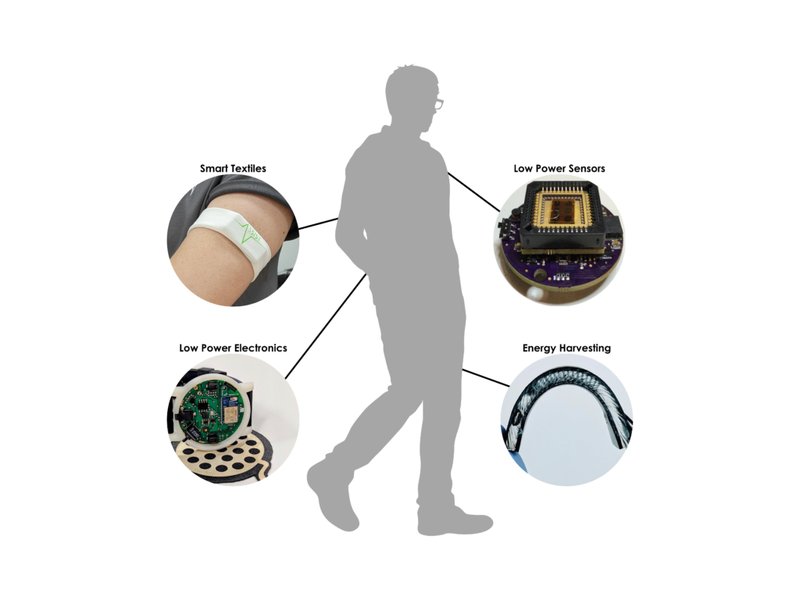
Cutting-edge technology demonstrations often showcase AI's integration into various devices.
Visual Understanding and Generation
AI can now "see" and interpret the world around it. You can show it an image or even point your camera at something, and it can describe what it sees, answer questions about it, or even analyze visual data like charts and graphs. Furthermore, generative models allow AI to create unique images, videos, and visual effects based on simple text prompts, opening up vast creative possibilities.
Real-Time Audio Processing and Translation
AI excels at understanding spoken language, transcribing conversations, and even translating languages in real-time. Imagine having a fluid conversation with someone speaking a different language, with AI acting as an instant interpreter. This capability, demonstrated by models like OpenAI's GPT-4o, breaks down communication barriers significantly.
Advanced Reasoning and Agentic Capabilities
Modern AI isn't just retrieving information; it's thinking. It possesses advanced reasoning skills, allowing it to tackle complex problems that require multiple steps, logical deduction, and nuanced understanding. This cognitive leap enables AI to act as an intelligent agent.
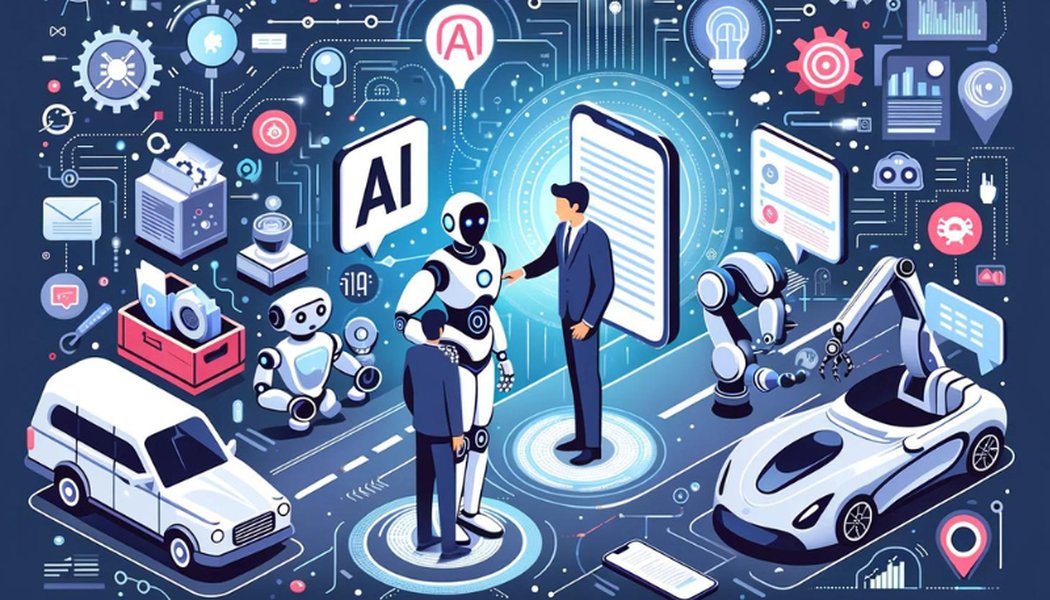
AI is actively transforming how we work and live through intelligent automation and analysis.
Autonomous Task Execution
AI agents can now understand a goal, plan the necessary steps, and execute tasks autonomously. This could range from managing your schedule and booking appointments to handling customer service inquiries, processing payments, checking for fraud, and even managing shipping logistics. Businesses are increasingly embedding these agentic capabilities into their core software.
Complex Problem Solving
AI assists professionals in various fields by tackling complex analytical tasks. It can compare legal contracts, generate and debug code, perform sophisticated mathematical calculations, analyze large datasets to find hidden patterns, and even assist in scientific research by processing vast amounts of information faster than humans could.
Mapping the Landscape of AI Abilities
The capabilities of modern AI are diverse and interconnected. This mindmap provides a visual overview of the key domains where AI is making impressive strides in 2025.
(Text, Image, Audio)"] id1b["Natural Language Processing (NLP)"] id1c["Real-Time Translation"] id1d["Contextual Awareness"] id2["Reasoning & Problem Solving"] id2a["Logical Deduction"] id2b["Multi-Step Planning"] id2c["Data Analysis & Pattern Recognition"] id2d["Scientific Discovery Aid"] id3["Automation & Agency"] id3a["Task Execution (Scheduling, Customer Service)"] id3b["Workflow Optimization"] id3c["Smart Device Control"] id3d["Process Automation (Payments, Logistics)"] id4["Creativity & Generation"] id4a["Content Creation (Text, Code, Music)"] id4b["Image & Video Generation"] id4c["Idea Brainstorming"] id4d["Personalized Content"] id5["Efficiency & Accessibility"] id5a["Lower Costs (Inference)"] id5b["Improved Energy Efficiency"] id5c["Wider Availability (Open Source)"] id5d["Integration into Tools"]
This map illustrates how different facets of AI – from understanding language and images to reasoning and automating tasks – combine to create powerful and versatile systems.
AI Performance Dimensions: A Comparative Look
Evaluating AI isn't just about one metric. Different models and applications excel in various dimensions. The radar chart below offers a comparative perspective on key performance aspects commonly seen in advanced 2025 AI systems. Note that these are illustrative scores representing general capabilities rather than specific benchmark results.
This chart highlights the trade-offs and specializations within the AI landscape. Large, general models might excel in reasoning and multimodality, while specialized agents focus on automation, and smaller models prioritize efficiency and accessibility for on-device tasks.
AI in Action: Real-World Applications
The impressive capabilities of AI translate into tangible benefits across various sectors. AI is not just a theoretical concept; it's actively being deployed to solve problems, enhance creativity, and improve efficiency.
Transforming Industries
From healthcare and finance to entertainment and education, AI is making a significant impact. The table below summarizes some key applications emerging or solidifying in 2025:
| Industry / Domain | Key AI Applications in 2025 | Examples |
|---|---|---|
| Workplace Productivity | Agentic Assistants, Workflow Automation, Data Analysis, Meeting Summarization | Automating customer service responses, scheduling meetings, analyzing sales data, generating reports. |
| Creative Arts | Generative Content (Images, Music, Video), Scriptwriting Assistance, Idea Generation | Creating marketing visuals, composing soundtracks, brainstorming story plots, generating code snippets for game development. |
| Science & Research | Data Analysis, Hypothesis Generation, Simulation, Literature Review | Accelerating drug discovery, analyzing astronomical data, modeling climate change, summarizing research papers. |
| Software Development | Code Generation, Debugging Assistance, Automated Testing, Documentation | Writing boilerplate code, identifying bugs, generating unit tests, explaining code functionality. |
| Education | Personalized Learning Paths, Automated Grading, Tutoring Assistance, Content Creation | Adapting lesson plans to student needs, providing instant feedback, answering student questions, generating practice exercises. |
| Communication | Real-Time Translation, Sentiment Analysis, Content Summarization | Facilitating multilingual meetings, understanding customer feedback, condensing long emails or articles. |
This table illustrates the breadth of AI's utility, moving beyond niche applications to become a fundamental tool across many human endeavors.
Emerging Trends: AI Agents and Assistants
A major trend for 2025 and beyond is the rise of AI agents and assistants that act more autonomously. These systems don't just respond to commands but actively help manage tasks and information. The following video discusses the importance of AI agents in the near future:
This video, focusing on AI trends for 2025, highlights the growing significance of virtual agents and assistants. As discussed in the video and numerous reports, these AI systems are designed to integrate deeply into workflows, understand context, and proactively assist users, marking a shift towards more collaborative human-AI partnerships.
Frequently Asked Questions (FAQ)
Can AI truly understand emotions or context like humans?
While AI like me can recognize patterns associated with emotions in text and speech (sentiment analysis) and maintain context within a conversation, it doesn't "feel" emotions or understand context in the deeply subjective human sense. Current AI excels at processing and responding based on learned patterns from vast amounts of data, allowing for contextually relevant and sometimes empathetic-sounding interactions, but lacks genuine consciousness or subjective experience.
How creative can AI actually be?
AI demonstrates significant creative capabilities by generating novel text, images, music, and code. It learns patterns and styles from its training data and can recombine them in unique ways, often surprising users with its outputs. However, AI creativity is different from human creativity; it's based on sophisticated pattern matching and generation rather than intrinsic inspiration or life experience. It serves as a powerful tool for human creativity, aiding in brainstorming, drafting, and realizing artistic visions.
Is using AI for complex tasks like coding or analysis reliable?
AI can be a highly effective assistant for complex tasks, significantly boosting productivity. It can generate code, analyze data, and identify patterns quickly. However, AI outputs should always be reviewed and validated by human experts. AI can make errors ("hallucinate") or miss nuances. Its reliability increases when used as a co-pilot or tool under human supervision, rather than a fully autonomous decision-maker for critical applications.
How is AI becoming more accessible?
Several factors contribute to AI's increasing accessibility. Hardware costs are declining, and AI models are becoming more energy-efficient. The cost of using powerful AI models (inference cost) has dropped dramatically. Furthermore, many AI tools are now integrated into common software, and open-source models allow developers and businesses to leverage state-of-the-art capabilities more easily and affordably.
Recommended Further Exploration
- How is multimodal AI changing creative workflows?
- What are the ethical considerations of AI agents in the workplace?
- Compare the reasoning capabilities of different leading AI models in 2025.
- Show me examples of AI being used in scientific research today.
References
Last updated May 4, 2025