
AI's Next Leap: What Groundbreaking Changes Await Us by 2030?
Unveiling the trajectory of Artificial Intelligence over the next five years, from enterprise revolution to societal transformation.
Artificial Intelligence (AI) is on a path of accelerated evolution, poised to redefine industries, augment human capabilities, and reshape our daily lives significantly over the next five years (2025-2030). Expect a future where AI transitions from specialized tools to deeply integrated, intelligent collaborators across virtually every domain.
Key Transformations on the Horizon
- Artificial General Intelligence (AGI) Progress: While full AGI is still debated, significant strides towards AI systems exhibiting human-like creativity, problem-solving, and cognitive abilities across diverse tasks are anticipated, with some experts predicting human-level intelligence by 2029.
- Ubiquitous Enterprise Integration: AI will become a cornerstone of business operations, driving unprecedented productivity gains, automating complex workflows, enhancing decision-making, and enabling highly personalized customer experiences through bespoke and democratized AI solutions.
- Rise of Advanced Generative and Agentic AI: Expect more sophisticated AI capable of autonomously creating diverse content (text, images, code) and AI agents performing complex tasks independently, acting as virtual collaborators in both professional and personal spheres.
The Expanding Frontiers of AI: 2025-2030
The coming half-decade promises remarkable advancements in AI, building upon current trends and pushing the boundaries of what's possible. From businesses to personal lives, the tendrils of AI will extend further, bringing both immense opportunities and new challenges.
Enterprise AI: Driving Efficiency and Innovation
Businesses are set to experience a profound transformation fueled by AI. The adoption of AI tools is no longer a niche trend but a core strategy for growth and competitiveness.
Bespoke Solutions and Data Governance
Organizations will increasingly move beyond generic AI applications to develop custom models tailored to their unique data and operational workflows. This shift allows for more precise insights and effective automation. Simultaneously, a heightened focus on data governance and privacy will see more AI training and inference performed locally, especially for sensitive information, to mitigate risks associated with third-party data handling. Cloud platforms will continue to lower the barrier to entry, making sophisticated AI tools more accessible even to small and medium-sized enterprises (SMEs).
Productivity Unleashed
AI is projected to significantly boost workforce productivity. Estimates suggest that AI tools could save knowledge workers a substantial amount of time—potentially up to 12 hours per week by 2029. This liberation of human capital will allow professionals to concentrate on higher-value strategic, creative, and interpersonal tasks, fostering innovation and job satisfaction.
AI transforming industrial and manufacturing processes.
Technological Milestones: Smarter, More Capable AI
The underlying technology of AI will continue its rapid evolution, leading to systems that are more intelligent, versatile, and intuitive.
Generative AI and Autonomous Agents
Generative AI (GenAI), already making waves, will mature significantly. Its ability to create coherent text, realistic images, complex code, and other forms of content will revolutionize creative industries, software development, and scientific research. Beyond content creation, AI-powered agents with enhanced autonomy and reasoning capabilities will become more prevalent, capable of performing complex multi-step tasks independently or in collaboration with humans.
Multimodal and Context-Aware Systems
Future AI systems will excel at processing and integrating information from multiple modalities simultaneously—text, speech, images, video, and sensor data. This will enable richer, more natural human-AI interactions and lead to more capable virtual assistants, sophisticated analytics, and immersive experiences across various sectors. These systems will also demonstrate improved contextual understanding, inferring user intent with greater accuracy.
The Path Towards AGI
The quest for Artificial General Intelligence (AGI)—AI with human-like cognitive abilities across a wide range of tasks—will see continued progress. Prominent futurists like Ray Kurzweil and figures like Elon Musk have posited that AI could reach human-level intelligence by 2029, potentially even exceeding the collective intelligence of humanity shortly thereafter. While full AGI remains a complex and debated milestone, advancements in reasoning, natural language understanding, and problem-solving will bring us closer to this threshold.
Futurist Ray Kurzweil discusses the timeline for AI surpassing human intelligence, a key topic in AI's future direction. This video explores his predictions for AI achieving superintelligence by 2029, touching on the profound societal and technological shifts this could entail.
Sector-Specific Transformations
AI's impact will be felt across all industries, each experiencing unique innovations tailored to its specific challenges and opportunities.
Healthcare Reinvented
AI will become indispensable in healthcare, enhancing diagnostic accuracy (e.g., analyzing medical images), personalizing treatment plans, accelerating drug discovery, and optimizing hospital operations. Multimodal AI will be crucial in synthesizing patient data from various sources for more holistic care. However, privacy and regulatory considerations will be paramount.
Finance and Commerce Evolved
In the financial sector, AI will refine fraud detection, improve algorithmic trading strategies, personalize financial advice, and streamline customer service through advanced natural language processing (NLP). Retail and e-commerce will leverage AI for hyper-personalized marketing, optimized inventory management, and enhanced customer experiences, with generative AI playing a role in product design and advertising.
Education Personalized
AI will facilitate tailored learning experiences, adapting educational content to individual student needs and learning paces. AI tutors, automated grading, and AI-driven analytics will help educators optimize teaching strategies and improve learning outcomes.
Entertainment and Creative Industries
Generative AI will increasingly contribute to the creation of music, visual art, scripts, and even interactive game content, potentially reshaping the roles of human creators and the landscape of intellectual property.
Military and Security
Nations will continue to invest in AI for defense and security, leading to advancements in autonomous systems, intelligence analysis, cybersecurity, and strategic planning. This also brings a focus on the ethical implications of AI in warfare.
Societal Impact: Work, Ethics, and Daily Life
The integration of AI into the fabric of society will bring about significant changes in how we work, interact, and govern.
The Augmented Workforce
AI is expected to augment human capabilities rather than merely replace jobs. New roles focused on AI development, management, ethics, and human-AI collaboration will emerge. The nature of work will shift, emphasizing skills that AI cannot easily replicate, such as critical thinking, emotional intelligence, and complex strategic decision-making.
Ethical Frameworks and Governance
As AI becomes more powerful and pervasive, the need for robust ethical guidelines, regulatory frameworks, and governance structures will intensify. Issues such as bias in AI algorithms, data privacy, accountability for AI decisions, and the potential for misuse (e.g., deepfakes, autonomous weapons) will require careful consideration and international cooperation. Sustainable AI initiatives, focusing on the environmental impact of AI development and deployment, will also gain prominence.
AI in Everyday Life
Beyond the workplace, AI will become more seamlessly integrated into daily routines. Smart assistants will become more intuitive and proactive, smart homes more adaptive, and personalized services (from news feeds to health advice) more refined. AI will also play a role in tackling complex global challenges like climate change and disease control.
Visualizing AI's Multifaceted Growth (2025-2030)
The following chart illustrates the anticipated focus and advancement across key dimensions of AI development over the next five years. These are qualitative assessments based on current trends and expert predictions, highlighting areas expected to see significant progress and investment. A higher score indicates a greater expected emphasis or rate of development.
This radar chart visually represents the projected advancement and focus areas within AI development leading up to 2030. Key dimensions like "Enterprise AI Adoption" and "Generative AI Capabilities" are expected to see very high rates of development, reflecting their current momentum. "Progress Towards AGI" shows significant anticipated strides, while "AI Ethics & Governance Development" underscores the growing importance of responsible AI. "Workforce Augmentation Impact" and "Multimodal AI Integration" also score highly, indicating transformative potential in how we work and interact with technology. "AI Democratization" reflects the ongoing trend of making AI tools more accessible.
Interconnected Web of AI Evolution
The future of AI is not a set of isolated advancements but a complex interplay of technological breakthroughs, sectoral applications, societal shifts, and governance challenges. The mindmap below provides a conceptual overview of these interconnected domains and how they contribute to the overall direction of AI in the next five years.
(Diagnostics, Drug Discovery)"] id2b["Finance
(Fraud Detection, Robo-Advisory)"] id2c["Education
(Personalized Learning)"] id2d["Enterprise
(Productivity, Automation)"] id2e["Creative Industries
(Content Generation)"] id2f["Manufacturing & Supply Chain
(Optimization)"] id3["Societal & Workforce Impact"] id3a["Augmented Human Capabilities"] id3b["New Job Roles & Skill Demands"] id3c["Integration into Daily Life"] id3d["Productivity Gains for Individuals"] id3e["Ethical Use in Society"] id4["Governance & Challenges"] id4a["AI Ethics & Legislation"] id4b["Data Privacy & Security"] id4c["Bias Mitigation & Fairness"] id4d["Sustainable AI Practices"] id4e["Managing AI Risks (e.g., Misuse)"] id5["Economic & Market Dynamics"] id5a["Substantial Market Growth"] id5b["Trillions in Economic Value"] id5c["Democratization of AI Tools"] id5d["Investment in AI R&D"]
This mindmap illustrates the core pillars driving AI's direction through 2030. "Technological Milestones" highlights key areas of innovation. "Sectoral Transformation" shows how these innovations will reshape various industries. "Societal & Workforce Impact" considers the human element, including job changes and daily life integration. "Governance & Challenges" addresses the crucial need for ethical frameworks and managing potential risks. Finally, "Economic & Market Dynamics" reflects the significant financial investment and value creation expected from AI.
Key Predictions and Timeline Summary
The following table summarizes some of the key predictions and anticipated developments in AI over the next five years, drawing from various expert analyses and reports.
| Aspect of AI | Prediction/Trend by 2029-2030 | Key Implication |
|---|---|---|
| Human-Level Intelligence (AGI Concept) | Some experts predict AI may match or exceed human-level intelligence in certain cognitive tasks by 2029. | Potential for unprecedented problem-solving capabilities and societal disruption. |
| Enterprise AI Adoption | Near-universal adoption in at least one business function; shift to bespoke, locally processed AI models. | Significant productivity boosts, enhanced efficiency, and new growth opportunities. |
| Workforce Productivity | AI tools potentially saving knowledge workers an average of 12 hours per week by 2029. | Shift in job roles towards strategic and creative tasks, focus on human-AI collaboration. |
| Generative AI | Will generate trillions in economic value; widespread use in content creation, software development, and design. | Transformation of creative industries and automation of complex design tasks. |
| Multimodal AI | Commonplace in applications, enabling richer interaction and data synthesis (text, image, audio, video). | More intuitive AI assistants, improved diagnostics, and immersive experiences. |
| AI Governance | Increased implementation of AI legislation focusing on transparency, fairness, privacy, and accountability. | Greater emphasis on responsible AI development and deployment. |
| Global AI Market | Substantial growth, with some projections indicating a CAGR of around 37.3% through 2030. | Massive investment and widespread deployment of AI solutions globally. |
This table provides a snapshot of specific anticipated milestones and trends. It underscores the multifaceted nature of AI's evolution, encompassing technological breakthroughs, profound economic impacts, and critical societal adjustments. The journey towards 2030 will be characterized by both rapid innovation and an increasing awareness of the responsibilities that come with developing and deploying such powerful technology.
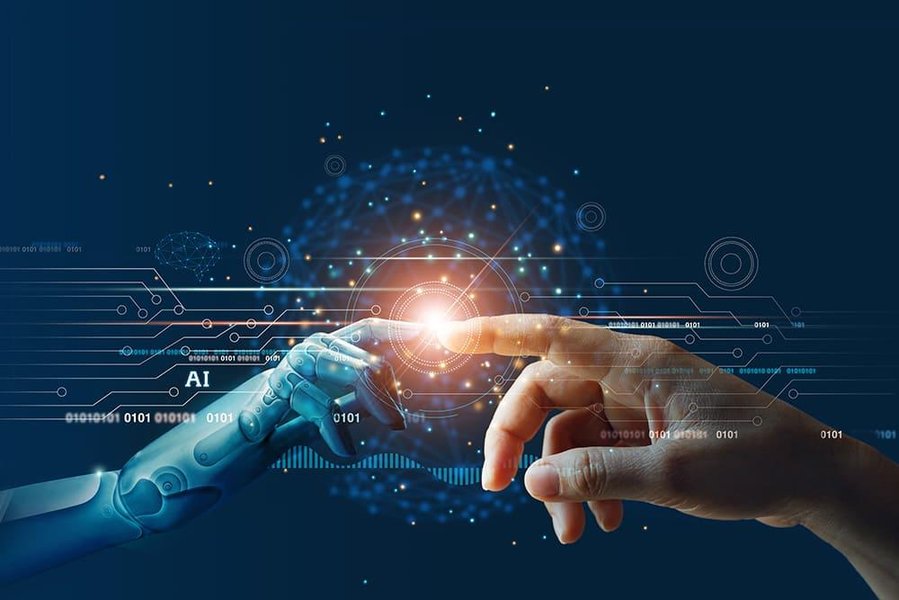
The field of Artificial Intelligence is rapidly expanding, touching every aspect of technology and daily life.
Frequently Asked Questions (FAQ)
Will AI take over most jobs by 2030?
While AI will automate many tasks, the consensus is that it will more likely augment human capabilities and transform existing jobs rather than cause mass unemployment by 2030. New roles centered around AI management, development, ethics, and human-AI collaboration are expected to emerge. The focus will likely shift towards skills that complement AI, such as critical thinking, creativity, and emotional intelligence.
What is meant by "Artificial General Intelligence" (AGI) and is it really achievable by 2029?
Artificial General Intelligence (AGI) refers to a type of AI that possesses the ability to understand, learn, and apply knowledge across a wide range of tasks at a level comparable to or exceeding that of human beings. Some experts, like Ray Kurzweil, predict AGI could be achieved by 2029. However, this is a subject of ongoing debate, with others believing true AGI is further away. The next five years will likely see significant progress towards more versatile and "intelligent" AI, even if full AGI remains elusive.
How will AI impact personal privacy and data security?
As AI systems become more data-hungry and integrated into our lives, concerns about personal privacy and data security will grow. There will be an increased emphasis on developing AI systems that are privacy-preserving by design (e.g., through techniques like federated learning or local data processing). Stricter regulations regarding data collection, usage, and AI transparency are also anticipated to address these concerns and ensure individuals' rights are protected.
What are "multimodal AI" and "agentic AI," and why are they important?
Multimodal AI refers to AI systems that can process, understand, and generate information from multiple types of data (modalities) simultaneously, such as text, images, audio, and video. This allows for more comprehensive understanding and richer interactions, like an AI that can describe a picture while listening to spoken questions about it.
Agentic AI (or AI agents) are systems designed to perceive their environment, make decisions, and take actions to achieve specific goals with a degree of autonomy. They can perform complex, multi-step tasks, learn from experience, and collaborate. Both are important because they represent a move towards more capable, versatile, and human-like AI assistants and problem-solvers.
Recommended Further Exploration
- How will generative AI transform specific industries like healthcare and entertainment by 2030?
- What are the most significant ethical challenges AI development will face in the next five years?
- Explore the potential economic impact of AI on global markets and employment by 2030.
- What advancements are expected in AI-powered robotics and autonomous systems by 2029?
References
Last updated May 6, 2025