
The Future of AI and Robotics in 2030
Exploring Transformative Trends and Technologies Shaping a New Era
Key Highlights
- Widespread Industry Transformation: AI and robotics will revolutionize sectors from healthcare to manufacturing with increased autonomy and smarter decision-making systems.
- Economic and Workforce Shifts: Significant job reallocation will occur, with transformative roles and new opportunities arising as traditional roles evolve.
- Ethical and Regulatory Considerations: As these technologies become ubiquitous, ensuring transparency, accountability, and responsible deployment will be a central challenge.
Overview
By 2030, Artificial Intelligence (AI) and robotics are expected to be embedded deeply across multiple industries, reshaping our society, economy, and daily lives. Over the past few decades, rapid advancements in technology have set the stage for innovations that blur the boundaries between digital intelligence and mechanical action. Today, AI and robotics no longer function as isolated tools but as interconnected entities working together to improve efficiency, decision-making, and human experience.
This synthesis provides an in-depth exploration of the expected state of AI and robotics by 2030. It considers industry innovations, technological progress, societal impact, and the accompanying economic transformations. Stakeholders across the globe—from policymakers and business leaders to researchers and everyday users—will encounter both opportunities and challenges as these transformative technologies become part of every facet of life.
Industry Transformations and Technological Advancements
One of the most compelling aspects of the 2030 prediction is the breadth of industry transformation driven by AI and robotics. Their applications are expected to penetrate a wide variety of spheres, driving efficiency, reducing human workload, and redefining roles across different fields.
Healthcare
AI and robotics are on track to change the face of healthcare dramatically. Advanced diagnostic algorithms will enable earlier detection and more accurate diagnoses, while robotic systems in surgery and patient care promise precision and reproducibility. Homes will be equipped with health-monitoring devices that continuously collect and analyze data, allowing for personalized healthcare interventions.
Medical robots will assist in surgical procedures, rehabilitation, and even daily care for the elderly. With better integration of AI, these robots are set to learn from individual patient data, providing tailored care strategies that adapt to the patient's evolving needs. This deeper integration will reduce errors, improve patient outcomes, and potentially lower the overall cost of healthcare.
Manufacturing and Logistics
The manufacturing sector is poised for revolutionary changes through the adoption of AI-enhanced robotics. Smart factories, equipped with collaborative robots (or "cobots"), will handle repetitive, dangerous, or highly precise tasks, further optimizing productivity and quality. Autonomous systems will manage supply chains with incredible efficiency, tracking inventory in real time and optimizing logistics routes through intelligent decision-making algorithms.
This evolution in manufacturing is driven by the need to handle increasingly complex production requirements, while robotics and automation lead to significant cost savings. AI-powered predictive maintenance will minimize downtime, and rapid prototyping will empower industries to respond quickly to market demand changes.
Service Industries and Personal Robotics
In everyday life, personal and service robots are expected to become commonplace. AI-driven personal assistants will extend beyond smartphones and computers into physical entities capable of performing domestic chores, providing companionship, and even supporting eldercare. These robots will be designed with enhanced human–machine interaction capabilities, making them safe and effective in home environments.
In service sectors such as retail and hospitality, robotics will streamline operations. Automated customer service terminals and interactive kiosks enhanced by advanced computer vision technologies will be able to handle customer inquiries and improve service quality.
Transportation and Autonomous Systems
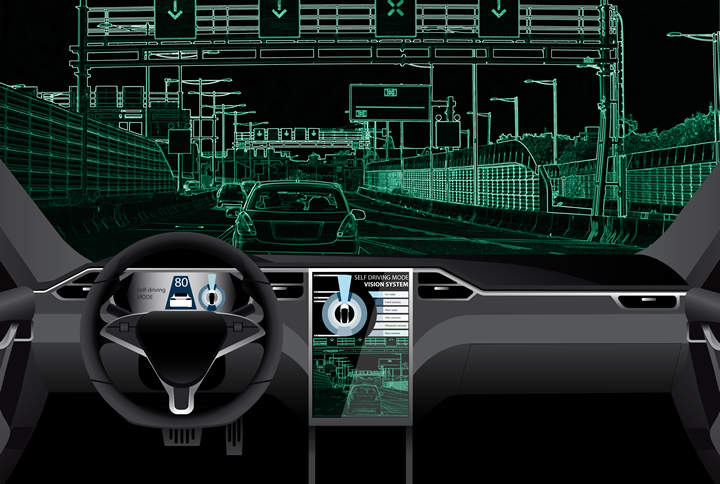
Autonomous vehicles, which include cars, drones, and delivery robots, will increasingly become a part of the urban and rural landscapes. With advancements in real-time data processing and sensor fusion, these systems will exhibit heightened levels of safety and efficiency. AI algorithms integrated with advanced sensor networks will ensure that autonomous systems can navigate complex environments, whether it is a bustling city center or a challenging rural terrain.
The seamless orchestration of data and real-world actions will also boost industries like logistics, where fleets of delivery robots and drones are expected to optimize last-mile delivery services. This transformation will not only increase operational efficiencies but also reduce traffic congestion and potentially lower carbon emissions.
Economic Impact and Workforce Evolution
The economic implications of AI and robotics are profound. A shifting economic landscape will witness both the displacement of certain job categories and the creation of new roles previously unimagined. The integration of these technologies is predicted to have a dual impact: streamlining processes while setting the stage for significant re-skilling and career transitions.
Job Displacement vs. Job Creation
While automation is expected to render certain traditional roles obsolete—especially those involving routine and repetitive tasks—it will also open avenues for new kinds of employment that require advanced skills in technology management, data analysis, and robotics maintenance. Estimates suggest that millions of jobs may be displaced; however, many of these will be replaced by new roles related to AI system design, robotics oversight, ethical governance, and more.
Organizations and educational institutions are increasingly recognizing the need for workforce evolution. Curricula are being reformed so that students are equipped with the competencies necessary for a future where AI and robotics are dominant. Continuous education and training programs will become essential for the current workforce to adapt to the rapid technological changes.
Market Growth and Economic Projections
The market for AI-enhanced robotics is projected to expand dramatically over the next decade. With significant investments in cloud robotics, AI integration, and autonomous systems, the global market is estimated to experience exponential growth. Economic forecasts suggest that the overall market could reach tens of billions of dollars, marking a growth percentage that redefines previous tech industry expectations.
Substantial investments from countries leading in technology—such as those in Asia—indicate that regional competition and innovation will be at the forefront of this global transformation. The convergence of AI with edge computing, 5G networks, and augmented reality technologies is set to accelerate progress and create sustainable economic models across the world.
Table: Market Projections for AI and Robotics
| Sector | Projected Growth | Impact Areas |
|---|---|---|
| Healthcare Robotics | Significant increase in personalized care and diagnostics | Surgery, patient monitoring, eldercare |
| Manufacturing Automation | High deployment of cobots and autonomous systems | Smart factories, supply chain optimization, predictive maintenance |
| Service and Personal Robotics | Rapid growth in household and hospitality sectors | Home assistance, retail automation, customer service |
| Autonomous Transportation | Adoption in urban and rural areas | Delivery drones, autonomous cars, public transport |
| Overall AI Robotics Market | Exponential growth reaching multi-billion-dollar valuations | Cross-industry integration and technological convergence |
Ethical, Legal, and Societal Considerations
The rapid integration of AI and robotics into every aspect of society raises numerous ethical, legal, and social issues that must be addressed proactively. These considerations are as important as the technological advancements themselves, ensuring that the development and deployment of these systems are both responsible and beneficial to society.
Transparency and Accountability
As systems become more autonomous, maintaining visibility into how algorithms make decisions is critical. Explainable AI (XAI) will become essential, enabling users and regulators to understand AI decisions. This transparency is crucial not only for building public trust but also for ensuring that accountability is clearly defined when errors or biases occur.
Robust regulatory frameworks will need to enforce standards that ensure user data privacy, algorithmic fairness, and accountability in automated decisions. Legal structures are expected to adapt dynamically in order to simplify and clarify responsibility in scenarios where AI and robotics make decisions independently.
Data Privacy and Security
With increased reliance on data-driven decisions, data privacy will continue to be at the forefront of ethical concerns. The enormous volume of data that AI systems process makes them potential targets for breaches and misuse. Ensuring that data security measures evolve in tandem with these technologies will be vital.
Governments, corporations, and independent bodies will have to work together to create and enforce security protocols that safeguard sensitive information from unauthorized access or manipulation. This will involve a combination of advanced encryption methods, controlled data access, and strict compliance standards.
Societal Inclusion and Workforce Transition
One of the most significant societal challenges is ensuring that the benefits of AI and robotics are widely shared. As these technologies drive job automation, affected workers must be provided with opportunities for retraining and skill development. Educational reforms and government initiatives will be key components in facilitating a smooth transition.
Addressing the digital divide is also crucial. Stakeholders must be proactive in ensuring equitable access to technology so that marginalized or less technologically developed communities are not left behind. Inclusive policies that promote participation in the digital economy will help mitigate disparities emerging from large-scale automation.
Technological Convergence and Future Possibilities
The evolution of AI and robotics is not occurring in isolation; these advancements are part of a broader technological convergence. Cloud computing, 5G connectivity, edge AI, and augmented reality are converging to create synergies that exponentially enhance the performance of autonomous systems.
In manufacturing wherever sensors collect real-time data and process it on the edge, the decision-making power quickens significantly. As improvements in computer vision, natural language processing, and sensor technology advance, AI will increasingly enable robotics to undertake complex tasks previously thought to be uniquely human. Beyond mere automation, AI will facilitate adaptive learning and enhanced contextual awareness in robotics, making them more robust in unpredictable environments.
Furthermore, initiatives in space exploration will benefit immensely from these advancements. Autonomous robotic systems, controlled by AI capable of processing vast amounts of data remotely, will be employed in space missions, assisting astronaut crews and conducting experiments in environments that are inhospitable to human life.
Integration Table: Converging Technologies
| Technology | Role in AI & Robotics | Future Impact |
|---|---|---|
| 5G Connectivity | Enables real-time data processing and communication between devices | Facilitates rapid decision making and improved autonomous capabilities |
| Edge AI | Processes data closer to the source | Enhances efficiency, reduces latency, and improves system robustness |
| Augmented Reality | Provides intuitive, interactive interfaces for human-robot interactions | Improves safety, training, and maintenance procedures |
| Computer Vision | Enables robots to interpret and understand visual information | Leads to enhanced decision making in dynamic environments |
Global Collaboration and Competitive Innovation
Global collaboration will play an essential role in shaping the future landscape of AI and robotics. Although competitive pressures among nations and corporations are anticipated, collaboration on research, standards development, and ethical best practices will be critical to addressing the multifaceted challenges presented by these technologies.
Partnerships between universities, research institutions, governments, and private industry will spur innovations that tackle the technical issues of energy consumption, real-world adaptability, and system reliability. These efforts will be bolstered by significant investments in research and development, as policymakers recognize that technological leadership is key to economic competitiveness and national security.
Cross-Border Collaborations
As countries such as China, Japan, and several European nations lead the charge in AI robotics, international collaborations and knowledge-sharing initiatives will become more prevalent. Regulatory bodies across borders will be tasked with devising frameworks that support innovation while safeguarding public interests.
Such initiatives are expected to not only accelerate technological progress but also ensure that ethical considerations and safety standards are globally maintained. This balance between competition and collaboration is vital for harnessing the full potential of AI and robotics.
Economic and Social Forecasts for 2030
In addition to technological advancements, AI and robotics will have profound economic and social implications. Market forecasts indicate that investments in cloud robotics and personal AI devices will surge, driven by both the need for automation and the promise of better quality of life.
The global market is projected to achieve multi-billion-dollar thresholds, reflecting not only the scale of technological adoption but also the transformative effect on everyday life. New job roles, enhanced consumer experiences, and improved efficiency across sectors are all part of this brave new world.
Socially, the integration of AI and robotics is expected to create vibrant yet challenging dynamics. As machines take over routine and labor-intensive roles, human involvement will increasingly focus on skills requiring emotional intelligence, creativity, and complex problem-solving. Education systems will pivot, emphasizing lifelong learning and interdisciplinary knowledge to prepare individuals for the demands of a digital economy.
Socio-Economic Balance and Reform
While the promise of technology is bright, ensuring socio-economic balance amid these disruptions will be paramount. Governments are likely to implement policies that cushion the effects of job displacement and encourage re-skilling programs. These measures will be essential in preventing societal disparities and promoting a fair distribution of the benefits that technological innovation brings.
Enhanced social safety nets, progressive tax policies on automated industries, and incentives for companies that invest in human capital development are all strategies that could help manage the transitional period as AI and robotics redefine the workforce.
Conclusion and Final Thoughts
As we look toward 2030, the rapid evolution of AI and robotics stands poised to fundamentally transform industries, reshape our economic landscape, and redefine the nature of work and daily human interaction. With advancements sweeping across diverse sectors—from healthcare, where personalized diagnostics and robotic surgeries are becoming norm, to manufacturing, where smart factories and autonomous logistics propel productivity—the future holds both tremendous promise and serious challenges.
Critical to this transformation will be the balancing act between harnessing innovation and addressing the ethical, legal, and socio-economic concerns that arise. Transparent AI, robust security measures, and inclusive policies will be essential in ensuring that the benefits of these technologies are shared equitably. Furthermore, a global collaborative approach, where nations work together to establish best practices and unified standards, will help maintain a sustainable and secure technological future.
In summary, by 2030, AI and robotics will not only elevate efficiency and enhance decision-making but will also pave the way for entirely new modes of social and economic activity. The journey toward this future will require intelligent strategies, progressive policies, and a commitment to ensuring that transformation benefits all layers of society.
References
- Trends and Predictions for the Next Decade (2030) - Awe Robotics
- Top 10 AI Future Predictions 2024-2030 in Space Economy, Robotics and Renewable Energy - IoT World Magazine
- Future of AI: Transformations by 2030 - Aiplusinfo
- Here's What Artificial Intelligence Will Look Like in 2030 - Futurism
- 12 Trends That Could Shape the World by 2030 - Ai4Beginners
- Expert Artificial Intelligence (AI) predictions - UQ Business School
Recommended
Last updated February 19, 2025