
The Evolution and Impact of Artificial Intelligence
A comprehensive journey through AI’s history, domains, and applications
Key Highlights
- Historical Progression: From early theoretical concepts to state-of-the-art multimodal AI models.
- Diverse Domains: AI now touches healthcare, finance, education, manufacturing, transportation, and many more.
- Transformative Applications: Enabling innovations such as personalized medicine, autonomous vehicles, cybersecurity, and creative content generation.
Historical Evolution of Artificial Intelligence
Early Beginnings and Theoretical Foundations
The field of artificial intelligence traces its roots back to the mid-20th century, when pioneering visionaries laid the groundwork for what would become a revolutionary technology. In the 1940s and 1950s, seminal figures such as Alan Turing started shaping the conceptual framework of AI. Turing’s proposal of the “Turing Test” in 1950 set an early benchmark for evaluating intelligence in machines. This period witnessed the advent of basic programs, such as early checkers-playing algorithms, that hinted at the emerging potential of machine learning.
Development and Initial Setbacks
The following decades brought both advancements and challenges to the field. During the 1960s and 1970s, trailblazing projects like ELIZA, a prototype chatbot simulating human conversation, and Shakey, the first mobile intelligent robot, marked significant progress. However, optimism soon encountered a reality check. The early promises of AI were met with practical limitations, funding shortages, and the infamous “AI winter,” a period marked by skepticism and reduced research investments. Despite these setbacks, expert systems emerged in the 1980s, cementing the foundation for more robust AI implementations even as the field grappled with inflated expectations.
Revival Through Machine Learning and Deep Learning
The 1990s and early 2000s heralded a significant revival in the field with the advent and refinement of machine learning techniques. This era saw the integration of AI into real-world applications such as recommendation systems, data mining, and natural language processing. The accelerated growth of computational power and the abundance of digital data in the 2000s catalyzed the onset of deep learning. Breakthroughs, such as the achievement of Deep Blue in chess and later victories by systems like AlphaGo in strategy games, demonstrated that AI was not merely an academic curiosity but a formidable, real-world tool.
Generative AI and Multimodal Innovations
The introduction of generative AI in the 2020s revolutionized the conventional functionalities of artificial intelligence. AI systems today are capable of creating novel content, ranging from textual narratives to high-quality digital art and even complex scientific documentation. This period is defined by the integration of multimodal capabilities—where AI processes and synthesizes information from texts, images, and other media types to produce sophisticated outputs. This era not only signifies technical advancements but also a paradigm shift in how AI is applied to solve complex, real-world problems.
Domains of AI and Their Applicabilities
Overview
Today, artificial intelligence is embedded in nearly every aspect of modern life, transforming industries, enhancing productivity, and simplifying everyday tasks. The present landscape of AI spans a myriad of fields, each harnessing the technology in unique ways. The following sections provide detailed insights into different domains where AI is making significant contributions and the specific functionalities it offers in each area.
Healthcare
Diagnostics and Disease Management
In healthcare, AI applications are proving critical to improving patient outcomes. Advanced diagnostic tools powered by machine learning analyze complex medical images, detect anomalies, and assist in early diagnosis of conditions such as cancer, cardiovascular diseases, and neurological disorders. Furthermore, AI supports personalized medicine initiatives by tailoring treatments based on individual genetic data and medical history, substantially increasing the effectiveness of therapeutic strategies.
Drug Discovery and Research
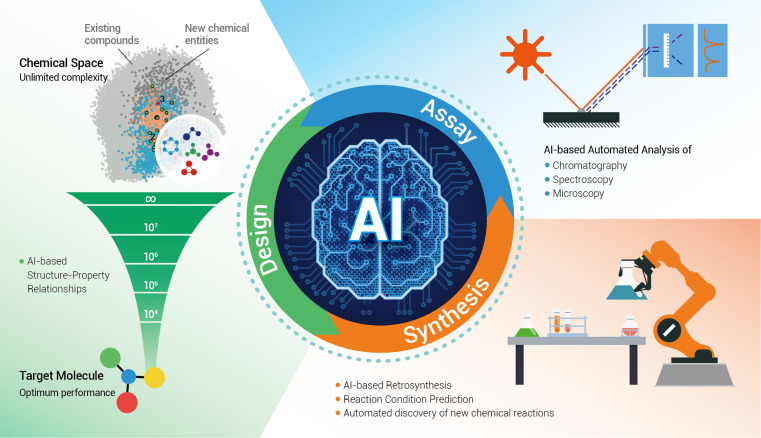
AI expedites drug discovery processes by simulating chemical interactions, predicting molecular behavior, and identifying promising compounds for treating various ailments. This acceleration not only reduces the cost of pharmaceutical research but also quickens the availability of novel treatments. Recent developments have seen AI algorithms compress decades of research into a matter of months, profoundly impacting the pace of scientific advancement.
Finance
Risk Management and Fraud Detection
In the financial sector, AI is employed to manage risk, detect fraudulent transactions, and automate trading strategies. Machine learning algorithms continuously analyze market data, detecting irregularities that may indicate malpractices, thereby minimizing losses and protecting assets. AI-driven models also provide insights for credit evaluation, offering personalized financial advice and optimizing investment portfolios.
Algorithmic Trading and Automation
The integration of AI into trading platforms allows for sophisticated algorithmic trading strategies that can process real-time data at incredible speeds. These automated systems, using deep learning techniques, predict market trends and execute trades without human intervention, thus maximizing returns and mitigating risks.
Retail and E-commerce
Personalized Recommendations and Customer Engagement
The retail sector leverages AI to enhance customer engagement through personalization. Recommendation engines analyze past consumer behavior and preferences to suggest products that are most likely to be of interest, improving customer satisfaction and boosting sales. Chatbots and virtual assistants provide round-the-clock support, addressing customer inquiries with quick and accurate responses.
Inventory Management and Supply Chain Optimization
AI tools optimize supply chain operations by forecasting demand, managing inventory levels, and automating logistics tasks. Such advancements lead to significant cost savings and streamline operations, ensuring that products are available when and where they are needed.
Manufacturing
Predictive Maintenance
In manufacturing, AI enables predictive maintenance by monitoring machinery health and predicting potential breakdowns before they occur. This capability reduces downtime, enhances operational efficiency, and prolongs the lifespan of equipment.
Quality Control and Process Optimization
Machine learning algorithms are used to detect defects in products and ensure quality control. Additionally, AI-driven process optimization finds patterns in manufacturing operations to recommend improvements, ultimately elevating production standards and reducing wastage.
Transportation and Logistics
Autonomous Vehicles
AI is at the heart of the development of autonomous vehicles, where complex algorithms process real-time sensor data to navigate safely and efficiently. These systems are key to reducing human error and enhancing road safety.
Traffic Management and Route Optimization
Beyond self-driving cars, AI improves transportation systems by optimally managing traffic flows and predicting congestion patterns. This results in more efficient route planning, reduced travel times, and energy savings.
Education
Personalized Learning Platforms
AI transforms education by facilitating tailored learning experiences that adapt to the pace and style of individual students. These systems identify a student’s strengths and weaknesses, ensuring that educational content is delivered in a manner that enhances understanding and retention.
Administrative Automation and Evaluation
Educational institutions also benefit from AI through automated grading, administrative process optimization, and the development of virtual tutoring systems. These enhancements free up educators to focus more on interactive instruction and less on routine tasks.
Media and Entertainment
Content Generation and Personalization
AI has made substantial inroads into the media domain. The technology is employed to generate creative content, including music, texts, and digital artwork. Moreover, personalized recommendation systems on streaming platforms curate content that meets the unique tastes of individual viewers, thereby enhancing user engagement.
Audience Analytics and Engagement
Real-time analytics driven by AI gauge audience responses and preferences, allowing media companies to adjust their strategies promptly. This dynamic approach ensures that content remains relevant and appealing to diverse viewer bases.
Cybersecurity
Threat Detection
In the realm of cybersecurity, AI systems are indispensable for monitoring networks and detecting abnormal patterns that might signify a breach. These systems leverage deep learning to analyze vast amounts of data rapidly, identifying potential threats and initiating countermeasures before any significant damage occurs.
Proactive Defense Mechanisms
The evolution of AI has also seen the development of proactive defense strategies in cybersecurity, where algorithms forecast potential vulnerabilities in real time. By constantly adapting and learning from emerging threat patterns, AI ensures a robust, preventative approach to digital security.
Energy
Demand Forecasting and Grid Management
In the energy sector, AI applications include precise demand forecasting, which allows utility companies to manage power grids more efficiently. These systems process historical consumption data and real-time inputs, ensuring that energy production aligns with consumer needs, thus reducing waste and improving resource allocation.
Renewable Resource Optimization
AI assists in optimizing the use of renewable resources by analyzing environmental data and weather patterns. This capability supports the transition to cleaner energy sources and enhances the efficiency of sustainable energy production.
Government and Public Services
Public Safety and Health
Governments leverage AI for a variety of public services including crime prediction and emergency response management. AI-driven data analysis helps public safety agencies allocate resources more effectively. Additionally, public health initiatives have benefited from AI applications that monitor disease outbreaks and predict their spread, allowing for timely interventions.
Administrative Efficiency
Public sector institutions integrate AI to streamline administrative procedures, reducing bureaucratic overhead and improving service delivery. These systems facilitate smoother operations in areas such as tax administration, licensing, and urban planning.
Comparative Overview of AI Applications
The table below provides a comparative insight into the various domains where AI is applied, summarizing key functionalities and benefits across industries:
| Domain | Primary Applications | Benefits |
|---|---|---|
| Healthcare | Diagnostic Imaging, Personalized Medicine, Drug Discovery, Predictive Analytics | Improved patient outcomes, rapid research, cost reduction in treatments |
| Finance | Fraud Detection, Risk Management, Algorithmic Trading, Credit Assessment | Enhanced security, optimized trading strategies, personalized services |
| Retail & E-commerce | Personalized Recommendations, Chatbots, Inventory Management, Supply Chain Optimization | Increased sales, better customer engagement, streamlined operations |
| Manufacturing | Predictive Maintenance, Quality Control, Process Optimization | Reduced downtime, improved product quality, cost savings |
| Transportation | Autonomous Vehicles, Traffic Management, Route Optimization | Enhanced safety, efficient travel, reduced congestion |
| Education | Personalized Learning, Auto-Grading, Virtual Tutors | Tailored instruction, reduced administrative burden, improved engagement |
| Media & Entertainment | Content Generation, Recommendation Engines, Audience Analytics | Creative innovation, personalized content, increased viewer retention |
| Cybersecurity | Threat Detection, Proactive Defense, Anomaly Analysis | Rapid response to threats, increased protection, minimized losses |
| Energy | Demand Forecasting, Grid Management, Renewable Resource Optimization | Efficient energy distribution, cost-effective operations, sustainable practices |
| Government | Public Safety, Health Monitoring, Administrative Automation | Enhanced public services, efficient resource management, quicker responses |
Significance and Future Outlook
The rapid evolution of artificial intelligence marks one of the most transformative technological advancements of our time. What began as theoretical exploration has now blossomed into a tool that permeates virtually every industry. The seamless integration of AI into healthcare, finance, retail, manufacturing, transportation, education, media, cybersecurity, energy, and government not only optimizes efficiency but also creates new opportunities for growth and innovation.
Innovation and Integration
With continuous improvements in computational power, data accessibility, and algorithmic sophistication, the future promises to see even tighter integration of AI into daily life. Key sectors are investing heavily in AI research, pushing the envelope on what machines can accomplish. We are witnessing a paradigm where AI systems work alongside humans, augmenting their capabilities and transforming interactions in both professional and personal realms.
Ethical Considerations and Governance
As AI applications become more widespread, ethical considerations and governance structures play increasingly critical roles. There is a concerted global effort to balance innovation with responsible deployment. Regulatory frameworks now emphasize safeguarding human rights, ensuring transparency in AI systems, and promoting unbiased, inclusive technologies.
Investment and Infrastructure
The exponential increase in AI investments across the globe underscores its importance as a strategic technology. Data centers supporting extra-large language models and multimodal systems are expanding rapidly, further driving AI innovations. These investments not only enhance the technological capabilities of AI but also ensure that it is scalable and adaptable to future challenges.
References
- The History of AI: A Timeline of Artificial Intelligence - Coursera
- The History of Artificial Intelligence - TechTarget
- 2025 Tech Predictions: AI Maturity and Cybersecurity Evolution - Forbes
- Examples of Artificial Intelligence in 7 Industries - Thoughtful
- 2025 and the Next Chapters of AI - Google Cloud
Recommended Queries for Further Exploration
Last updated March 6, 2025