
Impact of AI Training Methods on Various Sectors and Environmental Efficiency
Analyzing Use Cases and Sustainability Across AI Models
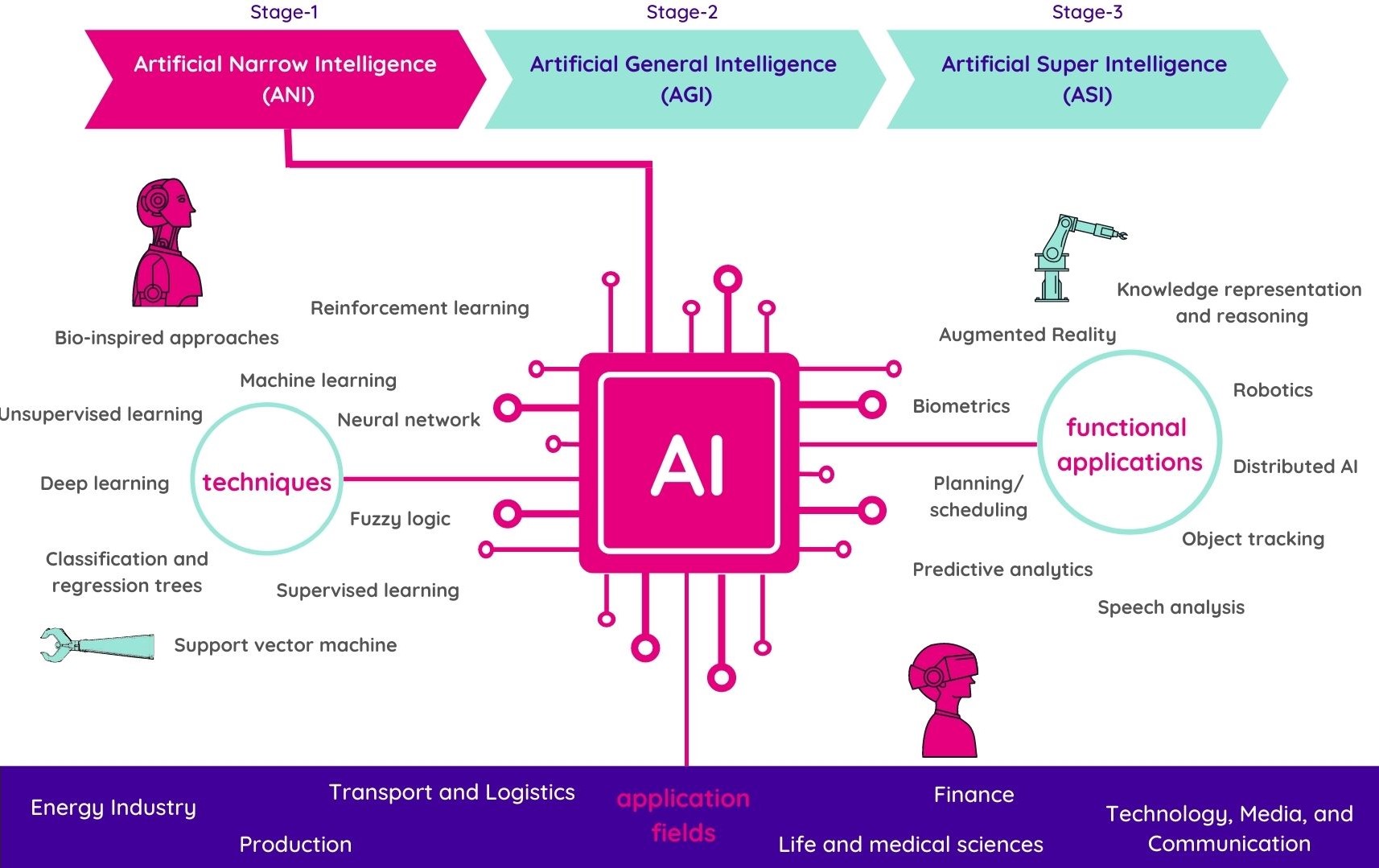
Key Takeaways
- Diverse AI training methods cater to specific industry needs, optimizing performance and application effectiveness.
- Environmental efficiency varies significantly among training methods, with some offering lower energy consumption and carbon footprints.
- Strategic selection and optimization of AI training approaches can balance technological advancement with ecological sustainability.
Introduction
The rapid evolution of Artificial Intelligence (AI) has revolutionized multiple sectors, including healthcare, finance, environmental monitoring, and more. Central to AI's transformative capabilities are the diverse training methods employed, each offering distinct advantages and challenges. This research paper delves into various AI training methodologies, examining their specific use cases across different industries and evaluating their environmental efficiency. By synthesizing insights from recent studies and case analyses, the paper aims to provide a comprehensive understanding of how AI training methods influence sectoral applications and contribute to environmental sustainability.
AI Training Methods Overview
Supervised Learning
Supervised learning involves training AI models using labeled datasets, where each input is paired with a corresponding output. This method excels in scenarios where the desired outcomes are well-defined, enabling models to make accurate predictions or classifications based on historical data.
Unsupervised Learning
Unsupervised learning trains models on unlabeled data, allowing them to identify inherent patterns and structures within the dataset. This approach is particularly useful for exploratory data analysis, anomaly detection, and clustering tasks where the underlying data distribution is not explicitly known.
Semi-Supervised Learning
Combining elements of both supervised and unsupervised learning, semi-supervised learning leverages a mix of labeled and unlabeled data. This method is advantageous in situations where acquiring labeled data is costly or time-consuming, yet ample unlabeled data is available, thereby enhancing training efficiency and model performance.
Reinforcement Learning
Reinforcement Learning (RL) involves training models through trial and error, guided by reward signals that feedback on the actions taken. RL is ideal for applications requiring sequential decision-making and dynamic adaptation, such as robotics, game playing, and autonomous systems.
Self-Supervised Learning
Self-supervised learning generates supervisory signals from the data itself, removing the dependency on external labels. This technique has gained prominence in natural language processing and computer vision, where large-scale data is abundant but labeled datasets are limited.
Transfer and Meta-Learning
Transfer learning leverages pre-trained models to adapt to new, related tasks, reducing the need for extensive retraining. Meta-learning, on the other hand, focuses on designing models that can learn new tasks rapidly with minimal data. Both approaches enhance training efficiency and promote resource reuse, contributing to environmental sustainability.
Impact on Different Sectors
Healthcare
In the healthcare sector, supervised learning is predominantly utilized for diagnostic imaging and predictive modeling, enabling early disease detection and personalized treatment plans. Unsupervised learning aids in patient clustering and identifying hidden patterns in medical data, while semi-supervised learning supports drug discovery by combining limited labeled data on drug efficacy with extensive unlabeled chemical data.
Finance
The finance industry leverages supervised learning for credit scoring and fraud detection, providing accurate risk assessments based on historical transaction data. Unsupervised learning facilitates portfolio management through pattern recognition in market data, and semi-supervised learning enhances risk prediction by integrating labeled crisis data with broader market trends. Reinforcement learning is also employed for algorithmic trading, optimizing investment strategies through continuous learning and adaptation.
Environmental Monitoring
Environmental monitoring benefits from supervised learning through accurate weather forecasting and air quality prediction models. Unsupervised learning assists in identifying new environmental threats by analyzing satellite imagery and sensor data, while semi-supervised learning enhances biodiversity monitoring by combining limited species distribution data with extensive ecological condition data.
Autonomous Systems and Robotics
Reinforcement learning plays a pivotal role in the development of autonomous systems and robotics, enabling machines to learn optimal behaviors through interaction with their environments. Self-supervised learning complements these systems by providing robust feature representations that enhance perception and decision-making capabilities.
Natural Language Processing and Content Generation
Self-supervised learning has revolutionized natural language processing (NLP) by powering advanced language models that understand and generate human-like text. Reinforcement learning from human feedback (RLHF) ensures that content generation aligns with human values and ethical standards, enhancing the quality and appropriateness of AI-generated content.
Environmental Efficiency of AI Training Methods
Energy Consumption and Carbon Footprint
The environmental impact of AI training methods is a growing concern, particularly regarding energy consumption and carbon emissions. Supervised learning, due to its reliance on large labeled datasets and extensive computational resources, typically has a higher carbon footprint compared to other methods. Unsupervised and semi-supervised learning can offer greater energy efficiency by utilizing unlabeled data and reducing the need for repetitive training cycles. Reinforcement learning, while powerful, often demands significant computational resources, especially in complex simulations, leading to substantial energy usage. Self-supervised and transfer/meta-learning approaches contribute to environmental sustainability by enabling efficient data utilization and model reuse, thereby lowering overall energy consumption.
Mitigating Environmental Impact
To address the environmental challenges associated with AI training, several strategies can be employed:
-
Renewable Energy Utilization: Powering data centers with renewable energy sources can significantly reduce the carbon footprint of AI training processes.
-
Model Optimization: Techniques such as model pruning, distillation, and efficient architecture design enhance computational efficiency, thereby lowering energy consumption.
-
Algorithmic Innovations: Developing more efficient training algorithms and leveraging parallel computing can decrease the time and resources required for model training.
-
Transfer and Meta-Learning: Utilizing pre-trained models and rapid adaptation techniques minimizes redundant training efforts, promoting resource reuse and reducing environmental impact.
Comparative Environmental Efficiency
Evaluating the environmental efficiency of various AI training methods reveals significant differences:
| AI Training Method | Energy Consumption | Carbon Footprint | Environmental Efficiency |
|---|---|---|---|
| Supervised Learning | High | High | Low |
| Unsupervised Learning | Moderate | Moderate | Moderate |
| Semi-Supervised Learning | Moderate | Moderate | Moderate |
| Reinforcement Learning | Very High | Very High | Low |
| Self-Supervised Learning | High | High | Moderate |
| Transfer/Meta-Learning | Low | Low | High |
Discussion
Sector-Specific Application Considerations
The selection of an AI training method is inherently context-dependent, influenced by the specific requirements and constraints of each sector. For instance, in healthcare, the accuracy and reliability provided by supervised learning are paramount for diagnostic applications, despite its higher environmental cost. Conversely, in environmental monitoring, unsupervised and semi-supervised methods offer a balance between efficiency and performance, facilitating the analysis of vast and unstructured datasets.
Balancing Performance with Sustainability
Achieving a balance between technological advancement and environmental sustainability necessitates a strategic approach to AI training method selection. Employing energy-efficient training techniques, optimizing model architectures, and leveraging transfer/meta-learning can significantly mitigate the environmental impact without compromising performance. Additionally, adopting renewable energy sources for data center operations and advancing algorithmic efficiencies are critical steps toward sustainable AI development.
Future Directions and Research Opportunities
Continued research into energy-efficient AI training algorithms, standardized environmental impact assessment protocols, and the integration of sustainable practices within AI infrastructure is essential. Exploring innovative training paradigms that further reduce resource consumption while enhancing model capabilities will drive the next generation of environmentally responsible AI technologies.
Conclusion
Different AI training methods offer unique strengths and are tailored to specific application domains, influencing both performance outcomes and environmental impacts. Supervised learning provides high accuracy for well-defined tasks but at a higher environmental cost, while unsupervised and semi-supervised methods offer more balanced efficiency suitable for exploratory and data-intensive applications. Reinforcement learning excels in dynamic decision-making scenarios but demands significant computational resources, impacting sustainability. Conversely, self-supervised and transfer/meta-learning approaches enhance environmental efficiency through optimized data utilization and model reuse. Moving forward, prioritizing energy-efficient training techniques and sustainable practices will be crucial in aligning AI advancements with global sustainability goals, ensuring that technological progress does not come at the expense of ecological well-being.
References
Last updated February 16, 2025