
Unlock High Revenue with This Unique & Simple SaaS Idea for 2025!
Discover a niche SaaS concept blending AI-driven personalization with targeted professional development, designed for achievable implementation and significant market impact.
In the dynamic Software-as-a-Service (SaaS) landscape of 2025, identifying an idea that is not only truly unique but also simple to implement while promising high revenue potential can feel like searching for a needle in a haystack. Many entrepreneurs seek this sweet spot, aiming to solve specific problems without requiring massive upfront investment or overly complex technical development. This response synthesizes insights to propose such an idea, focusing on an underserved niche with strong growth prospects.
Key Highlights: Your Next SaaS Venture
- Focus on a Niche Champion: The proposed idea is an AI-Powered Habit Tracker specifically designed for Niche Professionals (e.g., freelancers, remote workers, creative entrepreneurs).
- Smart, Not Just Standard: It leverages accessible AI for deep personalization, predictive insights, and actionable recommendations, moving beyond simple progress logging to actively enhance professional effectiveness.
- Revenue Rich & Achievable: This SaaS model offers high revenue potential through targeted value, recurring subscription models (freemium to premium), and a relatively straightforward implementation path for an MVP.
Unveiling the Concept: The AI-Powered Habit Tracker for Niche Professionals
Imagine a SaaS tool that doesn't just remind users to complete tasks, but intelligently helps them build and maintain habits crucial for their specific professional success. This is the core of the AI-Powered Habit Tracker for Niche Professionals. It's a cloud-based application designed to be an indispensable companion for individuals navigating the complexities of modern work environments, particularly those in specialized, independent, or remote roles.
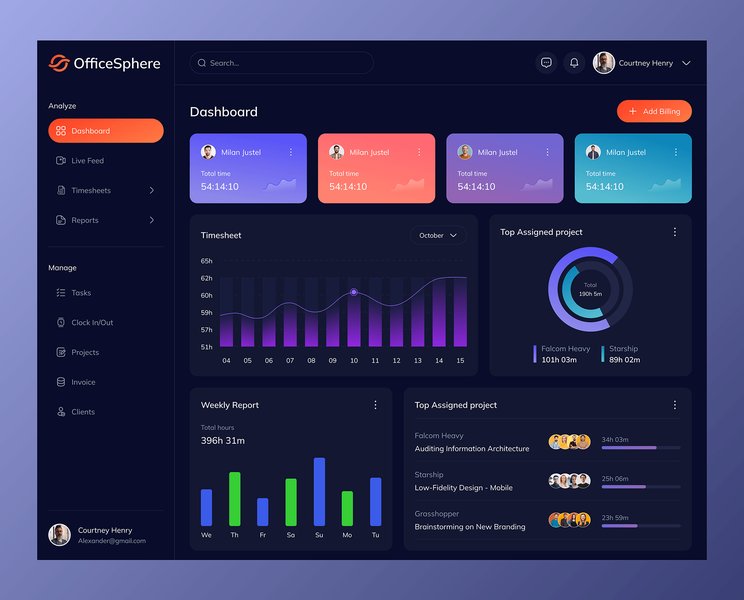
A conceptual look at a clean, intuitive dashboard for a productivity-focused SaaS tool.
Why Niche Professionals? The Untapped Opportunity
The modern workforce is increasingly characterized by specialization and non-traditional employment structures. Freelancers, gig economy workers, remote employees, solopreneurs, and specialized consultants often face unique challenges in productivity, work-life balance, and continuous professional development. Generic productivity tools often fall short because they don't cater to the specific workflows, goals, and pain points of these diverse professional niches.
Addressing Specific Pain Points:
- Freelancers & Solopreneurs: Managing fluctuating workloads, client acquisition, invoicing cycles, and maintaining motivation without a traditional office structure.
- Remote Workers: Combating isolation, managing distractions at home, maintaining visibility with their team, and ensuring work-life separation.
- Creative Professionals: Balancing creative output with administrative tasks, overcoming creative blocks, and managing project-based income streams.
- Sales & Marketing Specialists: Tracking outreach efforts, follow-up sequences, continuous learning on market trends, and performance metrics.
This AI-powered habit tracker aims to fill this gap by providing a tailored experience that understands and adapts to these specific professional contexts.
The "Unique" Edge: Standing Out in the SaaS Crowd
While habit tracking apps are not new, this concept carves out its uniqueness through a combination of deep niche focus and intelligent personalization, going far beyond what generic tools offer.
Beyond Generic Checklists: AI-Driven Value
The core differentiator is the integration of accessible Artificial Intelligence (AI) and Machine Learning (ML) to provide proactive and personalized support:
- Predictive Insights: Analyzing user data (e.g., completion rates, time of day, task difficulty) to predict potential roadblocks or optimal times for certain habits. For instance, it might learn that a freelancer is most productive on deep work tasks mid-morning and suggest scheduling accordingly.
- Personalized Recommendations: Offering tailored advice based on user patterns and goals. If a user consistently struggles with a particular habit, the AI could suggest breaking it down into smaller steps or trying a different approach that has worked for others in similar professional roles (anonymized data).
- Adaptive Reminders: Moving beyond static notifications to "smart" reminders that adjust based on the user's current context or progress.
- Goal-Oriented Habit Structuring: Helping users define habits that directly contribute to their professional objectives, rather than just generic "good habits."
Tailored Templates and Features for Professionals
The SaaS would come pre-loaded with habit templates and tracking metrics relevant to various professional niches:
- For Freelance Writers: Templates for "Daily Word Count," "Pitching New Clients," "Following Up on Invoices," "Dedicated Editing Time."
- For Remote Software Developers: Templates for "Focused Coding Blocks," "Learning New Technologies," "Code Review Contributions," "Virtual Team Sync-ups."
- For Small Business Owners: Templates for "Strategic Planning Sessions," "Networking Outreach," "Financial Review Cycles," "Team Mentorship Time."
These templates would be customizable, allowing users to adapt them to their specific needs, creating a truly personal productivity partner.
Simplicity in Implementation: Making It Achievable
A key aspect of this SaaS idea is its feasibility for solo founders or small teams, especially for developing a Minimum Viable Product (MVP).
Lean Development with Modern Tools
Core Technology Stack Considerations:
- No-Code/Low-Code Platforms: Tools like Bubble, Webflow (with logic capabilities), or Retool can be used for rapid prototyping and even building the initial versions of the front-end and core logic, significantly reducing development time and cost.
- Backend-as-a-Service (BaaS): Solutions like Firebase or Supabase offer pre-built infrastructure for databases, authentication, and cloud functions, simplifying backend development.
- AI/ML Integration: For the AI component, one can start with:
- Simple rule-based systems for basic personalization.
- Utilizing readily available APIs for specific AI functionalities (e.g., natural language processing for understanding habit descriptions).
- Implementing basic machine learning models (e.g., regression for simple predictions, clustering for pattern identification) using Python libraries like scikit-learn, deployed via cloud functions. The AI doesn't need to be cutting-edge from day one; it can evolve.
- Integration Services: Tools like Zapier or Make (formerly Integromat) can facilitate integrations with common third-party apps (e.g., Google Calendar, Trello, Slack) with minimal custom coding.
Phased Development Approach:
- Phase 1 (MVP): Focus on core habit tracking, manual template creation, basic reminders, and simple progress visualization for one or two initial niche professional groups. Collect user feedback intensively.
- Phase 2 (AI Enhancement): Introduce the first layer of AI personalization (e.g., smart suggestions based on user input, basic pattern recognition). Expand template library.
- Phase 3 (Integration & Advanced AI): Add third-party integrations and develop more sophisticated AI features (e.g., predictive analytics, adaptive coaching).
This iterative approach allows for learning and adaptation based on real user needs, ensuring the product remains lean and focused on delivering value.
Visualizing the Architecture: A Mindmap View
To better understand the interconnected components of the AI-Powered Habit Tracker for Niche Professionals, the following mindmap outlines its core structure, target users, key features, and monetization strategy. This visualization helps in grasping the holistic vision of the SaaS product and how different elements work together to deliver value.
for Niche Professionals"] id1["Core Concept"] id1a["Personalized Habit Formation"] id1b["AI-Driven Insights & Predictions"] id1c["Focus on Professional Goals"] id2["Key Features"] id2a["Niche-Specific Templates
(e.g., Freelancer, Creator)"] id2b["Intelligent Reminders & Scheduling"] id2c["Progress Analytics & Dashboards"] id2d["Gamification & Motivation"] id2e["Integrations (Calendar, PM Tools)"] id3["Target Users"] id3a["Freelancers & Gig Workers"] id3b["Remote Employees"] id3c["Solopreneurs & Small Business Owners"] id3d["Creative Professionals"] id3e["Students in Professional Fields"] id4["Monetization Strategy"] id4a["Freemium Base Tier
(Limited Features)"] id4b["Premium Subscription (Individual)
(Full AI, Unlimited Habits)"] id4c["Business/Team Tier (Future Expansion)
(Collaborative Features)"] id5["Unique Selling Proposition (USP)"] id5a["Hyper-Personalization via AI"] id5b["Deep Niche Focus & Relevance"] id5c["Actionable Professional Insights, Not Just Data"] id6["Implementation Strategy (MVP)"] id6a["No-Code/Low-Code Viable for Core"] id6b["Leverage Existing AI/ML Libraries & APIs"] id6c["Cloud-Based, Scalable Infrastructure"]
This mindmap illustrates how the product centers around AI-driven personalization to serve specific professional niches effectively, supported by a scalable tech approach and a clear path to monetization.
Tapping into High Revenue Potential
The AI-Powered Habit Tracker for Niche Professionals is positioned for strong revenue generation due to pressing market demand, a flexible monetization strategy, and inherent scalability.
Market Demand & Validation
The rise of the gig economy, remote work, and solopreneurship is not a fleeting trend; it's a fundamental shift in the employment landscape. As of 2025, millions globally identify as freelancers or operate small, specialized businesses. These professionals actively seek tools that enhance productivity, manage unique workflows, and foster continuous improvement. General-purpose tools often create more overhead than they solve. A habit tracker that speaks their language and addresses their specific professional challenges has a strong value proposition.
- Solving Real Pain Points: Time management, skill development, client management, and maintaining motivation are persistent challenges.
- Growing Target Audience: The number of independent workers and specialized professionals continues to grow globally.
Monetization Strategy: Recurring Revenue Streams
A tiered subscription model offers flexibility and a clear path to recurring revenue:
- Freemium Tier: Offers basic habit tracking for a limited number of habits and standard reminders. This serves as a lead magnet and allows users to experience core functionality.
- Pro Tier (e.g., $10-$20/month): Unlocks the full power of AI-driven insights, predictive analytics, unlimited habit tracking, advanced customization, niche-specific template library, and integrations. This is the primary revenue driver for individual professionals.
- Business/Team Tier (Future Expansion, e.g., $15-$25/user/month): For small teams or agencies looking to foster positive professional habits collectively, track team learning goals, or support new employee onboarding with structured habit development.
This model allows for low-friction entry and significant upsell potential as users experience the value of the premium features.
Scalability and Long-Term Growth
Being a cloud-based SaaS product, it is inherently scalable. The marginal cost of adding new users is low. As the user base grows, the AI models can become more refined through more extensive data (anonymized and aggregated), further enhancing the product's value and creating a positive feedback loop. Expansion into new professional niches and deeper AI capabilities can fuel long-term growth.
Comparative Analysis: SaaS Idea Attributes
To provide a clearer perspective on how the proposed AI-Powered Habit Tracker for Niche Professionals stands against other types of SaaS solutions, the following radar chart visualizes key attributes. This comparison highlights its strengths in areas crucial for a successful micro-SaaS or niche product launch in 2025.
The chart illustrates that the AI Habit Tracker for Professionals scores highly on niche specificity and uniqueness, while maintaining good implementation simplicity for an MVP and strong revenue potential. The AI impact is focused on practical value rather than extreme complexity, distinguishing it from generic tools with minimal AI or large-scale enterprise solutions that are difficult to implement.
Customization Showcase: Serving Diverse Professional Needs
The strength of this SaaS idea lies in its adaptability to various professional niches. The following table demonstrates how the AI-Powered Habit Tracker can be tailored to support the unique goals and challenges of different user groups:
| Niche Professional Group | Key Habits to Track Examples | AI-Powered Benefit Example |
|---|---|---|
| Freelancers | Billable hours, Project milestone completion, Client outreach & follow-up, Invoicing schedule, Skill development blocks | Predicts income fluctuations based on work patterns and suggests optimal times for client outreach or focused work. |
| Remote Workers | Maintaining work-life balance (e.g., start/end times), Focused work blocks (Pomodoro), Regular breaks, Virtual meeting preparation, Proactive communication with team | Recommends personalized break schedules to prevent burnout and optimizes daily task scheduling based on energy patterns. |
| Small Business Owners | Strategic planning time, Team check-ins & mentorship, Financial review & analysis, Networking activities, Process improvement tasks | Identifies productivity patterns for key business growth activities and flags deviations from strategic habit goals. |
| Content Creators (Writers, YouTubers, Podcasters) | Content creation schedule (writing, filming, editing), Idea generation & research, Audience engagement tracking, SEO optimization tasks, Learning new creation tools | Suggests optimal posting times based on past engagement, tracks consistency in content output, and helps prioritize tasks for maximum impact. |
| Sales Professionals | Prospect follow-ups, CRM data entry, Product knowledge enhancement, Cold outreach targets, Sales call preparation | Reminds of critical follow-up windows based on lead engagement and tracks progress on sales skill development habits. |
| Software Developers (Indie/Niche) | Daily coding streaks, Learning new frameworks/languages, Side-project development time, Documentation writing, Bug fixing focus | Analyzes coding session effectiveness and suggests adjustments to learning paths for new technologies based on progress. |
This table underscores the versatility of the platform, capable of delivering highly relevant and actionable support across a spectrum of professional endeavors by focusing on their unique habit-building needs.
Insights from the Micro SaaS World
Building a successful Micro SaaS business often involves identifying a niche, solving a specific problem well, and focusing on sustainable growth. The video below shares valuable insights into underrated Micro SaaS ideas that have demonstrated significant revenue potential, resonating with the principles behind the AI-Powered Habit Tracker for Niche Professionals.
This video, titled "5 UNDERRATED Micro SaaS Ideas That Can Make $1K $80K/Month," explores concepts that, like our proposed idea, target specific user needs with focused solutions. It emphasizes how even seemingly simple ideas, when executed well for the right audience, can achieve substantial financial success and market validation. The AI Habit Tracker aligns with this philosophy by aiming for depth in a niche rather than breadth across a mass market.
Frequently Asked Questions (FAQ)
What makes this SaaS idea "truly unique"?
The uniqueness stems from the combination of three key elements:
- Deep Niche Specialization: It's not just another habit tracker; it's specifically engineered for the nuanced needs of diverse professional groups (freelancers, remote workers, etc.), offering tailored templates and insights.
- Actionable AI Personalization: Instead of generic reminders, it uses accessible AI to provide predictive insights, personalized recommendations, and adaptive feedback directly related to professional goals and performance.
- Focus on Professional Efficacy: The entire platform is geared towards enhancing professional productivity, skill development, and work-life management, rather than general wellness or personal habits alone.
How "simple" is the AI component to implement for a small team or solo founder?
The "AI" aspect can be implemented progressively and doesn't require cutting-edge research from day one. For an MVP, simplicity is key:
- Rule-Based Logic: Initial "intelligence" can be built using conditional logic (e.g., "if user misses habit X for 3 days, suggest Y").
- Basic Machine Learning: Simple algorithms like linear regression (for trend prediction) or k-means clustering (for identifying user patterns) can be implemented using common libraries (e.g., Python's scikit-learn) and deployed via serverless functions. These don't require deep AI expertise for basic applications.
- Leverage APIs: For more complex tasks like Natural Language Processing (NLP) for understanding habit descriptions, pre-trained models via APIs can be used.
What's a realistic revenue potential in the first 1-2 years?
Revenue potential for a niche Micro SaaS like this can vary greatly based on execution, marketing, and market fit. However, a realistic outlook could be:
- Year 1 (Post-MVP & Launch): Focus on acquiring early adopters (e.g., a few hundred to a thousand users) through targeted marketing. With a Pro tier priced at $10-$15/month, converting 10-20% of free users could yield $1,000 - $3,000 MRR (Monthly Recurring Revenue) towards the end of the first year.
- Year 2 (Refinement & Growth): With product improvements based on feedback and expanded marketing, user base could grow to several thousand. If conversion rates hold or improve, MRR could reach $5,000 - $15,000+. Some successful Micro SaaS in niche productivity spaces report achieving $50K-$100K ARR (Annual Recurring Revenue) within this timeframe.
Can this idea be expanded beyond individual professionals?
Absolutely. While the initial focus is on individual niche professionals, there are several expansion avenues:
- Team/Small Business Version: Offer features for small teams to track collective professional development goals, share progress (with permissions), and for managers to support their team's growth habits. This opens up a B2B revenue stream.
- Specialized Modules: Develop premium add-on modules for highly specific professional needs (e.g., a "Grant Writing Habit Pack" for academics/researchers, or a "Certification Study Habit Pack" for IT professionals).
- Coaching Platform Integration: Allow professional coaches to use the platform with their clients, managing habit plans and tracking progress.
- Educational Institutions: Partner with universities or vocational schools to help students develop effective study and professional habits.
What are the biggest risks or challenges with this SaaS idea?
Like any startup, this SaaS idea faces potential risks and challenges:
- Market Adoption & Niche Definition: Precisely defining and reaching the target niche professionals can be challenging. If the niche is too broad, the "specialized" value diminishes; if too narrow, the market size might be limited initially.
- Demonstrating AI Value: Users need to clearly perceive the benefits of the "AI" component. If it feels gimmicky or doesn't provide tangible improvements over simpler tools, adoption of premium features might suffer.
- Competition: While the unique angle is a strength, general productivity tools and existing habit trackers could be perceived as "good enough" by some. Clear differentiation is crucial.
- User Engagement & Retention (Churn): Habit formation tools rely on users staying engaged. If the app isn't compelling enough or users don't see results, churn can be high. Gamification and strong community features (if added) can help mitigate this.
- Technical Execution: While an MVP can be simple, scaling the AI features and ensuring a seamless user experience as the user base grows requires ongoing technical effort.
Recommended Further Exploration
To delve deeper into related concepts and opportunities, consider exploring these queries:
- How to effectively market a Micro SaaS to niche professional audiences.
- What are the best practices for implementing simple AI in productivity applications.
- Compare freemium vs premium subscription models for niche SaaS products.
- Explore successful case studies of AI-driven personalization in software tools.
References
The insights and concepts presented are informed by trends and analyses discussed in the following resources:
Last updated May 7, 2025