
AI-Powered Cybersecurity: Opportunities and Risks
Exploring the transformative impact and challenges of integrating AI in cybersecurity measures
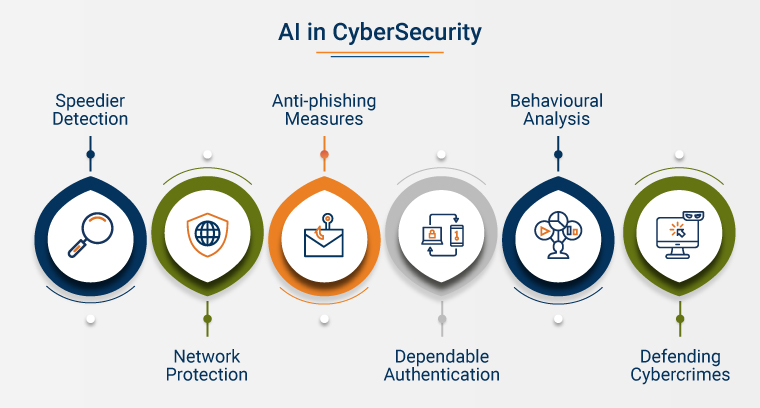
Key Takeaways
- Enhanced Threat Detection: AI significantly improves the ability to identify and respond to cyber threats in real-time.
- Automation and Efficiency: AI-driven automation streamlines cybersecurity processes, allowing professionals to focus on strategic tasks.
- Emerging Risks: The integration of AI introduces new vulnerabilities, including adversarial attacks and ethical concerns.
Introduction
In the evolving landscape of digital security, Artificial Intelligence (AI) has emerged as a pivotal technology in enhancing cybersecurity measures. As cyber threats become increasingly sophisticated and pervasive, traditional defense mechanisms often fall short in providing adequate protection. AI-powered cybersecurity systems leverage machine learning (ML) and deep learning (DL) algorithms to analyze vast datasets, detect anomalies, and respond to threats with unprecedented speed and accuracy. However, the deployment of AI in cybersecurity is not without its challenges. This comprehensive analysis delves into the opportunities presented by AI in bolstering cybersecurity defenses and the inherent risks that accompany its integration.
Opportunities in AI-Powered Cybersecurity
Enhanced Threat Detection and Response
AI algorithms excel in processing and analyzing large volumes of data to identify patterns and anomalies that may signify cyber threats. Machine learning models can learn from historical data to recognize the characteristics of malicious activities, enabling the detection of zero-day attacks and minimizing false positives. Real-time threat identification allows organizations to respond swiftly to emerging threats, thereby reducing the potential impact of cyberattacks.
Automation and Efficiency
Automation is a critical advantage of AI in cybersecurity. AI-driven tools can automate routine tasks such as log analysis, vulnerability scanning, and incident response. By handling these repetitive tasks, AI allows cybersecurity professionals to concentrate on more complex and strategic initiatives. This not only improves operational efficiency but also enhances the overall effectiveness of security teams.
Predictive Analytics and Threat Intelligence
Predictive analytics powered by AI enables organizations to anticipate potential cyber threats by analyzing historical data and identifying emerging trends. By forecasting future attack vectors, AI systems facilitate proactive measures to strengthen defenses before threats materialize. Additionally, AI can integrate and analyze global threat intelligence feeds, providing a comprehensive view of the threat landscape and enabling informed decision-making.
Advanced Detection Techniques
AI enhances traditional cybersecurity methods by introducing advanced detection techniques such as anomaly detection and behavioral analysis. Unsupervised learning models can establish baseline behaviors and identify deviations that may indicate malicious activities. This capability is crucial for detecting sophisticated attacks that may bypass conventional signature-based detection systems.
Adaptive Security Measures
Unlike static security systems, AI-powered cybersecurity solutions continuously learn and adapt to new threats. This adaptability ensures that security measures remain effective in the face of evolving attack methods. AI systems can dynamically adjust their parameters based on real-time feedback, maintaining a robust defense against both known and unknown threats.
Risks and Challenges in AI-Powered Cybersecurity
Adversarial Machine Learning
One of the foremost risks associated with AI in cybersecurity is adversarial machine learning (AML). Attackers can deliberately manipulate input data to deceive AI models, causing them to misclassify threats or overlook genuine vulnerabilities. Such adversarial attacks undermine the reliability of AI-powered systems, leading to false negatives or an excess of false positives, which can strain resources and erode trust in automated defenses.
Resource Asymmetry
The implementation of AI-driven cybersecurity solutions often requires substantial financial and technical resources. Large organizations are better positioned to invest in advanced AI technologies, while smaller businesses may struggle to afford such investments. This resource asymmetry can widen the cybersecurity gap, leaving smaller entities more vulnerable to cyber threats due to their limited access to sophisticated defense mechanisms.
Malicious Use of AI
While AI enhances defensive capabilities, it also provides malicious actors with tools to orchestrate more sophisticated attacks. Generative AI models can be used to automate the creation of convincing phishing emails, deepfakes, and other deceptive content, increasing the efficacy of social engineering attacks. The dual-use nature of AI poses significant challenges in maintaining a secure digital environment.
Over-reliance on AI
Dependence on AI systems for critical cybersecurity functions can lead to complacency among security professionals. Over-reliance on automated systems may result in a reduced emphasis on human oversight and critical thinking, potentially allowing sophisticated or novel attacks to slip through undetected. Maintaining a balanced approach that integrates human expertise with AI capabilities is essential to mitigate this risk.
Data Privacy and Surveillance Concerns
AI-powered cybersecurity systems require access to extensive datasets, including sensitive personal and corporate information. The collection and processing of such data raise significant privacy concerns, particularly regarding compliance with data protection regulations. Unauthorized access or data breaches within AI systems can lead to large-scale privacy violations and undermine user trust.
Bias and Model Robustness
AI models are only as effective as the data on which they are trained. If training datasets are biased or not representative of the full spectrum of potential threats, AI systems may exhibit partiality in threat detection, focusing disproportionately on certain types of attacks while neglecting others. Additionally, lack of robustness in AI models can result in performance degradation when confronted with novel or unforeseen attack methods.
Ethical and Privacy Concerns
The deployment of AI in cybersecurity involves ethical considerations related to surveillance, data usage, and decision-making transparency. Advanced AI algorithms can be exploited to conduct pervasive surveillance, potentially infringing on individual privacy rights. Moreover, the opaque nature of some AI models, often referred to as “black boxes,” complicates accountability and raises concerns about the ethical implications of automated decision-making in security contexts.
Best Practices and Risk Mitigation Strategies
Continuous AI Model Monitoring
Implementing continuous monitoring of AI models is essential to detect and respond to adversarial attacks and performance degradations. Regularly updating and validating AI models ensures that they remain effective against evolving threats and maintain high levels of accuracy in threat detection.
Explainable AI (XAI) Frameworks
Developing explainable AI frameworks enhances the transparency and interpretability of AI-driven decisions. By providing clear insights into how AI models process data and make decisions, XAI fosters trust among security professionals and facilitates compliance with regulatory requirements.
Hybrid Models Combining AI and Human Oversight
Integrating AI systems with human oversight creates a balanced approach that leverages the strengths of both automation and human expertise. Human analysts can validate and interpret AI-generated alerts, ensuring that critical threats are accurately identified and appropriately addressed. This collaboration mitigates the risks associated with over-reliance on automated systems and enhances overall cybersecurity efficacy.
Ethical Guidelines and Frameworks
Establishing comprehensive ethical guidelines for the deployment of AI in cybersecurity is crucial to address privacy and surveillance concerns. These guidelines should outline principles for responsible data usage, transparency in AI decision-making, and safeguards against misuse of AI technologies. Adhering to ethical frameworks ensures that AI implementations align with organizational values and societal norms.
Data Governance and Privacy Preserving Techniques
Implementing robust data governance policies and privacy-preserving techniques such as federated learning, differential privacy, and homomorphic encryption can mitigate data privacy risks. These approaches enable the secure processing of sensitive information while maintaining compliance with data protection regulations, thereby safeguarding user privacy.
Case Studies and Real-World Applications
AI in Financial Services
In the financial sector, AI-powered cybersecurity systems have been instrumental in protecting sensitive financial data and transactions. By utilizing machine learning algorithms to monitor network traffic and user behavior, financial institutions can detect and prevent fraud, unauthorized access, and other cyber threats. The integration of AI has led to significant improvements in response times and the accuracy of threat detection, reinforcing the security posture of financial entities.
Generative AI in Cybersecurity
Generative AI models have been deployed to simulate potential cyberattacks, allowing organizations to proactively identify vulnerabilities and strengthen defenses. These models can generate realistic attack scenarios, enabling security teams to test and refine their response strategies. However, the same generative capabilities can be exploited by malicious actors to craft more sophisticated and convincing cyber threats, highlighting the dual-use nature of AI technologies.
Implementation in Healthcare
The healthcare industry has adopted AI-powered cybersecurity solutions to protect patient data and medical records from cyber threats. AI systems monitor network activity, detect anomalies, and respond to data breaches with minimal delay. The ability to predict and prevent cyberattacks ensures the integrity and confidentiality of sensitive medical information, thereby maintaining patient trust and regulatory compliance.
Performance Metrics: Traditional vs. AI-Powered Cybersecurity Systems
| Metric | Traditional Systems | AI-Powered Systems |
|---|---|---|
| Threat Detection Speed | Slower due to manual analysis | Real-time detection through automated analysis |
| Accuracy of Detection | Higher false positive rates | Lower false positive rates with advanced algorithms |
| Incident Response Time | Delayed due to manual intervention | Rapid response through automated processes |
| Scalability | Limited by human resources | Highly scalable with AI-driven automation |
| Adaptability to New Threats | Limited by predefined rules | Adaptive learning models that evolve with threats |
Future Research Directions
Robustness Against Adversarial Attacks
Ongoing research is essential to develop AI models that are resilient to adversarial manipulations. Techniques such as adversarial training, model ensemble methods, and enhanced regularization can strengthen AI defenses against deliberate attacks aimed at compromising cybersecurity systems.
Explainable AI in Cybersecurity
Advancing explainable AI (XAI) methodologies will improve the transparency and interpretability of cybersecurity AI systems. Enhanced explainability facilitates better understanding and trust among security professionals, enabling more informed decision-making and regulatory compliance.
Data Governance and Privacy-Preserving Techniques
Research into data governance frameworks and privacy-preserving techniques such as federated learning and differential privacy is crucial to ensure that AI-powered cybersecurity systems can protect sensitive data without infringing on privacy rights.
Integration Strategies for Legacy Systems
Developing standardized protocols and adaptable architectures is necessary to seamlessly integrate AI-driven cybersecurity solutions with existing legacy systems. Future research should focus on creating frameworks that facilitate the collaboration between traditional security measures and advanced AI technologies.
Ethical and Policy Implications
Investigating the ethical and policy dimensions of AI in cybersecurity is vital to address issues related to accountability, fairness, and transparency. Establishing comprehensive ethical guidelines and regulatory frameworks will ensure the responsible deployment of AI technologies in security contexts.
Conclusion
AI-powered cybersecurity represents a significant advancement in the defense against evolving cyber threats. By leveraging AI's capabilities for enhanced threat detection, automation, and predictive analytics, organizations can achieve a more robust and proactive security posture. However, the integration of AI also introduces new risks, including adversarial attacks, resource asymmetry, and ethical concerns. Balancing the benefits of AI with effective risk mitigation strategies is essential to harness its full potential while maintaining a secure and trustworthy digital environment. Future research and interdisciplinary collaboration will play pivotal roles in addressing the challenges and ensuring the sustainable integration of AI in cybersecurity.
References
Conclusion
This research paper provides a comprehensive analysis of the opportunities and risks associated with AI-powered cybersecurity. By synthesizing insights from multiple sources, it highlights the transformative potential of AI in enhancing threat detection, automating security processes, and predicting future threats. Simultaneously, it underscores the critical challenges such as adversarial attacks, ethical concerns, and the need for robust data governance. The balanced approach advocated in this paper emphasizes the importance of integrating AI with human expertise and establishing ethical frameworks to ensure the responsible and effective deployment of AI technologies in cybersecurity.
Last updated February 11, 2025