
Unlocking AI's Potential: Your Guide to Prompting Cookbooks
Discover the art of crafting perfect AI instructions with comprehensive guides and practical "recipes."
In the rapidly evolving landscape of Artificial Intelligence, particularly with Large Language Models (LLMs), the ability to communicate effectively with these systems is paramount. A "Cookbook for Prompting" serves as an invaluable resource, offering a structured collection of guidelines, techniques, and examples to help users master the art of prompt engineering. Think of it as a chef's guide, but instead of culinary recipes, it provides "recipes" for eliciting desired responses from AI.
Key Insights: Mastering AI Communication
- Clarity is King: Successful prompting hinges on providing clear, specific, and unambiguous instructions to the AI.
- Contextual Guidance: Supplying relevant background information, examples, or defining a persona for the AI significantly improves response quality.
- Iterative Refinement: Prompt engineering is an empirical process; experimentation, evaluation, and iterative adjustments are crucial for optimal results.
What Exactly is a "Cookbook for Prompting"?
Your Recipe Book for AI Interaction
A "Cookbook for Prompting" is a comprehensive guide or collection of resources designed to teach users how to craft effective prompts for AI models, especially LLMs. These "cookbooks" compile best practices, practical tips, illustrative examples, and structured templates to help users optimize AI performance and usability across a multitude of applications. They aim to demystify the process of prompt engineering, transforming it from a trial-and-error endeavor into a more systematic and effective skill.
These resources are akin to instructional manuals, providing users with the "ingredients" (prompt elements) and "cooking methods" (prompting techniques) to create sophisticated and targeted interactions with AI. Whether you're a developer, content creator, researcher, or just an AI enthusiast, a prompting cookbook can significantly enhance your ability to leverage AI tools.
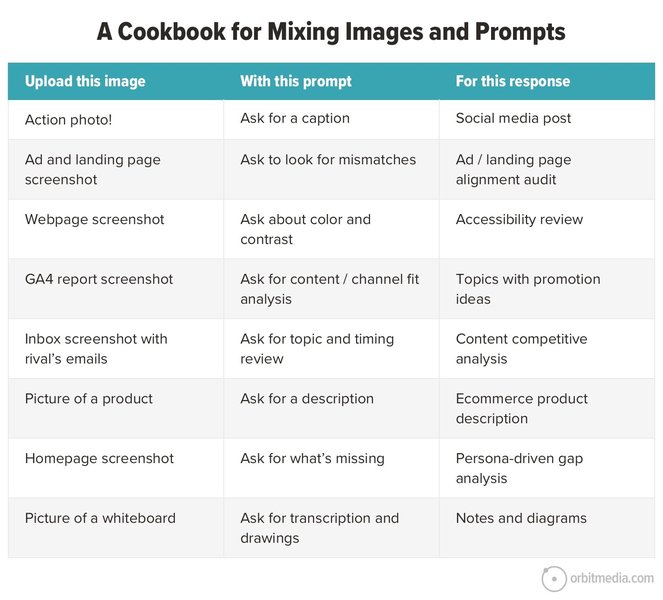
A "Cookbook for Prompting" acts as a practical guide, offering "recipes" for effective AI communication.
Core Principles: The Foundation of Effective Prompting
Prompting cookbooks emphasize several fundamental principles to guide users in crafting high-quality prompts. These principles are the bedrock upon which more advanced techniques are built.
Specificity and Clarity
Be Direct and Unambiguous
The most crucial aspect of a good prompt is its clarity. Vague or ambiguous instructions lead to generic or irrelevant AI responses. Effective prompts are precise, clearly stating the desired outcome, format, tone, and any constraints. For example, instead of "Write about dogs," a better prompt would be "Write a 500-word blog post about the benefits of adopting rescue dogs, focusing on their adaptability and affection, in an informative yet heartwarming tone."
Providing Context
Set the Stage for the AI
Context helps the AI understand the nuances of the request. This can involve:
- Background Information: Providing relevant details about the topic or situation.
- Examples (Few-shot Prompting): Showing the AI one or more examples of the desired input-output format. This is a powerful way to guide its behavior.
- Defining Terms: Clarifying any specific jargon or concepts.
Defining the Desired Output Format
Tell the AI How You Want It
Specifying the structure of the desired response helps the AI organize information effectively. You can request outputs in various formats, such as:
- Lists (bulleted or numbered)
- Summaries
- Tables
- Code snippets
- Email drafts
- Specific document formats (e.g., a script, a poem)
Using Personas
Assigning a Role to the AI
Instructing the AI to adopt a specific persona can significantly influence the tone, style, and even the content of its response. For example:
- "Act as an experienced financial advisor..."
- "Respond as if you are a Shakespearean poet..."
- "Explain this concept like I'm five years old."
Iterative Refinement
The Cycle of Improvement
Prompt engineering is rarely a one-shot process. It often involves an iterative cycle of:
- Crafting an initial prompt.
- Evaluating the AI's response.
- Identifying areas for improvement.
- Refining the prompt based on the evaluation.
- Repeating the process until the desired output is achieved.
Essential Prompting Techniques Explored
Beyond core principles, prompting cookbooks delve into various techniques, ranging from basic to advanced, to tackle diverse tasks and enhance AI capabilities.
Basic Techniques
Foundational Methods
- Zero-Shot Prompting: Asking the AI to perform a task without any prior examples. This relies on the model's pre-trained knowledge. Example: "Translate 'hello world' to French."
- One-Shot Prompting: Providing a single example to guide the AI. Example: "Translate 'sea otter' to French: 'loutre de mer'. Now translate 'cheese' to French:"
- Few-Shot Prompting: Offering several examples to the AI, which helps it better understand the pattern and desired output format. This is often more effective than zero-shot or one-shot for complex tasks.
Advanced Techniques
Sophisticated Strategies for Complex Tasks
- Chain-of-Thought (CoT) Prompting: Encouraging the AI to break down a complex problem into a series of intermediate reasoning steps before arriving at a final answer. This is particularly useful for arithmetic, commonsense, and symbolic reasoning tasks. Adding phrases like "Let's think step by step" can trigger this behavior.
- Meta Prompting: Using an AI (often a more capable model) to help generate or refine prompts for another AI. This can involve asking the AI to critique a prompt or suggest improvements.
- Grounding: Incorporating specific, factual information or data directly into the prompt to ensure the AI's response is accurate, relevant, and contextually appropriate, reducing hallucinations.
- Adversarial Prompting: Intentionally crafting prompts designed to challenge the AI or elicit undesirable behavior, then using these insights to create more robust prompts or to understand model limitations.
- Role and Style Prompting: As mentioned under personas, but can also involve specifying a particular writing style (e.g., "academic," "humorous," "formal") without a full persona.
Visualizing Prompting Technique Effectiveness
The radar chart below offers a conceptual comparison of various prompting techniques based on key attributes. This visualization helps in understanding the trade-offs and strengths of different approaches when aiming for specific outcomes from an AI model. The scores are illustrative, representing general tendencies rather than precise empirical data, as effectiveness can vary based on the model and specific task.
This chart illustrates how techniques like Chain-of-Thought excel in improving accuracy and reducing task complexity for the AI, though they might be harder to implement. Persona Adoption, on the other hand, scores high on boosting creativity. Clarity and Specificity, while fundamental, show a strong impact on accuracy. Choosing the right technique depends on the specific goals of your AI interaction.
Mapping the Landscape of Prompt Engineering
To better understand the interconnected concepts within prompt engineering facilitated by "cookbooks," the following mindmap provides a visual overview. It highlights the core ideas, various techniques, their applications, and the ultimate benefits of mastering this skill.
(No examples)"] id2b["One-Shot Prompting
(One example)"] id2c["Few-Shot Prompting
(Multiple examples)"] id3["Advanced Techniques"] id3a["Chain-of-Thought (CoT)
(Step-by-step reasoning)"] id3b["Meta Prompting
(AI-assisted prompt refinement)"] id3c["Grounding
(Factual data inclusion)"] id3d["Adversarial Prompting
(Testing limits, improving robustness)"] id3e["Self-Consistency
(Multiple CoT paths, majority vote)"] id4["Key Benefits"] id4a["Improved AI Accuracy"] id4b["Enhanced Relevance"] id4c["Greater Control over Output"] id4d["Increased Efficiency"] id4e["Unlocking Creative Potential"] id5["Types of Cookbooks"] id5a["Model-Specific (e.g., GPT-4, Solar)"] id5b["General Prompting Guides"] id5c["Creative Prompt Collections"]
This mindmap illustrates how a "Prompt Engineering Cookbook" is built upon core principles and branches out into various basic and advanced techniques. The ultimate goal is to achieve significant benefits, such as improved AI accuracy and efficiency, by leveraging these structured approaches. Different types of cookbooks cater to specific needs, whether it's for a particular AI model or for general creative prompting.
Notable Prompting Cookbooks and Resources
Several organizations and communities have developed valuable "cookbooks" and guides for prompt engineering. Here are a few examples:
- OpenAI Cookbook: This is a well-known resource, particularly the sections on GPT-4.1 prompting. It emphasizes clear instructions, context, and iterative development. It provides code examples and practical tips for getting the most out of OpenAI models.
- Solar Prompt Cookbook (UpstageAI): A comprehensive guide specifically for Upstage's Solar models. It covers foundational concepts, basic and advanced techniques like few-shot, role, and chain-of-thought prompting, and addresses practical challenges.
- Born Digital Prompting Cookbook: This resource focuses on creative prompt "recipes" designed to inspire engaging and captivating interactions with AI, useful for users seeking novel prompting styles.
- General Prompting Guides: Many websites and platforms (like those from MIT, Harvard, Atlassian, and PromptingGuide.ai) offer collections of plug-and-play prompts, advice on writing effective prompts, and discussions on various techniques.
These resources collectively aim to empower users to become proficient prompt engineers, thereby unlocking the full potential of generative AI.
Deep Dive: The New Prompting Rules
The following video discusses evolving strategies for prompting frontier Large Language Models, drawing insights from resources like the OpenAI prompting guide. It provides valuable context on how to effectively communicate with the latest generation of AI, emphasizing the shift towards more direct and literal instruction following.
This video highlights the importance of being explicit and detailed in prompts for advanced models like GPT-4. It underscores that even small changes in phrasing can significantly alter the AI's output, reinforcing the principles found in many prompting cookbooks. Understanding these "new rules" is crucial for anyone looking to maximize the capabilities of cutting-edge AI systems.
Comparing Prompting Techniques
To further clarify the different prompting strategies often detailed in cookbooks, the table below provides a comparative overview of some common techniques. Understanding their nuances helps in selecting the most appropriate method for a given task.
| Technique | Description | Primary Use Case | Pros | Cons |
|---|---|---|---|---|
| Zero-Shot Prompting | Instructing the AI to perform a task without providing any examples. | Simple tasks, general knowledge queries, when examples are hard to formulate. | Easy to implement, quick. | Lower accuracy for complex tasks, relies heavily on model's pre-training. |
| Few-Shot Prompting | Providing a small number of examples (shots) of the desired input/output format within the prompt. | Tasks requiring specific formatting, style imitation, or nuanced understanding. | Significantly improves accuracy and adherence to format, guides model behavior effectively. | Requires crafting good examples, increases prompt length. |
| Chain-of-Thought (CoT) Prompting | Guiding the AI to generate a series of intermediate reasoning steps before providing the final answer. | Complex reasoning, arithmetic problems, multi-step logical deduction. | Improves accuracy on complex tasks, provides transparency into the AI's reasoning. | Can be verbose, requires careful prompt phrasing to elicit CoT. |
| Persona Prompting | Instructing the AI to adopt a specific role or character. | Controlling tone, style, and perspective of the output; specialized advice generation. | Highly effective for tailoring responses, enhances engagement. | Effectiveness can vary by model, might require iteration to perfect persona. |
| Meta Prompting | Using an AI to generate, critique, or refine prompts for another AI (or itself). | Optimizing prompts, exploring new prompting strategies, automating prompt improvement. | Can lead to highly optimized prompts, leverages AI's own understanding of language. | Can be complex to set up, may require access to multiple or more capable models. |
| Grounding | Including specific, relevant factual information or data within the prompt. | Ensuring factual accuracy, reducing hallucinations, providing context-specific answers. | Increases reliability and trustworthiness of responses. | Requires sourcing and inputting accurate grounding data, can make prompts lengthy. |
This table demonstrates that each technique has its unique strengths and is suited for different scenarios. A good "cookbook" will explain these techniques in detail, often with examples, to help users choose the best "recipe" for their specific AI interaction needs.
Frequently Asked Questions (FAQ)
What is prompt engineering?
Prompt engineering is the art and science of designing and refining inputs (prompts) to guide AI models, particularly Large Language Models (LLMs), towards generating desired outputs. It involves understanding how AI interprets instructions and using various techniques to make communication more effective and achieve specific goals.
Why is prompt specificity so important?
Specificity is crucial because LLMs generate responses based on the patterns and information they've learned. Vague prompts can lead to ambiguous or overly general outputs. Specific prompts, detailing the desired content, format, tone, length, and any constraints, help the AI narrow down the possibilities and produce a response that closely matches the user's intent.
What are "few-shot" prompts?
Few-shot prompting is a technique where you provide the AI with a few examples (typically 2-5) of the task you want it to perform within the prompt itself. These examples demonstrate the desired input-output pattern. This helps the model understand the task's context and expected format more effectively than if no examples (zero-shot) or only one example (one-shot) were given, leading to more accurate and relevant responses, especially for complex or nuanced tasks.
How do I start using a prompting cookbook?
Start by identifying a cookbook relevant to the AI model you're using or the type of task you want to accomplish. Begin with the foundational principles like clarity, context, and specifying output. Then, experiment with basic techniques like zero-shot and few-shot prompting. As you gain confidence, explore more advanced techniques. Remember that iteration is key: test your prompts, observe the results, and refine your approach.
Recommended Further Exploration
To delve deeper into the nuances of AI communication, consider exploring these related queries:
- What are some advanced prompt engineering techniques specifically for creative writing tasks?
- How can I effectively evaluate and compare the results from different AI prompts?
- What is the role of context windows in LLMs and how does it affect prompting strategies?
- What are the ethical considerations to keep in mind when engineering prompts for AI?
References
The information synthesized in this response is based on insights from various authoritative sources on AI prompting:

Last updated May 16, 2025