
Exploring the Depths of AI: Semantic Relationships versus Business Processes
Unveiling which topic holds transformative potential for research outcomes
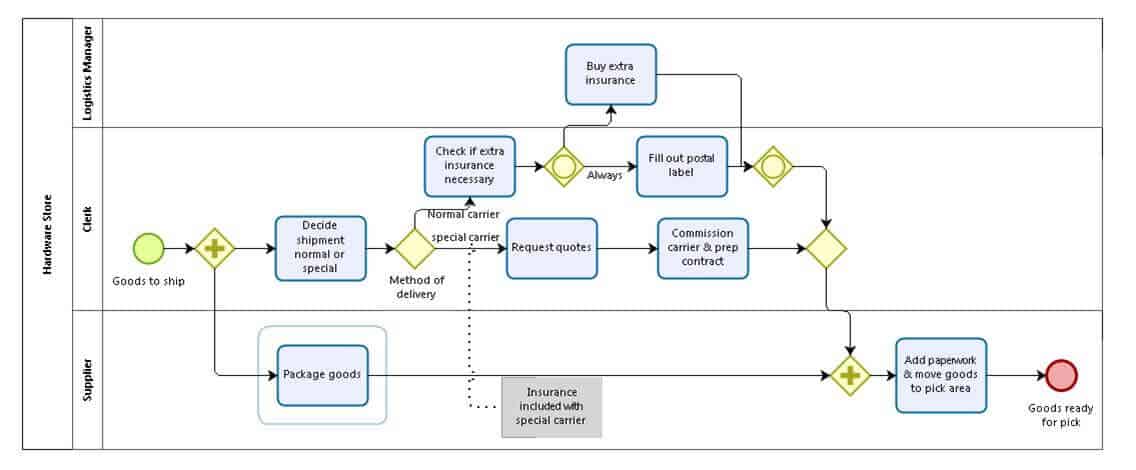
Key Highlights
- Semantic Depth: AI with semantic relationships dives into understanding and interpreting the inherent meaning behind data.
- Operational Impact: AI with business processes offers practical solutions for streamlining workflows and enhancing operational efficiency.
- Research Potential: Both fields show promise, yet semantic AI drives groundbreaking research in natural language processing, knowledge graphs, and context-aware computing.
Overview of Topics
Choosing between AI with semantic relationships and AI with business processes is a decision that involves careful consideration of both the theoretical depth and practical applications of the technology. While both areas present robust opportunities for research and impact, they cater to different objectives and research methodologies.
AI with Semantic Relationships
AI with semantic relationships focuses on enabling machines to understand data beyond its superficial appearance by capturing its underlying meaning and context. This approach is primarily rooted in the fields of natural language processing (NLP) and knowledge representation. It leverages advanced methodologies such as knowledge graphs, ontologies, and semantic networks to create systems that can reason about data as a human might.
Core Concepts and Applications
The essence of semantic AI lies in its ability to recognize the connections between various entities and concepts. By modeling these relationships, semantic AI can:
- Enhance Contextual Understanding: Systems can deduce meaning from data by understanding how different pieces of information relate. This is particularly beneficial in natural language queries and information retrieval.
- Improve Knowledge Representation: The use of knowledge graphs and semantic layers allows AI to organize data in a way that reflects real-world structures, making it easier for systems to draw conclusions and infer new knowledge.
- Boost NLP Capabilities: Semantic relationships strengthen the performance of chatbots, virtual assistants, and other language-driven applications, allowing them to interact more naturally with users.
- Facilitate Interdisciplinary Integrations: By applying semantic principles, data from disparate sources can be integrated meaningfully, enhancing cross-domain research and decision-making.
The transformative potential of semantic AI is evident in applications across various sectors—from healthcare where patient data can be linked in meaningful ways, to finance where market trends and sentiments can be better understood through intricate data networks.
AI with Business Processes
In contrast, AI with business processes centers on leveraging artificial intelligence to optimize and automate operational workflows within organizations. This focus is less on deep data understanding and more on efficiency, productivity, and improving the quality of decision-making in business contexts.
Core Concepts and Applications
AI integrated into business processes seeks to streamline operations by automating routine tasks and providing insights from large datasets. The primary applications include:
- Operational Efficiency: Implementing AI in business processes can reduce the cycle time for tasks, lower operational costs, and minimize human errors.
- Process Automation: Standard processes such as customer service, supply chain management, and financial analytics can benefit from AI-driven automation, freeing up human resources for higher-level tasks.
- Data-Driven Decision-Making: AI systems gather and analyze complex datasets to offer real-time, actionable insights that improve strategic planning and operational execution.
- Continuous Adaptation: Business-process-focused AI systems are designed to evolve by learning from operational data, thereby enhancing adaptability and long-term effectiveness.
While the primary strength of AI in this domain is its tangible impact on business outcomes, it often relies on established methodologies and systems that already benefit industries in measurable ways. The emphasis here is on practicality, streamlining workflows, and delivering a quick return on investment.
Comparative Analysis
To further elucidate the differences and synergies between these two domains, the following table summarizes key aspects of each field:
| Aspect | AI with Semantic Relationships | AI with Business Processes |
|---|---|---|
| Theoretical Depth | Involves deep understanding of linguistic nuances, knowledge representation, and context-driven reasoning. | Focuses on optimizing workflows and automating routine processes with minimal theoretical complexity compared to semantic AI. |
| Primary Applications | Enhancement in natural language processing, development of knowledge graphs, and cross-domain data integration. | Automation of business tasks, real-time data analytics, and streamlining operations for improved productivity. |
| Research Challenges | Requires advanced methodologies to capture and represent nuanced semantic data; high complexity in scalability. | Demands the integration of AI within diverse business frameworks and continuous learning from operational data. |
| Innovation Potential | High potential for revolutionary breakthroughs, especially in machine reasoning and human-like AI comprehension. | Provides pragmatic solutions that yield quick improvements in efficiency, though advances may be incremental. |
| Industrial Impact | Broad application across sectors where deep data analysis and interpretation are critical (e.g., healthcare, finance, education). | Widely applicable in corporate settings to enhance operational efficiencies and support decision-making processes. |
This table highlights that while both topics have unique strengths, the choice largely depends on the research goals and intended applications. If one aims to push the boundaries of how machines understand and process data, AI with semantic relationships offers unmatched theoretical innovation. Conversely, for tangible, immediate improvements in business operations, integrating AI into business processes provides demonstrable and practical benefits.
In-Depth Discussion and Research Considerations
Theoretical and Practical Foundations
When evaluating the prospects of each research area, the foundation upon which each topic is built must be considered. AI with semantic relationships is closely tied to the evolution of NLP and computational linguistics. It leverages advanced algorithms to model relationships between different pieces of data, a task that involves complex network analysis and machine understanding. This area is often seen as more futuristic, as it has the potential to drastically change how knowledge is stored, accessed, and applied across digital systems.
On the other hand, AI with business processes is constructed on the backbone of operational research and business informatics. It draws on well-established methodologies including process mining, workflow automation, and data analytics to offer incremental improvements in productivity. Although many AI businesses already use these technologies, the areas of research continue to evolve—especially by incorporating predictive analytics and continuous learning frameworks.
Innovations and Synergies
It is noteworthy that these domains are not mutually exclusive. In fact, there is substantial synergy between semantic AI and business process improvements. For example, the semantic understanding capabilities can be integrated into business operations to enable more context-aware decision-making. This integration results in:
- Enhanced Data Insights: Combining semantic relationships with business data can lead to better interpretation of user behavior, customer preferences, and market trends.
- Improved Customer Interaction: Chatbots and virtual assistants become more capable when they understand natural language deeply, leading to more personalized customer support and better service outcomes.
- Knowledge-Driven Automation: Integration of semantic AI into business processes enables the business systems to not only automate tasks but also learn from data, gradually improving the quality of service and operational efficiency.
In research, exploring such integrations could lead to novel frameworks that harness the best of both worlds: leveraging deep semantic insights to drive operational efficiencies. Such a cross-disciplinary approach could yield groundbreaking methodologies, particularly in industries where data complexity and operational intricacies converge.
Research Challenges and Future Directions
Both topics face their own set of challenges that shape the research landscape. For AI with semantic relationships:
- Complexity of Knowledge Representation: Building comprehensive knowledge graphs that are both accurate and scalable is inherently complex. It demands sophisticated algorithms and vast amounts of data.
- Integration Across Domains: Semantic relationships must often capture diverse datasets from various fields, necessitating adaptable frameworks that can work across heterogeneous data sources.
- Computational Demands: High performance in semantic analysis requires significant computational resources, which can be a barrier for scaling up projects.
Regarding AI with business processes, challenges include:
- Integration with Legacy Systems: Many organizations still operate on legacy systems, and integrating advanced AI into these frameworks may require substantial restructuring.
- Ensuring Reliability and Accuracy: AI systems need to provide highly reliable and accurate outputs, as errors can have direct financial or operational repercussions on businesses.
- Balancing Automation with Human Intervention: While AI can automate many tasks, ensuring a harmonious balance where human expertise complements machine-driven insights remains an ongoing challenge.
Looking forward, the future holds exciting possibilities for both domains. Research in semantic AI is expected to evolve with emerging breakthroughs in deep learning, ultimately rendering AI that can reason, empathize, and communicate almost as effectively as humans. Simultaneously, evolution in AI-driven business process automation will likely focus on incorporating enhanced analytics and adaptive learning mechanisms to further streamline complex operational ecosystems.
Comparative Prospects and Strategic Recommendations
Choosing the Right Topic for Your Research
As a researcher, your choice between these two topics should align with your long-term objectives:
- Interest in Fundamental Innovation: If your research is aimed at pushing the frontiers of how AI understands data, develops human-like reasoning capabilities, and fosters deep semantic integration, then AI with semantic relationships offers a rich field with the potential for revolutionary breakthroughs.
- Focus on Practical Applications and Immediate Impact: If you are more driven by measurable improvements in systems efficiency and the optimization of business operations, then researching AI with business processes will likely provide more tangible outcomes, thereby generating quick returns in business environments.
It is also important to note that these fields are increasingly overlapping. For instance, incorporating semantic understanding in business applications can lead to more intelligent workflow automation and improved customer service systems. Thus, while the foundational goals may differ, leveraging innovations from one topic can complement and enhance developments in the other.
Bridging Research and Industry
The long-term success of research in either field will depend on bridging the gap between theoretical innovation and practical implementation. In the academic realm, semantic AI research paves the way for new algorithms and models that significantly enhance the understanding of data. In industry, AI-driven business processes are a proven strategy for increasing efficiency and driving competitive advantage. A promising research trajectory might involve cross-disciplinary projects that combine these strengths, such as developing semantic-driven business process management systems.
Such integrative approaches have already begun to show promise, where the contextual depth provided by semantic analysis enhances data interpretation, while the pragmatic focus of business process automation ensures that these insights result in actionable outcomes. This synergy may represent the next frontier in AI research, where both theoretical advancements and applied innovations contribute meaningfully toward smarter, more resilient organizational systems.
References
- Semantic AI - DataVid
- Integrating AI into Business Processes - Microsoft DevBlogs
- Role of AI in the Semantic Layer - Enterprise Knowledge
- Semantic AI - PoolParty
- Semantic AI for Business - AppInventiv
Recommended Explorations
Last updated March 25, 2025