
Unlocking the Depths of Semantic Relationships in AI
Discover a detailed research roadmap to revolutionize natural language understanding
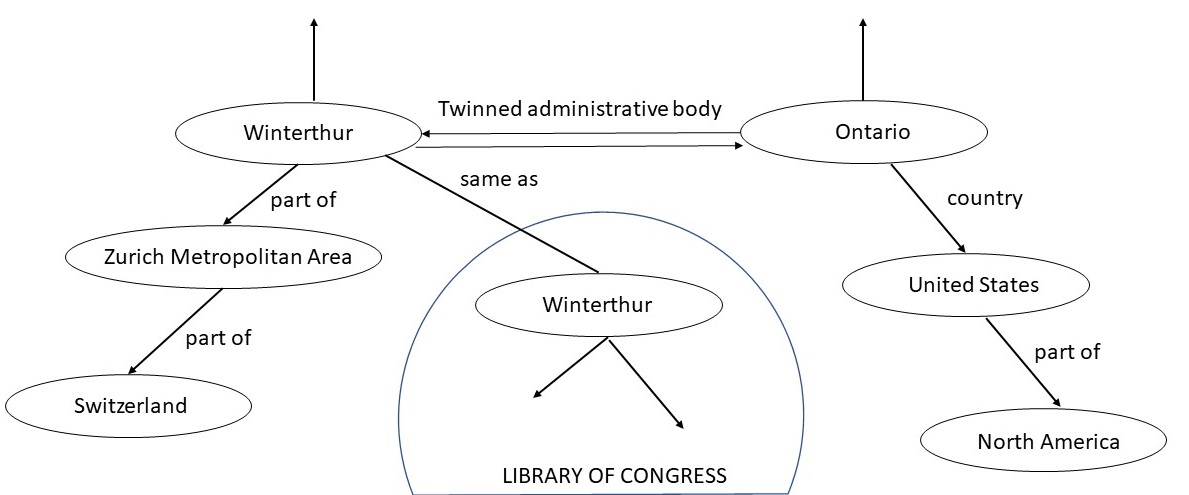
Highlights
- Comprehensive Framework: A structured plan—from literature review to methodology—tailored for exploring semantic AI.
- Innovative Approaches: Integration of advanced AI techniques, semantic search APIs, and knowledge graphs to push research boundaries.
- Practical Applications: Actionable insights for enhancing natural language processing, decision-making, and human-AI interaction.
Research Plan Introduction
Overview
The objective of this research plan is to provide a detailed, step-by-step framework to investigate the integration of artificial intelligence (AI) with semantic relationships. As AI systems evolve, there is a growing need to enhance their capability to understand, interpret, and act upon the nuanced meanings of human language. Semantic AI aims to move beyond keyword-based search by delving into the context, intent, and intricate relationships between concepts, which can transform fields such as natural language processing (NLP), knowledge representation, and decision-making.
This research plan serves as a foundational blueprint upon which you can build a robust study towards your publication. It encapsulates a comprehensive literature review, formulation of research questions, a mixed-methods approach in the methodology, experimental design, anticipated outcomes, and potential applications. Through this roadmap, researchers are encouraged to harness AI-driven tools, including generative models and knowledge graphs, to explore previously uncharted territories in semantic relationships.
Detailed Research Plan
I. Introduction
Background and Significance
Semantic relationships in AI represent links between entities in a manner that mimics human understanding. Understanding these relationships is crucial for improved text comprehension, enriched search algorithms, and better decision-making systems in AI. This section should:
- Define key terms such as “semantic relationships”, “knowledge graphs”, and “natural language understanding”.
- Explain the historical context and evolution of semantic AI from rule-based systems to modern deep learning approaches.
- Discuss the relevance of semantic relationships in creating enriched data models that can recognize subtleties in human language.
Problem Statement
Despite considerable advances in AI, current models often struggle with the full spectrum of semantic understanding. The challenges include limited capability in grasping context, handling ambiguous phrases, and integrating multi-dimensional knowledge into coherent representations. Addressing these challenges will help bridge the gap between human-like comprehension and machine processing.
II. Literature Review
Key Themes to Explore
A thorough literature review is indispensable for establishing the current state-of-the-art and identifying research gaps. The review should focus on:
- Semantic-Based AI Models: Analyzing models like Semantic Scholar and other AI tools which have guided keyword-agnostic search systems.
- Natural Language Processing Techniques: Studying how modern NLP leverages semantic segmentation, entity recognition, and relationship extraction.
- Knowledge Graphs: Evaluating the use of knowledge graphs for representing complex relationships across disparate datasets.
- Recent Innovations: Reviewing recent studies and experiments, such as those presented in SemEval and ACL conferences.
Identifying Gaps and Opportunities
Critical gaps in current methodologies include:
- Lack of integration between deep learning models and semantic frameworks.
- Insufficient approaches to contextualizing ambiguous phrases within semantic contexts.
- Opportunities for creating more robust evaluation metrics that better capture semantic accuracy.
III. Research Objectives and Questions
Primary Objectives
The central aim of this research is to conceptualize, design, implement, and evaluate an AI model that better understands and operationalizes semantic relationships. This includes:
- Developing a framework that integrates semantic analysis with state-of-the-art NLP techniques.
- Designing experiments to test the model across various linguistic and contextual scenarios.
- Creating an advanced evaluation methodology that measures the model's semantic understanding capabilities.
Specific Research Questions
The study could be driven by research questions such as:
- How do current AI models represent and process semantic relationships?
- What are the limitations of current semantic methods in natural language processing?
- How can knowledge graphs and generative AI be effectively combined to enhance semantic reasoning?
- What experimental frameworks can accurately evaluate semantic understanding in AI?
IV. Methodology
Research Design and Approach
Adopt a mixed-methods approach that integrates both qualitative and quantitative research methods. The following components should be part of the methodology:
- Data Collection: Utilize existing datasets that include annotated semantic relationships. Popular datasets such as WordNet, DBpedia, or STR-2022 will be valuable resources.
- Experimental Design: Plan experiments to measure the model's performance on semantic tasks. This can include training on labeled datasets, applying zero-shot reasoning, and assessing the model using metrics like precision, recall, and F1-score.
- Model Development: Develop an AI model that combines deep learning architectures (e.g., CNNs, LSTMs, and attention mechanisms) with semantic processing frameworks. Experimental frameworks could integrate knowledge graphs to organize and evaluate semantic connections.
- Evaluation Metrics: Establish quantitative and qualitative benchmarks. Consider using accuracy, mean average precision, and additional measures that assess the context and quality of semantic interpretation.
Implementation Steps
The experimental flow might include:
- Preprocessing the text data and augmenting it with semantic annotations.
- Training the model on a selected dataset while documenting the changes in performance as semantic layers are added.
- Conducting ablation studies to determine the contribution of each component (knowledge graph, semantic segmentation, etc.).
- Validating the model with cross-domain tests to assess whether the semantic relationships hold in diverse contexts.
Proposed Research Timeline
Below is a sample schedule to organize the entire project cycle:
| Phase | Timeline (Months) | Key Tasks |
|---|---|---|
| Literature Review | 1 - 2 | Review existing literature, identify gaps, and define research objectives. |
| Data Collection & Preprocessing | 3 - 4 | Assemble datasets, annotate relationships, and preprocess text data. |
| Model Development | 5 - 6 | Develop and integrate different semantic approaches, prototype the AI model. |
| Experiments and Analysis | 7 - 8 | Run experiments, evaluate model performance, perform ablation studies. |
| Writing and Publication | 9 | Consolidate findings, prepare manuscript, submit paper. |
V. Expected Contributions and Applications
Anticipated Research Outcomes
This research is expected to yield several important contributions:
- Development of an AI framework that significantly enhances understanding of semantic relationships.
- Improved techniques for extracting, representing, and reasoning about semantic data in diverse linguistic contexts.
- A robust evaluation framework that measures the interplay between context-aware semantics and AI decision-making.
- Novel insights into the integration of generative AI with traditional semantic processing methods.
Practical Applications
The findings from this research have the potential to impact a broad range of applications:
- Academic Research: Enhance research paper discovery and summarization through improved semantic searching.
- Knowledge Management: Aid in the construction of dynamic knowledge graphs to support information retrieval systems.
- Chatbots and Virtual Assistants: Improve natural language understanding to deliver context-aware and meaningful interactions.
- Human-AI Collaboration: Facilitate more intuitive interfaces where machines anticipate and respond to user needs based on semantic cues.
VI. Challenges and Future Directions
Identifying and Tackling Challenges
As with any advanced research, several challenges may arise:
- Data Quality and Annotation: Ensuring the accuracy and consistency of semantic annotations in complex datasets.
- Model Interpretability: Balancing model complexity with explainability in order to trace semantic reasoning steps.
- Computational Constraints: Managing resource requirements when training deep learning models augmented with semantic layers.
- Ethical Considerations: Carefully considering issues related to bias, privacy, and the implications of automated semantic reasoning.
Future Research Directions
Building on the research framework, subsequent steps could involve:
- Expanding the integration with multi-modal datasets, incorporating visual and textual semantic cues.
- Exploring advanced zero-shot and few-shot learning techniques to generalize semantic understanding across domains.
- Developing real-time semantic telemetry tools to monitor and adjust AI interpretations during live interactions.
References
- Semantic Scholar - Semantic Scholar
- 20 Best AI for Research - AutoGPT
- AI Research Tools - NIU Library Guides
- Best Semantic Search APIs - Eden AI
- Constructing Semantic Relationships - Wiley Online Library
Recommended Searches

Last updated March 25, 2025