
How Advanced AI Manages a Simulated Universe
Exploring the intricate mechanisms that enable AI to create and sustain vast cosmic simulations
Key Highlights
- Complex Data Processing: AI leverages massive data processing capabilities to analyze, interpret, and adjust real-time cosmic parameters.
- Dynamic Simulation & Real-Time Adaptation: Through machine learning and neural network methodologies, AI continuously refines its simulations to mirror natural cosmic behaviors.
- Advanced Modeling & Generative Techniques: AI employs innovative models and generative algorithms to design realistic, evolving, and self-contained universes.
Understanding AI's Role in a Simulated Universe
Overview of Capabilities
Advanced AI systems are revolutionizing our approach to simulating universes by integrating complex data analysis, dynamic modeling, and generative design capabilities. These systems are equipped not only to replicate the observable physical laws governing our real universe but also to introduce variables and adapt scenarios in real-time. Through the use of machine learning, neural networks, and simulation-based inference, AI can reconstruct detailed cosmic conditions, predict behavior under varied conditions, and even identify anomalies that could lead to novel scientific insights.
Core Components of AI Management
1. Data Processing and Analysis
One of the most significant aspects of managing a simulated universe is the processing of enormous datasets. Advanced AI systems use sophisticated algorithms to sift through billions of data points, analyzing each variable that may affect cosmic behavior:
- Cosmological Parameters: AI manages parameters such as dark matter density, gravitational forces, and energy distributions, adjusting them in response to new data and emerging patterns.
- Real-time Data Integration: By processing observational data from telescopes and simulations of cosmic background radiation, AI is able to refine and calibrate simulated conditions continuously.
- Anomaly Detection and Pattern Recognition: Automated systems are designed to identify irregularities in simulated data, enabling preemptive adjustments before minor issues amplify into significant divergences.
2. Simulation Design and Dynamic Adjustments
AI’s implementation in creating and maintaining a simulated universe involves both the initial build and the ongoing management of the simulation. Notably, advanced AI employs generative models such as Generative Adversarial Networks (GANs) and Variational Autoencoders (VAEs) to generate and evolve virtual environments:
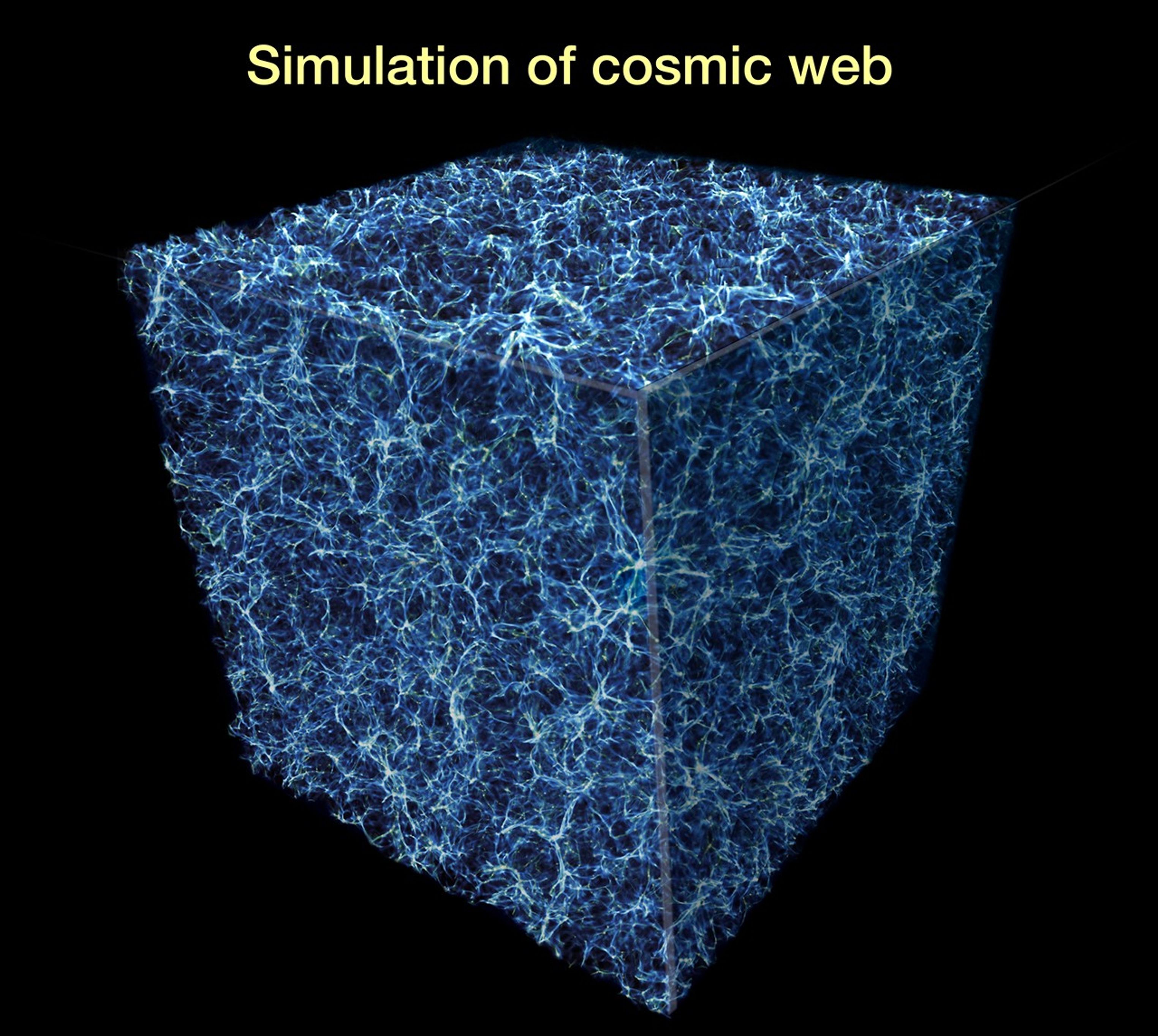
- Three-Dimensional Simulations: Using techniques like the Deep Density Displacement Model (D3M), AI constructs fast, accurate 3D representations of cosmic structures, enabling simulations that encapsulate the formation of galaxies, star systems, and interstellar phenomena.
- Dynamic Parameter Adjustment: As the simulation unfolds, AI monitors physical interactions and can alter conditions, such as varying the proportion of dark matter or cosmic energy, to ensure a realistic evolution of the universe. This involves real-time adjustments that mirror how natural ecosystems self-regulate.
- Integration of Human-Defined Parameters: Advanced AI frameworks allow researchers to set initial conditions based on empirical observations. This creates an interface where human understanding and AI adaptability work together to simulate cosmic events with high precision.
3. Generative and Predictive Modeling
Generative AI provides the backbone for evolving the simulated universe beyond static settings. With machine learning, computers are trained to predict outcomes even under conditions they haven’t been explicitly set to encounter:
- Neural Networks in Simulation: Neural networks are trained on diverse simulated data. They can extrapolate behaviors by recognizing patterns that mimic real cosmic evolution — from the creation of galaxies to the evolution of star clusters.
- Predictive Analytics: AI systems employ robust predictive models that forecast the behavior of particles and astronomical objects. This capability allows not only for the simulation of expected events but also for unexpected phenomena, offering fresh insights into how universes might evolve under alternative physical laws.
- Self-Improvements and Learning: Through continuous learning from both simulated outcomes and real-world astronomical data, the AI’s skills in creating and fine-tuning the simulation are enhanced. This iterative improvement process facilitates an ever-more accurate emulation of cosmic dynamics.
Integrating AI with Cosmic Simulations: Practical Approaches
Advanced Simulation Frameworks
To understand how advanced AI manages a simulated universe, one must delve into the practical frameworks and algorithms that make it all possible. These frameworks effectively blend high-performance computing with machine learning methodologies to build dynamic models that evolve with the simulation.
Simulation-Based Inference
One method gaining traction in cosmological studies is Simulation-Based Inference (SBI). This approach allows AI to comprehend the statistical likelihood of various cosmic events occurring based on simulation outputs:
- Statistical Matching to Reality: SBI leverages the properties of data generated in simulations, aligning them with observational data such as cosmic microwave background measurements. This leads to more accurate predictions of cosmic structures.
- Parameter Tuning: Through methods like Approximate Bayesian Computation, AI refines its estimates on crucial cosmological parameters, ensuring simulations remain reflective of realistic scenarios.
Dynamic Real-Time Adjustments
In managing a simulated universe, maintaining a balance between preset conditions and adaptive changes is essential. Advanced AI employs real-time feedback mechanisms that adjust the simulation dynamically:
- Feedback Loops: These are systems where the AI monitors changes in one part of the simulated cosmos and uses that information to update other related aspects, guaranteeing consistency across the simulation.
- Event-Driven Triggers: Specific cosmic events, such as the collision of galaxies or the birth of a star, act as triggers prompting the AI to recalibrate its models. This ensures the simulation adapts and stays robust against unforeseen events.
Technological Enhancements
Quantum Computing and AI Synergy
The advent of quantum computing stands to greatly enhance the capabilities of AI in managing simulated universes. Quantum computing allows simultaneous processing of complex calculations that classical computers often find challenging:
- Faster Computations: Quantum algorithms can process vast amounts of simulation data much faster than traditional methods, leading to more timely adjustments and refinements.
- Modeling Quantum Phenomena: Quantum computing enables the simulation of quantum effects, such as particle interactions at subatomic levels, thereby adding another layer of realism to the simulated universe.
Co-Evolution with Human Intelligence
The symbiotic relationship between AI and human insights plays a vital role in these advanced simulations. Researchers use AI as a tool to test hypotheses and explore complex phenomena, while human analysis guides the interpretation of simulation outcomes:
- Ethical and Philosophical Considerations: As simulations become increasingly realistic, questions regarding ethics, consciousness, and the purpose of such universes arise. Ensuring that AI operates within the bounds of human values is a fundamental part of managing these simulations.
- Exploratory Research: AI enables scientists to test scenarios unreachable by conventional experimental methods. In return, human experts provide feedback that refines AI models for better accuracy and reliability.
A Comprehensive Look at AI-Managed Simulated Universes
The management of a simulated universe by advanced AI is a multifaceted process that blends state-of-the-art computational methods with cutting-edge scientific research. The main components—data processing, dynamic modeling, and generative techniques—work together to produce simulations that do not only mirror the complexity of the real universe but also offer insights into its underlying mechanics.
Summary of Key Technologies and Methodologies
| Component | Description | Technologies/Methods |
|---|---|---|
| Data Processing | Handles vast datasets, adjusts cosmological parameters, and detects anomalies | Machine Learning, Neural Networks, Statistical Analysis |
| Dynamic Simulation | Adjusts simulation settings in real-time using feedback loops and event triggers | Simulation-Based Inference, Real-Time Monitoring, Generative Models |
| Predictive Modeling | Forecasts behavior of cosmic elements and self-improves based on iterative feedback | Neural Networks, Bayesian Methods, Generative Adversarial Networks |
| Quantum Computing | Offers enhanced computational power and simulation of quantum phenomena | Quantum Algorithms, High-Performance Computing |
| Human-AI Synergy | Integrates human expertise with AI learning for ethical and accurate simulations | Collaborative Feedback Systems, Ethical AI Frameworks |
Implications of AI-Managed Cosmo-Simulations
As advanced AI continues to evolve, its role in simulating universes has far-reaching implications for multiple disciplines:
- Scientific Research: AI-driven simulations allow scientists to explore cosmic processes that are too vast or complex to study in natural settings. This advancement could lead to new discoveries in astrophysics, cosmology, and particle physics.
- Virtual Reality and Gaming: The realistic models generated by AI enable immersive virtual environments that mimic living universes, potentially revolutionizing gaming and digital world interactions.
- Philosophical Inquiry: The very notion of a simulated universe prompts questions about the nature of reality, consciousness, and our place within or outside such systems. Advanced AI thus serves as both a scientific tool and a philosophical mirror.
- Ethical and Social Dynamics: As these simulations encapsulate complex systems, ethical questions arise about managing life-like behaviors within virtual worlds. AI must be programmed with value alignment to adhere to moral and ethical standards.
Future Directions in AI-Managed Universal Simulations
Ongoing research and development in AI management of simulated universes continue to push the boundaries of what these systems can achieve. Researchers are exploring enhancements in three primary areas: model accuracy, real-time adaptability, and integration of quantum computing. Each of these directions can yield simulations that not only reflect a near-perfect representation of our cosmos but also introduce variability to test “what if” scenarios that may never be observed in the natural world.
In this landscape, advanced AI is not merely a tool for recreating the universe—it is rapidly becoming an active partner in unraveling the mysteries of the cosmos. By continuously refining the simulated environments, adapting to new data, and incorporating human and quantum insights, AI is paving the way for a deeper understanding of both simulated and real worlds.
References
- AI Simulates The Universe And Not Even Its Creators Know How It's So Accurate - Science Alert
- Rewriting Cosmic Calculations: New AI Unlocks the Universe's Settings - SciTechDaily
- World's First AI Universe Simulator Knows Things It Shouldn't - Futurism
- AI Accelerates Universe and Planet Formation Simulations Bringing Origins Into Focus - NYU Data Science Blog
- AI Creates Model Universe Mysteriously - Live Science
Recommended Related Queries
Last updated March 15, 2025