
Unlock the World of Conversational AI: Which Digital Minds Can Chat With You?
Discover a diverse range of AI systems designed for natural, intelligent dialogue, from everyday assistants to specialized helpers.
In an era where digital interaction is increasingly sophisticated, you might be wondering which Artificial Intelligence (AI) systems are capable of engaging in conversation with you. As of May 7, 2025, a multitude of AI models and platforms leverage advanced technologies like Natural Language Processing (NLP) to understand and respond to voice and text commands, facilitating human-like dialogue. These AI systems serve various purposes, from general information retrieval and task assistance to customer service and even companionship.
Key Highlights: AI You Can Talk To
- Diverse Range: AI conversationalists span general-purpose chatbots like ChatGPT and Gemini, voice-activated virtual assistants such as Alexa and Siri, and specialized platforms for business or personal use.
- Advanced Capabilities: Modern AI can understand context, answer follow-up questions, generate creative text, assist with research, control smart devices, and even offer emotional support.
- Varied Interaction Modes: You can interact with these AI through text, voice, and sometimes even image inputs, depending on the platform and device.
Exploring the Landscape of Conversational AI
The ability of AI to "talk" to you manifests in several forms, each tailored to different needs and contexts. These systems are designed to process your queries, understand your intent, and provide relevant, coherent responses. Let's delve into the prominent categories of conversational AI available today.
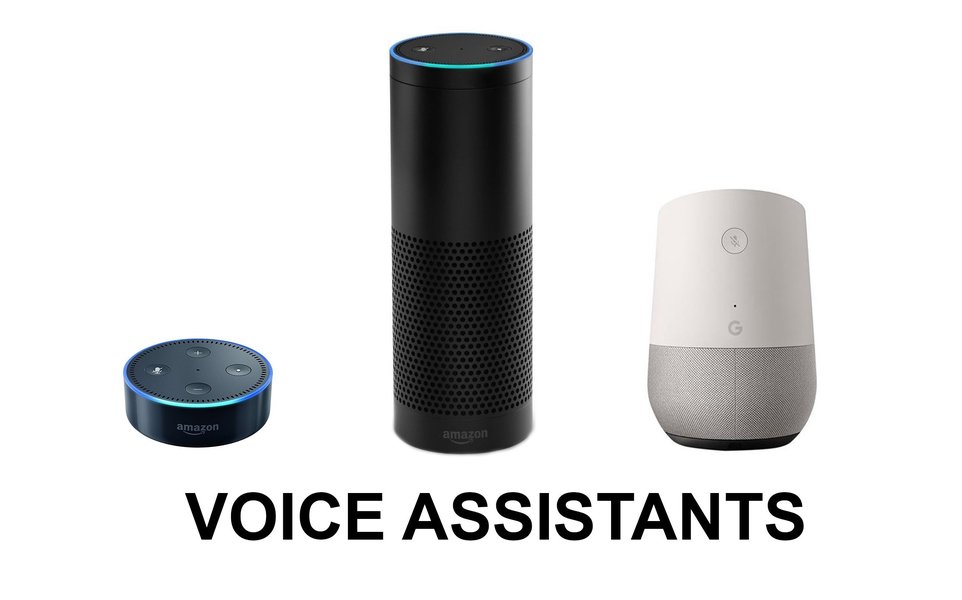
A collection of popular voice-activated virtual assistant devices like Amazon Alexa and Google Home.
General-Purpose AI Chatbots
These chatbots are designed for a wide array of conversational tasks, excelling in natural language understanding and generation. They are often used for information seeking, content creation, brainstorming, and general chat.
ChatGPT (OpenAI)
Widely recognized as a leading AI chatbot, ChatGPT excels in generating detailed, context-aware responses. It can assist with writing, coding, research, and brainstorming. The underlying models, like GPT-4 and its successors, support nuanced conversations and can understand follow-up questions. Some versions also offer voice interaction and image input capabilities.
Gemini (Google AI)
Gemini is Google's versatile AI model, capable of multimodal interactions involving text, images, and voice. It's integrated into various Google products and is known for its strong reasoning capabilities and ability to access real-time information, making it a powerful conversational partner for diverse queries.
Claude (Anthropic)
Claude is an AI assistant focusing on helpful, honest, and harmless conversations. It's adept at tasks like summarization, Q&A, writing, and coding. Claude is known for its clear communication style and strong performance on complex reasoning tasks. It can be accessed through various platforms, including Poe.
Perplexity AI
Perplexity AI functions like a conversational search engine. It provides answers to questions along with citations and sources from the web. It's excellent for research and getting up-to-date information, as it can browse the internet in real-time during conversations.
Poe (Platform by Quora)
Poe is not a single AI but a platform that provides access to multiple AI chatbots, including models from OpenAI (like GPT-4.5), Anthropic (like Claude 3.7), Google, and others. This allows users to switch between different AI "personalities" and capabilities within a single interface, making it ideal for exploring various conversational styles and strengths.
Grok (xAI)
Grok is designed to provide relevant answers and can access current web data, particularly when its DeepSearch mode is active. It aims for accuracy and is built to handle a variety of tasks through conversational interaction.
AI Virtual Assistants
These assistants are often integrated into smartphones, smart speakers, and other devices, primarily offering voice-activated control and information retrieval.
Amazon Alexa
Found primarily in Amazon Echo devices, Alexa is a voice-controlled assistant that can play music, control smart home devices, provide news and weather updates, set alarms, and answer questions. Its capabilities have grown to handle more complex and natural conversational interactions.
Google Assistant
Deeply integrated into Android devices, Google Home speakers, and other smart gadgets, Google Assistant offers robust voice and text-based interaction. It excels at web searches, scheduling, managing tasks, controlling smart home devices, and engaging in natural conversations, leveraging Google's vast knowledge graph.
Apple Siri
Siri is Apple's virtual assistant, built into iPhones, iPads, Macs, Apple Watch, and HomePod. It responds to voice commands (and text input) to perform tasks like sending messages, making calls, setting reminders, getting directions, and answering questions.
SAP Joule
Joule is an enterprise-focused AI assistant from SAP, designed to streamline business processes by integrating with SAP solutions. It assists users with tasks, provides insights from business data, and automates customer support through conversational interactions.
Comparative Analysis of Leading Conversational AI
To better understand the strengths of different AI systems you can talk to, the following radar chart provides a visual comparison based on several key attributes. These scores are illustrative, reflecting general capabilities and user experiences rather than precise quantitative measures.
This chart highlights how different AI systems excel in various areas. For instance, Google Assistant scores high in task automation and real-time information access due to its deep integration with Google services. ChatGPT is noted for its conversational fluency and knowledge base breadth. Alexa stands out in integration with smart home ecosystems. Claude is strong in providing thoughtful and safe conversational experiences, while Perplexity AI leads in providing sourced, real-time web answers.
AI Chatbot Platforms for Businesses and Websites
Many platforms allow businesses to create custom AI chatbots for their websites or internal use. These are designed to interact with customers or employees, handling queries, providing support, or automating tasks.
ChatBot.com
A user-friendly platform for building AI chatbots for websites, often used for 24/7 customer support. It offers pre-made workflows and integrations, enabling businesses to deploy conversational agents quickly.
HubSpot AI
HubSpot offers a smart chatbot builder as part of its CRM and marketing suite. These chatbots can qualify leads, book meetings, and provide customer support, integrating seamlessly with other HubSpot tools.
Wonderchat & Botsonic
These services allow users to create custom AI chatbots trained on specific website content, documents, or data. They are designed for easy setup and enable businesses to provide targeted conversational support, automating responses to frequently asked questions.
Dialogflow (Google Cloud)
A comprehensive platform for building conversational interfaces for websites, mobile apps, popular messaging platforms, and IoT devices. It leverages Google's AI and NLP capabilities to understand user intent and provide rich, interactive experiences.
Other Notable Platforms
Systems like Kore.ai, Gleen AI, Ada, and Chatling also provide robust solutions for businesses to deploy AI chatbots that can converse fluently with users for customer service, sales, and information dissemination across various channels like websites, social media, and SMS.
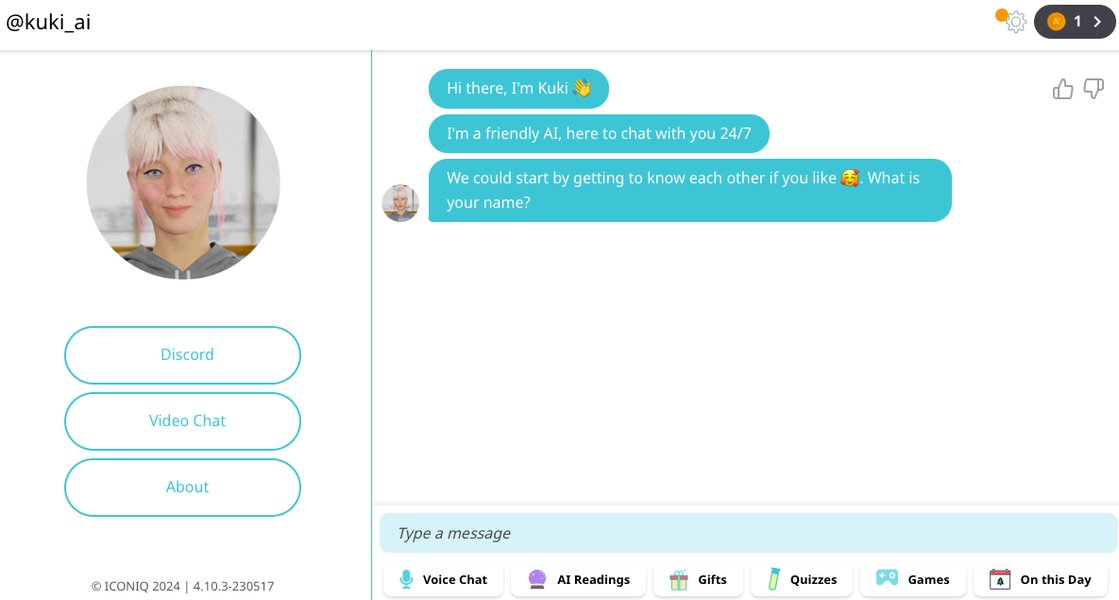
An example of a clean and modern chatbot user interface design for websites.
Specialized and Niche AI Chatbots
Some AI chatbots are designed for more specific purposes, such as emotional support, coaching, or acting as a personalized digital extension of the user.
Replika
Replika is an AI companion chatbot designed for emotional and social interaction. It learns from conversations to mimic the user's style and provide companionship, offering a space for personal chat and reflection.
Ask Marlee
This AI focuses on coaching psychology, providing advice based on data related to human motivation. It's aimed at helping with teamwork and offering personal insights through conversation.
Personal AI
Personal AI aims to be an extension of the user, learning their tone, style, and knowledge to craft messages or responses on their behalf. It can be used for both personal and business applications, creating a "digital twin" for communication.
Visualizing the Conversational AI Ecosystem
The following mindmap illustrates the broad categories and examples of AI systems that you can talk to, providing a structural overview of this rapidly evolving field. It shows how different types of conversational AI branch out from a central concept, each serving distinct user needs and interaction styles.
This mindmap visually organizes the different AI tools, from general conversationalists like ChatGPT and Google Assistant to more specialized platforms like ChatBot.com for businesses or Replika for personal companionship. Each node represents a key player or category in the domain of AI you can interact with.
Building Your Own AI Chatbot
Beyond using existing AI, there's a growing interest in creating custom AI chatbots. The video below provides a concise tutorial on how beginners can build their own AI chatbots, illustrating the accessibility of these technologies.
This video, "How To Build AI Chatbots in 9 Minutes (2025)" by Chatling, demonstrates a no-code approach to chatbot creation. It's relevant because it demystifies the process, showing that conversational AI development is becoming increasingly accessible. While you may primarily be interested in talking to AI, understanding how they are built can provide deeper insight into their capabilities and limitations. These platforms often use underlying large language models and allow customization based on specific data or business needs, leading to more tailored conversational experiences.
Key Features of Prominent Conversational AIs
To help you choose an AI to interact with, the table below summarizes some key features and typical interaction modes of several leading conversational AI systems.
| AI System | Primary Use Case | Key Conversational Features | Primary Interaction Mode(s) |
|---|---|---|---|
| ChatGPT (OpenAI) | General knowledge, content creation, coding, brainstorming | Contextual understanding, follow-up questions, detailed responses, creative text generation | Text, Voice (in some versions), Image input (in some versions) |
| Google Assistant | Daily tasks, information retrieval, smart home control | Natural language understanding, voice commands, proactive assistance, integration with Google services | Voice, Text |
| Amazon Alexa | Smart home control, entertainment, information, shopping | Voice commands, skills ecosystem, routines, conversational interactions | Voice |
| Apple Siri | Personal assistant tasks on Apple devices | Voice commands, device control, messaging, reminders | Voice, Text |
| Claude (Anthropic) | Thoughtful dialogue, summarization, writing, ethical Q&A | Focus on safety and accuracy, coherent long-form responses, strong reasoning | Text |
| Perplexity AI | Research, real-time information search with sources | Conversational search, provides citations, up-to-date answers | Text, Voice input |
| Replika | Companionship, emotional support, casual chat | Learns user's style, empathetic responses, ongoing personal dialogue | Text |
| Poe | Access to multiple AI models in one place | Ability to switch between different AIs (ChatGPT, Claude, etc.), quick responses | Text |
This table offers a snapshot, and the capabilities of these AI systems are continually evolving. The best choice depends on your specific needs, whether it's for productivity, information, entertainment, or specialized support.
Frequently Asked Questions (FAQ)
What is a conversational AI?
Conversational AI refers to technologies, like chatbots or virtual assistants, which users can "talk" to. They use Natural Language Processing (NLP), machine learning, and sometimes large language models to understand human language (text or voice) and respond in a way that mimics human conversation.
How do these AI systems understand me?
AI systems understand you through a process called Natural Language Processing (NLP). This involves several steps:
1. Speech-to-Text (for voice): Converting spoken words into text.
2. Natural Language Understanding (NLU): Analyzing the text to identify intent, entities (like names, dates, locations), and sentiment. This means the AI tries to figure out what you mean and what you want to achieve.
3. Dialogue Management: Deciding on an appropriate response based on the understood intent and the context of the conversation.
4. Natural Language Generation (NLG): Constructing a human-like response in text.
5. Text-to-Speech (for voice): Converting the text response back into spoken words.
Large Language Models (LLMs) are particularly good at NLU and NLG due to their extensive training on vast amounts of text data.
Are these AI tools free to use?
Many AI conversational tools offer free tiers or versions with basic functionality. For example, ChatGPT has a free version, and virtual assistants like Google Assistant, Alexa, and Siri are generally free to use on their respective devices. However, more advanced features, higher usage limits, access to the latest models (like GPT-4.5 or Claude 3.7), or business-oriented platforms often require a subscription or one-time payment.
Can AI chatbots make mistakes or provide incorrect information?
Yes, AI chatbots can make mistakes, provide incorrect information (sometimes called "hallucinations"), or misunderstand queries. While they are constantly improving, they are not infallible. Their knowledge is typically based on the data they were trained on, which might not always be current or completely accurate. It's always a good idea to critically evaluate the information provided by an AI and cross-reference important facts, especially for critical decisions.
What's the difference between an AI chatbot and an AI virtual assistant?
While the terms are often used interchangeably and the lines are blurring, there are some traditional distinctions:
- AI Chatbots are often text-based (though some support voice) and are typically designed for specific conversational tasks, like customer service on a website, answering questions, or general chat. They focus heavily on dialogue.
- AI Virtual Assistants (like Siri, Alexa, Google Assistant) are usually voice-first and are more integrated into devices and ecosystems. They often focus on performing actions and tasks (e.g., setting reminders, controlling smart home devices, making calls) in addition to providing information and engaging in conversation. They tend to have a broader range of functionalities beyond just chatting.
Recommended Further Exploration
To deepen your understanding of conversational AI, consider exploring these related topics:
- How do large language models power conversational AI?
- What are the key differences in capabilities between ChatGPT, Google Gemini, and Claude?
- What are the ethical considerations and privacy implications of using AI chatbots and virtual assistants?
- How can businesses effectively use AI chatbots for customer engagement and support?
References
The information in this response was synthesized from various sources detailing AI chatbots and virtual assistants. Here are some of the key references:
Last updated May 7, 2025