
Unlocking the Future of Construction: How AI is Reshaping Every Blueprint
Discover how artificial intelligence is revolutionizing the construction industry, driving unprecedented efficiency, safety, and sustainability.
Key Insights into AI's Impact on Construction
- Comprehensive Transformation: AI is not merely a tool but a fundamental force reshaping every phase of construction, from initial planning and design to on-site execution and post-construction maintenance.
- Enhanced Safety and Efficiency: Through predictive analytics, real-time monitoring, and automation, AI significantly reduces risks, prevents accidents, optimizes resource allocation, and streamlines workflows, leading to faster project completion and substantial cost savings.
- Sustainable and Data-Driven Future: AI empowers the industry to make more informed decisions, integrate sustainable practices, and combat inefficiencies like waste and fraud, paving the way for a greener, more transparent, and innovative construction landscape.
The construction industry, historically characterized by its traditional approaches, is now experiencing a profound transformation driven by Artificial Intelligence (AI). This technological revolution leverages various AI subfields, including machine learning, computer vision, robotics, and natural language processing, to address long-standing challenges such as inefficiencies, delays, cost overruns, and safety concerns. AI's integration into construction workflows is not just enhancing existing processes but is fundamentally redefining how projects are conceived, managed, and executed. The global AI in construction market is projected to experience substantial growth, reflecting the increasing demand for advanced solutions that enhance efficiency, reduce costs, improve safety, and foster greater sustainability.
The Foundational Role of AI in Construction
AI in construction involves the strategic application of intelligent algorithms, machine learning models, and sophisticated data analytics to automate tasks, optimize project workflows, predict potential risks, improve safety standards, and enhance decision-making across all project stages. These technologies enable the processing and analysis of vast, complex datasets, providing actionable insights that would be challenging for human operators to process efficiently. From initial project conception to final delivery and maintenance, AI is becoming an indispensable partner.
Phased Integration: AI Across the Construction Lifecycle
Preconstruction Phase: Intelligent Planning and Design
In the crucial preconstruction phase, AI serves as a powerful accelerator for planning and design. Predictive analytics, driven by AI, can analyze historical project data and current conditions to optimize construction schedules, streamline resource allocation, and refine task sequencing. Tools like ALICE Technologies utilize AI to simulate numerous construction scenarios, allowing teams to select the most efficient plans that keep projects on time and within budget.
Generative AI is revolutionizing design development. Platforms like ARCHITEChTURES and Maket.ai empower architects and engineers to input design goals and constraints, rapidly generating multiple optimized design options. This not only enhances creativity but also significantly reduces the time from months to minutes. Furthermore, AI-powered tools such as Blueprints AI and STACK Assist automate the takeoff process, dramatically cutting down the time and effort required for construction estimators to quantify materials and costs accurately. This automation also extends to initial budgeting, ensuring precise material needs and accelerating the bidding process.
Project Management and Execution: Streamlined Operations
During project management and execution, AI provides robust support for efficient operations. AI algorithms optimize the allocation of labor and materials, leading to more efficient and cost-effective scheduling. Beyond just scheduling, AI also enhances risk assessment by predicting potential delays and issues, allowing for proactive measures to maintain project timelines. Supplier management becomes more effective with AI, ensuring smoother execution by monitoring costs and supply chain dynamics. Companies like Procore integrate AI to streamline workflows and foster better collaboration among all stakeholders.
On-Site Operations: Automation, Safety, and Quality
On-site, AI's presence is becoming increasingly visible through autonomous machinery and advanced monitoring systems. AI-driven robots and drones perform tasks such as precise bricklaying, comprehensive site surveying, and efficient material transportation, significantly boosting productivity and minimizing human error. The Boston Consulting Group predicts that up to 30% of construction work could be automated by 2025, which will profoundly impact labor productivity and project timelines. Doxel, for instance, uses AI-powered robots to monitor construction progress and quality in real-time, providing immediate data for adjustments.
Safety, a paramount concern in construction, is dramatically enhanced by AI. The industry recorded the highest number of fatal injuries among all sectors in 2023, underscoring the urgent need for improved safety measures. AI platforms, employing sensors, cameras, and machine learning, continuously monitor job sites to identify safety hazards and compliance issues in real time. Smartvid.io's AI platform analyzes visual data to detect unsafe conditions, while AI-powered wearables like smart hardhats and boots can alert workers to immediate dangers. This proactive hazard detection significantly reduces accident rates.
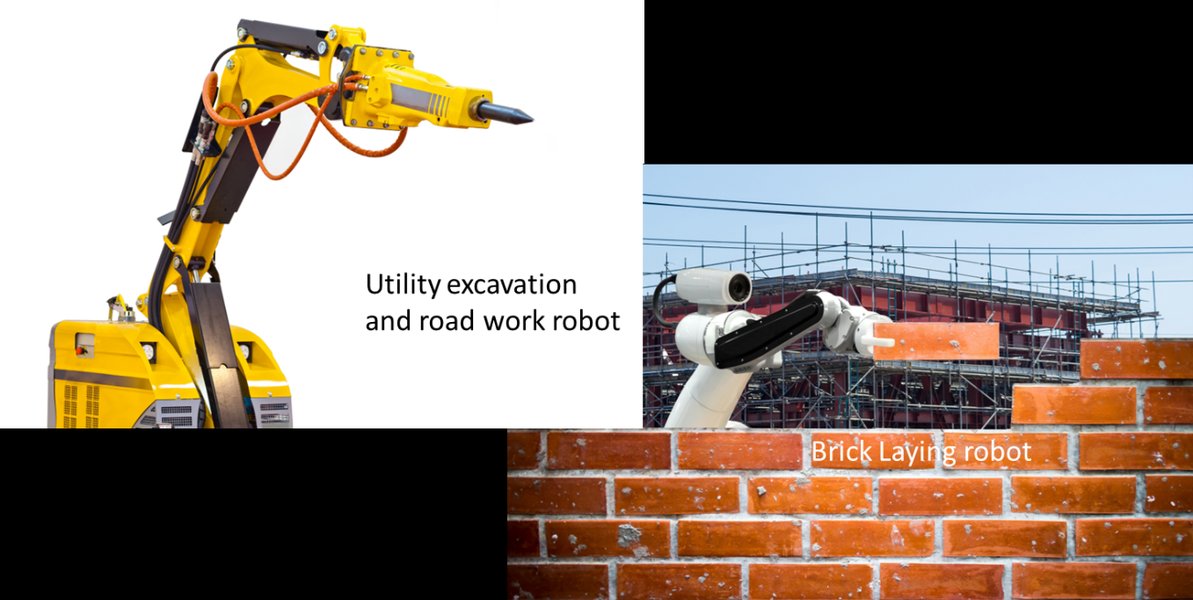
A robot assists in construction tasks, enhancing efficiency and safety on site.
Post-Construction and Beyond: Maintenance and Sustainability
AI's utility extends beyond active construction. Predictive maintenance, powered by machine learning, analyzes data from equipment to foresee failures, enabling proactive repairs that save money and minimize downtime. This ensures machinery operates efficiently and reduces accident likelihood.
Moreover, AI plays a crucial role in promoting sustainability and waste management. By analyzing building data, AI can identify energy inefficiencies, suggest improvements, and model more sustainable design options, contributing to greener construction practices. AI also optimizes material use and helps reduce waste, aligning with global efforts for eco-friendly construction. Furthermore, AI is increasingly improving transparency and combating corruption in construction procurement by analyzing historical data patterns to detect fraud and waste.
Benefits and Impact of AI in Construction
The widespread adoption of AI in construction is driven by its compelling benefits, which collectively redefine industry standards.
A Multifaceted Advantage: Key Benefits
- Improved Efficiency and Productivity: By automating repetitive tasks and optimizing schedules, AI allows projects to be completed faster and with fewer resources, significantly boosting overall productivity.
- Enhanced Safety: Real-time hazard detection and predictive accident prevention lead to a substantial reduction in injuries and fatalities on construction sites.
- Significant Cost Reduction: AI-driven budgeting, predictive analytics, and optimized resource allocation help control costs, minimize overruns, and improve financial predictability.
- Superior Quality Control: Continuous monitoring with AI-powered visual data analysis ensures high construction quality and enables early detection of potential defects, reducing costly rework.
- Addressing Labor Shortages: Automation and robotics mitigate the impact of skilled labor shortages by taking on labor-intensive and hazardous tasks.
- Fostering Sustainability: AI guides greener building techniques, optimizes material usage, and evaluates energy-efficient design alternatives, lowering the environmental footprint of projects.
- Data-Driven Decision Making: AI provides project managers with actionable insights from vast datasets, supporting more informed and strategic decisions.
- Increased Transparency and Fraud Detection: AI systems analyze procurement data to identify irregularities, combating fraud and enhancing trust in project administration.
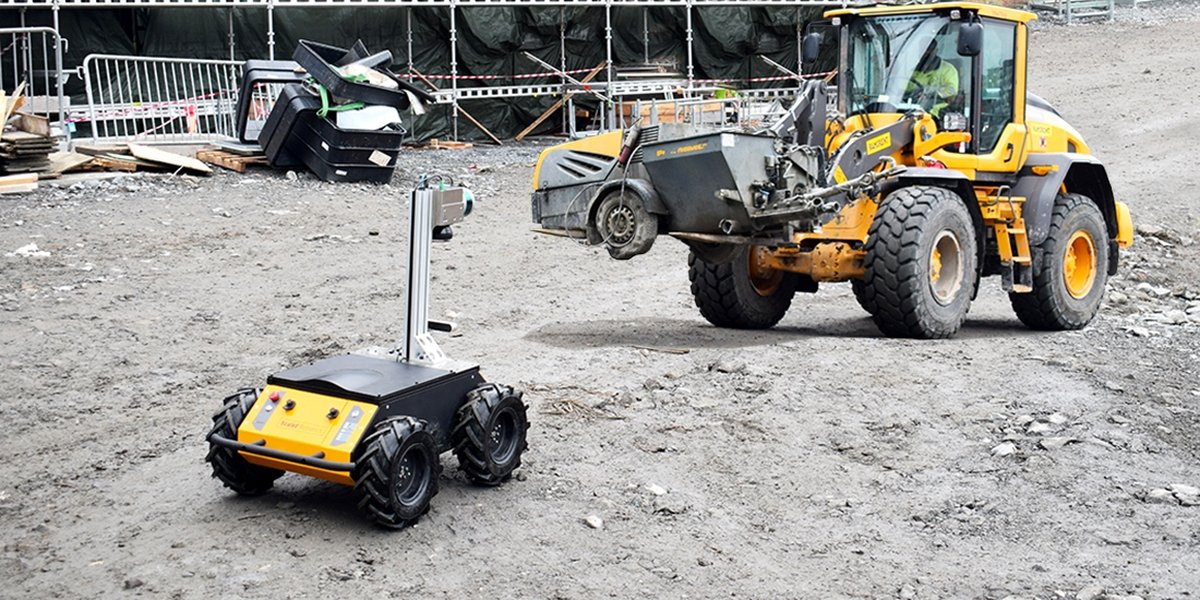
Advanced construction robotics streamlining site operations.
Assessing AI's Readiness in Construction: A Radar Chart Analysis
To better understand AI's current state and potential in construction, we can evaluate its impact across several key performance indicators. This radar chart illustrates a subjective assessment of AI's current maturity and projected impact in various critical areas within the construction industry as of mid-2025.
As the chart illustrates, AI's impact is already significant in areas like on-site safety and labor productivity. However, its full potential in areas such as sustainability integration and supply chain efficiency is still evolving, promising even greater advancements in the future. This forward trajectory indicates AI's increasing importance across all facets of construction.
AI in Action: Leading Tools and Technologies
Several companies and platforms are at the forefront of integrating AI into construction, providing practical solutions that are reshaping industry practices. These tools leverage various AI subfields like machine learning, computer vision, and natural language processing to automate complex tasks and provide actionable insights.
Pioneering AI Solutions in Construction
| Company/Platform | Primary AI Application | Specific Functionality |
|---|---|---|
| ALICE Technologies | Project Planning & Scheduling | Simulates multiple construction scenarios to optimize schedules and resource plans, ensuring projects stay on time and within budget. |
| Procore | Construction Management Platform | Integrates AI to streamline workflows, improve collaboration, and manage projects more efficiently across all phases. |
| Doxel | Real-Time Site Monitoring | Uses AI-powered robots to scan construction sites, track progress, measure installed quantities, and detect defects in real time. |
| Smartvid.io | Safety & Compliance Monitoring | Analyzes photos and videos from construction sites to identify safety hazards and compliance issues automatically. |
| ARCHITEChTURES & Maket.ai | Generative Design | Generates optimal building designs rapidly based on input goals and constraints, democratizing architectural design. |
| Trimble | Risk Assessment & Safety | Provides AI solutions for predictive safety measures and proactive risk management through continuous site monitoring. |
| Blueprints AI & STACK Assist | Estimating & Takeoffs | Automates the takeoff process, reducing time and effort for material and cost quantification. |
| Boston Dynamics’ Spot | Autonomous Site Inspection | Robotic asset used for automated site inspections and data gathering in challenging environments. |
These examples highlight the breadth of AI applications, from high-level project optimization to granular on-site task automation. The continuous development and integration of such tools promise to make construction safer, more efficient, and more sustainable.
Navigating the Path: Challenges and Future Outlook
While the benefits of AI in construction are clear, the industry faces several challenges in widespread adoption. However, the future outlook for AI in construction is overwhelmingly positive, with trends pointing towards deeper integration and transformative impacts.
Overcoming Hurdles in AI Adoption
The construction industry has traditionally been slow to adopt new technologies, often due to concerns about initial investment costs, the complexity of implementation, and potential disruptions to established workflows. A significant challenge lies in data quality and integration; successful AI deployment requires clean, high-quality data and seamless interoperability between disparate systems. Furthermore, there is a recognized skill gap, necessitating specialized expertise to effectively implement, manage, and maintain AI systems. Navigating regulatory and compliance issues, especially concerning safety standards with AI-based automation, also presents a complex hurdle.
The Bright Horizon: Future Trends in AI for Construction
Looking ahead to 2025 and beyond, AI is poised for even greater integration and impact. The industry can anticipate:
- Widespread Automation: Accelerated deployment of autonomous construction machinery and robots for a broader range of tasks.
- Advanced Generative AI: More extensive use of generative AI for rapid prototyping and optimization of complex building designs, moving beyond just conceptual models.
- AI-Driven Sustainability: AI will play a central role in helping firms achieve net-zero goals through hyper-optimized resource management and innovative material usage.
- AI as a Proactive Strategic Partner: AI will evolve from a reactive tool for problem-solving to a proactive partner that predicts issues and opportunities, enabling strategic foresight.
- Integration with IoT and Digital Twins: Deeper convergence of AI with IoT devices and digital twin technologies for real-time monitoring, simulation, and predictive maintenance throughout a project's lifecycle.
- Enhanced Collaboration: AI will further improve communication and collaboration across diverse teams and stakeholders through intelligent document management and workflow automation.
- Increased Adoption by Smaller Firms: The democratization of AI tools will empower small and medium construction businesses, fostering innovation and competitiveness across the entire industry.
- Focus on Regulation and Ethics: As AI becomes more ubiquitous, there will be a growing emphasis on developing robust frameworks to ensure responsible, ethical, and safe AI deployment.
A mindmap illustrating the core components and future trajectory of AI's role in the construction industry.
Exploring the Future: AI's Impact on Construction (2025)
This video provides an excellent overview of how AI is poised to transform the construction industry in 2025. It delves into various applications and provides insights into the scale of changes expected, covering aspects from planning and design to on-site operations and project management. The video is particularly relevant as it aligns with the immediate future outlook, showcasing practical implications and benefits that AI is already beginning to deliver or is soon expected to deliver.
Frequently Asked Questions About AI in Construction
What is AI in construction?
How does AI improve safety on construction sites?
Can AI help with construction project scheduling?
What are the main benefits of AI in construction?
What challenges does the construction industry face in adopting AI?
Conclusion
Artificial Intelligence is no longer a futuristic concept but a present-day reality profoundly reshaping the construction industry. By intelligently integrating AI across design, planning, execution, and maintenance, the sector is moving towards unprecedented levels of efficiency, safety, and sustainability. From optimizing complex schedules and ensuring worker safety through real-time monitoring to fostering innovative designs and combating waste, AI is proving to be a transformative force. While challenges related to adoption and integration persist, the clear benefits and projected market growth indicate that AI's role will only expand, leading to a smarter, safer, and more productive built environment. The journey into an AI-powered construction future is well underway, promising significant advancements and a new era of possibilities.
Recommended Further Exploration
- How are AI and robotics revolutionizing on-site construction automation?
- What are the latest generative design applications in architecture and construction?
- How is AI enhancing predictive maintenance and equipment management in construction?
- In what ways is AI contributing to sustainability and waste reduction in construction projects?