
Unlock Your Potential: How AI is Revolutionizing Tutoring
Discover the personalized, accessible, and engaging ways AI tutors enhance learning for everyone.
Key Highlights: AI as Your Personal Tutor
- Personalized Learning Paths: AI adapts lessons to your unique pace, style, and needs, focusing on areas where you need the most help.
- Instant Feedback & Support: Get immediate answers to questions and detailed explanations 24/7, reinforcing concepts and correcting mistakes on the spot.
- Enhanced Accessibility & Equity: AI tutors break down barriers, offering scalable, affordable, high-quality educational support anytime, anywhere.
The Dawn of Personalized Education
Artificial Intelligence (AI) is rapidly transforming the educational landscape, emerging as a powerful tool that functions much like a personal tutor. By leveraging sophisticated algorithms and vast datasets, AI tutors offer tailored learning experiences that supplement and enhance traditional teaching methods. They analyze individual learning patterns, adapt content dynamically, and provide support precisely when and where it's needed, making education more effective, engaging, and accessible than ever before.
Tailoring the Learning Journey
One of the most significant advantages of AI tutors is their ability to deliver truly personalized learning experiences. Unlike traditional classroom settings or static educational materials, AI can adapt dynamically to each student's specific requirements.
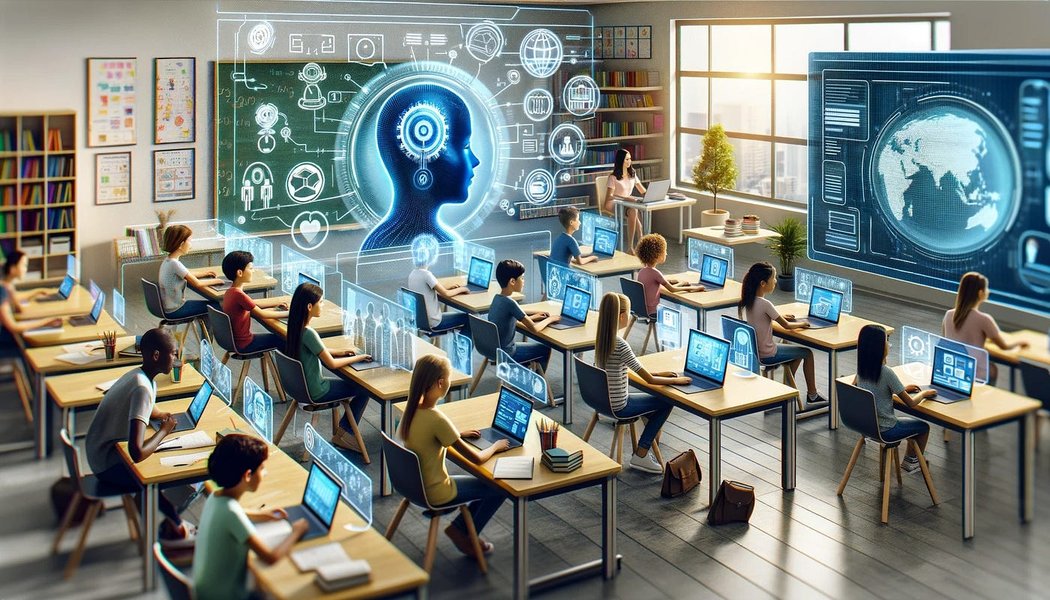
AI tutors often utilize Intelligent Tutoring System (ITS) frameworks to personalize learning.
Adaptive Learning Paths
AI tutors analyze a student's performance, identifying strengths and weaknesses in real-time. Based on this analysis, they craft customized learning paths. If a student masters a concept quickly, the AI can introduce more advanced material. Conversely, if a student struggles, the AI can provide additional explanations, simpler examples, or revisit foundational concepts, ensuring no one is left behind. Platforms like Khanmigo, Khan Academy's AI tutor, integrate with extensive content libraries to offer assistance tailored to individual progress.
Matching Learning Styles
AI can also adapt its teaching methods to suit different learning styles. Whether a student learns best through visual aids, interactive exercises, textual explanations, or real-world examples, the AI can adjust its approach accordingly. This level of personalization, as noted by researchers at Harvard Business Publishing, can significantly boost comprehension and engagement, mimicking the responsiveness of an expert human tutor.
Always On, Always Ready: Unmatched Accessibility
AI tutors break the constraints of time and location, offering educational support whenever and wherever a student needs it.
24/7 Availability
Learning doesn't always happen during school hours. AI tutors are available around the clock, perfect for students needing help with homework late at night, preparing for a test over the weekend, or learning in different time zones. This constant availability ensures that support is always just a click away, eliminating scheduling conflicts and waiting times.
Scaling Quality Education
Human tutoring, while highly effective, is resource-intensive and often costly. AI tutors can serve a virtually unlimited number of students simultaneously without a drop in quality. This scalability makes personalized education more affordable and accessible, helping to bridge achievement gaps and address educational inequities, particularly in underserved or remote areas. Some research suggests AI tutoring can replicate aspects of the "2-sigma effect," where one-on-one tutoring leads to significantly improved outcomes, but delivered at scale.
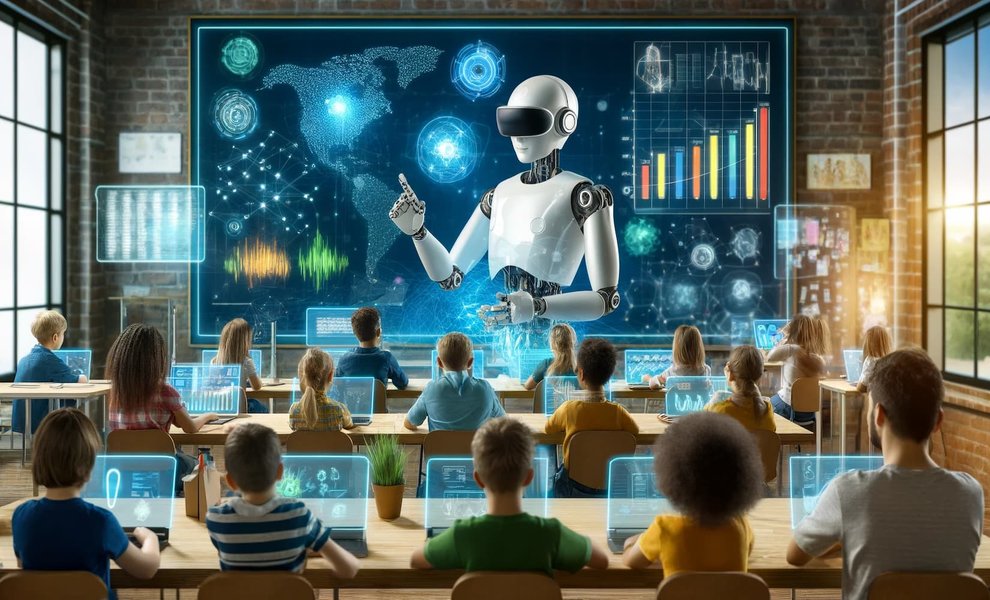
AI tutors enhance accessibility, bringing personalized learning to more students globally.
Instant Feedback: The Key to Mastery
Timely feedback is crucial for effective learning. AI tutors excel at providing immediate responses, helping students correct misunderstandings and reinforce knowledge quickly.
Real-Time Corrections and Explanations
When a student answers a question incorrectly or struggles with a concept, an AI tutor can provide instant, specific feedback. It can break down complex problems into smaller steps, offer alternative explanations, and pinpoint the exact nature of the error. This immediate loop prevents students from reinforcing mistakes and helps solidify understanding before moving on. Studies indicate this rapid feedback cycle enhances retention and critical thinking skills, with some research linking AI tutoring systems to measurable improvements in test scores (e.g., an average of 11.6% improvement noted by one source).
On-Demand Clarification
Students can ask questions in natural language at any point and receive detailed answers. Whether it's clarifying a definition, understanding a complex process, or exploring a topic further, the AI acts as an ever-present knowledge resource.
Boosting Engagement and Motivation
Learning should be enjoyable. AI tutors employ various strategies to make the educational process more interactive and engaging.
Interactive and Conversational Learning
Many AI tutors utilize natural language processing to enable conversational interactions. Students can engage in dialogues, ask follow-up questions, and explore topics through discussion. Some systems use scenario-based learning, simulating real-world situations where students can apply their knowledge.
Gamification and Relatable Content
To capture and maintain student interest, AI tutors often incorporate gamification elements like points, badges, and progress tracking. Some platforms even use relatable characters or themes (like popular video game characters mentioned by TutorOcean) to make abstract concepts more tangible and fun, potentially enhancing cognitive performance and motivation.
This video explores how AI is making learning more personalized, efficient, and accessible, highlighting the role of AI tutors.
The video above provides an overview of AI's transformative impact on education. It emphasizes how AI-driven tools, particularly tutors, facilitate personalized learning pathways. By adapting to individual student needs and providing constant support, AI helps make education more efficient and universally accessible, aligning with the core benefits discussed here.
Comparing AI and Human Tutors
While AI offers unique advantages, human tutors provide distinct benefits like empathy and nuanced understanding. Often, a blended approach works best. The following radar chart provides an opinionated comparison based on common characteristics:
This chart illustrates that AI tutors excel in areas like accessibility, scalability, cost-effectiveness, and feedback speed. Human tutors, however, currently hold an advantage in providing emotional support and adapting to complex, nuanced situations. Both offer high levels of personalization and consistency, though potentially in different ways.
AI Tutor Capabilities: A Mindmap Overview
To visualize the multifaceted role of AI tutors, consider the following mindmap outlining their key capabilities and benefits:
(Pronunciation, Grammar)"] id5d["Concept Reinforcement"] id6["Teacher/Educator Aid"] id6a["Automated Reporting"] id6b["Identifying At-Risk Students"] id6c["Generating Resources
(Quizzes, Plans)"] id6d["Handling Routine Questions"]
This mindmap shows how AI tutors branch out from core functions like personalization and accessibility to specific applications like homework help and supporting educators. Each branch represents a significant way AI contributes to a more effective and tailored learning environment.
Supporting Educators and Blended Learning
AI tutors are not intended to replace human teachers but rather to augment their capabilities and free up their time for higher-impact activities.
Teacher's Assistant
AI can handle routine tasks such as answering frequently asked questions, managing basic course logistics, and providing initial rounds of feedback on assignments. It can also generate reports summarizing student progress and highlighting areas where the class or individual students might be struggling. This allows teachers to focus on designing creative lesson plans, facilitating in-depth discussions, and providing personalized emotional and motivational support.
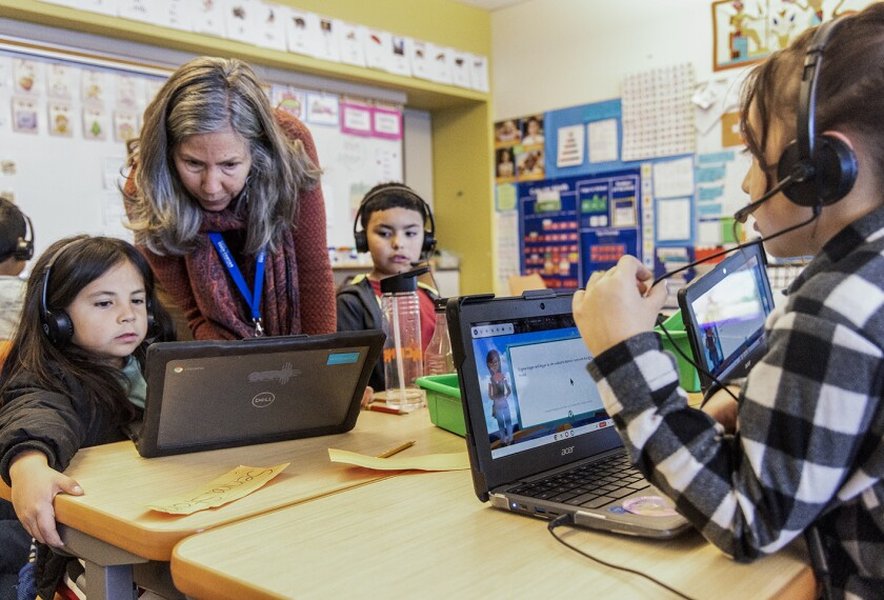
AI tutors can act as valuable assistants, supporting teachers in the classroom.
Hybrid Tutoring Models
Integrating AI with human tutors creates a powerful synergy. AI can provide initial support, identify specific difficulties, and even recommend human tutors when deeper intervention is needed. Research from Stanford has shown that AI assistance can increase the effectiveness of human tutors, leading to better student outcomes. This blended approach combines the efficiency and scalability of AI with the empathy and complex problem-solving skills of human educators.
Feature Comparison: AI vs. Human Tutors
Understanding the distinct strengths of AI and human tutors helps in leveraging both effectively. Here's a comparative table:
| Feature | AI Tutor | Human Tutor |
|---|---|---|
| Availability | 24/7, On-demand | Scheduled sessions, Limited hours |
| Cost | Generally lower cost or free options available | Typically higher cost per session |
| Scalability | Highly scalable (many students simultaneously) | Limited scalability (one-on-one or small groups) |
| Feedback Speed | Instantaneous | Delayed (during/after session or grading) |
| Personalization | Data-driven adaptation to pace/style | Intuitive adaptation based on interaction |
| Consistency | Highly consistent delivery | Variable based on individual tutor |
| Emotional Support & Empathy | Limited or simulated | High capacity for genuine empathy & motivation |
| Adaptability to Nuance | Can struggle with highly complex or novel issues | Strong ability to handle ambiguity & nuance |
| Subject Coverage | Potentially very broad, based on data | Dependent on tutor's expertise |
| Patience | Infinite | Variable, generally high but finite |
This table summarizes that AI tutors offer unparalleled accessibility, speed, and scalability, while human tutors excel in providing deep understanding, emotional connection, and handling nuanced situations.
Addressing Specific Needs and Future Directions
AI tutors are continuously evolving, offering specialized support and promising future advancements.
Specialized Applications
Language Learning
AI is particularly effective for language acquisition, offering practice with pronunciation, grammar correction, vocabulary building, and conversational skills.
STEM Subjects
For subjects like math and science, AI provides step-by-step problem-solving guidance, generates infinite practice problems, and helps visualize complex concepts.
Test Preparation and Homework
AI tutors offer targeted practice tests, identify knowledge gaps for focused review, and provide assistance with homework assignments across various subjects.
Ethical Considerations and Safety
Reputable AI tutoring platforms prioritize ethical development, ensuring student data privacy and safety. They are often designed to guide learning rather than simply provide answers, fostering critical thinking and preventing academic dishonesty. Content is typically aligned with educational standards to avoid misinformation.
Frequently Asked Questions (FAQ)
Can AI completely replace human tutors?
Currently, AI is seen as a powerful supplement rather than a complete replacement for human tutors. While AI excels in areas like accessibility, instant feedback, and consistent delivery of information, it lacks the genuine empathy, nuanced understanding, complex problem-solving skills, and motivational ability of a great human tutor. The most effective approach often involves a blend of both, leveraging AI for scale and efficiency and human tutors for deeper connection and complex support.
Is AI tutoring effective? Are there studies to support it?
Yes, numerous studies and real-world implementations suggest that AI tutoring can be highly effective. Research has shown improvements in test scores, faster learning progress, increased student engagement, and enhanced confidence. For example, some studies mention improvements comparable to human tutoring (the "2-sigma effect"), while others cite specific percentage gains in test scores. Organizations like Khan Academy and research institutions continue to study and refine AI tutoring models to maximize their positive impact.
What subjects can AI tutors help with?
AI tutors can assist with a wide range of subjects. They are commonly used for STEM fields (Science, Technology, Engineering, Math) due to the structured nature of problem-solving. They are also highly effective for language learning (grammar, vocabulary, pronunciation). Additionally, AI tutors can help with history, literature (providing analysis frameworks, though not nuanced interpretation), writing (grammar checks, structure suggestions), test preparation (SAT, ACT, etc.), and general homework help across various grade levels.
Are AI tutors safe and ethical to use, especially for children?
Leading developers of AI tutors, particularly those from established educational organizations like Khan Academy, prioritize safety and ethical considerations. This includes implementing safeguards against inappropriate content, protecting student data privacy, and designing the AI to support learning rather than simply giving answers. However, it's important to choose reputable platforms and for parents and educators to be aware of how the technology is being used. Responsible AI design focuses on augmenting human capabilities and promoting genuine understanding.
Recommended Reading
- What are the best AI tutoring platforms available today?
- How does AI tutoring compare to traditional classroom learning?
- What are the ethical considerations when using AI in education?
- How can teachers integrate AI tutors into their teaching strategies?
References
Last updated May 4, 2025