
Beyond Mood Boards: How AI is Radically Reshaping Interior Design Workflows
Discover the intelligent tools transforming creative processes, client collaboration, and space visualization for designers.
Artificial Intelligence (AI) is no longer a futuristic concept in interior design; it's a rapidly evolving set of tools actively transforming how professionals conceptualize, visualize, and execute projects. As of 2025, AI offers powerful capabilities that streamline workflows, enhance creativity, and provide unprecedented levels of personalization and efficiency.
Key Insights: AI's Role in Modern Interior Design
- Accelerated Visualization: AI tools enable designers to generate photorealistic renderings, apply diverse design styles, and create virtual stagings in minutes, dramatically speeding up the concept development phase.
- Enhanced Personalization & Optimization: AI algorithms analyze client preferences, spatial constraints, and vast design datasets to suggest tailored furniture, color palettes, and optimized layouts, improving both aesthetics and functionality.
- Streamlined Workflow: By automating repetitive tasks like drafting, mood board creation, and even initial space planning, AI frees up designers to focus on high-level creative problem-solving and client interaction.
Core Applications: How Designers Leverage AI
AI integration spans various stages of the interior design process, offering specialized solutions that augment a designer's skills.
Instant Concept Generation and Visualization
One of the most significant impacts of AI is its ability to rapidly generate design concepts. Designers can upload photos of existing rooms, floor plans, or even rough sketches. AI algorithms then process these inputs and produce multiple design variations almost instantly. Users can apply dozens of different design styles – from minimalist and modern to bohemian and rustic – and visualize different furniture arrangements, color schemes, and decor options. This allows for quick exploration of possibilities and helps clients better understand potential outcomes early in the process.
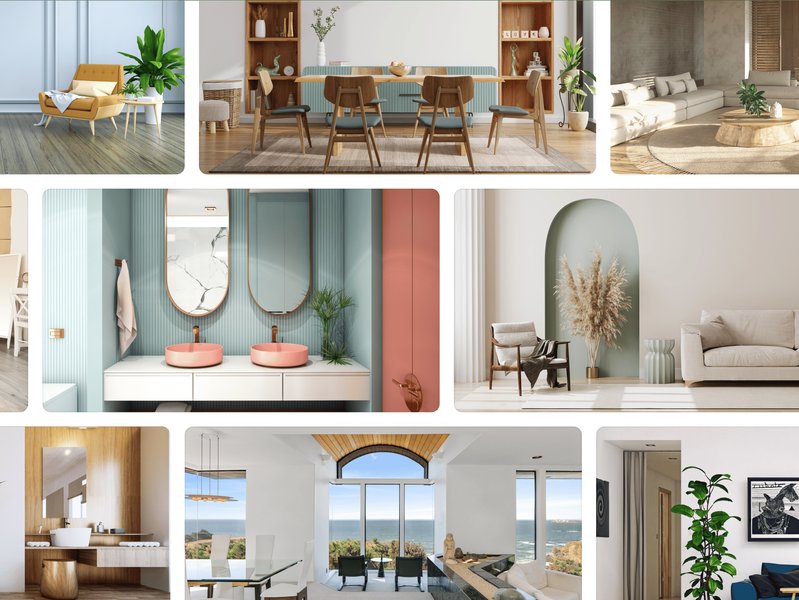
AI tools can instantly restyle spaces based on uploaded images or descriptions.
Virtual Staging and Space Planning
Furnishing the Void: Virtual Staging
AI-powered virtual staging is invaluable, especially for real estate professionals and designers working with empty properties. Instead of incurring the cost and logistical challenges of physical staging, AI tools can digitally furnish empty rooms with realistic furniture, lighting, and decor. This helps potential buyers or renters visualize the potential of a space, making properties more appealing. The process can often be completed in minutes, offering a significant time and cost advantage.
Optimizing Layouts
Beyond just placing furniture, AI can optimize spatial layouts. By analyzing floor plans, room dimensions, desired functions, traffic flow, and even ergonomic principles, AI algorithms suggest the most efficient and aesthetically pleasing furniture arrangements. This ensures spaces are not only beautiful but also functional and comfortable, maximizing the use of available square footage.
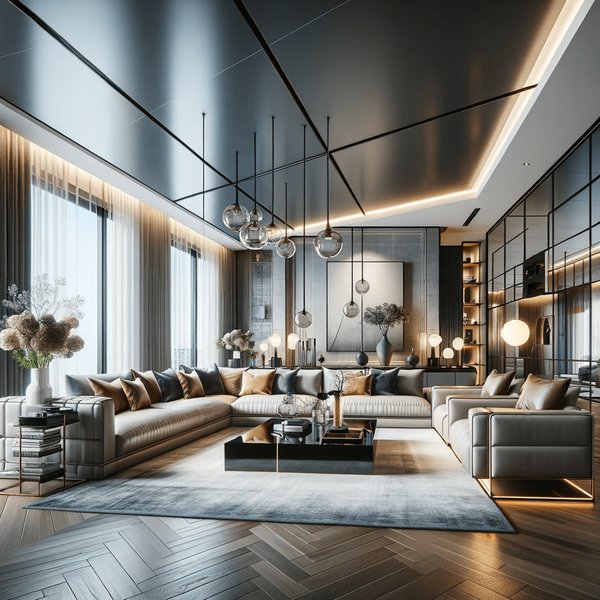
AI can generate fully realized design concepts, including furniture placement and decor.
Personalized Design Recommendations
AI excels at tailoring suggestions to individual client needs and tastes. By analyzing inputs like preferred styles, existing furniture, room dimensions, natural light conditions, and even inspirational images, AI can recommend specific furniture pieces, decor items, materials, and color palettes. This data-driven personalization helps designers create unique spaces that truly resonate with clients, reducing guesswork and iteration cycles.
Rapid and Realistic Rendering
Generating high-quality, photorealistic renderings traditionally required significant time and computational power. AI significantly accelerates this process. AI rendering engines can produce detailed 3D models and images that accurately depict textures, lighting, shadows, and materials, often much faster than conventional methods. This rapid turnaround allows designers to iterate on designs quickly and present clients with compelling, lifelike visualizations of the final space before committing to physical changes.
Workflow Automation and Efficiency
AI tools automate many time-consuming and repetitive tasks inherent in interior design. This includes drafting initial floor plans, generating mood boards based on selected criteria, creating material schedules, and even removing unwanted objects from photos to reimagine a space. By handling these tasks, AI allows designers to dedicate more time to creative aspects, client communication, and project management, boosting overall productivity. Industry surveys indicate significant adoption, with estimates suggesting around 65% of designers were integrating AI tools into their workflows by 2024-2025.
Sketch-to-Reality Transformation
AI bridges the gap between initial ideas and polished visuals. Some platforms allow designers to upload hand-drawn sketches or simple diagrams. The AI then interprets these basic concepts and transforms them into more detailed and refined visualizations, potentially applying various styles or suggesting improvements. This feature streamlines the early prototyping phase and helps quickly translate abstract ideas into tangible design concepts.
Trend Analysis and Forecasting
AI algorithms can analyze vast amounts of data from sources like social media, design publications, and market trends to identify emerging styles, popular color palettes, and consumer preferences. Designers can leverage these insights to create contemporary designs that align with current market demands and anticipate future trends, keeping their work fresh and relevant.
Visualizing AI Capabilities: Tool Assessment
AI interior design tools offer a range of capabilities. The radar chart below provides a conceptual overview of how these tools generally perform across key aspects, based on typical features described in the industry. Note that specific tool performance varies.
This chart illustrates typical strengths of AI tools in interior design, such as high speed and good visualization quality, while areas like complex layout optimization or deep trend integration might still be evolving or vary more between platforms.
Mapping AI's Impact on Interior Design
To better understand the interconnected applications of AI in this field, the following mindmap provides a visual summary of the key areas where AI tools assist interior designers:
(Multiple Styles)"] id1d["Sketch-to-Image"] id1e["AR/VR Experiences"] id2["Optimization & Planning"] id2a["Space Layout Optimization"] id2b["Furniture Placement"] id2c["Lighting Solutions"] id2d["Material Selection"] id3["Personalization"] id3a["Client Preference Analysis"] id3b["Tailored Recommendations
(Furniture, Colors, Decor)"] id4["Efficiency & Workflow"] id4a["Automation of Repetitive Tasks
(Drafting, Mood Boards)"] id4b["Faster Iteration Cycles"] id4c["Improved Client Communication"] id5["Data & Insights"] id5a["Trend Analysis & Forecasting"] id5b["Cost Estimation"]
This mindmap highlights how AI acts as a multi-faceted assistant, touching upon visualization, planning, personalization, workflow efficiency, and data analysis within the interior design process.
Popular AI Interior Design Tools & Features
Numerous AI-powered platforms cater to interior designers, each offering a unique set of features. The table below summarizes some commonly mentioned tools and their primary functionalities, based on information available up to May 2025.
| Tool Name | Key Features | Primary Use Cases |
|---|---|---|
| Canva AI Interior Design | Photo upload for restyling, virtual staging, sketch-to-image, multiple style application. | Quick concept visualization, restyling existing spaces, basic virtual staging. |
| RoomsGPT | Photo upload for redesign, various room types (interior, exterior, garden), multiple style options. | Rapid redesign ideation, exploring different styles for specific rooms. |
| Interior AI | Virtual staging, style application (over 30 styles), sketch redesign, object removal. | Professional virtual staging, concept generation from sketches or photos. |
| Spacely AI | High-quality photorealistic rendering, focus on professional outputs. | Creating realistic visualizations for client presentations, architectural projects. |
| ArchiVinci / Archi.AI | AI-driven design ideas, personalized decor/furniture suggestions, exterior/interior generation. | Generating personalized design concepts, finding specific decor items. |
| MyEdit / HomeVisualizerAI | Comprehensive toolset, enhances layouts from photos/sketches, object removal. | General design enhancement, cleaning up images, creating client visuals. |
| DecorMatters / Homestyler | Combines AI with design tools, layout optimization, mood boards. | Streamlining design workflow, space planning, creating presentations. |
Note: Features and capabilities of these tools are constantly evolving. This table provides a general overview based on available information.
Enhancing Productivity: AI Tools in Action
Understanding how these tools integrate into a designer's daily routine is key. Many AI platforms focus on streamlining workflows and boosting productivity. The following video discusses several AI tools that interior designers can use to save time and improve their processes:
This video provides practical examples of how specific AI applications can assist with tasks ranging from initial ideation to final presentation, highlighting the tangible benefits for professional designers seeking to optimize their workflow.
Benefits and Overall Impact
The integration of AI brings numerous advantages to the field of interior design:
- Speed and Efficiency: AI dramatically reduces the time needed for tasks like rendering, generating design options, and staging, allowing designers to handle more projects or dedicate more time to refinement.
- Enhanced Creativity: By quickly generating diverse options and handling mundane tasks, AI can act as a creative partner, suggesting novel ideas and combinations designers might not have considered.
- Improved Client Communication: Realistic visualizations and rapid iterations help clients better understand the proposed design, leading to clearer feedback, fewer revisions, and increased satisfaction.
- Cost Savings: Virtual staging eliminates physical staging costs, and faster workflows can reduce overall project hours and expenses.
- Accessibility: Some AI tools are user-friendly enough for enthusiasts and homeowners, democratizing design visualization to some extent, while professional tools offer advanced features for designers.
- Data-Driven Decisions: AI enables optimization based on data (e.g., ergonomics, trends, spatial analysis), leading to potentially more functional and appealing designs.
While AI offers powerful assistance, it's generally viewed as a tool to augment, not replace, human designers. The expertise, creativity, empathy, and nuanced understanding of a client's needs remain crucial human elements in the design process. AI handles computation and pattern recognition efficiently, while designers provide the vision, context, and personal touch.
Frequently Asked Questions (FAQ)
What types of AI tools are available for interior designers?
AI tools for interior design range widely. Common types include:
- AI Image Generators/Stylizers: Tools that take a photo or sketch and apply different design styles (e.g., Interior AI, Canva AI).
- Virtual Staging Platforms: Software designed to digitally furnish empty rooms (e.g., RoomsGPT, Interior AI).
- AI Rendering Software: Tools focused on creating fast, photorealistic 3D visualizations (e.g., Spacely AI).
- Layout Optimization Tools: AI that suggests furniture arrangements based on floor plans and constraints (often integrated into broader design platforms).
- Recommendation Engines: AI that suggests furniture, colors, or decor based on user input (e.g., ArchiVinci).
- Integrated Design Platforms: Software suites that combine multiple AI features with traditional design tools (e.g., Planner 5D, Homestyler).
Can AI replace human interior designers?
Currently, AI is largely seen as a powerful tool that assists rather than replaces human designers. While AI excels at generating options quickly, optimizing layouts based on data, and creating visualizations, it lacks the human elements crucial to successful interior design. These include:
- Empathy and Understanding Client Needs: Deeply understanding a client's lifestyle, emotional connection to space, and unspoken preferences.
- Creativity and Original Vision: Developing truly unique concepts beyond algorithmic combinations.
- Problem-Solving Complex Constraints: Navigating budget issues, structural limitations, and specific material sourcing challenges.
- Project Management and Execution: Overseeing contractors, managing timelines, and ensuring quality control during implementation.
AI enhances efficiency and provides inspiration, but the designer's expertise in curation, client relationships, and practical execution remains essential.
How accurate are AI-generated interior design visualizations?
The accuracy of AI visualizations varies depending on the tool and the quality of the input. Many professional-grade AI rendering tools (like Spacely AI) can produce highly photorealistic images that accurately depict lighting, textures, and scale. Simpler AI stylizers might produce more conceptual or illustrative results.
Potential inaccuracies can arise from:
- Input Quality: Poor photos or vague descriptions can lead to less accurate outputs.
- Algorithmic Limitations: AI might sometimes generate physically implausible arrangements or misinterpret complex spatial relationships.
- "AI Hallucinations": Occasionally, AI might generate details or objects that weren't intended or don't make logical sense in the context of the design (though this is improving).
While excellent for concept visualization and client presentations, designers should always critically review AI outputs and cross-reference them with real-world constraints and material samples.
How does AI handle different design styles?
Most AI interior design tools are trained on vast datasets of images representing various design styles (e.g., Modern, Scandinavian, Industrial, Traditional, Bohemian, Minimalist). Users can typically select a desired style, and the AI will apply the characteristic elements—such as color palettes, furniture shapes, materials, and decor motifs—associated with that style to the provided space (photo, sketch, or description).
Many tools offer dozens of predefined styles. The AI attempts to blend these stylistic elements coherently within the given room's structure. Some tools also allow for mixing styles or generating variations within a chosen style.
Recommended Further Exploration
- How do the top AI interior design software options compare for professional use in 2025?
- What are the ethical considerations surrounding the use of AI in creative fields such as interior design?
- What is the best way to integrate AI tools into an established interior design workflow?
- What future developments are predicted for AI within architecture and interior design?
References
Last updated May 4, 2025