
Unlocking Team Synergy: How AI is Revolutionizing Collaborative Design Education
Discover the publications and tools shaping the future of student teamwork in design through artificial intelligence.
The integration of Artificial Intelligence (AI) into design education is profoundly reshaping how student teams collaborate, create, and learn. As AI technologies become more sophisticated, they offer unprecedented opportunities to enhance teamwork, streamline design processes, and foster innovative thinking. This response delves into key publications and insights concerning AI-supported collaboration in student team settings within the dynamic field of design education, reflecting the state of research and application as of May 16, 2025.
Key Highlights
- AI as a Collaborative Partner: Research increasingly explores AI not just as a tool, but as an active collaborator, teammate, or even coach within student design teams, assisting in complex problem-solving and creative ideation.
- Enhanced Design Processes: AI tools are enabling more efficient workflows, real-time feedback, and personalized learning experiences, allowing students to focus on higher-order thinking and innovation in their design projects.
- Skill Development for Future Careers: Integrating AI in collaborative settings helps students develop crucial skills such as AI literacy, data analysis, human-AI interaction, and ethical considerations, preparing them for a workforce where AI is ubiquitous.
The Evolving Landscape of Design Education with AI
Artificial Intelligence is no longer a futuristic concept but a present-day catalyst transforming various sectors, including education. Within design education, AI's impact is particularly significant, prompting a shift in pedagogical approaches and the nature of student collaboration. Traditional design studio environments are evolving into dynamic spaces where human creativity is augmented by intelligent systems. This evolution is driven by AI's capacity to automate routine tasks, provide data-driven insights, and facilitate new forms of interaction.
Publications highlight that AI integration challenges established paradigms, urging design schools to foster a culture of experimentation. The focus is on preparing students not just to use AI tools, but to critically engage with them, understanding their capabilities, limitations, and ethical implications. This involves rethinking learning design to create intelligent communities where students, educators, and AI can interact productively.
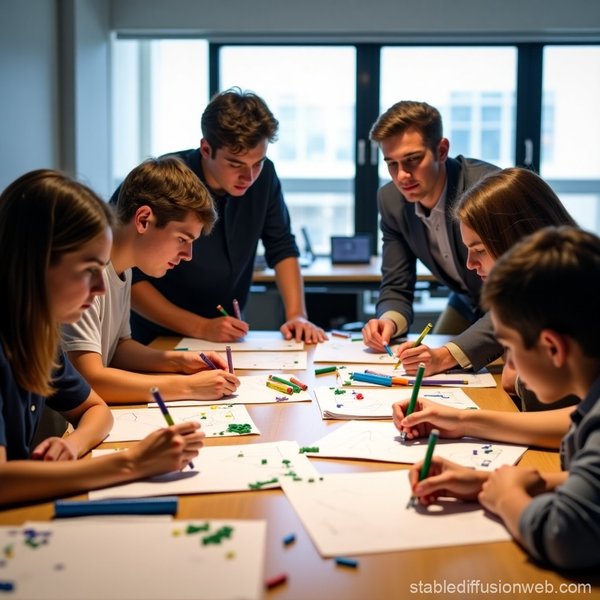
Students collaborating and exploring creative projects using AI tools in a modern, technologically advanced setting.
AI as an Active Collaborator: Teammate and Coach
A significant trend in current research is the conceptualization of AI as more than just a passive instrument. Studies are exploring AI's role as an active participant in student teams – a "teammate" or "coach." For instance, research involving students tackling complex problems with AI partners indicates the potential for AI to contribute to idea generation, analysis, and even decision-making processes within a team.
AI as a Teammate
Investigations, such as those examining student perceptions of AI as a teammate in problem-solving scenarios (e.g., Malaysian grade 9 students exploring space problems), shed light on the dynamics of human-AI co-creation. These studies assess usability, engagement, and the overall effectiveness of AI in a collaborative educational context. The goal is to understand how students interact with AI partners and how these interactions impact learning outcomes and team dynamics.
AI as a Team Coach
Generative AI, in particular, is being explored for its potential to act as a team coach. This involves using AI to guide students in structuring their teamwork, for example, by helping them create effective team charters or navigate collaborative challenges. AI can provide prompts and frameworks that encourage reflection and strategic planning within student groups.
Mechanisms of AI-Supported Collaboration in Design
AI supports and enhances collaboration in design education through several key mechanisms. These mechanisms are often facilitated by a growing array of specialized AI tools and platforms.
Real-Time Interaction and Feedback
Many AI tools allow for seamless, real-time project collaboration. Students can work concurrently on design artifacts, exchange ideas instantaneously, and receive immediate feedback, often mediated or augmented by AI. This accelerates the iterative design cycle and helps in identifying and resolving issues more quickly.
Personalized Learning and Adaptive Support
AI can tailor learning experiences to individual student needs within a team context. By analyzing student performance and interaction patterns, AI systems can offer personalized guidance, resources, or suggest specific roles within a team project, ensuring that all members can contribute effectively and learn optimally.
Enhanced Ideation and Prototyping
AI tools, especially generative AI, can significantly boost the ideation and prototyping phases of design. Tools like DALL-E for image generation, or AI-powered UI design tools, can help teams quickly visualize concepts, explore multiple design variations, and create initial prototypes, freeing up students to focus on conceptual depth and user experience.
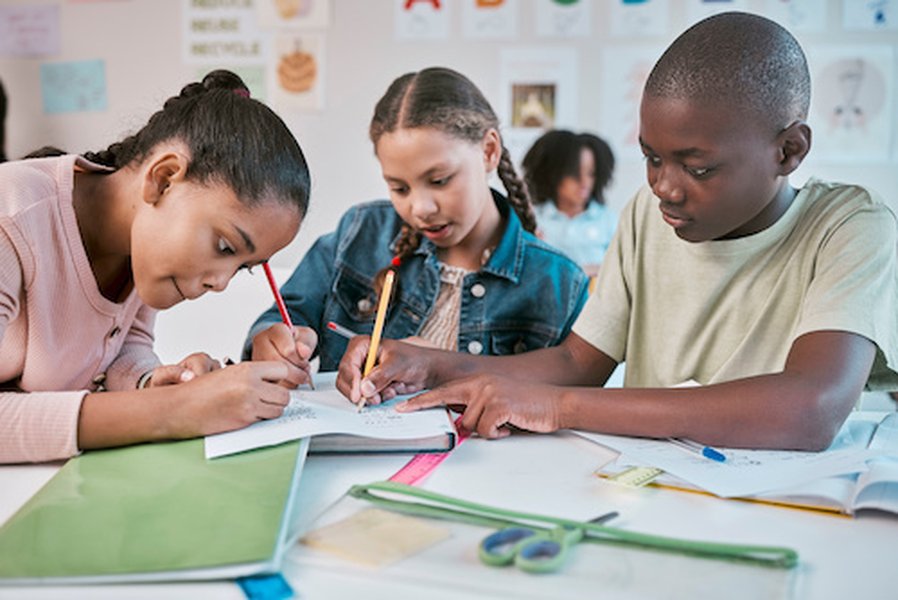
Students engaged in teamwork, utilizing technology for a collaborative project in a classroom setting.
Impact on Skill Development and Future Workforce Readiness
The integration of AI into collaborative design projects is crucial for equipping students with skills vital for the future workforce. Beyond traditional design competencies, students develop AI literacy, data analysis capabilities, and proficiency in human-AI interaction. They learn to manage projects where AI is a component, understand the ethical use of AI, and engage in interdisciplinary teamwork that mirrors professional environments.
Publications emphasize that this preparation is essential as industries increasingly rely on AI. Design graduates will be expected not only to be skilled designers but also to navigate and leverage AI technologies effectively and ethically in their professional roles.
Fostering Critical AI Literacy
A key aspect of this skill development is fostering critical AI literacy. This means students learn not just how to use AI tools, but also to understand their underlying mechanisms, potential biases, and societal impacts. This critical perspective is vital for responsible innovation in design.
Visualizing AI's Role: A Mindmap of Connections
To better understand the multifaceted role of AI in collaborative design education, the following mindmap illustrates the key concepts and their interrelations. It shows how AI influences various aspects from pedagogical approaches to student outcomes and the tools involved.
This mindmap highlights the interconnected nature of AI's impact, from the tools used and the benefits they bring, to the necessary pedagogical shifts and the challenges that must be addressed to ensure positive student outcomes.
Comparing AI Tools for Collaborative Design
The market offers a variety of AI tools that can be used in design education to support student collaboration. These tools differ in their primary functions, ease of use, collaborative features, and learning curves. The radar chart below provides an opinionated comparison of conceptual AI tool archetypes based on several key factors relevant to student team settings. This is not an exhaustive list of real tools but rather a representation of different types of AI assistance students might encounter.
This chart illustrates how different types of AI tools might offer varying strengths. For example, an 'Advanced Generative AI Suite' might excel in creative output but have a steeper learning curve, whereas a 'User-Friendly Design Platform AI' could prioritize ease of use and learning support. 'Specialized AI Prototyping Tools' might offer strong integration capabilities. Educators and students can consider such factors when selecting tools for specific collaborative projects.
AI Tools Transforming Collaborative Design Workflows
Several specific AI-powered tools are gaining prominence in design education, facilitating new modes of collaboration. The table below summarizes some key tools and their relevance to student teams. Note that features and availability can change, so it's always good to check the latest information from the providers.
| Tool Name | Primary Use in Design Education | Key Collaborative Feature(s) | Target Student User |
|---|---|---|---|
| Canva Magic Design™ | Rapidly generating design templates from text/media, presentations, social media graphics. | Shared workspaces, real-time co-editing (standard Canva features), AI-assisted template generation for team brainstorming. | Beginner to intermediate students, multidisciplinary teams. |
| Adobe Firefly & Sensei | Generative image creation, text effects, generative fill within Adobe Creative Cloud apps. | Integration with Adobe CC libraries for asset sharing, AI features enhancing individual contributions within a team project. | Intermediate to advanced design students familiar with Adobe suite. |
| Uizard | AI-powered UI/UX design, generating mockups and prototypes from text prompts or sketches. | Team collaboration features, generating shareable design sets, converting hand-drawn sketches to digital designs for team review. | UI/UX design students, app development teams. |
| Designs.ai | Suite of AI tools for logo making, video creation, graphic design, and voiceovers. | Multi-seat licenses, tools for creating diverse marketing assets that can be pooled by a team. | Students working on branding, marketing, or multimedia projects. |
| DALL-E / Midjourney | Generating unique images and artwork from textual descriptions for inspiration or asset creation. | Primarily individual generation, but outputs can be shared and integrated into team projects for ideation and visual development. | All design students, particularly for conceptualization and visual exploration. |
| FigJam AI / Miro AI | AI-assisted whiteboarding, diagramming, idea clustering, and summarization for collaborative brainstorming. | Real-time collaborative canvas with AI features to organize and synthesize team inputs. | All student teams for early-stage ideation, project planning, and workshops. |
These tools, among others, empower student teams by automating certain tasks, providing diverse creative options, and supporting efficient communication and iteration, thereby enhancing the overall collaborative design experience.
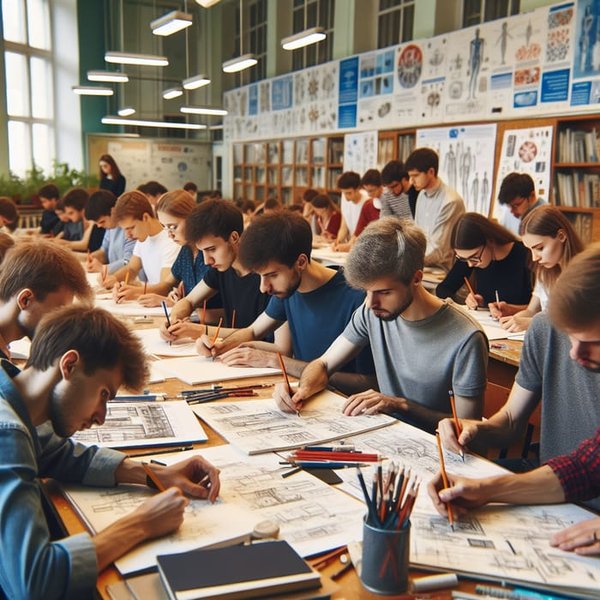
Design students engaged in a creative workshop, fostering collaboration and innovation.
Pedagogical Approaches and Curriculum Design
Effectively integrating AI into collaborative design education requires thoughtful pedagogical strategies and curriculum adjustments. Educators are exploring new models like Student-AI Collaboration (SAC), where learning is structured in phases:
- Learning About AI: Students gain foundational knowledge of AI concepts, capabilities, and limitations.
- Learning From AI: Students use AI tools for specific tasks, such as generating ideas or analyzing data, learning from the AI's outputs.
- Learning Together With AI: Students treat AI as a collaborative partner, engaging in co-creation and mutual learning.
Publications like "Learning design to support student-AI collaboration: perspectives of leading teachers for AI in education" delve into how educators are designing learning environments that foster these stages. This includes redesigning assignments to explicitly incorporate AI collaboration, as suggested by resources from institutions like Washington University's Center for Teaching & Learning.
Ethical Considerations and Challenges
While AI offers immense potential, its integration into design education also presents challenges and ethical considerations. These include:
- Maintaining Creative Agency: Ensuring that students do not become over-reliant on AI and retain their creative voice and critical thinking skills.
- Addressing Bias: Recognizing and mitigating biases that may be present in AI algorithms or training data.
- Data Privacy and Security: Protecting student data when using AI tools.
- Authorship and Originality: Navigating questions of authorship when designs are co-created with AI.
- Equitable Access: Ensuring all students have access to necessary AI tools and digital literacy training.
Systematic reviews and case studies, such as those found in publications from the Design Society or Emerald Insight, often highlight these challenges alongside the benefits, underscoring the need for a balanced and critical approach to AI adoption.
Perspectives on Generative AI in Design Education
The rise of generative AI tools has sparked considerable discussion within design education. The following video features a panel discussion on the evolving role of generative AI in design education and practice, offering valuable insights into opportunities and challenges.
This discussion highlights how educators and practitioners are grappling with the implications of AI tools that can generate novel designs, artwork, and content. It emphasizes the importance of adapting curricula to teach students how to leverage these tools effectively while also instilling a strong foundation in design principles, ethics, and critical thinking. The conversation often revolves around how AI can be a partner in the creative process, augmenting human capabilities rather than replacing them, and how student teams can use these tools for enhanced collaboration and innovation.
Notable Publications and Research Insights
The academic discourse on AI-supported collaboration in design education is growing. Several key publications offer valuable insights:
- "Learning design to support student-AI collaboration: perspectives of leading teachers for AI in education" (Springer): Explores curriculum design and pedagogical strategies for integrating AI as a collaborative partner in K-12 and higher education, including stages of student-AI interaction.
- "Understanding Student Perceptions of Artificial Intelligence as a Teammate in Complex Problem Solving" (Springer): Examines student attitudes and collaborative dynamics when AI acts as a partner in design-related problem-solving.
- "A Systematic Review of the Role of AI (Artificial Intelligence) in Design Education" (Design Society): Reviews AI applications facilitating creative collaboration, including AI-driven ideation and prototyping tools.
- "Redefining creative education: a case study analysis of AI in design courses" / "AI-Supported Collaboration in Design Education: A Case Study Analysis" (Emerald Insight): Focuses on real-time project collaboration using AI-driven design tools and their impact on team communication and workflow in student design teams.
- "The Impact of AI on Design Education and the Future Workforce" (adamfard.com): Discusses the skills designers will need, emphasizing human-centered design, AI literacy, and ethical considerations in an AI-integrated future.
- "Understanding Design Collaboration Between Designers and Artificial Intelligence" (ACM Digital Library): Provides a systematic literature review on designer-AI collaboration patterns, relevant for understanding student team interactions with AI.
- NSF National AI Institute for Student-AI Teaming (NSF iSAT): An interdisciplinary research community focused on developing collaborative learning environments by teaming AI with students and teachers.
These publications, among others, contribute to a deeper understanding of how AI can effectively support and transform collaborative learning experiences in design education, highlighting both the opportunities and the necessary considerations for successful implementation.

Visual representation of key insights into how AI contributes to the design education sector.
Frequently Asked Questions (FAQ)
1. How is AI changing student teamwork in design education?
AI is transforming student teamwork by acting as a collaborative partner, tool, or coach. It facilitates real-time idea exchange, automates certain design tasks (e.g., generating variations, initial drafts), provides instant feedback, and helps manage complex projects. This allows student teams to explore more diverse ideas, iterate faster, and focus on higher-level conceptual thinking and problem-solving.
2. What are some examples of AI tools used for collaborative design projects?
Examples include Canva Magic Design™ for quick template generation, Adobe Firefly for generative imagery within the Creative Cloud, Uizard for AI-powered UI/UX prototyping, Designs.ai for a suite of creative tools, and various generative art tools like DALL-E or Midjourney for visual ideation. Collaborative whiteboarding tools like FigJam AI or Miro AI also incorporate AI to help teams organize and synthesize ideas.
3. What skills do students develop through AI-supported collaboration in design?
Students develop a range of skills, including traditional design competencies, AI literacy (understanding how AI works and its applications), data analysis, prompt engineering, and critical evaluation of AI-generated content. Importantly, they hone skills in human-AI collaboration, project management in AI-integrated workflows, and ethical considerations related to AI use in design.
4. Are there any ethical concerns with using AI in student design teams?
Yes, ethical concerns include potential biases in AI algorithms influencing design outcomes, issues of authorship and intellectual property for AI-assisted creations, the risk of over-reliance on AI leading to a decline in fundamental skills, data privacy when using cloud-based AI tools, and ensuring equitable access to these technologies for all students.
5. How can educators effectively integrate AI into collaborative design assignments?
Educators can redesign assignments to explicitly leverage AI as a collaborator, define clear learning objectives related to both design and AI literacy, and structure projects in phases (learning about AI, from AI, and with AI). They should encourage critical reflection on AI's role, provide guidance on ethical use, and select appropriate AI tools that match the learning goals and students' skill levels. Fostering a culture of experimentation and open discussion about AI's capabilities and limitations is also crucial.
Recommended Further Exploration
To delve deeper into this topic, consider exploring these related queries:
- What are the ethical frameworks for using generative AI in academic design projects?
- How can AI tools enhance creativity and innovation in student design thinking processes?
- What are best practices for training design educators to effectively teach with AI-powered collaborative tools?
- Compare case studies of successful AI integration in collaborative design projects across different universities.
References
Last updated May 16, 2025