
Unlocking Team Synergy: How AI is Revolutionizing Student Collaboration According to Recent Publications
Discover the latest research insights into AI's transformative role in student teamwork, enhancing learning and project outcomes.
The landscape of education is rapidly evolving, with Artificial Intelligence (AI) emerging as a powerful catalyst for change, particularly in how students collaborate. Recent publications and research initiatives highlight a significant shift towards AI-supported team settings, where intelligent tools are not just accessories but integral components fostering enhanced communication, productivity, and learning. This exploration delves into the key findings and discussions presented in contemporary academic literature and expert analyses up to May 16, 2025, painting a picture of AI's growing influence on collaborative student endeavors.
Key Insights from Recent Publications
- Improved Team Performance: Studies indicate that AI collaborative tools can significantly boost team project completion rates and student involvement, with some research pointing to improvements of up to 40% by offering features like real-time feedback and smart moderation.
- Enhanced Learning Dynamics: AI is increasingly recognized for its ability to facilitate deeper learning within teams by personalizing support, aiding in complex data analysis, and acting as a 'team coach' to guide students through collaborative processes and conflict resolution.
- Focus on Ethical and Effective Integration: A growing body of literature emphasizes the critical need for human-centered design, educator training, and clear guidelines to ensure AI tools are used ethically and effectively, complementing rather than replacing essential human interaction and critical thinking skills.
The Multifaceted Role of AI in Student Team Collaboration
AI's integration into student team settings is not a monolithic concept. Instead, it encompasses a variety of tools and functionalities designed to address different aspects of collaborative work. Publications reveal a consensus on several key areas where AI provides substantial support:
Facilitating Communication and Seamless Interaction
Bridging Gaps and Balancing Contributions
AI tools are increasingly sophisticated in enhancing digital platforms to enable seamless interaction among students. They can act as intelligent mediators, simplifying communication flows and ensuring that all team members have an opportunity to contribute effectively. This is particularly valuable in diverse teams or remote collaboration scenarios. Smart moderation features, highlighted in several studies, help keep discussions balanced and productive.
Providing Real-Time Support and Constructive Feedback
Immediate Guidance for Continuous Improvement
One of the most lauded benefits of AI in team settings is its capacity to offer immediate, personalized feedback. During group discussions or collaborative project work, AI can help identify learning gaps, assess understanding, and provide suggestions for improvement. This real-time support loop enables students to iterate and refine their work more effectively.
Optimizing Group Dynamics and Formation
Building Balanced and Cohesive Teams
Research indicates that AI algorithms can analyze students' strengths, weaknesses, and learning styles to assist educators in forming diverse and balanced groups. By matching students based on complementary skill sets, AI contributes to better group dynamics, improved cohesion, and more effective collaboration from the outset.
AI as an Intelligent Team Coach and Mentor
Guiding Teams Towards Success
The concept of AI as a "team coach" is gaining traction in educational literature. Generative AI, for instance, can guide students in creating effective team charters, navigating the complexities of group work, resolving conflicts, and maintaining focus on project goals. This coaching role helps students develop crucial teamwork and problem-solving skills.
Supporting Complex Cognitive Tasks
From Brainstorming to Data Analysis
AI tools are proving invaluable in assisting student teams with various cognitive tasks. This includes:
- Brainstorming and Idea Generation: Students can collaboratively use AI tools to generate a wide array of ideas for projects, which they then critically evaluate and refine.
- Collaborative Writing and Content Creation: AI-powered writing assistants can help teams draft outlines, generate text, and ensure consistency in reports and presentations, streamlining the content creation process.
- Data Analysis and Interpretation: For research-intensive projects, AI can assist teams in processing and analyzing large datasets, identifying patterns, and interpreting results, thereby supporting data-driven conclusions.
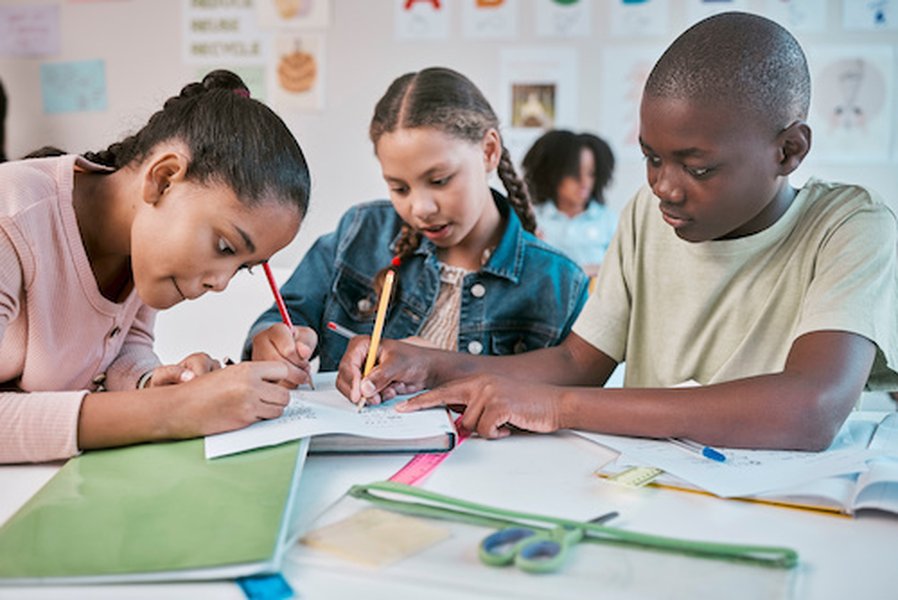
Students engaging in collaborative learning, a scenario increasingly supported by AI tools that enhance teamwork and project outcomes.
Visualizing AI's Impact on Collaborative Learning
To better understand the multifaceted impact of AI on student team collaboration, the following chart illustrates key dimensions where AI intervention typically yields improvements. The scores are illustrative, representing perceived effectiveness based on trends discussed in recent publications. A higher score indicates a greater positive impact.
This radar chart visualizes how different levels of AI integration can affect various aspects of student teamwork. Well-implemented AI tools, as suggested by current research, tend to elevate performance across all these dimensions, leading to more effective and engaged student teams.
Benefits and Positive Outcomes Highlighted in Publications
The literature consistently reports several key benefits stemming from the integration of AI in student collaborative settings:
- Increased Student Engagement and Motivation: Interactive AI tools, gamification elements, and personalized feedback contribute to higher levels of student interest and active participation in team projects.
- Improved Learning Outcomes: By providing tailored support, facilitating deeper understanding of complex topics, and promoting critical thinking, AI helps enhance overall learning achievements within teams.
- Higher Project Completion Rates: As mentioned, studies show that AI-supported teams often exhibit greater efficiency and effectiveness, leading to increased rates of successful project completion. One study highlighted by the AI Center at Lapu.edu reported up to a 40% increase in student involvement and project completion.
- Development of Future-Ready Skills: Collaborating with and through AI tools prepares students for future workplace environments where human-AI teaming is becoming increasingly common. This includes fostering AI literacy, digital communication skills, and adaptive problem-solving.
- Equitable Participation: AI can help monitor and encourage more balanced participation among team members, ensuring that quieter students have a voice and that contributions are more evenly distributed.
Mapping the Ecosystem of AI in Student Team Collaboration
The integration of AI into student collaboration is a complex ecosystem involving various components, from the types of AI support and their benefits to the inherent challenges and the crucial role of educators. The mindmap below provides a visual overview of these interconnected elements as discussed in recent publications.
This mindmap illustrates the interconnected nature of AI's role in student teams, highlighting how various support mechanisms contribute to benefits, while also acknowledging the challenges that need careful management by educators within specific research contexts.
Key Research Findings and Notable Publications
Several studies and reports provide concrete evidence and insights into AI's role in student collaboration. The following table summarizes some key findings discussed in the literature:
| Publication/Study Focus Area | Key Findings Highlighted in Literature | Reported Impact or Significance |
|---|---|---|
| "How AI Collaborative Tools Actually Improve Student Team Performance" (e.g., AI Center at Lapu.edu discussions) | AI tools enhance collaboration through real-time feedback, optimal student matching based on strengths, and smart moderation to ensure balanced discussions. | Reports indicate up to a 40% increase in team project completion rates and overall student involvement when AI collaboration systems are effectively used. |
| "Exploring how AI can be used to Promote Collaboration in group Project reduce Conflict in Team Dynamics and Enhance Cooperative Learning Experiences" (Quantitative Studies) | AI implementation is shown to minimize interpersonal conflicts and significantly enhance cooperation among students. Strong positive correlations were found between AI tool usage and improvements in collaboration, communication, task coordination, conflict resolution, and learning outcomes. | AI tools serve as strong predictors of improved collaboration effectiveness and enhanced learning outcomes in team-based projects. |
| Springer Publication: "Learning design to support student-AI collaboration: perspectives of leading teachers for AI in education" | Emphasizes AI as a "learning mate" or partner, offering instructional scaffolding, aiding in error analysis, and supporting the development of data literacy. Effective design requires interdisciplinary tasks and authentic problem-solving contexts. | Enhances student engagement and supports more complex, creative, and interdisciplinary collaborative projects. Highlights the need for human-centered AI design. |
| MDPI Publication: "Exploring students' perspectives on integrating AI into scientific collaboration" / "Benefits and Challenges of Collaboration between Students and Conversational Generative Artificial Intelligence in Programming Learning" | Students using AI in small groups for tasks like programming report benefits in idea sharing, problem-solving, and receiving immediate feedback. AI can enable personalized learning paths within the team. | Improves critical thinking and problem-solving skills. However, it also flags challenges such as potential over-reliance on AI and technical inconsistencies. |
| Harvard Business Publishing Education: "AI as Team Coach" Series | Details how generative AI can function as a team coach, guiding students through project phases, improving communication, and helping manage team dynamics effectively. | Helps students develop critical thinking, project management, and collaborative skills by providing structured support and feedback throughout the teamwork process. |
These findings underscore a consistent theme: AI, when thoughtfully integrated, can be a powerful lever for improving student collaboration and learning. However, success hinges on addressing the associated challenges proactively.
Navigating Challenges and Ethical Considerations
While the benefits are compelling, publications also conscientiously address the challenges and ethical dilemmas associated with AI in student collaboration:
- Over-Reliance on AI: A significant concern is that students might become overly dependent on AI tools, potentially diminishing their own critical thinking, problem-solving abilities, and capacity for independent collaboration.
- Technical Difficulties and Accessibility: Issues such as inconsistent AI outputs, system glitches, and unequal access to technology can hinder collaborative efforts and create inequities.
- Algorithmic Bias and Fairness: AI tools are only as unbiased as the data they are trained on. There's a risk that inherent biases in AI algorithms could inadvertently perpetuate or exacerbate existing inequalities among students.
- Data Privacy and Security: The use of AI tools in education involves the collection and processing of student data, raising important concerns about privacy, security, and ethical data handling practices.
- Maintaining Authenticity and Academic Integrity: Educators and institutions must establish clear guidelines on the appropriate use of AI to prevent misuse, such as plagiarism, and ensure that student work remains authentic.
Addressing these challenges requires a multi-pronged approach involving robust AI governance, ethical design principles, comprehensive teacher training, and fostering AI literacy among students.
The Evolving Role of Educators
Publications stress that AI is not intended to replace educators but to augment their capabilities. The teacher's role evolves to that of a facilitator, guiding students in the effective and ethical use of AI tools. This includes:
- Designing collaborative tasks that leverage AI's strengths while promoting higher-order thinking.
- Providing training on responsible AI use and critical evaluation of AI-generated content.
- Monitoring group dynamics and intervening when necessary to address challenges or ensure equitable participation.
- Fostering a classroom culture that values both human collaboration and an understanding of AI's capabilities and limitations.
Insights from the Field: AI-Supported Collaboration in Discussion
The following video features a discussion on the broader topic of AI-supported collaboration, offering perspectives relevant to its application in educational and professional settings. Understanding these general principles can inform how AI is leveraged specifically within student teams.
This discussion explores how AI can augment human collaborative efforts, a theme that resonates strongly with the findings in educational publications regarding student teams. It touches upon the synergies and challenges inherent in human-AI partnerships.
Frequently Asked Questions (FAQ)
How does AI specifically improve student teamwork?
According to various publications, AI improves student teamwork by:
- Facilitating Communication: Offering platforms with smart moderation and translation features.
- Providing Real-Time Feedback: Helping students identify errors and areas for improvement instantly.
- Optimizing Group Formation: Assisting educators in creating balanced teams based on student skills and learning styles.
- Acting as a Team Coach: Guiding teams through project stages, managing conflicts, and suggesting roles.
- Automating Mundane Tasks: Assisting with tasks like summarizing discussions or scheduling, freeing up students to focus on higher-level thinking.
- Enhancing Brainstorming & Content Creation: Providing tools for idea generation and collaborative writing.
What are the primary concerns or challenges when using AI in collaborative student projects?
Key challenges highlighted in research include:
- Over-Reliance: Students may become too dependent on AI, potentially stifling their own critical thinking and problem-solving skills.
- Technical Issues: Inconsistent AI performance, bugs, or lack of access can disrupt collaboration.
- Ethical Concerns: Issues of data privacy, algorithmic bias, and the responsible use of AI-generated content are paramount.
- Integration Complexity: Effectively integrating AI into existing curricula and teaching practices requires careful planning and teacher training.
- Quality of AI Output: AI-generated information may sometimes be inaccurate or superficial, requiring careful vetting by students.
What role do educators play when AI is used to support student teams?
Educators play a crucial, evolving role. Publications emphasize that they should:
- Design Effective Tasks: Create collaborative projects that meaningfully integrate AI tools.
- Facilitate and Guide: Act as facilitators, guiding students on how to use AI tools productively and ethically.
- Teach AI Literacy: Help students understand AI's capabilities, limitations, and potential biases.
- Monitor and Intervene: Oversee team dynamics and provide support when teams encounter difficulties or misuse AI.
- Promote Critical Thinking: Encourage students to critically evaluate AI-generated content rather than accepting it passively.
- Set Clear Guidelines: Establish rules for AI use to ensure academic integrity and responsible collaboration.
Are there particular AI tools that are highly recommended for student collaboration?
While specific recommendations vary and tools evolve rapidly, publications frequently mention platforms and types of tools such as:
- Integrated Learning Platforms: Systems like Microsoft Teams with Viva Learning or Google Workspace for Education offer collaborative features enhanced by AI.
- Specialized Collaboration Tools: Platforms like Socrat are designed with features for group discussions, AI summaries, and real-time feedback.
- Generative AI Models: Tools like ChatGPT can be used for brainstorming, drafting, and getting feedback, though their use requires careful guidance.
- Content Creation Tools: AI-enhanced tools like Adobe Express can assist teams in creating visuals and multimedia content.
- Educational AI Assistants: Tools like Eduaide.Ai or MagicSchool, while often teacher-focused, have student-facing applications that can support collaborative research and learning.
Recommended Further Exploration
To delve deeper into the nuances of AI-supported student collaboration, consider exploring these related queries:
- Explore ethical guidelines for AI use in collaborative educational settings.
- Discover specific strategies for training students to effectively collaborate with AI tools.
- Investigate the long-term impact of AI-supported collaboration on student skill development.
- Learn about the latest advancements in AI features designed for educational teamwork.
References
The insights in this response are synthesized from a range of publications and resources. For further reading, consult sources such as:
Last updated May 16, 2025