
Unlocking Synergistic Power: Practical Ways to Weave Human Ingenuity with Generative AI
Discover actionable strategies to effectively combine human cognitive strengths with the capabilities of generative AI for enhanced productivity and innovation.
In an era where artificial intelligence is rapidly advancing, the collaboration between human intellect and generative AI presents a transformative opportunity. This synergy is not about human replacement but augmentation, creating a powerful partnership that leverages the unique strengths of both. By strategically integrating AI into our workflows, we can unlock new levels of creativity, efficiency, and problem-solving. This guide explores practical methods to blend human thinking with generative AI, turning this collaboration into a tangible asset across various domains.
Key Highlights: Embracing Human-AI Collaboration
- Strategic Augmentation: Focus on using generative AI to enhance and amplify human capabilities, such as creativity and strategic insight, rather than merely automating tasks.
- Defined Roles & Seamless Integration: Clearly delineate tasks suited for AI (e.g., data processing, initial draft generation) and those requiring human expertise (e.g., ethical judgment, nuanced understanding, final refinement), ensuring AI tools are smoothly embedded into existing workflows.
- Iterative Feedback & Ethical Oversight: Establish continuous feedback loops where human input refines AI outputs, coupled with robust ethical guidelines and human oversight to ensure responsible and beneficial AI application.
The Dawn of Human-AI Synergy
Blending human thinking with generative AI signifies a paradigm shift from viewing AI as a standalone tool to embracing it as a collaborative partner. This approach involves strategically combining human cognitive abilities—creativity, critical thinking, emotional intelligence, and ethical judgment—with AI's strengths in processing vast amounts of data, recognizing patterns, and generating diverse content at scale. The goal is to create a symbiotic relationship where AI handles laborious, data-intensive, or repetitive aspects of tasks, freeing up human intellect to focus on higher-order thinking, innovation, and strategic decision-making. This collaboration fosters an environment where the sum is greater than its parts, leading to breakthroughs and efficiencies previously unattainable.

Generative AI tools are increasingly becoming part of our daily creative and professional workflows.
Defining Clear Roles and Responsibilities
A cornerstone of effective human-AI collaboration is the clear delineation of roles. This involves understanding the distinct advantages each brings to the table and assigning responsibilities accordingly.
Identifying Complementary Strengths
Humans excel in areas requiring intuition, empathy, complex ethical reasoning, and understanding nuanced contexts. Generative AI, on the other hand, excels at rapid information processing, generating a multitude of options, identifying patterns in large datasets, and performing repetitive tasks with high consistency. For instance, AI can generate initial drafts or design concepts, while humans provide the creative vision, contextual understanding, and ethical oversight to refine these outputs.
Strategic Task Allocation
Tasks should be allocated based on these strengths. AI can be tasked with:
- Generating initial drafts of reports, articles, or code.
- Analyzing large datasets to identify trends or anomalies.
- Automating responses to routine inquiries.
- Creating diverse visual or textual concepts for brainstorming.
- Setting strategic direction and defining project goals.
- Critically evaluating and refining AI-generated content.
- Making complex decisions that require ethical judgment and contextual awareness.
- Injecting creativity, originality, and emotional intelligence into the final product.
- Handling complex, non-standard customer interactions or problems.
Seamless Integration into Workflows
For human-AI collaboration to be practical, AI tools must be seamlessly integrated into existing processes and workflows rather than existing as standalone novelties. This involves both technical integration and process redesign.
Incorporating Generative AI APIs and Custom Bots
Organizations can leverage generative AI APIs to embed AI functionalities directly into their current software and platforms. This could mean integrating a language model into a CRM to help draft customer communications or using an image generation API within a design tool. Developing custom AI bots tailored to specific business needs can automate particular tasks or provide specialized assistance, ensuring the AI is a natural fit within the team's operational environment.
Pilot Projects and Iterative Adoption
Start with pilot projects in low-risk areas to test and refine the integration. For example, a marketing team might pilot generative AI for drafting social media posts, with human marketers reviewing and editing. Successes from these pilots can inform broader adoption, allowing teams to gradually become comfortable with AI tools and adapt their workflows iteratively.
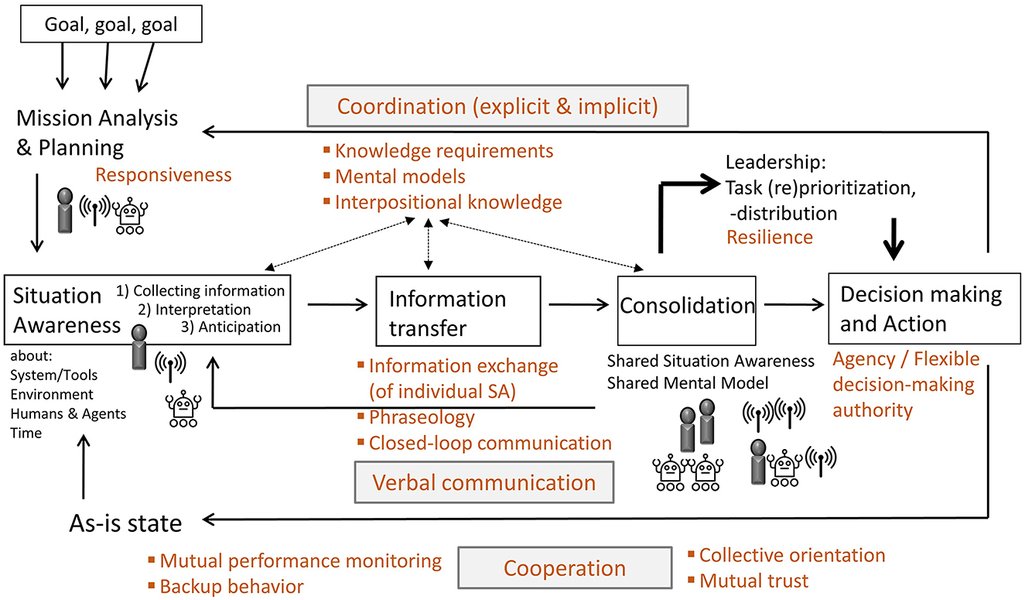
Effective human-AI teams leverage the distinct capabilities of both human members and AI systems.
Fostering Creative Collaboration
Generative AI can be a powerful catalyst for human creativity, helping to overcome creative blocks and explore new possibilities.
AI for Divergent Thinking and Idea Generation
Use generative AI as an "idea engine." It can produce a wide array of suggestions, concepts, or designs based on initial prompts. This helps in the divergent thinking phase of the creative process, where the goal is to generate as many ideas as possible. For example, AI can suggest multiple headlines for an article, various color palettes for a design, or different plot points for a story.
Human Refinement, Selection, and Contextual Application
Following AI-assisted idea generation, human intelligence is critical for the convergent thinking phase. Humans evaluate the AI's suggestions, select the most promising ones, refine them, and ensure they align with the project's objectives, target audience, and ethical considerations. This human touch adds depth, nuance, and strategic alignment that AI alone cannot achieve.
The Power of Iterative Feedback Loops
A dynamic and iterative feedback process is essential for optimizing the output of human-AI collaboration. This continuous loop ensures that AI performance improves over time and remains aligned with human goals.
Establishing Continuous Review and Refinement Cycles
Implement regular check-ins where human team members review AI-generated outputs. This could involve daily or weekly reviews of AI suggestions, content drafts, or data analyses. Feedback should be specific, allowing for adjustments to AI prompts or parameters to enhance future results. This iterative process helps in "training" the AI (in a practical sense of prompt refinement) to better understand the desired outcomes.
Human Validation and AI Adaptation
Human validation of AI outputs is crucial for maintaining quality and accuracy. As humans provide corrections and refinements, AI systems (or rather, the human interaction with them) adapt. This ensures that the collaboration becomes more efficient and effective over time, with the AI producing increasingly relevant and high-quality contributions.
Visualizing Complementary Strengths: Human vs. AI
To better understand how humans and generative AI can work together, it's helpful to visualize their respective strengths. The following radar chart illustrates typical areas where humans and AI excel, highlighting their complementary nature. The scores are illustrative, representing general tendencies on a scale where higher values indicate greater proficiency. The axis minimum is set to 2, and the maximum is 10, with all data points plotted above the minimum for clarity.
This chart visually underscores why a collaborative approach is so potent: AI can handle the heavy lifting in data-intensive areas and generate diverse options quickly, while humans provide the critical thinking, ethical oversight, and creative finesse essential for high-quality, meaningful outcomes.
Mindmap of Human-AI Collaboration Strategies
The following mindmap outlines the core strategies for effectively blending human thinking with generative AI. It visualizes the interconnected components that contribute to a successful synergistic relationship, from defining roles to ensuring ethical practices and fostering continuous improvement.
Generative AI"] id1["Define Clear Roles"] id1a["AI Strengths:
Data Processing, Speed,
Pattern Recognition, Scale"] id1b["Human Strengths:
Creativity, Ethics,
Context, Strategy,
Emotional Intelligence"] id1c["Task Allocation:
AI for routine & data-heavy,
Humans for oversight & complex decisions"] id2["Seamless Workflow Integration"] id2a["Identify Use Cases &
Apply Design Patterns"] id2b["Integrate AI APIs & Tools"] id2c["Develop Custom AI Bots"] id2d["Start with Pilot Projects"] id3["Foster Creative Synergy"] id3a["AI for Divergent Thinking:
Idea Generation, Brainstorming"] id3b["Human for Convergent Thinking:
Refinement, Selection, Validation"] id3c["AI in Conceptual Design Processes"] id4["Iterative Feedback & Improvement"] id4a["Establish Feedback Loops"] id4b["Human Review & Annotation"] id4c["Continuous AI Learning & Adaptation
(via refined human interaction)"] id5["Ethical Guardrails & Oversight"] id5a["Address AI Biases & Limitations"] id5b["Ensure Transparency & Auditability"] id5c["Maintain Human-in-the-Loop
for Critical Decisions"] id6["Optimize Input & Build Skills"] id6a["Master Prompt Engineering"] id6b["Foster AI Literacy & Training"] id6c["Strategic Decision-Making Support"]
This mindmap provides a holistic view of the multifaceted approach required to create a truly collaborative environment where human and artificial intelligence can thrive together.
Ethical Guardrails and Human Oversight
While the potential of human-AI collaboration is immense, it's crucial to navigate the ethical landscape responsibly. This involves establishing clear guidelines and maintaining human oversight to mitigate risks and ensure fairness.
Addressing AI Bias and Ensuring Transparency
Generative AI models can inadvertently perpetuate biases present in their training data. Human oversight is essential to identify and correct these biases in AI-generated content. Furthermore, striving for transparency in how AI tools operate and make suggestions helps build trust and allows for more informed human intervention.
The Human-in-the-Loop (HITL) Principle
For critical decisions, especially those with significant ethical or real-world consequences, the Human-in-the-Loop (HITL) approach is paramount. This means that AI can assist and provide information, but the final judgment and accountability rest with human decision-makers. This is particularly important in fields like healthcare, finance, and law.
Training, AI Literacy, and Clear Communication Protocols
Educating teams on the capabilities and limitations of generative AI is vital. This includes training on effective prompt engineering to get better results and understanding potential pitfalls. Clear communication protocols should define when and how AI usage is acceptable, reinforcing that employees should use their own insights in conjunction with AI tools.
Combining AI's analytical power with human insight can drive significant growth and innovation.
Optimizing AI Input and Developing Custom Solutions
The quality of AI output is heavily dependent on the quality of human input. Moreover, tailoring AI solutions to specific contexts can greatly enhance their utility.
The Art of Prompt Engineering
Effective interaction with generative AI often comes down to skillful "prompt engineering"—crafting clear, specific, and context-rich instructions for the AI. Humans need to learn how to communicate their desired outcomes to AI systems effectively to maximize the relevance and quality of the generated content.
Tailoring AI for Specific Needs
Developing custom AI bots or fine-tuning existing models for particular business functions or individual tasks can make AI a more potent collaborator. This customization ensures that the AI's capabilities are closely aligned with the specific challenges and objectives at hand.
Illustrative Strategies for Human-AI Collaboration
The following table summarizes key practical strategies for blending human thinking with generative AI, outlining the roles of both AI and humans, along with concrete examples:
| Collaboration Strategy | AI's Role | Human's Role | Practical Example |
|---|---|---|---|
| Idea Generation & Brainstorming | Produce a wide range of initial ideas, concepts, or solutions. | Define problem, guide AI, refine, select best ideas, add context, ensure alignment with goals. | AI generates 50 blog post titles; a human writer selects the top 3 and refines them for tone and SEO. |
| Content Creation & Augmentation | Generate drafts of text, code, summaries, or image concepts. | Provide prompts, edit, personalize, ensure accuracy, originality, ethical considerations, and final quality. | AI drafts an initial email response; a customer service agent personalizes and verifies it before sending. |
| Data Analysis & Insight Discovery | Process large datasets, identify patterns, correlations, and anomalies. | Formulate questions, interpret AI-generated insights, validate findings, make strategic decisions based on data. | AI analyzes market trends from sales data; a business analyst interprets these trends to inform marketing strategy. |
| Repetitive Task Automation | Handle routine, predictable, and time-consuming tasks. | Oversee AI performance, manage exceptions, handle complex or nuanced variations, focus on higher-value strategic work. | AI chatbot handles common customer queries; human agents manage complex issues and escalations. |
| Personalized Experience Delivery | Tailor content, recommendations, or learning paths based on user data. | Define personalization parameters, monitor for fairness and bias, curate experiences, provide empathy. | AI recommends products based on browsing history; a human stylist curates a personalized collection. |
| Problem Solving & Decision Support | Simulate scenarios, predict outcomes, present data-driven options. | Define problem scope, evaluate AI-suggested options, apply critical thinking and ethical judgment, make final decisions. | AI models potential impacts of a supply chain disruption; a manager uses this to make contingency plans. |
Measuring Impact and Scaling Success
To ensure the long-term viability and benefits of human-AI collaboration, it's important to measure its impact and strategically scale successful implementations.
Defining Key Performance Indicators (KPIs)
Establish metrics to track the effectiveness of human-AI teams. These could include productivity gains (e.g., time saved on tasks), quality improvements (e.g., error reduction, enhanced creativity), employee satisfaction, and innovation rates. Continuously evaluate AI accuracy, efficiency, and overall contribution.
Strategies for Wider Implementation and Building "Superteams"
Once specific human-AI collaborative approaches prove successful in pilot projects, develop strategies to scale these practices across the organization. This might involve sharing best practices, providing broader access to AI tools, and investing in ongoing training. The concept of "superteams"—where humans and AI are deeply integrated to redesign work in transformative ways—can lead to significantly greater value than managing them on parallel tracks.
Exploring Human-AI Synergy in Action
The video below, "Human-AI Collaboration: Unlocking Next-Level Synergy," delves into various applications where the combination of human creativity and AI capabilities leads to innovative solutions and enhanced decision-making. It showcases how this collaborative approach is being applied in diverse fields, highlighting the practical benefits and transformative potential of humans and AI working in concert. Understanding these real-world examples can provide valuable insights into how such synergies can be cultivated in your own context.
This video illustrates that from creative industries to critical disaster response, the blend of human intuition with AI's analytical power is not just a futuristic concept but a present-day reality, driving efficiency and innovative outcomes.
Frequently Asked Questions (FAQ)
What is the primary goal of blending human thinking with generative AI? ▼
The primary goal is to create a synergistic partnership that leverages the unique strengths of both humans and AI to achieve superior outcomes. It's about augmenting human capabilities—like creativity, critical thinking, and ethical judgment—with AI's speed, data processing power, and ability to generate diverse options. This leads to enhanced productivity, innovation, and more effective problem-solving, rather than replacing human workers.
How can businesses start integrating generative AI with human tasks? ▼
Businesses can start by:
- Identifying suitable use cases: Pinpoint tasks where AI can assist, such as drafting content, summarizing information, or analyzing data.
- Starting with pilot projects: Implement AI in limited, low-risk areas to test effectiveness and gather learnings.
- Defining clear roles: Assign data-heavy or repetitive aspects to AI, while humans handle strategy, refinement, and ethical oversight.
- Providing training: Equip employees with skills in prompt engineering and understanding AI capabilities/limitations.
- Integrating AI into existing workflows: Choose tools and APIs that can be embedded into current systems smoothly.
What are common challenges in human-AI collaboration? ▼
Common challenges include:
- Potential for AI bias: AI outputs can reflect biases in their training data, requiring human vigilance.
- Over-reliance on AI: Humans might become too dependent on AI, potentially diminishing critical thinking skills if not managed.
- Integration complexities: Fitting AI tools seamlessly into existing workflows and IT infrastructure can be difficult.
- Data privacy and security concerns: Handling sensitive data with AI tools requires robust security measures.
- Need for new skills: Employees may require training to interact effectively with AI (e.g., prompt engineering).
- Cost of implementation: Acquiring, integrating, and maintaining AI systems can be an investment.
Why is human oversight crucial when using generative AI? ▼
Human oversight is crucial for several reasons:
- Ethical considerations: Humans apply ethical judgment that AI lacks, ensuring fairness and preventing harm.
- Contextual understanding: AI may not grasp nuances or specific contexts, leading to inappropriate or irrelevant outputs. Humans provide this crucial context.
- Bias detection and mitigation: Humans can identify and correct biases in AI-generated content.
- Quality control and refinement: Humans ensure the accuracy, relevance, and overall quality of AI outputs, aligning them with strategic goals.
- Accountability: For critical decisions, human accountability is essential, especially in sensitive domains.
- Creativity and Innovation: While AI can generate novel ideas, human creativity is often needed to refine, combine, or apply these ideas in truly innovative ways.
Recommended Further Exploration
To delve deeper into leveraging AI for enhanced human capabilities, consider exploring these related queries:
- What are the best prompt engineering techniques for creative content generation with AI?
- How can ethical AI principles be practically implemented in human-AI collaborative projects?
- What are real-world examples of companies successfully using human-AI superteams for innovation?
- How to measure the ROI of investing in generative AI tools for team productivity?
References

Last updated May 8, 2025