
Unlocking Unprecedented Synergy: The Definitive Guide to Seamlessly Blending Human and AI Ideas
Discover how to harness the combined power of human ingenuity and artificial intelligence for unparalleled innovation and creativity.
Highlights of Human-AI Idea Blending
- Synergistic Partnership: Blending human and AI ideas fosters a collaborative environment where AI augments human capabilities, leading to outcomes significantly superior to what either could achieve in isolation. This is about enhancement, not replacement.
- Iterative Co-Creation: The most effective blending involves a dynamic, iterative workflow. AI can generate a multitude of initial concepts or analyze vast data, while humans provide crucial refinement, contextual understanding, emotional depth, and ethical oversight.
- Strategic Role Allocation: Success hinges on intelligently assigning tasks based on distinct strengths: humans excel in creativity, emotional intelligence, and complex ethical reasoning, while AI offers speed, data processing prowess, and pattern recognition.
The Dawn of Co-Creation: Integrating Human and AI Thought
The concept of "completely blending" human and AI ideas refers to the creation of a deeply integrated, synergistic partnership. This collaboration aims to weave together the unique strengths of human intellect—our intuition, emotional depth, creativity, and ethical compass—with the formidable capabilities of artificial intelligence, such as rapid data processing, pattern identification, and tireless generation of alternatives. The goal is not for AI to supplant human thought, but to amplify and extend it, enabling the generation of ideas and solutions that are richer, more innovative, and more impactful than either humans or AI could produce alone. This harmonious blend is poised to redefine creative processes, problem-solving methodologies, and innovation across countless fields.
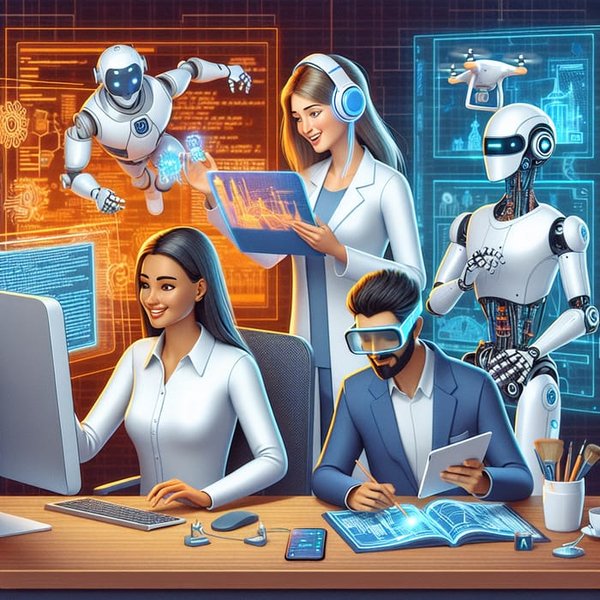
Humans and AI collaborating to achieve shared goals.
Understanding the Dynamic Duo: Human vs. AI Strengths
A complete blend of human and AI ideas starts with a profound understanding of their complementary strengths and weaknesses. Recognizing what each brings to the table is fundamental to designing effective collaborative workflows.
Human Strengths: The Core of Ingenuity
Humans contribute irreplaceable qualities that are, as of today, beyond AI's grasp:
- Creativity and Originality: The ability to imagine novel concepts, think outside the box, and create truly original work.
- Emotional Intelligence: Understanding and responding to human emotions, crucial for creating ideas that resonate on a deeper level.
- Contextual Understanding: Grasping nuances, cultural sensitivities, and the broader implications of ideas.
- Ethical Reasoning and Judgment: Applying moral principles, making value-based decisions, and ensuring fairness.
- Subjective Intuition: "Gut feelings" and insights born from experience and tacit knowledge.
- Critical Thinking: Analyzing information with depth, questioning assumptions, and solving complex, ill-defined problems.
AI Strengths: The Engine of Scale and Speed
AI offers powerful capabilities that can significantly augment human endeavors:
- Vast Data Processing: Analyzing enormous datasets far beyond human capacity, identifying patterns and correlations.
- Speed and Efficiency: Performing tasks, generating options, and iterating at incredible speeds.
- Pattern Recognition: Detecting subtle trends and anomalies in data that might be missed by humans.
- Rapid Idea Generation: Producing a large volume and wide diversity of ideas or content variations based on learned patterns.
- Information Recall: Accessing and synthesizing vast stores of information accurately.
- Task Automation: Handling repetitive or time-consuming aspects of the creative process.
The Power of Augmented Intelligence
The true magic happens when these distinct strengths are combined. AI acts as a powerful tool that extends human capabilities, allowing for greater exploration, efficiency, and the creation of novel and impactful outcomes. The following chart visualizes a conceptual comparison of these strengths and how a blended approach might yield superior results.
This chart illustrates how humans generally excel in areas requiring deep understanding and nuanced judgment, while AI excels in speed and data handling. A blended approach aims to leverage the peaks of both, mitigating individual weaknesses and creating a more well-rounded and potent ideation force.
Crafting the Collaborative Symphony: Workflows and Processes
Achieving a complete blend of human and AI ideas isn't accidental; it requires thoughtfully designed workflows and processes that facilitate seamless collaboration. This involves iterative cycles, clear role definitions, and robust feedback mechanisms.
The Iterative Cycle: From AI Spark to Human Polish
A common and effective model involves AI generating initial drafts, concepts, or data analyses. Humans then step in to review, select, refine, combine, and build upon these AI-generated starting points. This cycle can be repeated multiple times, with each iteration bringing the idea closer to its optimal form. For instance, AI might generate 100 taglines, a human marketer selects the top 5, refines them for brand voice, and perhaps feeds new criteria back to the AI for further variations.
Defining Roles: Strategic Task Allocation
Clarity in roles is paramount. Tasks should be allocated based on who (or what) is best suited for them:
- AI's Role: Brainstorming diverse options, conducting rapid data analysis, identifying patterns, drafting initial content, automating repetitive tasks, generating variations.
- Human's Role: Setting the strategic direction and goals, providing initial creative prompts, ensuring ethical considerations, imbuing emotional nuance and storytelling, making final curatorial decisions, and validating accuracy and relevance.
The Crucial Feedback Loop
Effective human-AI collaboration thrives on a continuous feedback loop. Humans guide the AI's output by refining prompts, providing examples of desired outcomes, and correcting or adjusting AI-generated content. This "training" or "guidance" helps the AI better align with human intent over time, leading to more relevant and useful contributions.
The following mindmap illustrates the interconnected components involved in successfully blending human and AI ideas, showcasing the flow from individual contributions to collaborative processes and desired outcomes.
Creativity, Empathy
Context, Ethics
Intuition, Judgment"] id_h_roles["Roles
Refinement, Oversight
Emotional Nuance
Strategic Direction
Validation"] id_ai["AI Contributions"] id_ai_strengths["Strengths
Data Analysis, Speed
Pattern Recognition
Idea Generation
Scalability"] id_ai_roles["Roles
Brainstorming, Drafting
Automation, Analysis
Variation Generation"] id_process["Collaborative Process"] id_p_iter["Iterative Cycles
(AI Generate -> Human Refine)"] id_p_feed["Feedback Loops
(Human Guides AI)"] id_p_role["Defined Roles & Tasks"] id_p_aug["Goal: Augmented Intelligence"] id_outcomes["Key Outcomes & Benefits"] id_o_inno["Enhanced Innovation"] id_o_eff["Increased Efficiency & Productivity"] id_o_qual["Improved Quality & Depth"] id_o_exp["Expanded Creative Possibilities"] id_apps["Application Areas"] id_app_creat["Creative Industries
(Art, Music, Design)"] id_app_biz["Business & Marketing
(Content, Strategy)"] id_app_res["Research & Development"] id_app_edu["Education & Learning"]
This mindmap visually structures the core elements: understanding human and AI inputs, defining the collaborative process, and recognizing the powerful outcomes and diverse applications of this synergy.
Practical Strategies for Harmonious Blending
Beyond understanding strengths and processes, specific strategies can help foster a truly harmonious blend of human and AI ideas.
AI as a Creative Catalyst, Not Just a Generator
Shift the mindset from viewing AI as a mere output generator to seeing it as a creative partner or catalyst. AI-generated content, even if imperfect, can serve as a powerful source of inspiration, helping humans overcome creative blocks, explore unconventional paths, or see problems from new angles. For example, an artist might use AI-generated textures or forms as a starting point for a new piece, or a writer might use an AI-generated plot idea to spark a novel.
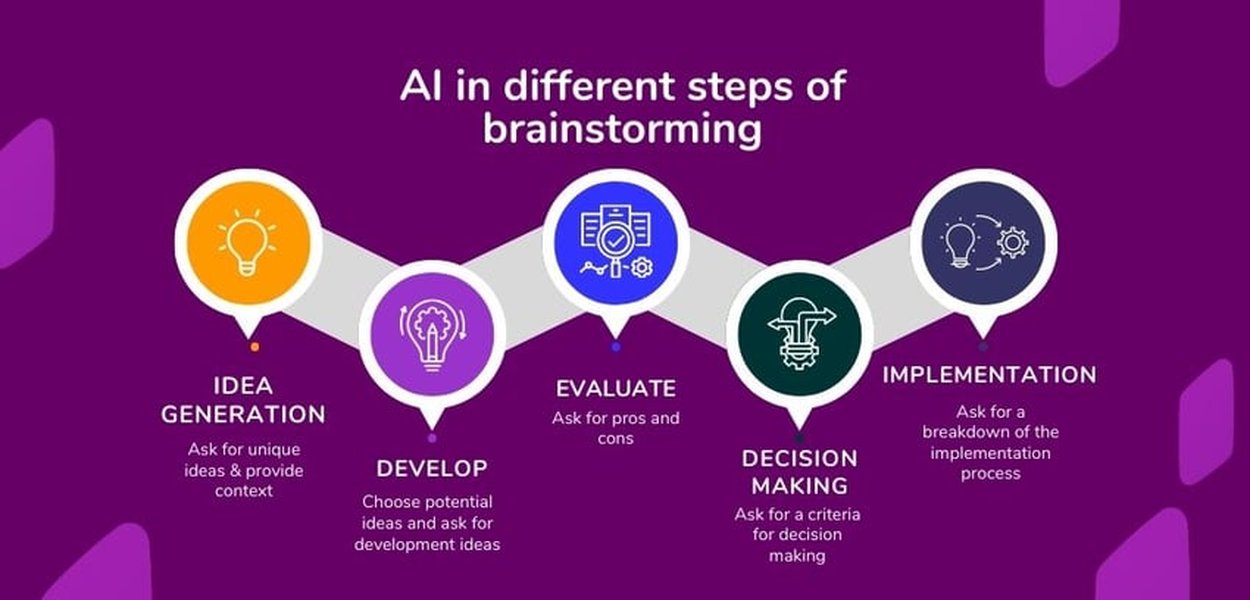
AI can be a powerful tool in the initial stages of brainstorming and idea generation.
Hybrid Projects and Integrated Tools
Embrace tools and platforms that are designed for human-AI collaboration. These might include AI-assisted design software, writing platforms with integrated AI suggestions, or co-composition tools for music. Developing projects that explicitly require both human and AI input at various stages fosters a natural blending of their respective contributions.
Cultivating Essential Collaboration Skills
For humans to effectively collaborate with AI, new skills become important:
- Prompt Engineering: The art and science of crafting effective prompts to guide AI towards desired outputs.
- Critical Evaluation: The ability to critically assess AI-generated content for accuracy, relevance, bias, and quality.
- Adaptability and Openness: A willingness to experiment with AI-generated ideas and integrate them into human-led creative processes.
The following table summarizes the distinct yet complementary roles human and AI play in a collaborative ideation process, highlighting how their synergy leads to superior outcomes.
| Feature | Human Contribution | AI Contribution | Synergistic Outcome |
|---|---|---|---|
| Idea Generation | Initial spark, unique insights, problem framing, strategic goals | Rapid generation of diverse options, pattern-based ideas, exploring vast solution spaces | A broader, more varied, and strategically aligned pool of initial concepts |
| Refinement & Elaboration | Adding nuance, emotional depth, contextual relevance, storytelling, ethical checks | Identifying alternatives, suggesting structural improvements, generating variations based on feedback | Ideas that are not only innovative and data-informed but also deeply resonant and ethically sound |
| Data Analysis & Insight | Interpreting data, deriving strategic insights, applying understanding of complex contexts | Processing vast datasets, identifying hidden trends, correlations, and anomalies | Data-informed decisions enhanced by human strategic oversight and contextual understanding |
| Creativity & Innovation | Original thought, artistic vision, imaginative leaps, combining disparate concepts in novel ways | Generating unexpected combinations, overcoming human cognitive biases, providing non-obvious suggestions | Unconventional solutions, novel artistic expressions, and breakthroughs that push creative boundaries |
| Ethical Oversight | Applying moral reasoning, ensuring fairness, aligning with human values and societal norms | (If programmed) Flagging pre-defined ethical concerns or biases in data | More responsible, equitable, and ethically considered innovations and ideas |
| Efficiency & Productivity | Strategic focus, complex problem-solving, managing the overall creative vision | Automating repetitive tasks, accelerating content generation, handling large-scale processing | Faster project completion, with humans freed to concentrate on high-value strategic and creative work |
| Personalization & Relevance | Empathy, deep understanding of individual needs and motivations, crafting tailored narratives | Tailoring content or suggestions based on individual user data patterns and preferences | Highly relevant and personalized experiences delivered efficiently and at scale |
Real-World Harmonies: Applications Across Diverse Fields
The blending of human and AI ideas is not a futuristic concept; it's already transforming various industries.
Creative Industries: Art, Design, and Music
Artists are using AI to generate initial visual concepts, explore new aesthetic styles, or create interactive installations. Designers leverage AI for mood board creation, layout suggestions, and product visualizations, while human designers provide the artistic direction and ensure the final product meets user needs and brand identity. Musicians collaborate with AI to generate melodies, harmonies, or even entire song structures, which they then refine and produce.
Content Creation and Marketing
In content marketing, AI can assist with generating blog post ideas, drafting initial articles, creating social media updates, or analyzing content performance. Human writers and marketers then provide factual accuracy, emotional depth, brand voice consistency, and strategic alignment to resonate with the target audience. This synergy allows for more content to be produced efficiently while maintaining quality and relevance.
The following video explores human-AI collaboration, offering insights into how these partnerships are charting new territories, which is highly relevant to blending ideas effectively:
This video discusses the evolving landscape of human-AI collaboration, a key aspect of blending diverse ideas.
Business Strategy and Decision-Making
AI's ability to analyze vast datasets can provide businesses with valuable insights for strategic planning. Human leaders then interpret these insights within the broader business context, consider market dynamics, and make informed decisions that align with long-term goals and ethical considerations.
Customer Experience
In customer service, AI-powered chatbots can handle routine queries and provide instant responses 24/7. For more complex or emotionally charged issues, human agents step in, equipped with information gathered by AI, to provide empathetic and nuanced support, leading to improved customer satisfaction.
Navigating the Landscape: Ethical Considerations and Human Oversight
As we blend human and AI ideas more completely, it's crucial to address the ethical implications and maintain robust human oversight.
Maintaining Human Control and Judgment
While AI can significantly contribute to the ideation process, final decision-making authority, especially concerning ethical or high-impact choices, must remain with humans. Human oversight ensures that AI-generated ideas are critically evaluated for potential biases, unintended consequences, and alignment with human values.
Transparency, Fairness, and Data Ethics
Transparency in how AI systems generate ideas and the data they are trained on is important. Efforts must be made to mitigate biases in AI algorithms and training data to ensure fairness and equity in the outcomes. Considerations around intellectual property, credit for AI-assisted creations, and privacy in data usage are also paramount.
Frequently Asked Questions (FAQ)
What are the primary benefits of blending human and AI ideas?
Blending human and AI ideas leads to enhanced innovation by combining human creativity with AI's analytical power. It increases efficiency and productivity by automating certain tasks and accelerating idea generation. This synergy often results in higher quality, more diverse, and more thoroughly vetted ideas that neither humans nor AI could achieve alone, expanding the realm of what's creatively possible.
How can I ensure AI doesn't overshadow human creativity?
Ensure human creativity remains central by clearly defining roles where humans drive strategy, provide initial creative sparks, and perform final curation and refinement. Use AI as a tool to augment and support human ingenuity, not replace it. Emphasize iterative feedback loops where human judgment guides and shapes AI contributions. Focus on tasks where human emotional intelligence, ethical reasoning, and contextual understanding are indispensable.
What skills are important for effective human-AI collaboration?
Key skills include prompt engineering (crafting effective instructions for AI), critical evaluation (assessing AI outputs for quality, bias, and relevance), adaptability, and a willingness to experiment. Strong communication, an understanding of AI's capabilities and limitations, and domain-specific expertise remain crucial for guiding the collaborative process effectively.
Are there any risks or challenges in this blending process?
Challenges include potential AI inaccuracies or biases if not carefully managed, the risk of over-reliance on AI leading to a decline in human critical thinking skills, and ethical concerns regarding data privacy, intellectual property, and job displacement. Ensuring human oversight, continuous learning, and ethical guidelines are essential to mitigate these risks.
Can AI truly understand emotional nuances in ideas?
Currently, AI does not "understand" emotions or nuances in the human sense. It can recognize and replicate patterns associated with emotional expression in data it's trained on, but it lacks genuine emotional intelligence, empathy, or subjective experience. Therefore, human input is crucial for imbuing ideas with authentic emotional resonance and ensuring they are contextually appropriate and sensitive.
Recommended Queries
- What are the best practices for integrating AI into creative workflows?
- How does prompt engineering enhance human-AI collaboration in idea generation?
- What ethical frameworks should guide the use of AI in creative and strategic decision-making?
- Explore case studies of successful human-AI synergy in product innovation.
References

Last updated May 8, 2025