
Unlock the Secrets of Algebra: Your Guide to Mastering the Rules!
Algebra might seem like a secret code, but it's just a super useful way to solve puzzles with numbers and letters. Let's crack it together!
Quick Wins: Algebra Highlights
- Variables are your friends: Letters like 'x' or 'y' simply stand for numbers you don't know yet. Think of them as mystery boxes!
- Balance is key: The golden rule of algebra is that whatever you do to one side of an equation, you MUST do to the other. It's like keeping a scale perfectly balanced.
- Properties make it easier: Rules like the Commutative, Associative, and Distributive properties are shortcuts to simplify and solve problems faster.
What Exactly IS Algebra?
Imagine you're trying to figure out a mystery. In math, algebra is a powerful tool that helps you solve these mysteries, especially when they involve unknown numbers. Instead of leaving a blank space for the unknown, we use symbols, usually letters like \(x\), \(y\), or \(a\), to represent these unknown values. Algebra provides a set of rules and techniques to work with these symbols and find their values.
Meet the Variables: The Unknowns in Disguise
In algebra, a variable is a letter or symbol that stands for a quantity that can change or is unknown. For example, if you're saving money for a new game and you don't know exactly how many weeks it will take, you might use 'w' to represent the number of weeks. The main goal in many algebra problems is to figure out the specific value of that variable.
Consider this simple scenario: You had some cookies, and your friend gave you 3 more. Now you have 8 cookies. If 'c' is the number of cookies you started with, we can write this as: \(c + 3 = 8\). Here, 'c' is the variable.
Equations: Statements of Balance
An equation is a mathematical statement that says two things are equal. It always contains an equals sign (=). Think of it like a perfectly balanced seesaw. What's on one side of the equals sign has the exact same value as what's on the other side.
Using our cookie example, \(c + 3 = 8\) is an equation. It states that the expression "your initial cookies plus 3" is equal to the expression "8".
The Golden Rule: Keeping Equations Balanced
The most fundamental principle in solving algebraic equations is this: Whatever operation you perform on one side of an equation, you must perform the exact same operation on the other side. This keeps the equation "balanced." If you add 5 to one side, you must add 5 to the other. If you divide one side by 2, you must divide the other side by 2 as well.
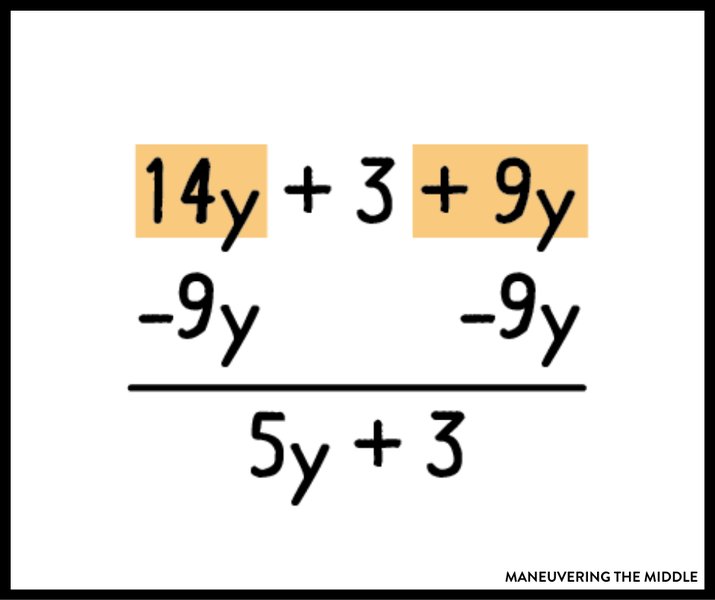
Keeping both sides of an equation equal is crucial, like a balanced scale.
Fundamental Algebraic Properties: Your Math Toolkit
Algebra has a few core properties that make manipulating and solving equations much more manageable. These rules apply to numbers and variables alike and are essential tools in your algebra toolkit.
| Property | Rule for Addition | Example (Addition) | Rule for Multiplication | Example (Multiplication) |
|---|---|---|---|---|
| Commutative Property | \( a + b = b + a \) | \( 7 + x = x + 7 \) | \( a \times b = b \times a \) | \( 5 \times y = y \times 5 \) |
| Associative Property | \( (a + b) + c = a + (b + c) \) | \( (2 + 4) + x = 2 + (4 + x) \implies 6 + x = 2 + (4+x) \) | \( (a \times b) \times c = a \times (b \times c) \) | \( (3 \times 2) \times y = 3 \times (2 \times y) \implies 6y = 3(2y) \) |
| Distributive Property | \( a \times (b + c) = (a \times b) + (a \times c) \) | Example: \( 4 \times (x + 2) = (4 \times x) + (4 \times 2) = 4x + 8 \) | ||
This table summarizes the key properties that simplify algebraic expressions.
Commutative Property: Order Doesn't Matter!
For Addition
The Commutative Property of Addition states that you can swap numbers around when adding, and you'll still get the same result. \[ a + b = b + a \] For instance, \(3 + 5\) is the same as \(5 + 3\). Both equal 8. In algebra, \(x + 9\) is identical to \(9 + x\).
For Multiplication
Similarly, the Commutative Property of Multiplication means the order in which you multiply numbers doesn't change the product. \[ a \times b = b \times a \] So, \(4 \times 6\) is the same as \(6 \times 4\). Both equal 24. With variables, \(y \times 7\) is the same as \(7y\).
Associative Property: Grouping Doesn't Matter!
For Addition
The Associative Property of Addition tells us that when you add three or more numbers, it doesn't matter how you group them using parentheses. \[ (a + b) + c = a + (b + c) \] Example: \((2 + 3) + 4\) (which is \(5 + 4 = 9\)) is the same as \(2 + (3 + 4)\) (which is \(2 + 7 = 9\)). For variables, \((x + 1) + 5\) is the same as \(x + (1 + 5)\), which simplifies to \(x + 6\).
For Multiplication
The Associative Property of Multiplication works the same way for multiplying three or more numbers. \[ (a \times b) \times c = a \times (b \times c) \] Example: \((2 \times 3) \times 4\) (which is \(6 \times 4 = 24\)) is the same as \(2 \times (3 \times 4)\) (which is \(2 \times 12 = 24\)). With variables, \((2a) \times 5\) is the same as \(2 \times (a \times 5)\), both equaling \(10a\).
Distributive Property: Multiplying Over a Sum or Difference
The Distributive Property is super useful. It states that multiplying a number by a group of numbers added together is the same as doing each multiplication separately. \[ a \times (b + c) = (a \times b) + (a \times c) \] Example: \(3 \times (4 + 5)\) can be solved as \(3 \times 9 = 27\). Or, using the distributive property: \((3 \times 4) + (3 \times 5) = 12 + 15 = 27\). This is very handy in algebra: \(5(x + 2)\) becomes \(5 \times x + 5 \times 2\), which simplifies to \(5x + 10\). It also works for subtraction: \(a \times (b - c) = (a \times b) - (a \times c)\). For example, \(2(y - 3) = 2y - 6\).
Solving Algebraic Equations: Finding the Mystery Value
The main goal when you see an equation is often to "solve for the variable"—that means finding the numerical value of the unknown letter that makes the equation true.
Isolating the Variable
To solve for a variable, you need to get it by itself on one side of the equals sign. This process is called "isolating the variable." You'll use inverse operations to undo whatever is being done to the variable.
Inverse Operations: The "Undo" Button
Every mathematical operation has an inverse operation that undoes it:
- The inverse of addition is subtraction (and vice-versa).
- The inverse of multiplication is division (and vice-versa).
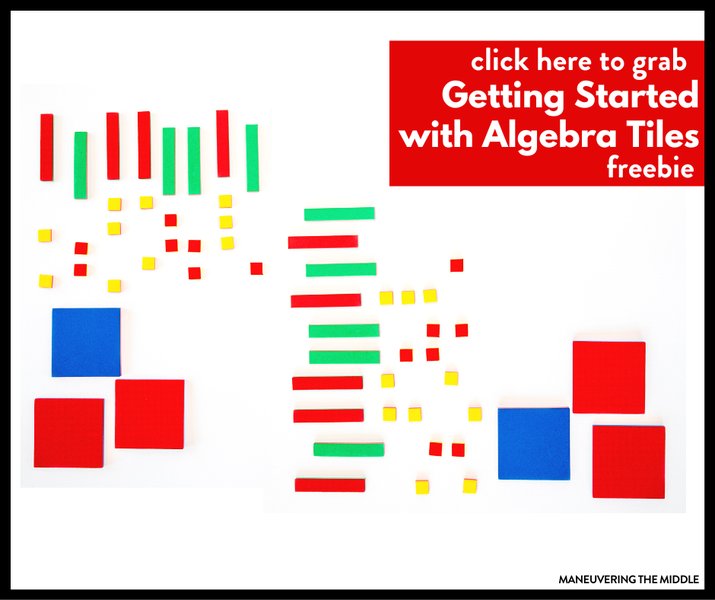
Using inverse operations helps to isolate the variable.
Step-by-Step Example: Solving \(2x + 3 = 11\)
- Identify the variable: It's \(x\).
- What's happening to \(x\)? It's being multiplied by 2, and then 3 is added.
- Undo the addition first: The inverse of adding 3 is subtracting 3. Do this to both sides of the equation:
\(2x + 3 - 3 = 11 - 3\)
\(2x = 8\)
- Undo the multiplication: The inverse of multiplying by 2 is dividing by 2. Do this to both sides:
\(\frac{2x}{2} = \frac{8}{2}\)
\(x = 4\)
So, the solution is \(x = 4\). You can check this by plugging 4 back into the original equation: \(2(4) + 3 = 8 + 3 = 11\). It works!
Understanding Key Algebra Concepts: Difficulty vs. Importance
Some algebra concepts might seem tricky at first, while others are fundamental to everything you'll do. This chart gives an idea of how different topics might be perceived in terms of initial difficulty versus their overall importance in mastering algebra. Remember, "difficulty" is subjective and often decreases with practice!
This chart illustrates that while some concepts like solving multi-step equations might seem more difficult initially, they are highly important. Foundational concepts like understanding variables are less complex but crucial for all further learning.
Working with Algebraic Expressions
Before you can confidently solve equations, you need to be comfortable with algebraic expressions. An expression is a combination of numbers, variables, and operation signs (like +, -, ×, ÷), but it doesn't have an equals sign.
Terms, Coefficients, and Constants
- A term is a single number, a single variable, or numbers and variables multiplied together. Terms are separated by + or - signs. For example, in the expression \(3x + 2y - 7\), the terms are \(3x\), \(2y\), and \(-7\).
- A coefficient is the number part of a term that includes a variable. In \(3x\), the coefficient is 3. In \(2y\), the coefficient is 2. If a variable stands alone, like \(x\), its coefficient is 1 (because \(x\) is the same as \(1x\)).
- A constant is a term that is just a number, with no variable part. In \(3x + 2y - 7\), the constant is -7.
Combining Like Terms
Like terms are terms that have the exact same variable part (including the same exponents). For example, \(5x\) and \(2x\) are like terms because they both have \(x\). \(4a^2\) and \(-a^2\) are like terms. However, \(3x\) and \(3y\) are not like terms, nor are \(7x\) and \(7x^2\).
You can combine like terms by adding or subtracting their coefficients.
- \(5x + 2x = (5+2)x = 7x\)
- \(10y - 4y = (10-4)y = 6y\)
- \(3a + 5b + 2a - b = (3a + 2a) + (5b - b) = 5a + 4b\) (Notice you combine the 'a' terms together and the 'b' terms together).
Understanding Exponents
An exponent tells you how many times to multiply a base number by itself. For example, in \(x^3\), \(x\) is the base and 3 is the exponent. It means \(x \times x \times x\).
- \(y^2 = y \times y\)
- \(5^4 = 5 \times 5 \times 5 \times 5 = 625\)
Negative Numbers in Algebra
Working with negative numbers is common in algebra. Remember these rules:
- Adding a negative is the same as subtracting: \(7 + (-3) = 7 - 3 = 4\).
- Subtracting a negative is the same as adding: \(7 - (-3) = 7 + 3 = 10\).
- Multiplying/dividing two negatives gives a positive: \((-2) \times (-5) = 10\). \(\frac{-10}{-2} = 5\).
- Multiplying/dividing a positive and a negative gives a negative: \((-2) \times 5 = -10\). \(\frac{10}{-2} = -5\).
Visualizing Algebra: A Mind Map of Core Concepts
Sometimes, seeing how concepts connect can make them easier to understand. This mind map shows the main branches of introductory algebra and how they relate to each other.
Symbols for unknowns"] id1b["Constants (e.g., 5, -2)
Fixed numerical values"] id1c["Expressions (e.g., 2x + 3)
Combinations of terms, no equals sign"] id1d["Equations (e.g., 2x + 3 = 7)
Statements that two expressions are equal"] id2["Key Operations"] id2a["Addition (+)"] id2b["Subtraction (-)"] id2c["Multiplication (× or implied)"] id2d["Division (÷ or /)"] id2e["Exponents (e.g., x²)"] id3["Fundamental Rules & Properties"] id3a["Commutative Property
Order doesn't matter
a + b = b + a
a × b = b × a"] id3b["Associative Property
Grouping doesn't matter
(a+b)+c = a+(b+c)
(a×b)×c = a×(b×c)"] id3c["Distributive Property
Multiply over sum/difference
a(b+c) = ab + ac"] id3d["Identity Properties
a + 0 = a
a × 1 = a"] id3e["Inverse Properties
a + (-a) = 0
a × (1/a) = 1 (for a ≠ 0)"] id4["Solving Equations Techniques"] id4a["The Golden Rule:
Do the same to both sides"] id4b["Using Inverse Operations
To isolate the variable"] id4c["Combining Like Terms
To simplify equations"] id4d["Order of Operations (PEMDAS/BODMAS)
Parentheses, Exponents, Mult/Div, Add/Sub"]
This mind map visually organizes the key elements of algebra, from basic definitions to the rules and techniques used in problem-solving.
Algebra in Action: Real-Life Applications
You might wonder, "When will I ever use this?" Algebra is surprisingly useful in many everyday situations and future careers!
- Budgeting Money: If you want to save \(S\) dollars per week for \(w\) weeks to buy something that costs \(C\) dollars, you can use the equation \(S \times w = C\). If you know the cost and how much you save weekly, algebra helps you find how many weeks it will take.
- Cooking: Adjusting a recipe for more or fewer people involves algebra. If a recipe for 4 people needs 2 cups of flour, how much for 10 people? Let \(x\) be the flour for 10 people: \(\frac{2 \text{ cups}}{4 \text{ people}} = \frac{x \text{ cups}}{10 \text{ people}}\).
- Distance, Speed, Time: The formula \(Distance = Speed \times Time\) (\(D = S \times T\)) is pure algebra. If you know the distance and speed, you can find the time.
- Gaming: Calculating scores, predicting outcomes, or even understanding game mechanics can involve algebraic thinking.
- Science and Engineering: Almost all fields of science and engineering rely heavily on algebra to model situations and solve problems.
Video Guide: Understanding Algebra Basics
Sometimes, watching an explanation can make things click. This video from Math Antics gives a great introduction to what algebra is all about, focusing on variables and the concept of unknowns. It's a good starting point to see these ideas in action.
This video explains that algebra uses letters to represent unknown values (variables) and how these are used in expressions and equations. It lays the groundwork for why we need rules to manipulate and solve for these variables.
Tips for Mastering Algebra
- Practice Regularly: Just like learning a sport or a musical instrument, consistent practice is key. Work through problems every day, even if it's just for a short while.
- Understand, Don't Just Memorize: Try to understand why a rule works, not just what the rule is. This makes it easier to apply in different situations.
- Show Your Work: Write down every step when solving a problem. This helps you catch mistakes and makes it easier for teachers (or you!) to see where you might have gone wrong.
- Check Your Answers: Once you find a solution for a variable, plug it back into the original equation to see if it makes the equation true.
- Ask Questions: If you're stuck or confused, don't be afraid to ask your teacher, a classmate, or a family member for help. There are no silly questions!
- Use Online Resources: Websites like Khan Academy or Math is Fun offer great tutorials, examples, and practice problems.
- Relate it to Real Life: Try to think of how algebra problems could apply to real-world situations. This can make it more engaging.
- Stay Positive: Algebra can be challenging at times, but with persistence, you can master it! Celebrate small victories along the way.
Frequently Asked Questions (FAQ)
Why do we use letters in algebra?
Letters (like x, y, or a) are used in algebra to represent unknown quantities or values that can change. They are called variables. Using letters makes it possible to write general rules and formulas that can apply to many different situations without knowing the specific numbers involved yet. Think of them as placeholders until you figure out their value!
What's the most important rule in algebra?
While all rules are important, a very crucial one is the "Golden Rule of Algebra": Whatever you do to one side of an equation, you must do to the other side. This ensures the equation remains balanced and true. This principle is fundamental for solving equations correctly.
How can I get better at algebra?
Practice is the key! The more you work with algebraic problems, the more comfortable you'll become. Also, make sure you understand the basic concepts before moving on to more complex ones. Don't be afraid to ask for help, show your work step-by-step, and check your answers. Using online resources and trying to relate algebra to real-world examples can also make learning more effective and fun.
Is algebra actually used in real life?
Yes, absolutely! Algebra is used in many fields like science, engineering, computer programming, finance, and even in everyday situations like budgeting, cooking, or planning a trip. It helps in problem-solving, logical thinking, and understanding patterns, which are valuable skills in almost any area of life.
Recommended Further Exploration
- How to solve two-step algebraic equations with examples?
- What are common mistakes to avoid when learning algebra?
- Can you show me how to use algebra to solve word problems?
- What are exponents and how do they work in algebra?
References
 static1.squarespace.com
Last updated May 11, 2025