
Alien Life: Separating Speculation from Scientific Inquiry
Exploring the Evidence and Possibilities of Life Beyond Earth
Key Insights into the Search for Extraterrestrial Life
- Scientific consensus leans towards the likelihood of extraterrestrial life existing in the vastness of the universe, particularly in simple microbial forms. The sheer number of planets and moons makes it statistically probable that life has arisen elsewhere.
- Recent observations by the James Webb Space Telescope of exoplanet K2-18b have provided the strongest tentative evidence yet for potential biosignatures, specifically the detection of dimethyl sulfide (DMS), which on Earth is primarily produced by life. However, scientists emphasize that this is not yet conclusive proof.
- While the scientific search for extraterrestrial life focuses on detecting biosignatures and potential habitable environments, claims of alien visitation to Earth, particularly those involving UFOs and cover-ups, largely remain in the realm of speculation and lack definitive evidence.
The question of whether alien life exists has fascinated humanity for centuries. It's a question that touches upon our place in the cosmos and the potential for life to flourish beyond our own planet. While science has yet to definitively confirm the existence of extraterrestrial life, ongoing research, particularly in the field of astrobiology and exoplanet studies, is providing compelling hints and increasing the likelihood that we are not alone in the universe. Concurrently, popular culture and various claims of unidentified anomalous phenomena (UAP), often referred to as UFOs, have fueled speculation about alien visitation to Earth, although these claims often lack robust scientific evidence.
The Scientific Search for Life Beyond Earth
The scientific endeavor to find extraterrestrial life is a rigorous process rooted in observation, data analysis, and the application of our understanding of life as we know it. Astrobiologists study the origins, evolution, distribution, and future of life in the universe. Their search extends from examining potential habitable environments within our own solar system to analyzing the atmospheres of exoplanets orbiting distant stars.
Habitable Zones and Exoplanets
A key concept in the search for life is the "habitable zone," often referred to as the "Goldilocks zone." This is the region around a star where conditions are just right for liquid water to exist on a planet's surface. The presence of liquid water is considered crucial for life as we know it, as it acts as a solvent for essential chemical reactions.
The discovery of thousands of exoplanets – planets outside our solar system – has revolutionized the search for alien life. Many of these exoplanets are located within the habitable zones of their host stars, making them prime candidates for further investigation.
Seeking Biosignatures
Rather than searching for intelligent civilizations directly, the current scientific focus is often on finding biosignatures – chemical compounds or elements in a planet's atmosphere or on its surface that could indicate the presence of life. These biosignatures are typically gases produced by biological processes.
K2-18b: A Case Study
The exoplanet K2-18b, located about 124 light-years away, has garnered significant attention due to recent observations by the James Webb Space Telescope (JWST). This planet is an example of a "hycean" world, characterized by a liquid water ocean beneath a hydrogen-rich atmosphere, and it resides within the habitable zone of its star.
The JWST observations detected the presence of molecules like methane and carbon dioxide in K2-18b's atmosphere, which is consistent with a hycean environment. More significantly, tentative evidence for the presence of dimethyl sulfide (DMS) was also found. On Earth, DMS is primarily produced by marine microorganisms. While this detection is exciting and represents the strongest hint of a potential biosignature on an exoplanet to date, scientists are cautious and emphasize the need for further observations to confirm its presence and rule out non-biological explanations.
Below is an illustration of the exoplanet K2-18b:
Artist's impression of the exoplanet K2-18b orbiting its star.
Other Potential Locations for Life in Our Solar System
Even within our own solar system, scientists are exploring moons of gas giants that may harbor subsurface oceans of liquid water, such as Europa (a moon of Jupiter) and Enceladus (a moon of Saturn). These icy moons are considered promising candidates for harboring simple microbial life, even if surface conditions are inhospitable.
The Likelihood of Extraterrestrial Life
Given the sheer size of the universe and the vast number of stars and planets it contains, many scientists consider it highly probable that life exists elsewhere. Even if the probability of life arising on any given habitable planet is small, the sheer number of potential candidates suggests that Earth is unlikely to be the only place where life has emerged.
Surveys of scientists indicate a strong belief in the existence of at least basic forms of extraterrestrial life. The probability of complex or intelligent life is considered lower but still significant.
The Role of UFOs and Speculation
While the scientific community pursues evidence through rigorous methods, the concept of alien life is also deeply embedded in popular culture, often fueled by reports of Unidentified Flying Objects (UFOs) and theories of government cover-ups.
Unidentified Anomalous Phenomena (UAP)
In recent years, the term UAP has become more commonly used by official bodies to describe observations of objects or phenomena that cannot be immediately identified. While some UAP reports may have conventional explanations (e.g., aircraft, balloons, atmospheric phenomena), a small percentage remain unexplained.
Below is an image related to UFO sightings:
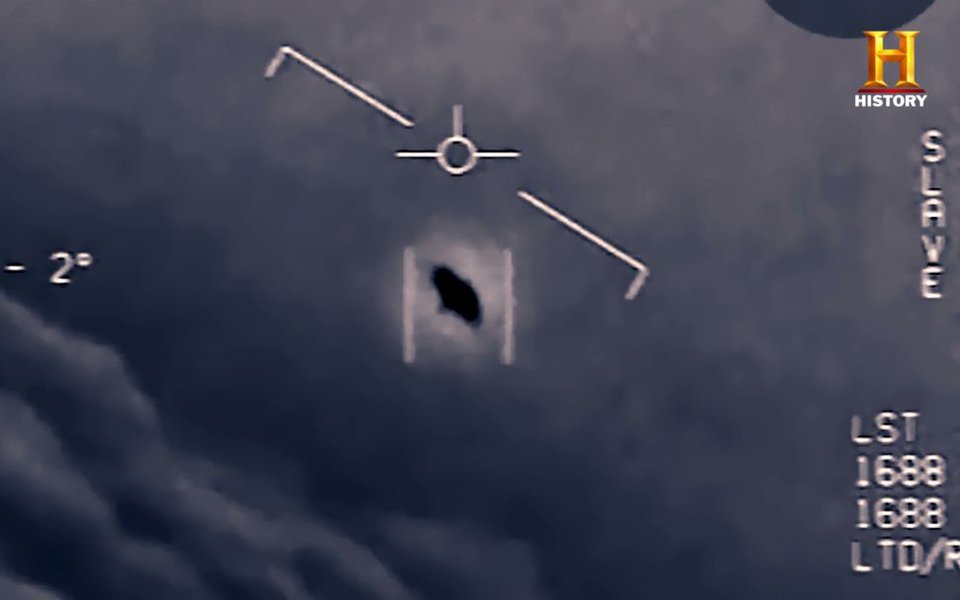
An illustration depicting a classic UFO.
Claims of Alien Visitation and Cover-ups
The idea that aliens have visited Earth and that governments are concealing this truth is a persistent theme in popular culture and among some segments of the public. These claims often involve alleged sightings of alien spacecraft, accounts of abductions, and theories about reverse-engineered alien technology.
However, despite the widespread belief in these ideas among some individuals, there is currently no credible, verifiable evidence that definitively proves alien visitation to Earth or a large-scale government cover-up. Scientific and governmental investigations into UAP have not yielded evidence of extraterrestrial spacecraft.
Here is a table summarizing the distinction between the scientific search and speculative claims:
| Aspect | Scientific Search for Alien Life | Speculative Claims of Alien Visitation/UFOs |
|---|---|---|
| Methodology | Empirical observation, data analysis, hypothesis testing, peer review | Anecdotal accounts, alleged sightings, unverified documents, conspiracy theories |
| Focus | Detecting biosignatures, identifying habitable environments, understanding the potential for life | Claims of physical presence on Earth, advanced technology, government secrets |
| Evidence Basis | Observable phenomena, chemical analysis, astronomical data | Personal testimonies, blurred photos/videos, alleged leaked information |
| Status of Claims | Ongoing research, tentative findings requiring confirmation | Largely unsubstantiated, lack of verifiable proof |
Assessing the Likelihood of Different Forms of Alien Life
When considering the possibility of alien life, it's important to differentiate between simple microbial life and advanced intelligent civilizations. Based on our current understanding of the universe and the processes that led to life on Earth, the likelihood of these different forms of life is often assessed differently.
This radar chart illustrates a general perspective on the perceived likelihood of different forms of alien life and related phenomena, based on scientific understanding and common speculation. It shows that while the scientific community is increasingly confident about the existence of simple extraterrestrial life, the likelihood of alien visitation to Earth and advanced intelligent civilizations being easily discoverable is considered much lower based on current evidence.
The consensus among most scientists is that if life exists elsewhere, it is most likely to be in simple microbial forms, similar to the earliest life on Earth. The conditions required for the development of complex multicellular life and intelligent civilizations are thought to be more specific and potentially less common.
The Future of the Search
The search for alien life is an ongoing and evolving endeavor. New technologies and observational capabilities are continually expanding our ability to explore the cosmos and look for signs of life.
Advancements in Telescopes and Missions
Space telescopes like the James Webb Space Telescope and future missions are providing unprecedented insights into the atmospheres of exoplanets. These powerful instruments can detect the chemical composition of distant worlds, allowing scientists to search for potential biosignatures with greater sensitivity.
Missions to explore potentially habitable environments within our solar system, such as planned missions to Europa, aim to directly investigate places where life could exist.
SETI and the Search for Intelligent Signals
While the search for microbial life is a major focus, the Search for Extraterrestrial Intelligence (SETI) continues to use radio telescopes and other methods to listen for potential signals from technological civilizations. Although no definitive signals have been detected so far, the search continues.
The following video discusses the search for alien life:
Astrophysicist Avi Loeb discusses the search for proof of alien existence.
This TED talk by Avi Loeb highlights the importance of dedicated resources and scientific rigor in the search for alien life. Loeb discusses the need for open-minded scientific investigation and the potential implications of discovering life beyond Earth.
Frequently Asked Questions
Recommended Further Exploration
- What are the latest James Webb Space Telescope discoveries on exoplanets?
- What is the potential for life on Europa and Enceladus?
- How does the Drake Equation estimate the number of intelligent civilizations?
- What is the history and what are the goals of the SETI program?
References

Last updated May 19, 2025