
Unraveling the Power of Alternative Splicing
How a Single Gene Can Produce Multiple Proteins
Alternative splicing is a fundamental biological process that significantly enhances the complexity and diversity of the proteome in eukaryotic organisms. Instead of a single gene coding for a single protein, alternative splicing allows for the generation of multiple, distinct protein products from a single gene. This remarkable mechanism plays a crucial role in various cellular functions, development, and adaptation.
Key Highlights of Alternative Splicing
- Protein Diversity: Alternative splicing is a primary driver of protein diversity, enabling a relatively small number of genes to encode a much larger number of protein isoforms with potentially different structures, functions, and localization within the cell.
- Regulation of Gene Expression: This process is a critical layer of post-transcriptional gene regulation, influencing which protein variants are produced in specific cell types, tissues, or developmental stages, or in response to various stimuli.
- Contribution to Complexity: Alternative splicing is a key factor in the increased complexity of higher eukaryotes compared to organisms with similar gene counts but less extensive alternative splicing.
The Central Dogma and the Role of Splicing
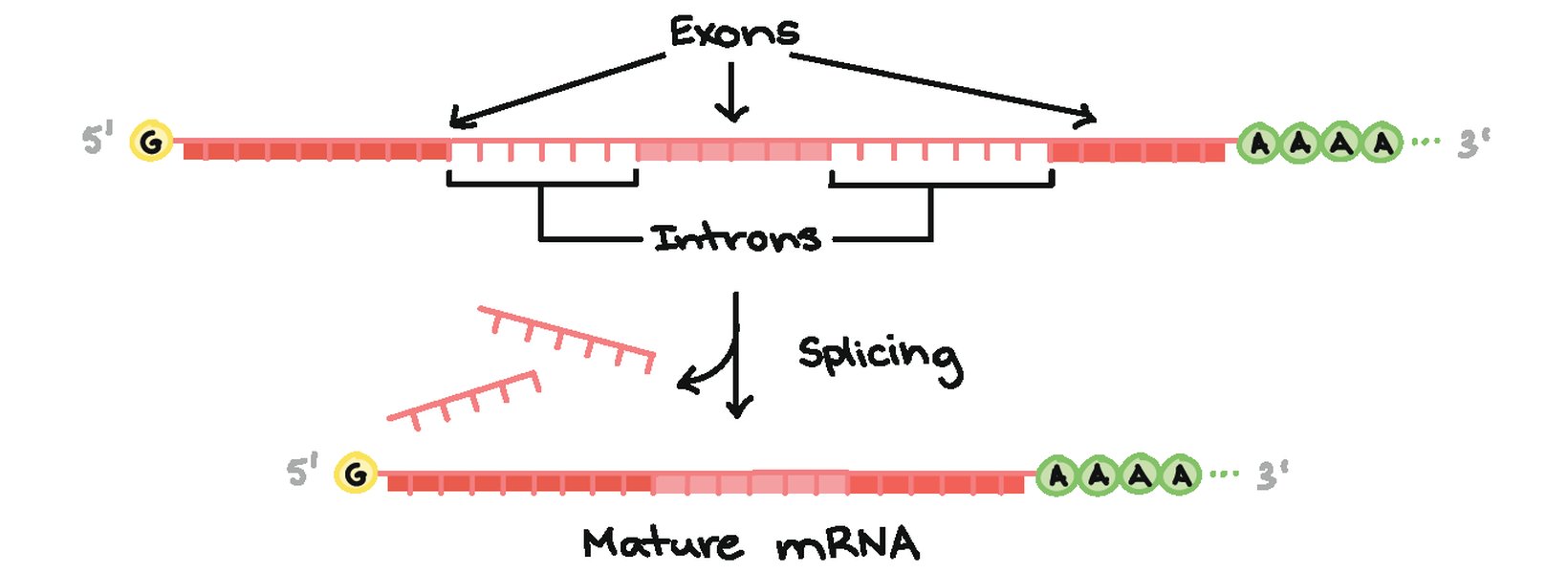
To understand alternative splicing, it's helpful to first recall the central dogma of molecular biology, which describes the flow of genetic information from DNA to RNA to protein. Transcription is the process where a gene segment of DNA is transcribed into a precursor messenger RNA (pre-mRNA) molecule. This pre-mRNA contains both coding regions called exons and non-coding regions called introns.
Introns and Exons: The Building Blocks of mRNA
Introns are intervening sequences that do not code for protein and must be removed before the mRNA can be translated. Exons are the expressed sequences that contain the genetic code for building a protein. The process of removing introns and joining exons together is called RNA splicing.
Standard Splicing vs. Alternative Splicing
In standard splicing, the introns are precisely excised, and the exons are ligated together in a fixed order to produce a mature mRNA molecule that will be translated into a single type of protein. Alternative splicing, however, deviates from this rigid process, offering flexibility in how exons are combined.
Alternative splicing is a post-transcriptional modification in eukaryotes that allows for different combinations of exons from the same gene to be joined, resulting in different mature mRNA transcripts. These different mRNA transcripts can then be translated into distinct protein isoforms.
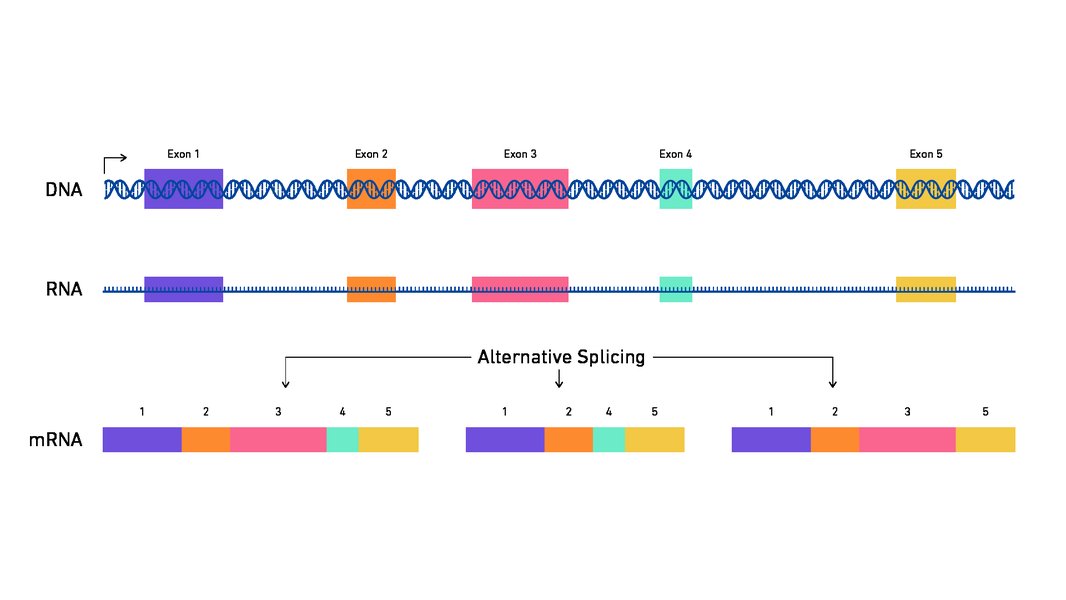
Alternative splicing demonstrating different combinations of exons from a single gene.
Mechanisms of Alternative Splicing
Alternative splicing is a highly regulated process orchestrated by a complex molecular machinery called the spliceosome, along with various regulatory proteins. The spliceosome, composed of small nuclear ribonucleoproteins (snRNPs) and other proteins, recognizes specific sequences within the pre-mRNA, particularly at the boundaries between exons and introns (splice sites).
Different Splicing Patterns
Alternative splicing can occur through several distinct mechanisms, leading to different mRNA variants:
- Exon Skipping (Cassette Exons): This is one of the most common forms of alternative splicing. An exon (or multiple exons) is either included or excluded from the mature mRNA transcript. This can lead to protein isoforms that are either shorter or longer, or that lack specific functional domains.
- Mutually Exclusive Exons: In this case, one of two or more exons is included in the mature mRNA, but never both (or all) at the same time. This often involves exons of similar size and can lead to protein isoforms with distinct functional properties in a particular region.
- Alternative 5' Splice Sites: The spliceosome can recognize and use different 5' splice sites within an intron or exon. This results in mRNAs that differ at their 5' ends.
- Alternative 3' Splice Sites: Similarly, different 3' splice sites can be used, leading to variations at the 3' ends of the mRNA transcripts.
- Intron Retention: In some cases, an intron that would normally be removed is retained in the mature mRNA. If the retained intron is in the coding region, it can introduce premature stop codons, leading to truncated proteins, or it can affect the protein sequence if the intron is translated.
- Alternative Promoters: While not strictly a splicing mechanism, the use of alternative promoters can result in pre-mRNAs with different 5' ends, which can influence subsequent splicing events.
- Alternative Polyadenylation Sites: The use of alternative polyadenylation sites affects the 3' end of the mRNA and can also influence splicing, particularly of downstream exons.
Various types of alternative splicing mechanisms.
Regulation of Alternative Splicing
The decision of which splice sites are used during alternative splicing is tightly regulated. This regulation involves the interaction of cis-acting elements within the pre-mRNA sequence and trans-acting factors, which are primarily RNA-binding proteins (RBPs). These RBPs can act as splicing enhancers or repressors, promoting or inhibiting the recognition and use of nearby splice sites by the spliceosome.
The intricate interplay between cis-acting elements and trans-acting factors, along with other factors like transcriptional speed and chromatin structure, determines the specific splicing pattern of a gene in a given cell type and condition.
Impact of Alternative Splicing on Protein Diversity and Function
The most significant consequence of alternative splicing is its contribution to the diversity of proteins produced from a limited number of genes. While the human genome contains an estimated 20,000-21,000 protein-coding genes, the number of different protein isoforms is much higher, potentially exceeding 90,000 or even more. This is largely attributed to alternative splicing, with estimates suggesting that around 95% of multi-exonic genes in humans undergo alternative splicing.
Generating Functionally Distinct Protein Isoforms
Different protein isoforms resulting from alternative splicing can have altered amino acid sequences, leading to changes in their structure, function, localization, stability, and interactions with other molecules. This can result in:
-
Proteins with different enzymatic activities.
-
Receptors with altered ligand binding affinities or signaling properties.
-
Ion channels with different ion selectivity or gating characteristics.
-
Proteins that are targeted to different cellular compartments.
-
Proteins with modified protein-protein interaction profiles.
This ability to generate multiple protein variants from a single gene allows organisms to increase the functional complexity of their proteome and tailor protein function to specific cellular needs and environmental conditions.
Examples of Functional Impact
Alternative splicing is particularly important in complex processes such as nervous system development and function, where it contributes to the diversity of neuronal proteins, including ion channels and receptors. It also plays a crucial role in the immune system, allowing for the rapid generation of diverse antibody variants to combat different pathogens.
Alternative Splicing and Disease
Given its critical role in generating protein diversity and regulating gene expression, it's not surprising that dysregulation of alternative splicing can contribute to various diseases, including cancer, neurological disorders, and cardiovascular diseases. Changes in splicing patterns can lead to the production of aberrant protein isoforms with altered or lost functions, or to the production of proteins in the wrong place or time.
Splicing Aberrations in Disease
Mutations in splice sites or in genes encoding splicing regulatory proteins can lead to abnormal splicing patterns. Furthermore, changes in the expression levels or activity of splicing factors in different disease states can also disrupt normal splicing.
Understanding the role of alternative splicing in disease is an active area of research, with the potential to identify novel therapeutic targets and develop new diagnostic tools.
Detailed explanation of the mechanism and regulation of alternative splicing.
This video provides a visual and in-depth explanation of how alternative splicing works, including the molecular mechanisms and regulatory factors involved. It helps illustrate the dynamic nature of this process and how different outcomes are achieved from a single pre-mRNA molecule.
Comparing Alternative Splicing Outcomes
To further clarify what alternative splicing allows, let's compare it to the other options presented in the query:
| Process/Outcome | Description | Relationship to Alternative Splicing |
|---|---|---|
| Different protein products from one gene | A single gene sequence can be processed to produce multiple mRNA transcripts, each leading to a distinct protein isoform. | This is precisely what alternative splicing allows. Different combinations of exons create variations in the mRNA sequence, which in turn dictates the amino acid sequence of the resulting protein. |
| Some introns left in coding regions to protect the mRNA | Introns are generally removed from the pre-mRNA. While intron retention is a type of alternative splicing, retained introns in the coding region usually lead to truncated or non-functional proteins, not protection of the mRNA. | Incorrect. Intron retention is a mechanism, but its primary outcome is not mRNA protection; it usually affects protein function. |
| The same mRNA sequence created from different DNA templates | Different DNA templates would represent different genes or alleles. While different alleles of the same gene might produce slightly different proteins, the process of creating the *same* mRNA sequence from *different* DNA templates is not a function of alternative splicing. | Incorrect. Alternative splicing acts on a single pre-mRNA transcribed from a single gene (DNA template). Creating the same mRNA from different DNA templates is not a biological process described by splicing. |
As the table highlights, alternative splicing is the mechanism that allows for the creation of different protein products from a single gene by selectively including or excluding exons.
Future Directions and Research
Research into alternative splicing continues to expand our understanding of gene regulation and protein diversity. Advances in high-throughput sequencing technologies have revealed the widespread nature of alternative splicing and are helping to identify novel splice variants and their functions. Computational approaches are also playing a crucial role in predicting splicing patterns and analyzing the impact of splicing on protein structure and function.
Further research is needed to fully elucidate the complex regulatory networks that control alternative splicing, to understand the functional significance of all the identified splice variants, and to explore the potential of targeting alternative splicing for therapeutic purposes.
Frequently Asked Questions
What is the main purpose of alternative splicing?
The main purpose of alternative splicing is to increase the diversity of protein products that can be generated from a single gene. This expands the functional repertoire of the proteome without requiring a proportional increase in the number of genes.
Is alternative splicing unique to humans?
No, alternative splicing is a common phenomenon in eukaryotes, including plants and other multicellular organisms. While the extent and complexity of alternative splicing can vary between species, it is a widespread mechanism for increasing proteomic diversity.
How is alternative splicing regulated?
Alternative splicing is regulated by the interaction of cis-acting elements (sequences within the pre-mRNA) and trans-acting factors (RNA-binding proteins). These interactions influence the recognition and use of splice sites by the spliceosome.
Can alternative splicing lead to disease?
Yes, dysregulation of alternative splicing can lead to the production of aberrant protein isoforms that contribute to various diseases, including cancer, neurological disorders, and genetic conditions.
References
Last updated May 4, 2025