
Unpacking Amazon's Empire: More Than Just an Online Store
Discover the diverse and interconnected ways Amazon generates revenue and delivers value worldwide.
Amazon, initially launched in 1994 by Jeff Bezos as an online bookstore, has dramatically transformed into a global technology and e-commerce powerhouse. Understanding its business model reveals a complex yet highly effective ecosystem built on customer obsession, operational efficiency, and continuous innovation. It's not just one business, but several interconnected ventures working together.
Key Highlights of Amazon's Business Model
- Diverse Revenue Streams: Amazon doesn't rely on a single source of income. Its revenue comes from online retail sales, third-party seller fees, cloud computing (AWS), subscription services (like Prime), advertising, and physical stores.
- AWS Profitability Engine: While online retail generates the most revenue, Amazon Web Services (AWS), its cloud computing division, contributes the largest share of the company's operating profit due to its high-profit margins.
- Customer-Centric Ecosystem: The model thrives on a cycle: low prices and fast delivery attract customers, a large customer base attracts third-party sellers, and services like Prime and AWS deepen customer loyalty and provide the technological backbone for the entire operation.
The Pillars of Amazon's Success
Amazon's business model can be broken down into several key components that function synergistically. While often perceived primarily as an online retailer, its operations span technology infrastructure, digital content, advertising, and physical retail.
1. E-commerce: The Foundation
The core of Amazon remains its vast online marketplace. This operates in two main ways:
Online Stores (First-Party Sales)
Amazon sells products directly to consumers. It purchases goods wholesale from manufacturers and sells them under its own name. This segment, while generating massive sales volume (estimated around $220 billion in 2024), typically operates on relatively thin profit margins. The focus here is on offering competitive prices and a wide selection to attract and retain customers.
Third-Party Seller Services (Marketplace)
Amazon allows independent businesses and individuals to sell their products on its platform. This significantly expands the product variety available without Amazon needing to hold inventory for every item. Amazon earns revenue through commissions on sales (often around 15%), fulfillment fees (if sellers use Fulfillment by Amazon - FBA), storage fees, and advertising charges. This marketplace model (estimated $117.7 billion revenue in 2024) is generally more profitable than direct sales, as Amazon leverages its platform and logistics infrastructure without taking on inventory risk. Recent trends show Amazon increasingly favoring this more profitable third-party model.
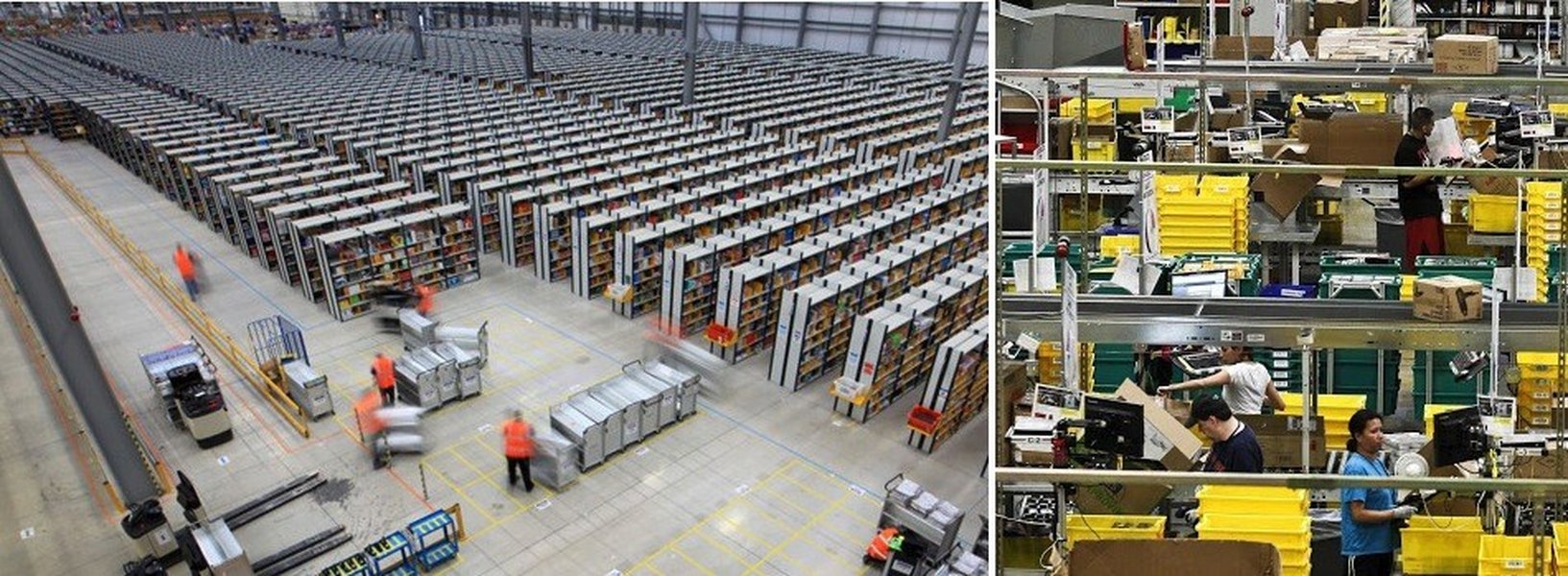
An Amazon fulfillment center, showcasing the scale of logistics supporting its e-commerce operations.
Revenue Contribution from Retail Activities
The following table provides an approximate breakdown of revenue from Amazon's major segments based on available 2024 data, illustrating the significance of both direct sales and marketplace services alongside other key divisions.
| Revenue Stream | Description | Estimated 2024 Revenue (USD) | Typical Profit Margin |
|---|---|---|---|
| Online Stores (1P) | Direct sales of products owned by Amazon. | ~$220 Billion | Low |
| Third-Party Seller Services (3P) | Commissions, fulfillment (FBA), and other fees from marketplace sellers. | ~$117.7 Billion | Medium to High |
| AWS | Cloud computing services (IaaS, PaaS, SaaS). | ~$80 Billion | Very High |
| Subscription Services | Fees from Amazon Prime, Kindle Unlimited, Audible, etc. | ~$37.7 Billion | High |
| Advertising Services | Fees from sellers/brands promoting products on Amazon's platform. | ~$37.7 Billion | Very High |
| Physical Stores | Sales from Whole Foods Market, Amazon Go, etc. | Lower (part of overall retail) | Low to Medium |
2. Amazon Web Services (AWS): The Profit Engine
Launched initially to support Amazon's own vast online retail operations, AWS has become a dominant force in the cloud computing industry and Amazon's primary source of profit. It provides on-demand cloud services, including computing power, storage, databases, analytics, machine learning, and more, to businesses, governments, and individuals globally. Clients pay for what they use, making it a scalable solution for organizations of all sizes.
While AWS revenue (around $80 billion in 2024) constitutes a smaller portion of Amazon's total net sales compared to e-commerce, its high-profit margins mean it contributes the majority (often over 50%) of Amazon's overall operating income. This profitability subsidizes the lower margins in retail and fuels investment in other areas.

Amazon's investment in electric delivery vans highlights its focus on logistics and sustainability.
Comparing Amazon's Business Segments
This radar chart visually compares key aspects of Amazon's main business segments based on relative estimations. It highlights how different parts of the business contribute in unique ways – for example, AWS excels in profit margin and growth, while Online Stores dominate revenue share.
3. Subscription Services: Building Loyalty
Amazon Prime is the most prominent example of Amazon's subscription model. For an annual or monthly fee, Prime members receive benefits like free and expedited shipping, access to Prime Video (streaming movies and TV shows), Prime Music, Prime Reading, and exclusive deals (like Prime Day). Subscriptions (estimated $37.7 billion revenue in 2024) create a predictable, recurring revenue stream and significantly increase customer loyalty and purchasing frequency on the platform. Other subscriptions include Kindle Unlimited and Audible.
4. Advertising Services: A Growing Force
Amazon has rapidly developed a significant advertising business. Sellers and brands pay to promote their products within Amazon's search results and product pages, similar to search engine advertising. Given the high purchase intent of users on Amazon, this advertising space is highly valuable. This segment (also estimated around $37.7 billion revenue in 2024) boasts high-profit margins and leverages the vast amount of customer shopping data Amazon possesses.
5. Physical Stores and Other Ventures
While primarily digital, Amazon operates physical retail locations, most notably through its acquisition of Whole Foods Market. It also experiments with concepts like Amazon Go cashier-less convenience stores. Though a smaller part of the overall business, these stores extend Amazon's reach and provide additional channels for sales and customer interaction. Amazon continuously invests in other areas like artificial intelligence (Alexa), logistics and delivery networks, robotics, and healthcare, exploring new potential revenue streams and ways to enhance its core offerings.
The Interconnected Ecosystem
The brilliance of Amazon's business model lies in how these different components support and reinforce each other, creating a powerful flywheel effect. The retail platform attracts millions of users, making its advertising space valuable and drawing in third-party sellers. AWS provides the robust, scalable infrastructure needed for all of Amazon's operations and generates profits to fund innovation. Prime locks customers into the ecosystem, encouraging more frequent purchases and usage of digital services. Data gathered across all platforms helps personalize experiences and optimize operations.
This mindmap illustrates the interconnected nature of Amazon's diverse business units:
Visualizing the Model in Action
Understanding the different facets of Amazon requires looking beyond just the website. The company's vast infrastructure, technological prowess, and diverse offerings contribute to its overall success. This video provides a concise explanation of how Amazon's various parts fit together to create its powerful business model.
The video highlights how Amazon transitioned from a simple online retailer to a multi-billion dollar conglomerate by strategically adding services like AWS, the marketplace, and advertising. It emphasizes the scale of operations and the financial contributions of each major segment, reinforcing the idea that Amazon is much more than just an e-commerce company.
Frequently Asked Questions (FAQ)
What is Amazon's most profitable segment?
Amazon Web Services (AWS), its cloud computing division, is consistently Amazon's most profitable segment. While it generates less total revenue than the online retail operations, its high-profit margins contribute the largest portion of Amazon's overall operating income.
How does Amazon make money from third-party sellers?
Amazon earns revenue from third-party sellers in several ways:
- Referral Fees/Commissions: Taking a percentage of the sale price for each item sold through the marketplace.
- Fulfillment Fees (FBA): Charging sellers for storing, packing, and shipping their products via Fulfillment by Amazon.
- Storage Fees: Charging for inventory stored in Amazon's warehouses.
- Advertising Fees: Charging sellers to promote their products within Amazon's search results and product pages.
- Subscription Fees: Fees for professional selling accounts.
Is Amazon just an online store?
No, Amazon is far more than just an online store. While e-commerce is its largest revenue generator, Amazon is also a major cloud computing provider (AWS), a significant advertising platform, a subscription service provider (Prime), a streaming content provider (Prime Video, Music), a logistics company, and operates physical stores (Whole Foods, Amazon Go). Its business model integrates all these elements.
Why is Amazon Prime important to the business model?
Amazon Prime is crucial because it builds customer loyalty and increases engagement. The annual/monthly fee provides a steady income stream, but more importantly, Prime members tend to spend significantly more on Amazon than non-members due to benefits like free shipping and access to exclusive content and deals. It locks customers into the Amazon ecosystem.
Recommended Reading
- How does Amazon Web Services (AWS) generate profit?
- What is the difference between Amazon's first-party and third-party seller models?
- Explore the impact of Amazon Prime on customer spending habits.
- Analyze the growth of Amazon's advertising business.
References


 business.amazon.com
Last updated May 4, 2025