
Gold's Enduring Allure: Unpacking Its Timeless Value and Commodity Status
Discover why this lustrous metal has captivated humanity for millennia, remaining a cornerstone of wealth and trade.
Gold's gleam has mesmerized civilizations for thousands of years. More than just a shiny metal, it embodies a complex tapestry of history, unique physical attributes, economic stability, and profound cultural meaning. Understanding why gold is so important, expensive, and how it became such a successful commodity requires a journey through these interconnected facets. Its story is one of enduring value, transcending empires and technological revolutions.
Key Insights into Gold's Precious Nature
- Historical Significance & Cultural Deep Roots: Gold has been a universal symbol of wealth, power, and divinity across diverse cultures for over 6,000 years, deeply embedding its value in human psychology.
- Exceptional Physical & Chemical Properties: Its resistance to corrosion and tarnish, combined with its malleability and distinctive luster, make gold uniquely durable and aesthetically prized for both ornamentation and practical applications.
- Economic Cornerstone & Safe Haven: Gold serves as a reliable store of value, a hedge against inflation and economic uncertainty, and a crucial reserve asset for central banks, underpinning its high price and commodity status.
The Multifaceted Reasons Behind Gold's Importance and Cost
Gold's preeminence as a valuable asset isn't accidental. It's a result of a rare convergence of factors that have cemented its status over millennia.
A Legacy Forged in History and Culture
Gold's story begins deep in antiquity. Civilizations from the ancient Egyptians, who associated it with the sun god Ra, to the Romans, who used it for coinage and trade, revered gold. It was used to craft crowns, religious artifacts, and adorn the tombs of pharaohs, like that of Tutankhamun, symbolizing not just wealth and power, but also majesty and even divinity. This historical reverence wasn't confined to one region; across continents and cultures, gold emerged as a universal symbol of the highest value. In many societies, such as India, gold continues to play a vital role in cultural traditions, especially weddings, where it signifies prosperity and good fortune. This deep-seated cultural significance, passed down through generations, creates a persistent and widespread demand that underpins its value.
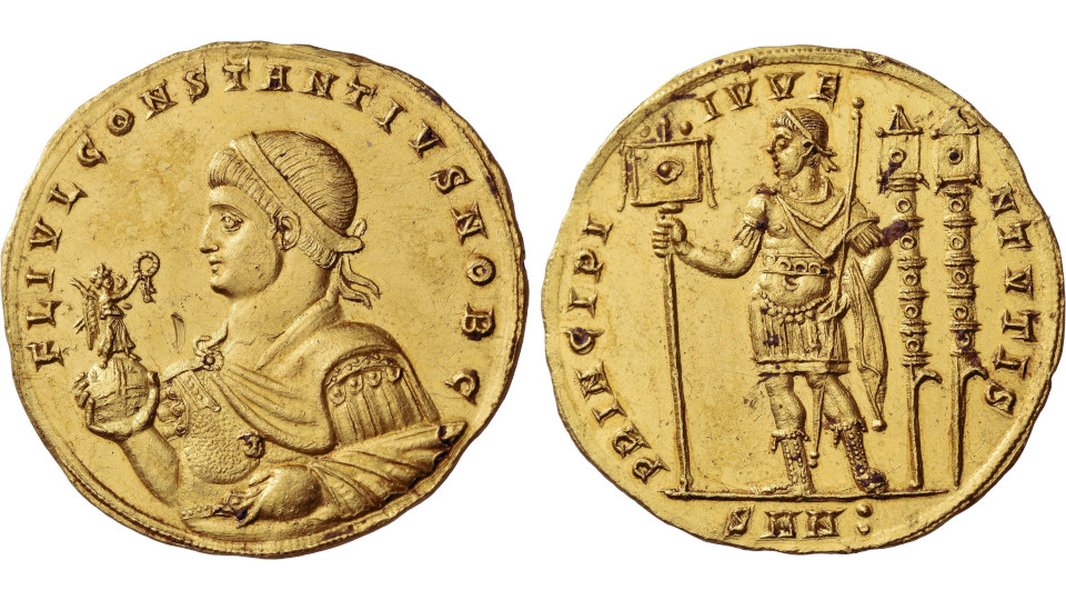
A collection of ancient gold coins, showcasing their historical use as currency and symbols of wealth.
The Unique Chemistry and Physics of Gold
Beyond its beauty, gold possesses a remarkable set of physical and chemical properties that contribute significantly to its importance and cost:
Durability and Incorruptibility:
Gold is exceptionally resistant to corrosion, tarnish, and rust. It doesn't react with most chemicals, air, or water, meaning it can maintain its integrity and luster for millennia. This permanence makes it an ideal material for items meant to last, from jewelry to archival artifacts.Malleability and Ductility:
Gold is the most malleable of all metals. A single ounce can be beaten into an incredibly thin sheet (a process known as gold leafing) or drawn into a fine wire. This makes it easy to work with, allowing artisans to craft intricate designs for jewelry, coins, and decorative objects.Distinctive Luster and Color:
Gold's characteristic yellow shine is aesthetically pleasing and instantly recognizable, contributing to its desirability.Density:
Gold is a very dense metal, giving it a satisfying weight. This substantial feel has historically contributed to the perception of its value.
The Economics of Scarcity and Extraction
Gold is rare. While not the rarest element on Earth, its concentration in the Earth's crust is low, and economically viable deposits are challenging and expensive to find and mine. The process of extracting gold from ore involves significant investment in technology, labor, and energy. It's estimated that all the gold ever mined would fit into a relatively small cube. This inherent scarcity, coupled with the high cost of production, naturally limits its supply. Unlike paper currencies or other assets that can be created at will, the supply of new gold entering the market is relatively stable and predictable, further supporting its price.
Gold's Pivotal Role in the Global Economy
A Store of Value and Safe-Haven Asset
For centuries, gold has been trusted as a reliable store of value. In times of economic uncertainty, high inflation, geopolitical turmoil, or when faith in fiat currencies wavers, investors often turn to gold. Its price tends to remain stable or even increase when other assets are declining, making it a "safe-haven" asset. Central banks and governments around the world hold substantial gold reserves as a financial safeguard and to maintain confidence in their monetary systems, even after the abandonment of the gold standard in 1971.
Hedge Against Inflation and Currency Devaluation
One of gold's most recognized economic functions is its role as a hedge against inflation. As the general level of prices for goods and services rises (inflation), the purchasing power of paper money erodes. Gold, however, tends to hold its value or appreciate during such periods, preserving wealth. Similarly, it can protect against currency devaluation, where a specific currency loses value relative to others or to gold itself.
Portfolio Diversification
Financial advisors often recommend including gold in investment portfolios because its price often moves independently of, or inversely to, other financial assets like stocks and bonds. This negative correlation can help to reduce overall portfolio risk and volatility.
Modern Applications: Beyond Bullion and Baubles
While historically prized for currency and adornment, gold's unique properties have found critical applications in modern technology and industry:
- Electronics: Gold is an excellent electrical conductor that doesn't tarnish. This makes it invaluable for reliable, corrosion-free connectors, contacts, and wiring in a vast array of electronic devices, from smartphones and computers to complex aerospace components.
- Medicine and Dentistry: Gold is biocompatible (it's not harmful to living tissues) and resistant to bacterial colonization. This has led to its use in dentistry for crowns and fillings, and in medicine for certain surgical instruments, implants (like stents), and even in treatments for conditions like arthritis.
- Aerospace: Gold's ability to reflect infrared radiation and its stability make it useful in aerospace applications, such as coating visors of astronaut helmets to protect from solar radiation and lubricating mechanical parts in spacecraft.
These industrial demands, though smaller than investment or jewelry demand, contribute to gold's overall utility and value.
Visualizing Gold's Value Drivers
The following chart illustrates a qualitative assessment of the relative importance of various factors contributing to gold's overall value. These are conceptual estimations based on the combined insights discussed, rather than precise quantitative data.
This radar chart highlights how factors like economic stability (its role as a safe haven) and historical significance have a profound impact, while industrial applications, though important, play a relatively smaller role in driving its overall perceived value compared to investment and cultural demand.
Why Gold Became a "Good" Commodity
Gold wasn't "made" a good commodity by any single decree; rather, it naturally evolved into one due to its inherent characteristics aligning perfectly with the needs of trade and value storage. Several key attributes contributed to this:
- Durability: As mentioned, gold doesn't rust, corrode, or decay. This meant it could be stored for long periods without losing its substance, unlike perishable goods.
- Portability and Divisibility: Gold is dense, meaning a small amount can represent significant value, making it easy to transport. It can also be easily divided into smaller units (coins, bars) without losing its proportional value, facilitating transactions of various sizes.
- Recognizability: Its distinctive color and luster make it easily identifiable, reducing the chances of counterfeiting with less valuable metals, especially in early trade.
- Scarcity Balanced with Availability: Gold is rare enough to be valuable, but not so rare that it couldn't be found and used for commerce. If it were too common, it wouldn't hold much value; if too scarce, it couldn't function effectively as a medium of exchange.
- Homogeneity: Gold is fundamentally the same wherever it is found. Pure gold from one mine is identical to pure gold from another, making it a consistent standard of value.
- Intrinsic Value Perception: Due to its beauty and the labor required to obtain it, gold was perceived as having intrinsic value, separate from any government decree.
These factors made gold a superior choice for currency and a store of wealth compared to other materials available to early societies. Its adoption was a practical solution to the challenges of barter and the need for a reliable medium of exchange, leading to its central role in economies for millennia.
This video, "Why Do We Value Gold So Much?", explores the historical and cultural reasons behind gold's enduring appeal and high valuation, complementing the discussion on its commodity status.
Gold's Journey: An Interconnected Web of Value
The following mindmap illustrates how the various characteristics and roles of gold are interconnected, collectively contributing to its importance and high value.
This mindmap visually connects the dots, showing that gold's value isn't derived from a single source but from a confluence of historical weight, intrinsic qualities, economic functions, rarity, and modern utility.
Summary of Key Factors Driving Gold's Value
To consolidate the primary reasons for gold's enduring importance and high price, the table below summarizes the key factors and their direct impact.
| Factor | Description | Impact on Value |
|---|---|---|
| Historical & Cultural Significance | Longstanding reverence as a symbol of wealth, power, and divinity across global cultures for millennia. | Sustained high demand, psychological perception of value. |
| Physical & Chemical Properties | Non-corrosive, non-tarnishing, malleable, ductile, distinctive luster, high density. | Durability for long-term value storage, ideal for jewelry, art, and specific industrial uses. |
| Scarcity & Extraction Costs | Relatively rare in Earth's crust; mining is difficult, costly, and energy-intensive. | Limited supply supports higher prices; cannot be easily or quickly produced. |
| Economic Stability & Financial Role | Acts as a hedge against inflation, currency devaluation, and economic/political instability; a safe-haven asset; key reserve for central banks. | High demand during uncertainty, stabilizes investment portfolios, fundamental financial asset. |
| Industrial & Technological Uses | Excellent electrical conductivity, biocompatibility, reflectivity. Used in electronics, medicine, aerospace. | Consistent, albeit smaller, source of demand; crucial for specific high-tech applications. |
| Universal Acceptance & Liquidity | Globally recognized and accepted as a form of wealth; easily bought, sold, and traded. | Facilitates its role as a global commodity and investment vehicle. |
These elements work in concert, reinforcing each other to maintain gold's status as one of the world's most precious and sought-after commodities.
Frequently Asked Questions (FAQ)
Is gold truly rare?
Yes, gold is relatively rare in the Earth's crust. While not the absolute rarest element, its concentration is low enough that finding and extracting economically viable deposits is a significant challenge. It's estimated that all the gold ever mined could fit into a cube roughly 22 meters on each side. This natural scarcity is a key factor in its high value.
Why isn't a more useful metal, like steel or aluminum, as valuable as gold?
While metals like steel and aluminum are incredibly useful and vital for industry, they are far more abundant and easier to produce than gold. Gold's value stems from a combination of factors: its rarity, historical significance as money and a store of wealth, cultural appeal, and its chemical inertness (it doesn't corrode). Industrial utility is only one component of value; for gold, historical, cultural, and financial roles play a much larger part in its price.
Does gold still matter now that we don't use the gold standard?
Yes, gold remains highly relevant. Even though currencies are no longer directly convertible to gold (since the abandonment of the gold standard), central banks worldwide still hold substantial gold reserves. It continues to be a globally recognized store of value, a hedge against inflation and economic instability, and an important asset for portfolio diversification. Its price movements often reflect global economic sentiment.
How much gold is there in the world?
Estimates vary slightly, but according to the World Gold Council, around 208,000 metric tons of gold have been mined throughout history as of the end of 2022. Of this, a significant portion is held as jewelry, private investment (bars and coins), and by central banks. There are also estimated underground reserves of around 57,000 metric tons that are economically viable to mine with current technology.
Recommended Further Exploration
- What was the historical impact of the gold standard on global economies?
- How does gold mining affect the environment and local communities?
- Compare the investment performance of gold versus stocks and bonds over the last 50 years.
- Explore the most significant gold discoveries in history and their consequences.
References

Last updated May 17, 2025