
Decoding the Enigma: Can We Find a Pattern in 1, 838, 26, 74, 528, c644, 23, 385, d?
An exploration into a challenging sequence that blends numbers and letters, defying simple analysis.
The sequence you've provided, 1, 838, 26, 74, 528, c644, 23, 385, d, presents a unique challenge. Unlike standard mathematical sequences, it includes alphanumeric terms ("c644" and "d") alongside numbers. This blend makes finding a straightforward pattern difficult using conventional methods. Let's delve into why this sequence is so perplexing.
Key Insights at a Glance
Understanding the Core Challenges
- Irregular Structure: The sequence doesn't follow predictable mathematical rules like constant addition (arithmetic) or multiplication (geometric).
- Mixed Data Types: The inclusion of alphanumeric terms "c644" and "d" alongside integers prevents the direct application of standard numerical sequence analyzers.
- Context is Crucial: Without knowing the origin or purpose of the sequence (e.g., is it part of a code, data log, or puzzle?), determining the underlying logic or rule is highly speculative.
Breaking Down the Sequence: An Analytical Approach
Step 1: Initial Observation and Structure
The sequence consists of nine terms:
- 1 (Numeric)
- 838 (Numeric)
- 26 (Numeric)
- 74 (Numeric)
- 528 (Numeric)
- c644 (Alphanumeric)
- 23 (Numeric)
- 385 (Numeric)
- d (Alphanumeric)
The immediate presence of "c644" and "d" signals that this might not be a simple mathematical progression.
Step 2: Analyzing the Numeric Components
Let's isolate the numeric terms and apply standard sequence analysis techniques:
Testing for Arithmetic Progression
An arithmetic sequence has a constant difference between consecutive terms. Let's calculate the differences for the numeric parts, skipping the alphanumeric terms:
- 838 - 1 = 837
- 26 - 838 = -812
- 74 - 26 = 48
- 528 - 74 = 454
- (skip c644)
- 23 - 528 = -505 (if we consider 528 as the preceding term)
- 385 - 23 = 362
- (skip d)
The differences (837, -812, 48, 454, -505, 362) are inconsistent, ruling out a simple arithmetic pattern.
Testing for Geometric Progression
A geometric sequence has a constant ratio between consecutive terms.
- 838 / 1 = 838
- 26 / 838 ≈ 0.031
- 74 / 26 ≈ 2.846
- 528 / 74 ≈ 7.135
The ratios vary significantly, indicating it's not a geometric sequence.
Difference Table Method
This method looks for patterns in the differences between differences. Applying this conceptually:
| Term | Value | 1st Difference | 2nd Difference | 3rd Difference |
|---|---|---|---|---|
| 1 | 1 | |||
| 2 | 838 | 837 | ||
| 3 | 26 | -812 | -1649 | |
| 4 | 74 | 48 | 860 | 2509 |
| 5 | 528 | 454 | 406 | -454 |
| 6 | c644 | (Alphanumeric - Skipped in numeric analysis) | ||
| 7 | 23 | -505 * | -959 * | -1365 * |
| 8 | 385 | 362 | 867 | 1826 |
| 9 | d | (Alphanumeric - Skipped in numeric analysis) | ||
(* Assumes difference calculated relative to the preceding numeric term, 528)
The differences at any level do not stabilize or reveal a clear polynomial pattern based solely on the numeric terms.
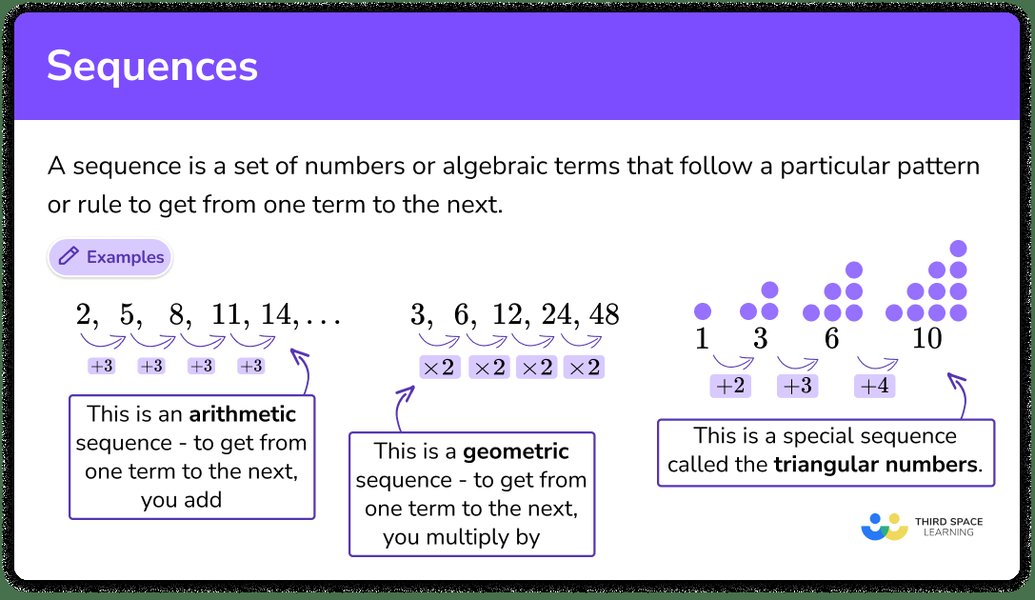
Standard number sequences often follow visual or mathematical patterns, unlike the complex sequence provided.
The Mystery of "c644" and "d"
Exploring Potential Interpretations
The presence of "c644" and "d" is the main obstacle to finding a simple pattern. Here are some possibilities:
1. Hexadecimal Values
In computer science and mathematics, letters 'a' through 'f' are used in hexadecimal (base-16) notation.
- "c644" (hex): This translates to \( \text{c} \times 16^3 + 6 \times 16^2 + 4 \times 16^1 + 4 \times 16^0 = 12 \times 4096 + 6 \times 256 + 4 \times 16 + 4 \times 1 = 49152 + 1536 + 64 + 4 = \mathbf{50756} \) in decimal (base-10).
- "d" (hex): This translates to \( \text{d} \times 16^0 = 13 \times 1 = \mathbf{13} \) in decimal.
2. Code or Cipher Elements
The sequence might be part of a coded message, an identifier string, or cryptographic output where letters and numbers are combined according to a specific, non-mathematical rule.
3. Placeholders or Symbolic Representation
"c644" and "d" could represent specific concepts, categories, or instructions within a particular domain, rather than numerical values.
4. Data Corruption or Errors
It's possible that these terms are typos or errors in the sequence data.
Without external context clarifying the meaning of "c644" and "d", choosing the correct interpretation is impossible, and further mathematical analysis is speculative.
Visualizing the Analysis Challenge
Mindmap of the Investigation
This mindmap illustrates the thought process involved in analyzing this complex sequence, highlighting the branching possibilities and the ultimate dependence on context.
1, 838, 26, 74, 528, 23, 385"] id1b["Alphanumeric Terms
'c644', 'd'"] id2["Analyze Numeric Part"] id2a["Check Arithmetic Pattern
(Differences: 837, -812, 48, ... -> Inconsistent)"] id2b["Check Geometric Pattern
(Ratios: 838, 0.031, 2.846, ... -> Inconsistent)"] id2c["Check Polynomial Pattern
(Difference Table -> No stability)"] id2d["Result: No Standard Numeric Pattern Found"] id3["Analyze Alphanumeric Part"] id3a["Possibility 1: Hexadecimal?"] id3a1["c644 -> 50756 (Decimal)"] id3a2["d -> 13 (Decimal)"] id3a3["Test Sequence:
1, 838, ..., 50756, ..., 13"] id3a4["Result: Still No Obvious Pattern"] id3b["Possibility 2: Code/Cipher Element?"] id3c["Possibility 3: Placeholder/Symbol?"] id3d["Possibility 4: Data Error?"] id4["Conclusion"] id4a["Sequence is Highly Irregular"] id4b["Mixed Format Complicates Analysis"] id4c["Interpretation of 'c644' and 'd' is Ambiguous"] id4d["Definitive Pattern Requires Context"]
Comparing Sequence Characteristics
This radar chart compares the characteristics of the provided sequence against standard mathematical sequences. The scores (ranging from 1=Low to 10=High) reflect the difficulty in analyzing the sequence 1, 838, 26, 74, 528, c644, 23, 385, d using typical methods. It highlights high context dependency and low predictability compared to well-defined sequences like arithmetic or Fibonacci.
Tools and Techniques for Sequence Analysis
Limitations of Standard Tools
While powerful for numerical sequences, standard tools face limitations here:
- Online Sequence Solvers (e.g., AlteredQualia, Calculator.net): These typically require purely numerical input. You could try inputting the numeric parts, but this ignores the potentially crucial alphanumeric terms. Converting hex to decimal and inputting the result (1, 838, ..., 50756, ..., 13) is possible, but as shown, doesn't guarantee a recognizable pattern.
- OEIS (The On-Line Encyclopedia of Integer Sequences): This extensive database is primarily for integer sequences. Submitting the numeric portion (1, 838, 26, 74, 528, 23, 385) is unlikely to yield a match incorporating the alphanumeric context.
Sequential Pattern Mining
Techniques from data mining, known as sequential pattern mining, are designed to find statistically relevant ordered patterns in large datasets, which can include non-numeric elements (like DNA sequences or customer purchase histories). However, applying these complex methods to a single, short, ambiguous sequence like yours is generally not feasible or informative without a larger dataset or defining rules.
The Need for Context
Ultimately, the most effective way to decipher this sequence is to understand its origin. Knowing where it came from (e.g., a programming log, a puzzle, a specific scientific measurement, an ID system) would provide the necessary rules or constraints to interpret "c644" and "d" correctly and potentially reveal the underlying pattern.
Frequently Asked Questions (FAQ)
What are common types of number sequences?
Common types include:
- Arithmetic Sequences: Each term is found by adding a constant difference to the previous term (e.g., 2, 5, 8, 11... difference is 3).
- Geometric Sequences: Each term is found by multiplying the previous term by a constant ratio (e.g., 3, 6, 12, 24... ratio is 2).
- Fibonacci Sequence: Each term is the sum of the two preceding terms (e.g., 1, 1, 2, 3, 5, 8...).
- Polynomial Sequences: Terms are generated by a polynomial function (e.g., square numbers: 1, 4, 9, 16...).
What does 'alphanumeric' mean?
Alphanumeric refers to characters that include both letters (alpha) and numbers (numeric). In the sequence provided, "c644" and "d" are alphanumeric because they contain letters.
Could 'c644' and 'd' be hexadecimal numbers?
Yes, this is a plausible interpretation. In hexadecimal (base-16), letters 'a' through 'f' represent the decimal values 10 through 15. Under this system:
- 'c644' (hex) = 50756 (decimal)
- 'd' (hex) = 13 (decimal)
However, even substituting these values into the sequence did not reveal a simple mathematical pattern in this case.
Why didn't standard analysis find a pattern?
Standard analysis methods (checking for common differences/ratios, using difference tables) failed primarily because:
- The numeric terms themselves don't follow a simple arithmetic, geometric, or polynomial rule.
- The presence of alphanumeric terms ("c644", "d") disrupts numerical continuity and introduces ambiguity. These terms cannot be handled by tools designed purely for numbers without making assumptions (like hexadecimal conversion).
Why is context important for sequence analysis?
Context tells you the 'rules of the game'. Knowing where a sequence comes from helps determine:
- The type of data: Is it mathematical, coded, logged data, identifiers, etc.?
- The meaning of non-standard elements: What do letters or symbols represent? Are they hex values, categories, placeholders, or errors?
- The expected pattern type: Is it supposed to be mathematical, logical, related to a specific algorithm, or something else?
Without context, analysis relies on guessing potential rules, which is often unreliable for complex or non-standard sequences like the one provided.
Recommended Further Exploration
Related Queries for Deeper Insights
- How to analyze sequences with mixed numeric and alphanumeric data?
- What are common methods for identifying patterns in non-standard sequences?
- Can you explain hexadecimal notation and its uses?
- What are some examples of sequences used in coding or cryptography?
References
Helpful Resources for Sequence Analysis
Last updated May 5, 2025