
Step-by-Step Math Problem Explanation
Easy guide to solve 3 1/4 = 1/2 + w for a 12-year-old
Key Highlights
- Convert Mixed to Improper Fractions: Understand how to change a mixed number like 3 1/4 to an improper fraction.
- Find Common Denominators: Learn why and how to use the same denominator when adding or subtracting fractions.
- Isolate the Unknown: Follow steps to isolate the variable w and get your answer.
Understanding the Problem
We need to solve the equation: 3 1/4 = 1/2 + w. This means we want to find the value of w that makes the left side equal to the right side. In simpler words, if you start with 3 1/4 and remove 1/2, what do you have left? That result is w.
Step 1: Convert the Mixed Number
Understanding Mixed Numbers
A mixed number like 3 1/4 has two parts: a whole number (3) and a fraction (1/4). It is sometimes easier to work with fractions when solving an equation.
Conversion Process
To convert 3 1/4 into an improper fraction:
-
Multiply the whole number (3) by the denominator (4) of the fraction.
\(3 \times 4 = 12\) -
Add the numerator (1) to the result.
\(12 + 1 = 13\) -
Place the result over the original denominator (4).
So, 3 1/4 becomes \(\frac{13}{4}\).
The equation now becomes:
\(\frac{13}{4} = \frac{1}{2} + w\)
Step 2: Get Ready to Isolate w
What Does It Mean to Isolate?
Isolating the variable means you want to have w by itself on one side of the equation. To do that, you need to remove the fraction that is added to w.
Equation Setup
Our current equation is:
\(\frac{13}{4} = \frac{1}{2} + w\)
To find w, we subtract \(\frac{1}{2}\) from both sides of the equation.
Step 3: Subtracting the Fraction
Why Find a Common Denominator?
When subtracting fractions, they must have the same denominator. The denominators in our equation are 4 and 2. The easiest way to subtract is to make both denominators equal to 4.
Converting 1/2 to an Equivalent Fraction
To convert \(\frac{1}{2}\) to a fraction with a denominator of 4, multiply both the numerator and the denominator by 2:
\(\frac{1 \times 2}{2 \times 2} = \frac{2}{4}\)
Now, the equation is:
\(\frac{13}{4} = \frac{2}{4} + w\)
Removing the Common Fraction
To find w, simply subtract \(\frac{2}{4}\) from \(\frac{13}{4}\):
\(\frac{13}{4} - \frac{2}{4} = w\)
When the denominators are the same, subtract the numerators:
\(13 - 2 = 11\), hence, \(w = \frac{11}{4}\)
Step 4: Converting to a Mixed Number (Optional)
Why Convert?
Sometimes it is easier or more familiar to see the answer as a mixed number instead of an improper fraction.
Conversion Process
To convert \(\frac{11}{4}\) to a mixed number:
-
Divide 11 by 4.
\(11 \div 4 = 2\) with a remainder because \(2 \times 4 = 8\). -
Determine the remainder:
\(11 - 8 = 3\). -
The mixed number representation is:
\(2 \frac{3}{4}\).
Summary Table: Converting and Solving
| Step | Calculation | Result |
|---|---|---|
| Convert 3 1/4 | 3 × 4 + 1 | 12 + 1 = 13, so 3 1/4 = 13/4 |
| Convert 1/2 | Multiply by 2/2 | 1/2 = 2/4 |
| Subtract to find w | 13/4 - 2/4 | (13 - 2)/4 = 11/4 |
| Conversion (Optional) | 11 ÷ 4 | 2 remainder 3, so 11/4 = 2 3/4 |
This table summarizes the process we followed: converting the mixed number, adjusting fractions to have a common denominator, subtracting, and finally, expressing the answer in both improper and mixed number forms.
Detailed Explanation for Better Understanding
Step-by-Step Breakdown
1. Converting the Mixed Number
A mixed number combines whole numbers with a fraction. For 3 1/4, the whole part is 3 and the fractional part is 1/4. To handle it like other fractions in equations, we convert it to an improper fraction:
Multiply the whole number (3) by the fraction's denominator (4) which equals 12, then add the numerator (1) which gives you 13. Write this result over the denominator, obtaining \(\frac{13}{4}\).
2. Setting Up the Equation
The equation originally is: 3 1/4 = 1/2 + w. After converting 3 1/4, it becomes:
\(\frac{13}{4} = \frac{1}{2} + w\)
This format allows us to work with similar parts—that is, fractions.
3. Creating a Common Denominator
Fractions can only be directly added or subtracted when they have the same denominator. Our fractions have denominators 4 (from \(\frac{13}{4}\)) and 2 (from \(\frac{1}{2}\)). We convert \(\frac{1}{2}\) into an equivalent fraction with a denominator of 4 by multiplying both parts of the fraction by 2:
\(\frac{1 \times 2}{2 \times 2} = \frac{2}{4}\)
4. Isolating the Unknown Variable w
The goal is to find the value of w. With the equation now as:
\(\frac{13}{4} = \frac{2}{4} + w\),
subtract \(\frac{2}{4}\) from both sides to leave w by itself on the right:
\(\frac{13}{4} - \frac{2}{4} = w\)
Subtract the numerators: \(13 - 2 = 11\), so you obtain:
\(w = \frac{11}{4}\)
5. Option: Expressing w in Mixed Number Form
While \(\frac{11}{4}\) is a correct answer, sometimes converting it back to a mixed number makes it easier to understand. Divide 11 by 4:
\(11 \div 4 = 2\) with a remainder of 3, so:
\(w = 2 \frac{3}{4}\)
Both forms are correct! You can use either \(\frac{11}{4}\) or \(2 \frac{3}{4}\) as your final answer.
Learn By Doing – Practice Problems
Additional Example 1
Solve: 4 1/2 = 1/3 + w. Convert 4 1/2 to an improper fraction:
4 × 2 = 8; 8 + 1 = 9, so 4 1/2 = \(\frac{9}{2}\). Convert \(\frac{1}{3}\) to have the denominator 6 if needed, and then subtract. Practice similar steps for varying numbers.
Additional Example 2
Try: 5 2/3 = 2/3 + w. Follow the same approach by converting the mixed number to an improper fraction and subtracting.
Each time, work carefully through the steps: Convert, rewrite with common denominators, isolate the variable, and simplify!
Using Visual Aids
Fraction Bars
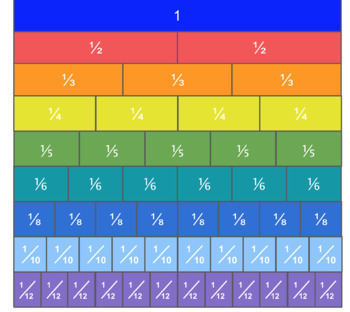
A great way to understand fractions is to use fraction bars or circles. Imagine a bar divided into 4 equal parts. The fraction \(\frac{13}{4}\) means you have three whole bars (since 3 × 4 = 12) plus one extra piece (1/4). Similarly, \(\frac{2}{4}\) represents just 2 parts out of a 4-part bar. Visualizing these can help you see why, when you remove 2 pieces from a total of 13, you are left with 11 parts.
Drawing the Problem
You might draw two bars side by side:
- Bar 1: Show 13 parts divided into 4 equal segments.
- Bar 2: Show 2 parts representing the fraction \(\frac{2}{4}\).
Shade the removed parts to illustrate the subtraction.
More Details About Why This Works
The Concept of Fractions
Fractions represent parts of a whole. In the equation, the denominator (4 in \(\frac{13}{4}\) and \(\frac{2}{4}\)) tells us into how many equal parts the whole is divided. When we subtract fractions, it’s like removing a part of a divided object.
Maintaining Equality
Whatever operation you perform on one side of the equation, you must perform on the other side to keep the equation balanced. This is why subtracting \(\frac{2}{4}\) from \(\frac{13}{4}\) correctly isolates w.
The Importance of Same Denominators
Having the same denominator is crucial because it lets you compare fractions directly. Without the common denominator, you cannot simply subtract one fraction from another since the pieces you are comparing are not the same size.
Additional Tools and Practice Resources
There are many online tools where you can practice similar problems, check your work, and even get extra explanations if you need more help. Using these can enhance your understanding and build confidence in solving similar math problems.
- Mathway - Step by Step Solutions
- Tiger Algebra - Detailed Drills
- Calculator Soup - Fraction Calculator
- Khan Academy - Fraction Arithmetic
-
Math is Fun - Mixed Numbers
Recommended Related Queries
Last updated March 11, 2025