
Unlocking Your Brain's Potential: Strategic Language Learning and Polymathy with Anki
How spaced repetition can transform passive curiosity into structured knowledge across languages and beyond
Anki's spaced repetition system provides a powerful framework for "Away From Keyboard" (AFK) language learning and expanding your knowledge across multiple domains. As a mathematics graduate student looking to build both language foundations and increase polymathy, you're positioning yourself perfectly to leverage this tool's capabilities.
Highlights of Anki-Powered Learning
- Frequency-based language acquisition accelerates practical fluency by focusing on the most commonly used words first
- Structured knowledge building creates mental frameworks that serve as "hooks" for deeper learning later
- Cross-disciplinary connections emerge naturally when using Anki across multiple domains simultaneously
Recommended Language Learning Decks
For your "AFK" language learning approach, focusing on high-frequency vocabulary with good example sentences will give you the strongest foundation. Here are the most effective decks for each of your target languages:
French Resources
French offers numerous high-quality resources with audio and contextual sentences:
- 5000 Most Frequently Used French Words (v6.0) - This comprehensive deck includes the most common French words with example sentences and audio, allowing you to build vocabulary efficiently (AnkiWeb Link)
- French A1 Anki Deck (Language Atlas) - Contains over 3,700 flashcards with audio and covers essential French vocabulary and grammar
- French Sentences w/ Audio - A collection of 6,000 French sentences with audio recordings to improve comprehension and pronunciation
German Resources
German decks provide structured vocabulary acquisition with frequency-based organization:
- German Anki Deck (5000 Words Sorted by Frequency) - This excellent resource contains the top 5000 German words organized by frequency of use (Reddit Link)
- German A1 Anki Deck (Language Atlas) - Similar to the French version, with over 3,700 flashcards featuring audio and basic German vocabulary
- 625 Words Flashcards (SPEAKADA) - Includes the most essential German vocabulary with images, audio, and IPA pronunciation guides
Latin Resources
While Latin lacks audio components, these decks offer excellent frequency-based vocabulary building:
- Frequency-based Latin Vocabulary - Contains approximately 7,800 cards covering the most frequent Latin vocabulary words (AnkiWeb Link)
- LLPSI Latin Vocabulary - Based on the respected Lingua Latina Per Se Illustrata textbook with over 500 carefully curated vocabulary items
- Latin Core Vocabulary - A collection of the most essential Latin words organized by frequency of occurrence in classical texts
Visual Comparison of Language Decks
| Language | Best Deck | Word Count | Audio? | Example Sentences? | Frequency Sorted? |
|---|---|---|---|---|---|
| French | 5000 Most Frequently Used French Words | 5,000 | Yes | Yes | Yes |
| German | German Anki Deck (5000 Words) | 5,000 | Partial | Yes | Yes |
| Latin | Frequency-based Latin Vocabulary | 7,800 | No | Yes | Yes |
| Supplementary | SPEAKADA 625 Words | 625 | Yes | Partial | Yes |
Anki for Polymathy: Building Knowledge Frameworks
As a mathematics graduate student seeking polymathy, Anki can be instrumental in creating cognitive "hooks" that later facilitate deeper learning across various domains. Here's how to leverage Anki beyond language learning:
Structured Knowledge Architecture
To maximize retention and create meaningful connections between concepts:
- Create topic-based hierarchies - Rather than isolated decks for every subject, build a structured hierarchy with main decks for broad domains (e.g., Mathematics, Sciences, Humanities) and subdecks for specific topics
- Focus on foundational concepts - Prioritize fundamental principles, terminology, and frameworks that serve as building blocks for more complex ideas
- Connect related information - On the back of cards, include connections to related concepts, helping build a web of knowledge rather than isolated facts
Mathematics Application Strategies
Specifically for mathematics and related fields:
- Syntax and notation cards - Create cards for mathematical notation, syntax, and terminology that you encounter in your studies
- Theorem and proof structure cards - Rather than memorizing entire proofs, focus on the key insights and structures that make proofs work
- Visual concept cards - Include diagrams, graphs, and visual representations of mathematical concepts to strengthen spatial understanding
- Application examples - Add real-world applications of mathematical concepts to connect abstract ideas with concrete scenarios
Digital Polymath Approach
The modern approach to polymathy leverages digital tools and strategic learning:
- Breadth-first exploration - Use Anki to build broad foundational knowledge across multiple domains before diving deep
- Cross-disciplinary connections - Create cards that explicitly link concepts across different fields (e.g., how mathematical principles apply to music theory)
- Community knowledge leveraging - Combine your specialized knowledge with others' expertise to achieve collective understanding
Visualizing the Polymath Learning Strategy
This mindmap illustrates how Anki can be used as a central tool for expanding your knowledge across multiple domains while maintaining connections between them.
Effectiveness Comparison: Learning Approaches for Polymathy
Different learning approaches offer varying degrees of effectiveness across key dimensions important for polymathic learning. The radar chart below compares these approaches:
The radar chart illustrates how each approach excels in different dimensions. The Digital Polymath Approach, which combines Anki spaced repetition with other methods, provides the most balanced profile for comprehensive learning across domains.
Additional Resources Beyond Anki
Language Learning Supplements
Complement your Anki practice with these additional resources:
- SPEAKADA - Offers proven Anki decks for pronunciation, vocabulary, and grammar in multiple languages (Website)
- Language Atlas - Provides comprehensive language learning resources including Anki decks for various proficiency levels
- Verbling - Platform for speaking practice with native speakers once you're ready to activate your vocabulary
- Language Learning Podcasts - "Coffee Break French" and "News in Slow German" provide listening practice with gradually increasing difficulty
Visual Learning Supplements
Enhance your language learning with visual aids that complement your Anki practice:
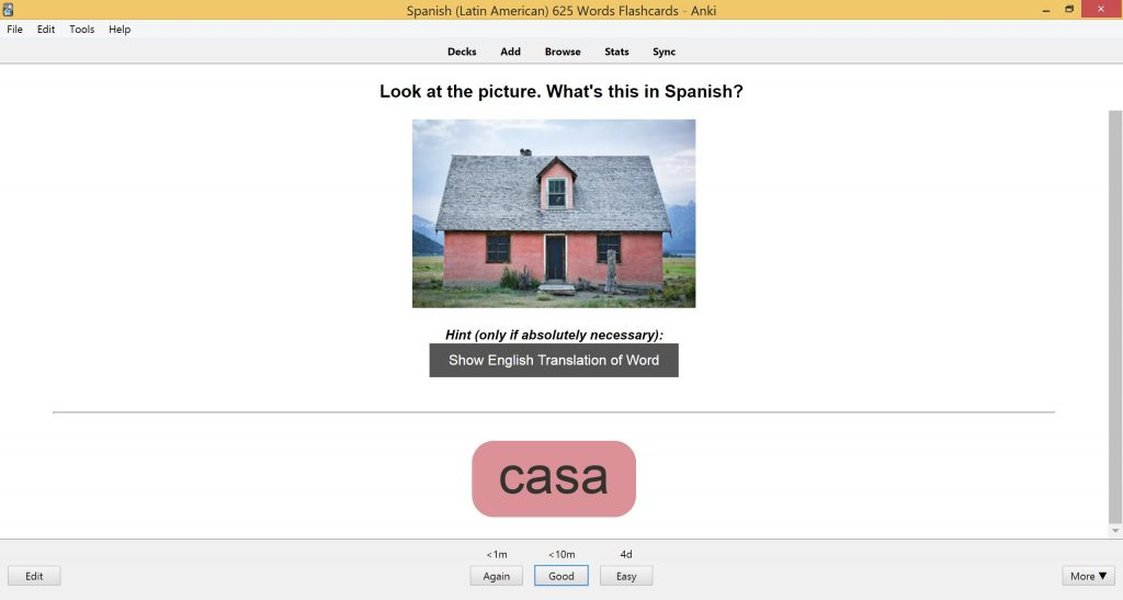
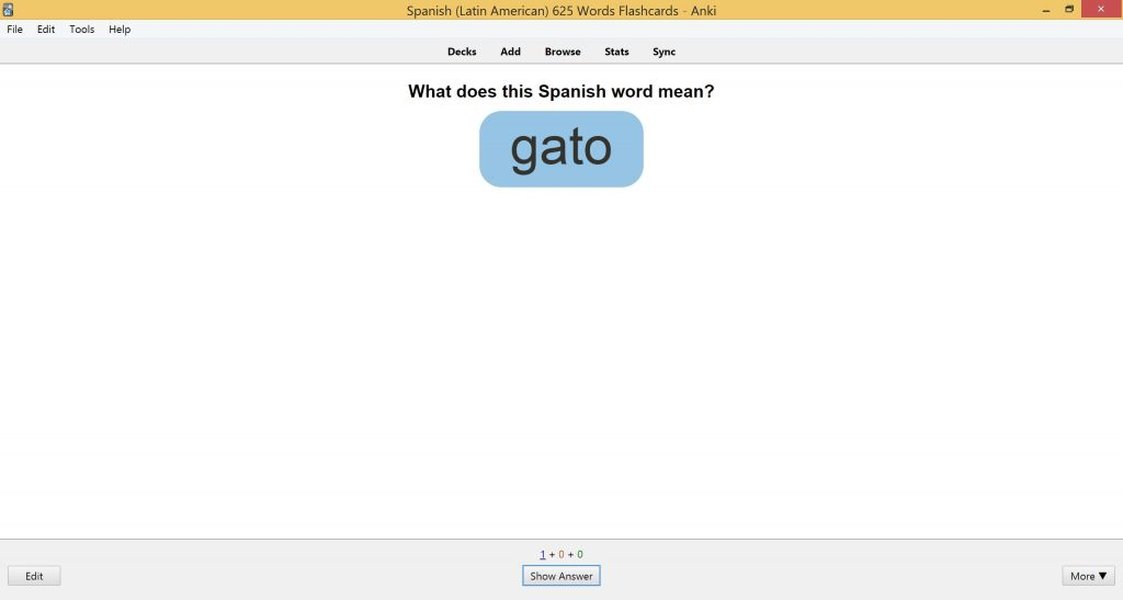
These examples from SPEAKADA show how effective visual flashcards can be for language acquisition. The combination of images, native text, and audio creates multiple memory pathways.
Polymathy Development Resources
To support your goal of increased polymathy:
- Online Courses - Platforms like Coursera, edX, and Khan Academy offer structured courses across diverse disciplines
- Collaborative Study Groups - Join or create cross-disciplinary study groups to share insights and learning approaches
- Mind Mapping Tools - Use tools like MindMeister or XMind to visualize connections between concepts across domains
- Podcasts for Broad Learning - "The Tim Ferriss Show," "Radiolab," and "Stuff You Should Know" expose you to diverse topics
Study Environment Optimization
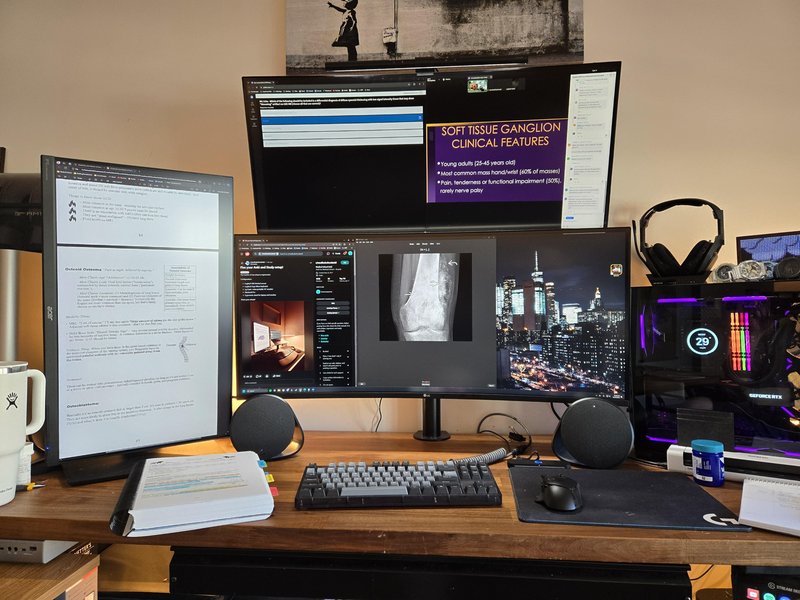
An optimized study environment like this one can significantly enhance your Anki learning efficiency. Notice the dual-monitor setup, which allows you to research and create cards simultaneously.
YouTube Resource: Language Learning with Anki
This video provides an excellent overview of how to use Anki effectively for language learning, specifically focusing on French:
This tutorial from Language Atlas walks through their French Anki deck structure, demonstrating how frequency-sorted vocabulary is organized and how to effectively use the audio components. The timestamp sections cover deck structure (0:41), overview of available decks (02:09), and editing options (09:53).
Frequently Asked Questions
References
- 5000 Most Frequently Used French Words - AnkiWeb
- German Anki Deck (5000 Words Sorted by Frequency) - Reddit
- Frequency-based Latin Vocabulary - AnkiWeb
- 625 Words Anki Flashcards to Start Learning a Language Now - SPEAKADA
- The Digital Polymath - Absorbing the Web With Accelerated Learning - The Bioneer
- How to Use Anki: An Efficient Tutorial for Beginners - Lean Anki
- Building Structured Knowledge - Reddit
- How Anki Saved My Engineering Career - freeCodeCamp
Recommended Explorations
 frequencylists.blogspot.com
Last updated April 6, 2025