
Anklets in Prehistoric Times: Civilizations and Independent Development
Exploring the Roots, Adoption, and Symbolic Meanings of Anklets Across Ancient Societies
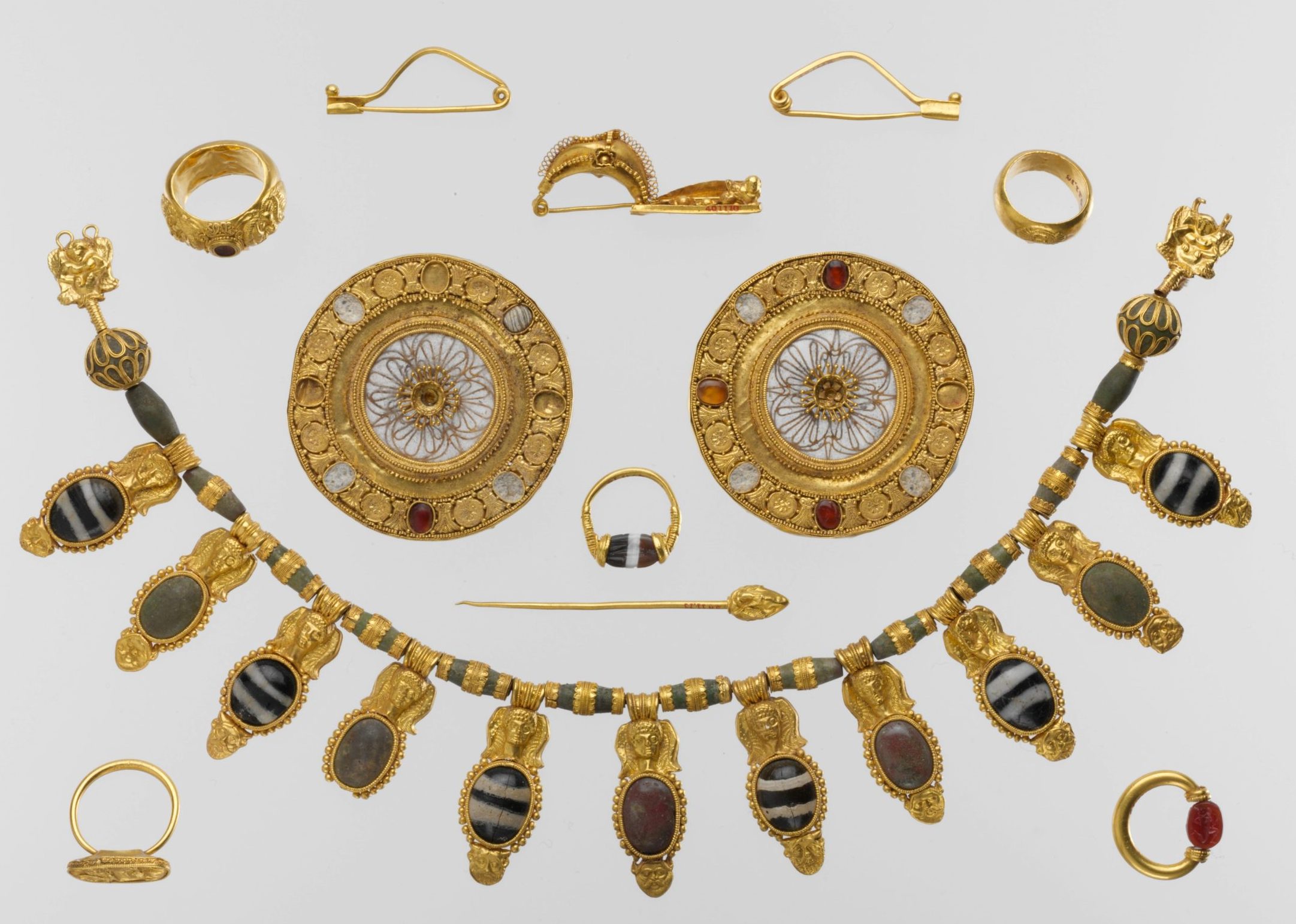
Key Insights
- Ancient Adoption: Anklets have been worn from early prehistoric times in ancient civilizations such as Egypt, Mesopotamia, the Indus Valley, Greece, and Rome, each attributing different symbolic values based on social status and cultural significances.
- Independent Development: Evidence suggests that while trade and cultural exchange may have facilitated the broader dissemination of styles, anklets were generally developed independently in various cultures as expressions of identity, status, and beauty.
- Cultural Diversity: The basic form of the anklet remained consistent, yet its materials, design, and meanings varied widely across regions including the Middle East and Africa, evolving over more than 8,000 years.
Historical Overview of Anklets
Anklets, as historical artifacts, serve not only as ornamental jewelry but also as cultural markers that memorialize human creativity and societal structure. Their long history stretches back thousands of years and has been observed in various ancient civilizations. In prehistoric times, anklets were not merely decorative but also served as indicators of social status, wealth, and cultural identity.
Ancient Egypt
In Egypt, evidence from predynastic times indicates that anklets were worn by women across different social classes. In early Egyptian society, anklets made from natural materials such as leather or simple beads were common among the lower classes, while the wealthy adorned themselves with elaborate designs fashioned out of cherished materials like gold and silver embellished with precious gems. The anklet in ancient Egypt became a significant symbol of status. Archaeological discoveries, including depictions in tombs and in ancient iconography, reinforce the idea that anklets were linked to femininity, fertility, and divine protection.
Mesopotamia and Sumer
In the region known as Mesopotamia, and particularly among the Sumerians, anklets have also been found as part of ancient adornment traditions. Dating back approximately 4500 years, the Sumerians incorporated anklets into their wardrobe primarily as a marker of status and femininity. These ornamental pieces not only celebrated beauty but also were thought to denote marital status or symbolize protection, possibly linking the wearer to divine favor or the prosperity of their household.
Indus Valley Civilization and Ancient India
The Indus Valley Civilization, which covered parts of modern-day Pakistan and northwest India, provides some of the earliest records of anklet wear. Known locally by names such as "pattilu," "payal," "golusu," and "nupur," these anklets have been found in archaeological sites dating back over 8,000 years. Within Indian culture, anklets came to be an indispensable part of traditional adornment. They were used in everyday life as well as in ceremonial practices, notably during weddings. In addition to beauty, they were imbued with symbolic meanings such as good luck, marital fidelity, and spiritual wellbeing. The stories surrounding anklets in India emphasize a continuity of tradition, highlighting how ancient rituals and fashion persist through time.
Ancient Greece and Rome
In the classical civilizations of Greece and Rome, anklets also found a place among the ornamentation of women. In these cultures, anklets were associated with refinement and exclusivity. Typically, the design and material of anklets were reflective of a wearer’s social status. Patrician women in Rome, for example, often wore highly decorated and finely crafted gold anklets, while plebeian women adorned themselves with simpler, silver pieces. The duality in design and usage underscored the broader societal stratifications of these ancient cultures.
Middle Eastern and African Societies
Beyond the more widely documented regions, anklets were also present within various Middle Eastern groups and even some African communities. In the Middle East, they were frequently considered amulets offering protection, and in many cases, were designed to ward off evil or attract positive energy. The African societies that have been found to use anklets valued them for their aesthetic appeal as well as their connection to traditional rites of passage or spiritual beliefs. Although the styles and uses varied, the common thread was that anklets were seen as important culturally resonant objects.
Independent Development versus Cultural Convergence
The question of whether anklets developed independently in various prehistoric civilizations is a subject of considerable historical and archaeological interest. The evidence points toward a mixed scenario where anklets emerged independently across different cultures, each adapting the concept to suit localized customs, available materials, and societal needs.
Independent Innovation
In many instances, different civilizations found that adornments around the ankle served a significant aesthetic and functional purpose. For example, in ancient Egypt, patriarchal social structures and religious symbolism may have spurred the early development of anklets as markers of divine favor and social ranking. Similarly, in the Indus Valley, the anklet's role in ceremonial and marital contexts fostered a distinct evolution that was closely related to indigenous cultural norms.
This independent emergence in multiple parts of the world indicates a universal recognition of the human fascination with body adornment. Given that similar practices appear in geographically and temporally disparate societies, one could argue that the concept of wearing anklets was a convergent cultural development—a result of analogous human desires to enhance beauty, express identity, and denote social positions without necessarily being influenced by a single source or direct cultural transmission.
Culture Exchange and Convergence
Moreover, while the primary development of anklets may have been largely independent, ancient trade routes, such as the historic Silk Road, facilitated cultural exchange that likely influenced the design and styles of anklets. These intercultural interactions allowed for an exchange of materials and artisanship techniques which enriched the stylistic diversity of anklets across civilizations. For instance, while the basic concept might have been independently conceived, the variance in decorative elements such as precious stones from Egypt or indigenous motifs from India showcases a blend of localized tailorings and cross-cultural influences.
Assessing Archaeological Evidence
When evaluating archeological discoveries, experts have noted that the similarities in anklet designs across disparate civilizations could be coincidental. Each society exploited the materials at hand—be it gold, silver, beads, or leather—and crafted anklets that fit their unique aesthetic and functional needs. This illustrates a fascinating process where practical and symbolic needs converged to create similar adornments, without implying a direct transmission of the concept.
Trade Routes and Cultural Exchange
It is undeniable that the existence of extensive trade routes, such as the Silk Road, played a role in the dissemination of artistic ideas and styles. While these routes connected regions spanning from Asia to Europe and Africa, it provided a platform for communities to exchange not only commodities but also visual and cultural concepts. As a result, some stylistic similarities observed in anklets might be attributed to this exchange. Nonetheless, the underlying idea of adorning the ankle persisted, even if the decorative features evolved to align with the localized cultural narratives.
Comprehensive Timeline and Cultural Significance
| Civilization | Period | Materials and Style | Cultural Significance |
|---|---|---|---|
| Ancient Egypt | Predynastic to Dynastic Times (approx. 3000 BC onward) | Gold, silver, beads, and other natural materials | Symbol of wealth, femininity, and divine protection |
| Mesopotamia/Sumer | Approx. 4500 years ago | Ornamental metal pieces often embellished with decorations | Marker of social status, marital symbol, and aesthetics of beauty |
| Indus Valley/Ancient India | Over 8,000 years ago | Varied materials from metals to beads, often locally crafted | Ceremonial significance, marital adornment, and cultural identity |
| Ancient Greece and Rome | Classical Antiquity (circa 500 BC to 300 AD) | Gold and silver with intricate designs | Indicator of social and economic class, aesthetic refinement |
| Middle Eastern & African Societies | Throughout Ancient Times | Traditional designs using locally available materials | Protection amulets, spiritual adornments, rites of passage |
The table above provides a concise comparison of how anklets emerged in different civilizations, illustrating both their independent development and cross-cultural adaptations through trade and exchange. Each row narrates not only the historical timeline but also the corresponding cultural significance that anchored the anklet as an important symbol in its respective society.
Material Culture and Symbolism
Beyond the mere physical adornment, anklets represent a much deeper level of cultural symbolism. Their designs frequently reflected the interplay between aesthetics and function—serving as both an embellishment and a signifier of socio-economic status. In many ancient cultures, the value of the anklet was directly correlated with the materials used:
Materials and Societal Status
In ancient societies, the choice of materials used in anklet construction played a pivotal role in conveying social stratification. In Egypt, for example, the use of gold and precious gemstones was reserved for the elite, while more modest materials were allocated to commoners. Similarly, in the Indus Valley, indigenous methods of metalworking and bead-making manifested in elaborate designs that were cherished and sometimes even believed to invoke divine blessings. In Greece and Rome, the contrast between gold and silver anklets further underscored the boundaries of social hierarchy.
Symbolic Meanings and Ritual Uses
The anklet often transcended its role as a mere fashion accessory. In many cultures, it was imbued with symbolism that intersected with spiritual and ritualistic domains. Ancient Egyptian iconography frequently portrayed anklets in scenes that linked the adornments to fertility, protection, and even the afterlife. In the context of Indian traditions, anklets are not only decorative but are integrated into matrimonial rituals symbolizing a blessing for a happy union and lasting prosperity. These multifaceted meanings highlight the broader anthropological importance of the anklet, reinforcing its role as a bridge between the material and the mystical.
Archaeological Findings and Modern Reflections
Current archaeological research continues to validate the presence of anklets across various ancient sites. Excavations in Egypt, Mesopotamia, and the Indus Valley have unearthed remnants and depictions that provide insights into how these objects were used and crafted. In modern times, the renewed interest in ancient adornments has prompted designers and cultural historians to revisit these relics, connecting contemporary fashion trends with their deep historical roots.
The study of anklets from a archaeological perspective highlights a fascinating narrative of human ingenuity and adaptation. It shows that while the tools and techniques might have evolved, the limitations imposed by geography or culture were often surmounted by human creativity. This reinforces the idea that the practice of wearing anklets was a global phenomenon that arose from a profoundly human desire to beautify and signal identity.
Insights from Archaeology
Recent archaeological reports suggest that while the initial inception of anklets was likely independent, subsequent cultural exchanges may have refined the technique and expanded the symbolisms. These discoveries have also sparked discussions on how modern societies can draw inspiration from ancient practices to foster a deeper appreciation of cultural heritage and diversity.
Further Exploration and Interpretative Narratives
While the historical record regarding anklets is rich and multifaceted, many aspects invite further research and interpretation. Scholars remain interested in exploring:
- Regional Variations: How did different materials and artisan traditions result in distinct styles of anklets?
- Cultural Symbolism: In what ways did spiritual beliefs and social norms influence the evolution of anklets?
- Inter-Civilizational Exchanges: How did trade routes such as the Silk Road facilitate a cross-pollination of decorative arts and techniques?
These questions continue to be at the forefront of cultural and historical studies, reaffirming the importance of anklets not only as an artifact of fashion but also as a symbol with a multitude of meanings, intertwined with the evolution of human societies.
References
- The Long and Stylish History of Anklets - F. Silverman Jewelers
- Anklets in Ancient Cultures and Biblical Symbolism - Divine Narratives
-
A Brief History of the Anklet - AnOther Magazine
- The History of Anklets - SWCreations
- Anklet - Wikipedia
Recommended Queries for Further Exploration

Last updated March 11, 2025