
Apartheid's Shadow: Were Indian and Asian Children Educated Separately?
Unpacking the complex system of racial segregation in South African schools during the apartheid era.
Highlights
- Segregated Systems: Apartheid enforced separate education systems based on rigid racial classifications: White, Black, Coloured, and Indian/Asian.
- Designated Indian Schools: Individuals classified as 'Indian' attended schools specifically designated for this group, separate from all others.
- Complex Asian Classification: While 'Indian' was a primary category, other 'Asians' (like Japanese or Chinese) faced different classifications, sometimes leading to different school placements (e.g., 'honorary white' status allowed access to White schools for some).
Understanding Apartheid's Racial Hierarchy
The apartheid regime, formally established in South Africa in 1948 and lasting until the early 1990s, was built upon a foundation of institutionalized racial segregation and discrimination. Central to this system was the classification of the population into distinct racial groups, which dictated nearly every aspect of life, including where people could live, work, and crucially, attend school.
The Four Main Pillars of Segregation
The Population Registration Act of 1950 was a cornerstone of apartheid legislation, officially dividing South Africans into four main racial categories:
- White: People of European descent, who held privileged status and access to the best resources.
- Black (or African): The indigenous African population, who faced the most severe forms of oppression and discrimination.
- Coloured: People classified as being of mixed racial ancestry.
- Indian/Asian: Primarily comprising individuals of South Asian descent (mostly from India) but sometimes encompassing other Asian groups.
These classifications were not merely descriptive; they formed the legal basis for systemic inequality and segregation across society.
The Nuances of "Asian" Classification
While "Indian" was a specific and widely used category, the broader term "Asian" presented complexities for the apartheid government. The majority of people classified as "Asian" in South Africa were indeed of Indian origin due to historical waves of migration, primarily as indentured laborers in the 19th century. Consequently, in many official contexts and policies, "Indian" and "Asian" were used interchangeably.
However, the classification wasn't uniform for all people of Asian descent:
- Japanese, Taiwanese, and South Koreans: Due to diplomatic and economic ties, individuals from these nations were sometimes granted "honorary white" status. This classification was a pragmatic exception, allowing them certain privileges denied to other non-White groups, including potential access to facilities and schools designated for Whites.
- Chinese South Africans: This group often faced a different classification, frequently being categorized as "Coloured" or "Other Asian." They did not receive "honorary white" status and were subject to discrimination and segregation similar to, or sometimes slightly different from, that experienced by Indians.
This variable classification meant that while the vast majority of "Asians" (i.e., Indians) were subject to one set of segregation rules, a small number of individuals from other Asian backgrounds might fall under different classifications with varying implications for their schooling.
The Architecture of Segregated Education
Education under apartheid was meticulously segregated to reinforce the racial hierarchy and the policy of "separate development." This wasn't merely about keeping children of different races apart; it was fundamentally about providing vastly unequal educational opportunities.
Separate and Unequal Schools
Following the Population Registration Act, the government established separate schools, curricula, and administrative departments for each of the main racial groups. This meant:
- White children attended White schools.
- Black children attended Black schools (under the infamous Bantu Education system).
- Coloured children attended Coloured schools.
- Indian children attended Indian schools.
The quality and funding allocated to these systems varied dramatically. White schools received the highest levels of funding, better facilities, more qualified teachers, lower pupil-teacher ratios (e.g., 1:18), and broader curricula. In stark contrast, schools for Black Africans were deliberately underfunded and designed to provide an inferior education suited for manual labor. Schools for Coloured and Indian children occupied an intermediate position – generally better resourced than Black schools but significantly inferior to White schools.
Students in a classroom during the apartheid era, highlighting the segregated educational environment.
Legislation Cementing Educational Divides
Several key pieces of legislation entrenched this educational segregation:
- Bantu Education Act (1953): Centralized control of Black education under the state, explicitly aiming to limit opportunities and reinforce racial hierarchies.
- Extension of University Education Act (1959): Prohibited established universities from accepting Black students (unless with special ministerial permission) and paved the way for separate ethnic university colleges.
- Coloured Persons Education Act (1963): Established a separate education system for Coloured students.
- Indian Education Act (1965): Formalized state control over the education of Indian South Africans, creating a distinct administrative system separate from other groups.
- Group Areas Act (Implemented from the 1950s): Enforced residential segregation, which naturally led to geographically segregated schools within designated racial zones.
These laws created a rigid framework where education was delivered based explicitly on race, with profound and lasting consequences.
The Experience of Indian Students
For the vast majority of South Africans classified as "Indian," apartheid meant attending schools designated solely for their racial group. These schools were administered nationally, separate from provincial systems governing White education and distinct from the departments controlling Black and Coloured education.
Designated Indian Schools and Curriculum
Indian children attended government-run Indian schools, often located within designated Indian residential areas established under the Group Areas Act. Some missionary schools initially served Indian communities but were later brought under government control or phased out. The curriculum, while broader than that offered under Bantu Education, was still controlled by the state and inferior to that in White schools. Indian students wrote separate matriculation (school-leaving) examinations.
Quality and Resource Disparities
While systematically disadvantaged compared to White schools, Indian schools generally received more funding and resources than schools for Black Africans. Teacher qualifications tended to be better, and infrastructure, while often inadequate, was typically superior to that found in Black schools. Pass rates in Indian schools were often higher than the national average for Black students but lower than those for White students, reflecting this intermediate position within the apartheid hierarchy. Despite these relative advantages over Black schools, the system fundamentally limited the potential and opportunities available to Indian students compared to their White counterparts.

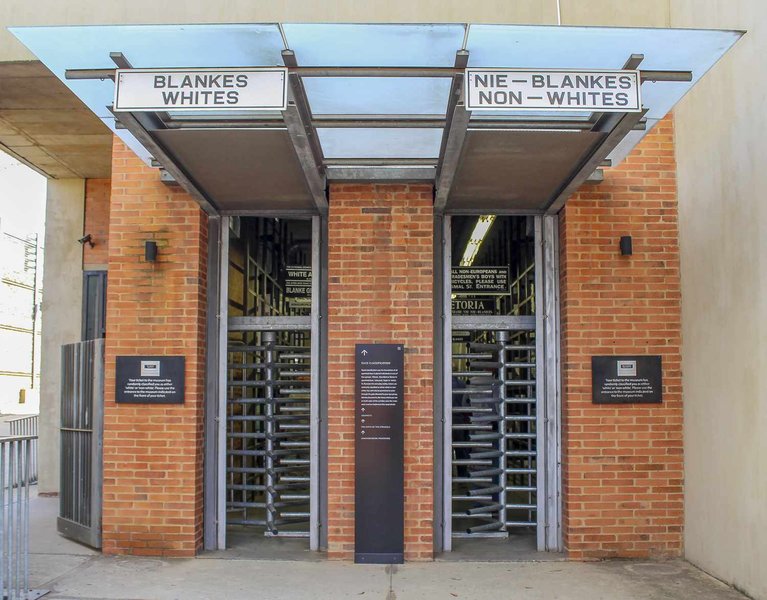
Apartheid-era educational architecture often reflected the segregated nature of the system.
Schooling for Other Asian Groups
The situation for Asians who were not of Indian descent varied based on their specific nationality and the complex, often contradictory, classifications employed by the apartheid state.
The "Honorary White" Anomaly
As mentioned earlier, small numbers of Japanese, Taiwanese, and sometimes South Korean nationals were granted "honorary white" status. This pragmatic designation, driven by economic and diplomatic considerations, allowed these individuals to bypass many petty apartheid restrictions. Crucially, this could include permission to live in White areas and, significantly, attend White schools. This placed them in a vastly different educational reality compared to Indian South Africans and other non-White groups.
Chinese South Africans: A Different Trajectory
Chinese South Africans, who had a longer history in the country, were not granted "honorary white" status. Their classification often fluctuated, sometimes being grouped under "Coloured" or a separate "Other Asian" category. They faced significant discrimination and were barred from White schools. Their educational experience was one of segregation, attending schools designated for non-Whites, often facing conditions and limitations similar to those in Indian or Coloured schools.
Resulting School Placements: A Divided Path
Therefore, the answer to whether "Indians and Asians" were in different schools is nuanced:
- Indians: Consistently attended designated Indian schools, separate from all other groups.
- "Honorary White" Asians (Japanese, Taiwanese, etc.): Could potentially attend White schools.
- Other Asians (e.g., Chinese): Attended segregated non-White schools (possibly designated as Coloured, Other Asian, or similar), separate from White schools and often distinct from Indian schools administratively, though facing similar levels of disadvantage relative to Whites.
So, while Indians were in their own category of schools, other Asian groups could be found in either White schools (if honorary whites) or other segregated non-White schools, meaning Indians *were* indeed in different schools from *some* other Asian individuals under apartheid.
Comparative Overview of Educational Segregation
The following table summarizes the general educational situation for different racial groups under apartheid, highlighting the stark inequalities inherent in the system. Note that "Other Asians" represents a simplification, as treatment varied (e.g., between honorary whites and Chinese).
| Racial Group Classification | Designated School System | Relative Funding & Resources | Compulsory Education | Access to Higher Education |
|---|---|---|---|---|
| White | White Schools | Highest | Yes (to age 16) | Full access to White universities |
| Indian | Indian Schools (separate dept. from 1965) | Intermediate (below White, above Black) | Yes (to age 15) | Access primarily to designated Indian university college (e.g., University of Durban-Westville) or limited access elsewhere with permits |
| Asian ("Honorary White" - e.g., Japanese) | Potentially White Schools | Access similar to Whites | As per White system if attending White schools | Potentially access to White universities |
| Asian (Other - e.g., Chinese) | Segregated Non-White Schools (often Coloured or 'Other Asian') | Intermediate/Low (below White, similar to Indian/Coloured) | Variable, often aligned with Coloured system | Limited access, often via designated non-White institutions or permits |
| Coloured | Coloured Schools (separate dept. from 1963) | Intermediate (below White, above Black, similar to Indian) | Yes (to age 15) | Access primarily to designated Coloured university college (e.g., University of the Western Cape) or limited access elsewhere with permits |
| Black (African) | Black Schools (Bantu Education system from 1953) | Lowest (severely underfunded) | No (initially), later limited/uneven implementation | Access primarily to designated ethnic "homeland" universities or limited access elsewhere with permits; system designed to limit opportunities |
Visualizing Educational Inequality
The following chart provides a visual representation of the estimated disparities in educational resources and quality across the different racial classifications under apartheid. The scores are relative estimates (out of 10) intended to illustrate the hierarchy, not precise statistical measures. They reflect factors like funding per pupil, teacher qualifications, quality of facilities, curriculum breadth, and compulsory attendance enforcement.
This chart clearly shows the privileged position of White education and the severely deprived state of Black education under the Bantu Education system. Indian and Coloured education systems occupied an intermediate, yet still significantly disadvantaged, position. The estimated situation for "Honorary White" Asians mirrors the White system, highlighting the exceptionalism of that status.
Mapping Apartheid's Educational Structure
This mindmap illustrates the hierarchical and segregated nature of the education system under apartheid, showing how racial classification directly determined access to separate and unequal schooling.
(1948-1994)"] id1["Racial Classification
(Population Registration Act 1950)"] id1a["White"] id1a1["White Schools"] id1a1a["Highest Funding & Resources"] id1a1b["Compulsory (Age 16)"] id1a1c["Access to White Universities"] id1b["Indian/Asian"] id1b1["Indian Schools
(Indian Education Act 1965)"] id1b1a["Intermediate Funding"] id1b1b["Compulsory (Age 15)"] id1b1c["Access to Indian University College"] id1b2["Other Asians"] id1b2a["'Honorary White'
(Japanese, Taiwanese)"] id1b2a1["Potential access to White Schools"] id1b2b["Chinese"] id1b2b1["Segregated Non-White Schools
(Coloured / Other Asian)"] id1c["Coloured"] id1c1["Coloured Schools
(Coloured Persons Education Act 1963)"] id1c1a["Intermediate Funding"] id1c1b["Compulsory (Age 15)"] id1c1c["Access to Coloured University College"] id1d["Black (African)"] id1d1["Black Schools
(Bantu Education Act 1953)"] id1d1a["Lowest Funding & Resources"] id1d1b["Limited / No Compulsory Ed."] id1d1c["Access to 'Homeland' Universities"] id2["Key Principles"] id2a["Segregation"] id2b["Inequality"] id2c["Separate Development"] id2d["State Control"]
The mindmap visually reinforces how the entire educational landscape was fractured along racial lines, with distinct pathways and vastly different levels of opportunity dictated by the apartheid state.
Institutionalization of Apartheid
The video below provides context on how apartheid policies, including racial classification and segregation in areas like education, were formally established and implemented in South Africa. Understanding this institutional framework is key to grasping how separate schooling for different racial groups became law and practice.
The video explains the classification system ("White," "Coloured," "Black," "Indian/Asian") and mentions the Bantu Education Act, illustrating how these laws directly led to racially segregated and deliberately unequal education systems, forming the backbone of the apartheid state's social engineering.
The Enduring Legacy
The formal system of apartheid education, with its rigid segregation and mandated inequality, was dismantled following the end of apartheid in 1994. The South African Schools Act of 1996 officially desegregated schools. However, the decades of discriminatory policies created deep-seated inequalities in educational outcomes, infrastructure, and resource distribution that continue to affect South African society today. While Indian and Coloured schools were better off than Black schools under apartheid, they were still part of a system designed to limit non-White advancement, leaving a legacy of disadvantage compared to the historically privileged White education system.
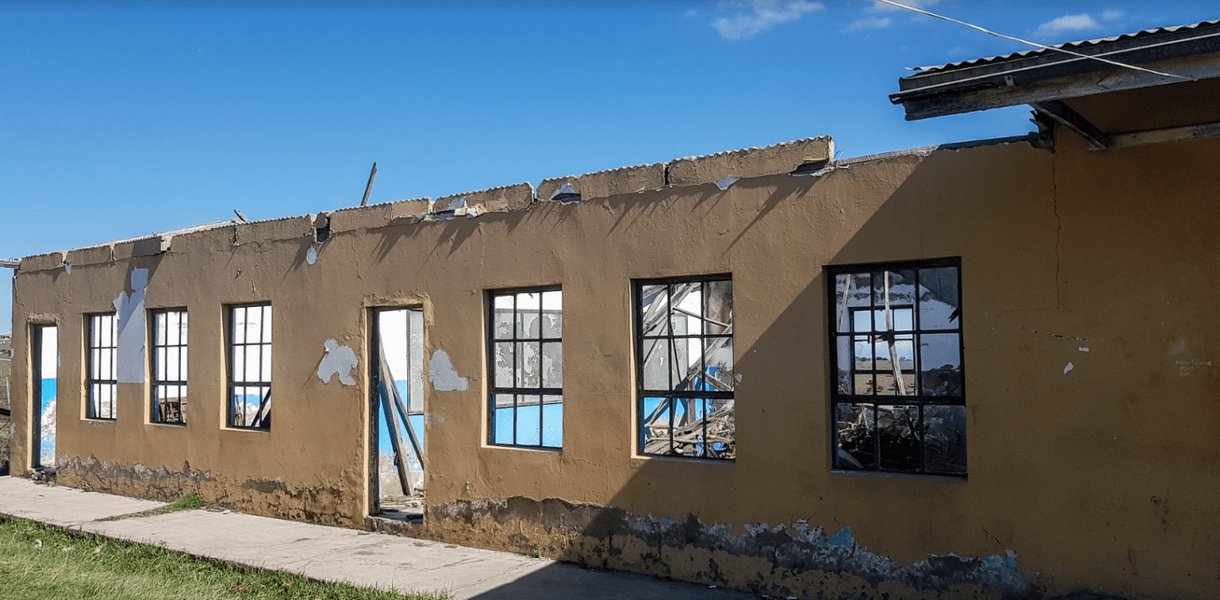
The legacy of unequal education continues to challenge South Africa post-apartheid.
Frequently Asked Questions
Recommended Reading
- Explore the details and devastating impact of the Bantu Education Act on Black South Africans.
- Understand how residential segregation under the Group Areas Act reinforced separate schooling.
- Learn more about the concept of "honorary white" status and which groups received it.
- Investigate the long-term effects of segregated education on contemporary South African society.
References
Last updated May 2, 2025