
Unlocking the Undefined: The Transformative Power of Cauchy Principal Value in Modern Science and Engineering
Discover how this pivotal mathematical concept resolves singularities and underpins advancements across diverse fields from quantum mechanics to signal processing.
Key Insights into Cauchy Principal Value Applications
- Resolving Singularities: The Cauchy Principal Value (CPV) is a vital technique for assigning finite, meaningful values to improper integrals that would otherwise be undefined due to singularities within the integration interval or at infinite limits.
- Broad Interdisciplinary Reach: CPV is not confined to pure mathematics; it is indispensable in fields like quantum field theory, signal processing (especially the Hilbert transform), thermodynamics, and the development of numerical integration methods.
- Foundation for Advanced Concepts: It forms the theoretical basis for defining generalized functions (distributions), analyzing complex contour integrals, and handling divergent quantities in theoretical physics, allowing for robust scientific and engineering models.
The Cauchy Principal Value (CPV), a powerful concept named after Augustin-Louis Cauchy, serves as a crucial bridge in mathematics, enabling the evaluation of integrals that present significant challenges due to singularities or infinite integration limits. Standard integration methods often fail in such scenarios, yielding undefined or divergent results. CPV overcomes these hurdles by symmetrically approaching the singular point or extending the integration domain to infinity, thereby deriving a finite and meaningful value. This method is fundamental across a wide spectrum of disciplines, from theoretical physics to applied engineering, where it provides a rigorous framework for dealing with otherwise intractable mathematical expressions.
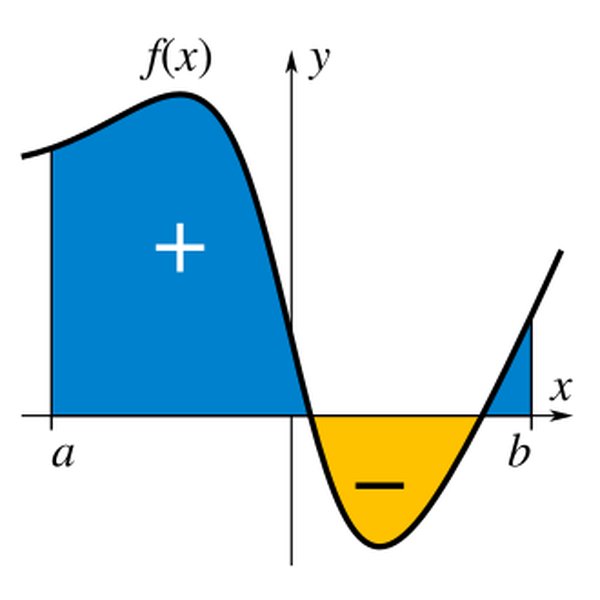
An illustrative example of a definite integral, fundamental to understanding where CPV becomes necessary for integrals with singularities.
Decoding the Cauchy Principal Value
Before diving into its myriad applications, it's essential to grasp the core definition of the Cauchy Principal Value. For a function \(f(x)\) with a singularity at \(x = y\) within the interval \([a, b]\), the CPV is formally defined as:
\[ \text{p.v.} \int_a^b f(x) \, dx = \lim_{\epsilon \to 0^+} \left( \int_a^{y - \epsilon} f(x) \, dx + \int_{y + \epsilon}^b f(x) \, dx \right) \]This symmetric approach ensures that contributions from either side of the singularity cancel out, allowing a finite value to be assigned. For integrals over infinite domains, a similar symmetric limit is taken:
\[ \text{p.v.} \int_{-\infty}^{\infty} f(x) \, dx = \lim_{R \to \infty} \int_{-R}^{R} f(x) \, dx \]This symmetry is the cornerstone of CPV's utility, enabling the regularization of integrals that would otherwise diverge in the classical sense, such as the integral of \(1/x\) over an interval containing zero. The existence of a CPV does not necessarily imply the convergence of the standard improper integral, making it a distinct and powerful analytical tool.
Far-Reaching Applications of Cauchy Principal Value
The pragmatic utility of the Cauchy Principal Value extends across various scientific and engineering disciplines. It provides a means to extract meaningful numerical results from situations where standard integration methods are inadequate. Below, we explore its key applications in detail.
Quantum Field Theory and Green's Functions
In the realm of theoretical physics, particularly in perturbative quantum field theory, the Cauchy Principal Value is indispensable. It plays a critical role in the computation of Green's functions, also known as propagators, for fundamental operators like the Klein-Gordon and Dirac operators. These propagators are essential for describing the behavior of particles and fields. Integrals involved in their calculation often exhibit divergences, which CPV helps to regularize, yielding finite and physically interpretable values. While not a direct form of renormalization, CPV enables the extraction of meaningful quantities from otherwise infinite expressions, crucial for theoretical predictions that align with experimental observations.
Signal Processing and Transform Analysis
One of the most prominent applications of CPV is in signal processing and harmonic analysis, particularly concerning the Hilbert transform. The Hilbert transform is a singular integral operator used to construct the analytic representation of a real signal, which is vital for applications like time-frequency analysis and modulation theory. The defining integral of the Hilbert transform contains a \(1/x\) singularity, necessitating interpretation in the CPV sense for its proper definition and convergence. Beyond the Hilbert transform, CPV is also utilized in evaluating improper integrals that arise in the context of Fourier, Laplace, and Z-transforms, which are foundational tools in operational calculus for analyzing systems and signals.
This radar chart illustrates the perceived impact and prevalence of Cauchy Principal Value across various scientific and engineering domains. Each spoke represents a different field, with a higher value indicating greater reliance on or applicability of CPV.
Complex Analysis and Contour Integration
In complex analysis, CPV is fundamental for evaluating contour integrals, especially when the integration path passes directly through a pole (singularity) of the integrand. The Sokhotski–Plemelj theorem beautifully links CPV integrals to the boundary values of analytic functions, allowing the powerful residue theorem to be applied by slightly deforming the contour around the singularity. This is critically important for computing various definite integrals that arise in physics and engineering, such as those related to the Kramers-Kronig relations in electromagnetism, which connect the real and imaginary parts of complex response functions.
Thermodynamics and Aerodynamics
The study of thermodynamic entropy often involves complex integrals that exhibit singular behavior. CPV contour integrals are employed to predict system behavior and analyze entropic phenomena. A notable application is in aerodynamic entropy studies, particularly concerning turbulence around wing or rotor blades. Here, singularities in the mathematical models for fluid flow can be handled symmetrically using CPV, providing balanced and physically meaningful insights into energy dissipation and aerodynamic efficiency. It allows engineers and physicists to model and understand complex systems that would otherwise be beyond standard analytical methods.
Distribution Theory and Generalized Functions
CPV extends the concept of integration to a broader class of functions known as generalized functions or distributions. For instance, the principal value of \(1/x\) can be rigorously defined as a distribution, even though \(1/x\) is not locally integrable at \(x=0\) in the classical sense. This framework is vital in advanced theoretical physics and the study of partial differential equations, where singular functions frequently appear. CPV distributions are crucial for defining Fourier transforms of discontinuous functions like the sign function and the Heaviside step function, thus broadening the scope of Fourier analysis.
Numerical Integration and Computational Methods
From a computational perspective, CPV enables the numerical evaluation of integrals with singular integrands. Standard numerical methods often struggle or fail when singularities are present. However, by transforming the integrand or using specialized algorithms, numerical integration packages can compute CPV integrals reliably. Software like Wolfram Language (Mathematica) and libraries such as QuadGK.jl in Julia explicitly support the computation of Cauchy principal values, making these otherwise problematic integrals tractable for scientific computing, simulations, and data analysis in various engineering disciplines.
This mind map visually organizes the diverse applications of the Cauchy Principal Value, highlighting the interconnections and specific areas where this mathematical concept provides essential solutions.
Integral Equations and Boundary Value Problems
Many problems in physics and engineering, such as those found in fluid mechanics, electromagnetism, and elasticity theory, are formulated as integral equations. These equations often feature singular kernels, meaning the integrand becomes infinite at certain points. The Cauchy Principal Value is crucial for providing a well-defined mathematical framework to solve these integral equations, particularly when they arise from boundary value problems. It ensures mathematical rigor and enables both analytical and numerical solutions to complex physical phenomena.
Probability and Statistics
While less intuitive, the concept of CPV also finds a niche in probability and statistics, especially when dealing with distributions like the Cauchy distribution. Unlike many other distributions, the Cauchy distribution does not possess a finite mean in the traditional sense, as its defining integral diverges. However, a "principal value" for the mean can be assigned using CPV, offering a balanced interpretation of its central tendency, particularly in contexts where such pathological models are relevant.
Comparative Applications of CPV Across Disciplines
To further illustrate the versatility of CPV, the following table summarizes its core applications and the specific mathematical challenges it addresses in each field.
| Field | Core Application | Challenge CPV Addresses | Examples/Context | ||||
|---|---|---|---|---|---|---|---|
| Quantum Field Theory | Computing Green's functions/propagators | Divergent integrals in perturbative calculations | Klein-Gordon, Dirac operators, scattering amplitudes | ||||
| Signal Processing | Defining Hilbert transform | Singular kernel \(1/x\) at \(x=0\) | Analytic signal construction, time-frequency analysis | ||||
| Complex Analysis | Evaluating contour integrals through poles | Integrands with singularities on the integration contour | Residue theorem, Fourier and Laplace transforms | ||||
| Thermodynamics | Predicting entropy in complex systems | Singularities in thermodynamic models (e.g., turbulence) | Aerodynamic entropy, phase transitions | ||||
| Distribution Theory | Defining generalized functions | Functions not integrable in classical sense (e.g., \(1/x\)) | Fourier transforms of step/sign functions, PDEs | ||||
| Numerical Methods | Computing singular integrals numerically | Instability and divergence in standard numerical algorithms | Computational physics, engineering simulations | ||||
| Integral Equations | Solving equations with singular kernels | Undefined integrals in boundary value problems | Fluid mechanics, electromagnetism problems | Probability & Statistics | Interpreting "mean" of Cauchy distribution | Non-existent mean in classically divergent distributions | Pathological statistical models |
Visualizing the Concept: Cauchy Principal Value in Action
Understanding the visual intuition behind the Cauchy Principal Value can be greatly beneficial. The process involves symmetrically excluding a region around the singularity and then observing the limit as this excluded region shrinks to zero. This video offers an excellent simplified concept and examples of CPV integrals.
This video elucidates the simplified concept and practical examples of the Cauchy Principal Value integral, providing a visual and intuitive understanding of how it addresses singularities.
Frequently Asked Questions (FAQ) about Cauchy Principal Value
What is the primary purpose of the Cauchy Principal Value?
How does CPV differ from a standard improper integral?
Can CPV be applied to integrals with multiple singularities?
Why is CPV important in physics?
Conclusion: The Enduring Significance of CPV
The Cauchy Principal Value stands as a testament to the ingenuity of mathematical analysis in overcoming inherent limitations of classical integration. By providing a robust and logically sound method for handling singularities, CPV has not only expanded the toolkit of pure mathematicians but has also become an indispensable utility across a vast array of scientific and engineering disciplines. From unraveling the complexities of quantum fields and enhancing signal processing algorithms to enabling advanced numerical simulations and understanding thermodynamic phenomena, the CPV ensures that critical mathematical models yield finite, interpretable, and practically useful results. Its symmetric approach offers a profound way to make sense of otherwise intractable problems, cementing its role as a fundamental concept in both theoretical and applied sciences as of June 02, 2025.
Recommended Further Exploration
- Delving deeper into Hilbert Transform applications in signal analysis.
- Exploring regularization techniques in quantum field theory and their connection to CPV.
- Investigating advanced numerical methods for evaluating singular integrals.
- Understanding the diverse applications of the residue theorem in engineering contexts.