
Applications of Cyclic Voltammetry
Exploring the Versatile Uses of Cyclic Voltammetry in Modern Science and Industry
Key Takeaways
- Versatility Across Disciplines: Cyclic voltammetry is employed in fields ranging from analytical chemistry to materials science, highlighting its broad applicability.
- Essential for Material Characterization: It plays a critical role in understanding the electrochemical properties of materials, which is fundamental for advancements in energy storage and conversion technologies.
- Integral in Sensor Development: The technique is pivotal in designing and testing electrochemical sensors and biosensors, enabling precise detection of various analytes.
Introduction to Cyclic Voltammetry
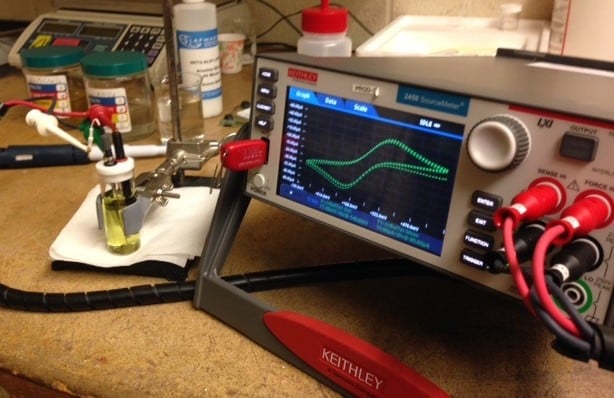
Cyclic voltammetry (CV) is a powerful and versatile electrochemical technique used to study the redox properties of chemical compounds, materials, and interfaces. By sweeping the potential of a working electrode in a cyclic manner and measuring the resulting current, CV provides detailed insights into electron transfer processes, reaction kinetics, and the electrochemical behavior of various substances. This technique is indispensable in both research and industrial applications due to its ability to deliver rapid and comprehensive data.
Applications of Cyclic Voltammetry
1. Analytical Chemistry
Qualitative and Quantitative Analysis
In analytical chemistry, CV is utilized for both qualitative and quantitative analysis of electroactive species in solution. It allows for the determination of concentration levels of various analytes by analyzing the peak currents corresponding to oxidation and reduction processes.
Environmental Testing
Cyclic voltammetry plays a crucial role in environmental monitoring by enabling the detection and quantification of pollutants. For instance, it is employed to measure lead levels in drinking water, ensuring safety and compliance with environmental standards.
Medical Applications
In the medical field, CV is used to measure essential biochemical parameters, such as iron levels in blood. This application is vital for diagnosing and monitoring various health conditions related to iron metabolism.
2. Materials Science
Battery and Supercapacitor Research
Cyclic voltammetry is instrumental in the development and optimization of battery materials. By evaluating the electrochemical properties of electrode materials, researchers can enhance battery performance and longevity. Similarly, CV is used to analyze the charge storage capacity and efficiency of supercapacitors.
Fuel Cells
In fuel cell research, CV aids in understanding the electrochemical reactions that occur within the cell. It helps in evaluating and improving catalysts, which are essential for enhancing fuel cell efficiency and performance.
Semiconductor Materials
CV is employed to characterize semiconductor materials by analyzing their redox behavior and electrical properties. This application is critical for the development of advanced electronic devices and components.
3. Electrochemical Sensors and Biosensors
Sensor Development
CV is pivotal in the design and testing of electrochemical sensors. By monitoring the redox activity of analytes, CV helps in developing sensitive and selective sensors for various applications, including environmental monitoring and medical diagnostics.
Biosensors
In biosensor technology, CV is used to detect and quantify biological molecules. It enables the monitoring of enzymatic reactions and the detection of specific biomolecules, which are crucial for applications like glucose monitoring in diabetes management.
4. Fundamental Electrochemical Research
Electron Transfer Processes
Cyclic voltammetry is essential for studying fundamental electron transfer processes. It provides insights into the kinetics and mechanisms of redox reactions, enabling a deeper understanding of electrochemical behavior.
Reaction Mechanisms and Kinetics
By analyzing the shape and characteristics of voltammograms, CV helps in elucidating reaction mechanisms and determining reaction rates. This application is vital for developing new chemical reactions and improving existing processes.
Determining Reaction Reversibility
CV allows researchers to assess the reversibility of electrochemical reactions. Understanding whether a reaction is reversible, quasi-reversible, or irreversible is crucial for applications in synthesis and materials development.
5. Energy Conversion and Storage
Electrocatalysis
In the field of electrocatalysis, CV is used to study the activity and stability of catalysts for reactions such as oxygen reduction, hydrogen evolution, and carbon dioxide reduction. This application is key to improving catalyst design and enhancing energy conversion efficiency.
Charge Storage Devices
Cyclic voltammetry is employed to characterize charge storage devices like batteries and supercapacitors. It helps in assessing the capacity, stability, and performance of these devices, which are critical for energy storage solutions.
6. Electroplating and Electrodeposition
Thin Film Deposition
CV assists in optimizing the parameters for electroplating and electrodeposition processes. By controlling the deposition potential and current density, CV ensures the quality and uniformity of thin films and coatings applied to various surfaces.
Surface Modification
In surface modification applications, CV is used to deposit materials onto substrates, enhancing properties such as corrosion resistance, conductivity, and aesthetic appearance. This is widely used in industries like automotive and electronics.
7. Corrosion Studies
Metal Dissolution and Passivation
Cyclic voltammetry is employed to study the corrosion behavior of metals. By analyzing metal dissolution and passivation processes, CV provides essential data for developing corrosion-resistant materials and protective coatings.
Developing Corrosion-Resistant Materials
Through CV analysis, researchers can design and test materials that exhibit enhanced resistance to corrosive environments. This application is crucial for industries where material durability is paramount.
8. Food Chemistry
Antioxidant Capacity Measurement
In food chemistry, CV is used to determine the antioxidant capacity of various foods and beverages. It measures the ability of substances like red wine, chocolate, and hops to neutralize free radicals, which is important for assessing nutritional quality and shelf life.
Quality Control
Cyclic voltammetry aids in quality control by analyzing the redox-active compounds in food products. This ensures consistency, safety, and adherence to nutritional standards.
9. Pharmaceutical Analysis
Drug Stability and Interaction Studies
CV is utilized to study the electrochemical stability of pharmaceutical compounds. It helps in understanding how drugs interact with biological systems and in developing formulations with improved efficacy and safety profiles.
Drug Release Mechanisms
Cyclic voltammetry is employed to analyze the mechanisms of drug release from delivery systems. This application is vital for developing controlled-release medications and enhancing therapeutic outcomes.
10. Semiconductor Material Characterization
Redox Behavior Analysis
In semiconductor research, CV is used to analyze the redox behavior of materials, which is essential for understanding their electrical properties and suitability for electronic applications.
Electrical Property Assessment
Cyclic voltammetry aids in assessing the electrical properties of semiconductor materials, facilitating the development of advanced electronic devices with optimized performance.
11. Cellular Biology and Proteolysis Studies
Cellular Process Monitoring
CV is employed in cellular biology to monitor redox processes within cells. It provides insights into cellular metabolism and the impact of various biochemical pathways.
Proteolysis Studies
In proteolysis research, cyclic voltammetry is used to study the electrochemical properties of enzymes and proteins involved in protein degradation. This application aids in understanding enzyme mechanisms and developing inhibitors.
12. Environmental Monitoring
Pollutant Detection
Cyclic voltammetry is a key tool in environmental monitoring for detecting and quantifying pollutants in various media. It enables the identification of trace levels of contaminants in water, air, and soil samples.
Compliance and Safety
By providing accurate measurements of pollutant levels, CV ensures compliance with environmental regulations and contributes to public health and safety.
Cyclic Voltammetry in Energy Storage and Conversion
Energy storage and conversion technologies rely heavily on the insights provided by cyclic voltammetry. This technique facilitates the development of more efficient batteries, supercapacitors, and fuel cells by enabling detailed analysis of their electrochemical properties.
Table: Key Applications of Cyclic Voltammetry in Various Fields
| Field | Application | Description |
|---|---|---|
| Analytical Chemistry | Pollutant Detection | Identifying and quantifying contaminants in environmental samples. |
| Materials Science | Battery Research | Analyzing electrode materials to enhance battery performance. |
| Sensor Development | Electrochemical Sensors | Designing sensitive sensors for detecting various analytes. |
| Energy Conversion | Electrocatalysis | Studying catalysts for improved energy conversion efficiency. |
| Food Chemistry | Antioxidant Measurement | Determining the antioxidant capacity of foods and beverages. |
| Pharmaceuticals | Drug Stability | Evaluating the electrochemical stability of pharmaceutical compounds. |
Advanced Applications and Emerging Trends
Nanotechnology
Nanomaterials Characterization
Cyclic voltammetry is utilized to characterize nanomaterials, including nanoparticles and nanowires. It provides valuable information about their electrochemical behavior, which is essential for applications in nanodevices and nanomedicine.
Nanoelectronic Devices
In the development of nanoelectronic devices, CV helps in understanding the redox properties of nanomaterials, thereby facilitating the design of components with precise electrical characteristics.
Renewable Energy Technologies
Solar Fuel Production
Cyclic voltammetry is instrumental in researching solar fuel production processes, such as water splitting and carbon dioxide reduction. It helps in evaluating the efficiency and stability of catalysts used in these reactions.
Wind Energy Storage
In wind energy systems, CV aids in developing advanced storage solutions that can efficiently store and release energy based on demand, thereby enhancing the reliability of wind power.
Biotechnology
Biochemical Pathway Analysis
CV is used to analyze biochemical pathways by monitoring redox reactions within biological systems. This application is crucial for understanding metabolic processes and developing therapeutic strategies.
DNA and Protein Interaction Studies
In biotechnology, cyclic voltammetry helps in studying the interactions between DNA, proteins, and other biomolecules. This is important for drug design, genetic research, and the development of novel biomaterials.
Conclusion
Cyclic voltammetry stands out as a fundamental technique in electrochemistry, offering unparalleled versatility and depth of information across a myriad of scientific and industrial fields. Its ability to provide detailed insights into redox processes, reaction kinetics, and material properties makes it indispensable for advancements in energy storage, materials science, environmental monitoring, and beyond. As technology evolves, the applications of CV continue to expand, underscoring its critical role in driving innovation and enhancing our understanding of complex electrochemical systems.
References
Last updated February 13, 2025