
Unveiling the Soul of a Verse: Translating and Understanding a Classical Arabic Poem
Delving into the layers of meaning within lines of passion, conflict, and bewilderment from the heart of Arabic poetic tradition.
Key Insights from the Verse
- The poem masterfully captures the overwhelming and bewildering nature of intense love, with the speaker questioning whether their feelings are a natural affliction or a form of supernatural enchantment.
- Often attributed to the pre-Islamic warrior poet 'Antarah ibn Shaddad, these verses can be interpreted through a martial lens, where love's turmoil pierces through even the chaos of battle, adding a layer of profound intensity.
- The richness of Classical Arabic allows for multiple, nuanced interpretations of key phrases, particularly those describing the "spears" (or "pen"/"line") and the "dark, cultured ones," showcasing the depth and artistry of the language.
The Poem: A Glimpse into Passion and Turmoil
The Arabic verses you've inquired about are a powerful example of classical love poetry, pulsating with raw emotion, vivid imagery, and a timeless human dilemma. Such poetry often explores the profound impact of love on the human psyche, set against various backdrops, from serene contemplation to the heart of conflict.
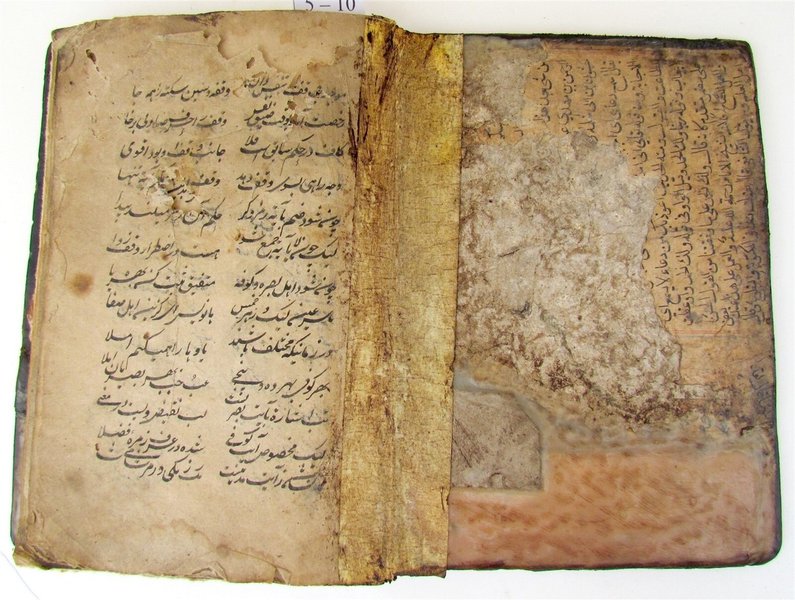
An example of an antique Arabic manuscript, illustrating the rich textual tradition of Arabic poetry.
The Original Arabic Text (Transliterated)
Here is the transliteration of the poem you provided:
ḏakartuki wa-l-k͟͟haṭṭīyu yak͟hṭiru baynanā
waqad nahilat minnā l-muṯaqqafatu s-sumru
fa-wa-Llāhi mā ʾadrī wa-ʾinnī la-ṣādiqun
ʾadāʾun ʿarānī min ḥabābiki ʾam siḥrun
wa-ʾin kāna siḥran faʿḏirīnī alā ʾal-hawā
wa-ʾin kāna dāʾan ġayrahu fa-laki l-ʿuḏru
English Translation
While direct translation of poetry across languages is always a challenge, aiming to capture both meaning and spirit, the following version reflects a prominent interpretation, particularly if one considers its common attribution to the warrior poet 'Antarah ibn Shaddad:
I remembered you, while the spears darted between us,
And the dark, polished shafts had quenched their thirst from us.
By God, I do not know, though I am truthful,
Whether it was a malady from your love that afflicted me, or magic.
And if it was magic, then forgive me for this passion;
And if it was an ailment other than that, then yours is the excuse.
Deconstructing the Verses: A Line-by-Line Exploration
Each line of this poem is laden with meaning, open to subtle variations in interpretation that enrich its depth.
First Line: Memory Amidst Peril
ḏakartuki wa-l-k͟͟haṭṭīyu yak͟hṭiru baynanā
"I remembered you, while the spears darted between us."
The poem opens with "ḏakartuki" (I remembered you [feminine]), immediately establishing a personal and emotional connection. The phrase "al-k͟͟haṭṭīyu yak͟hṭiru baynanā" is pivotal. "Al-Khaṭṭīy" often refers to spears made in Al-Khaṭṭ, a region known for its spear production. "Yak͟hṭiru" suggests a dangerous, menacing movement, like darting or quivering. This interpretation paints a vivid picture of the poet recalling his beloved amidst the chaos and danger of battle, highlighting the enduring power of memory and love even in extreme circumstances. Alternative interpretations suggest "al-khaṭṭ" as a "line" (perhaps a boundary or fate) or even "pen," where "yakhtiru" could mean "falter" or "flow," implying difficulty in expression or a destiny unfolding.
Second Line: The Price of Conflict (or Influence)
waqad nahilat minnā l-muṯaqqafatu s-sumru
"And the dark, polished shafts had quenched their thirst from us."
"Nahilat" means to have drunk one's fill, often to quench thirst. "Al-muṯaqqafatu" can mean straightened, cultured, or educated. "As-sumru" means dark or brown ones. In the martial context of 'Antarah, "al-muṯaqqafatu s-sumru" poetically refers to well-made, dark-hued spears (polished and straightened) that have "drunk" (drawn blood) from the combatants. This creates a stark image of the violence surrounding the poet. Other readings might interpret "al-muṯaqqafatu s-sumru" as "the cultured, dark-complexioned women/brunette" who has "drawn deeply from our essence" or even an abstract "cultured brownness" that has "withdrawn," or "the darkened veil lifted by culture."
Third Line: An Oath of Sincere Confusion
fa-wa-Llāhi mā ʾadrī wa-ʾinnī la-ṣādiqun
"By God, I do not know, though I am truthful."
The poet invokes God ("wa-Llāhi" - By Allah/God), a common rhetorical device in Arabic to emphasize sincerity. "Mā ʾadrī" (I do not know) expresses profound bewilderment. This is immediately followed by an assertion of his honesty: "wa-ʾinnī la-ṣādiqun" (and indeed I am truthful/sincere). This line sets up the central dilemma of the poem: the poet is genuinely unsure about the nature of his overwhelming feelings.
Fourth Line: The Core Question – Affliction or Enchantment?
ʾadāʾun ʿarānī min ḥabābiki ʾam siḥrun
"Whether it was a malady from your love that afflicted me, or magic."
"ʾAdāʾun" means an ailment, malady, or sickness. "ʿArānī" means afflicted me or befell me. "Min ḥabābiki" can be translated as "from your love," "from your charms," or even, more poetically in some traditions, alluding to "the dust of your hair" (though "ḥabāb" doesn't directly mean hair, it can encompass the beloved's captivating presence). "ʾAm siḥrun" means "or magic/sorcery." The poet questions whether the intense feelings consuming him are a natural consequence of love (a kind of sickness) or something supernatural, an enchantment cast by the beloved.
Fifth and Sixth Lines: A Plea for Understanding
wa-ʾin kāna siḥran faʿḏirīnī alā ʾal-hawā
wa-ʾin kāna dāʾan ġayrahu fa-laki l-ʿuḏru
"And if it was magic, then forgive me for this passion;
And if it was an ailment other than that, then yours is the excuse."
The concluding lines offer two conditional resolutions. "Wa-ʾin kāna siḥran" (And if it was magic), "faʿḏirīnī alā ʾal-hawā" (then excuse/forgive me for the passion/love/desire). If his actions are due to an irresistible magical force, he asks for pardon for being so consumed by "hawā" (love, desire, passion). "Wa-ʾin kāna dāʾan ġayrahu" (And if it was an ailment other than that – i.e., not magic but some other profound affliction), "fa-laki l-ʿuḏru" (then for you is the excuse, or you are excused). This could mean that if it's a different kind of affliction (perhaps the sheer overwhelming power of her being), then she holds the 'excuse' or reason for his state, or she is absolved of any fault for his suffering because its cause is so profound and unique.
Thematic Depths of the Poem
This poem resonates with several core themes prevalent in classical Arabic literature:
Love, Longing, and Bewilderment
At its heart, the poem is an exploration of love's disorienting power. The speaker is not merely in love; he is consumed by it to the point of questioning its very nature. This intense emotional state, bordering on turmoil, is a hallmark of ghazal and other forms of Arabic love poetry.
The Power of the Beloved
The beloved is depicted as a figure of immense influence, capable of inducing states akin to sickness or magical enchantment. Whether through her "love" (ḥabābiki) or general presence, her impact is profound and inescapable, a common trope where the beloved holds almost supernatural sway over the lover.
Enchantment vs. Affliction (Siḥr vs. Dāʾ)
The central dichotomy of "magic" (siḥr) versus "ailment" (dāʾ) reflects a deep psychological query. Is this overwhelming emotion an external force beyond his control (magic), or an internal condition, a sickness born of love? This tension highlights the irrational and consuming aspects of profound romantic attachment.
Contextualizing the Poem: Classical Arabic Poetry
Attribution and Poetic Tradition
These verses are frequently attributed to 'Antarah ibn Shaddad al-'Absi, a pre-Islamic (Jahiliyyah period) Arab knight and poet, famous for both his battlefield prowess and his romantic poetry dedicated to his cousin 'Abla. If this attribution is accurate, the imagery of "spears" and "quenched thirst" from battle takes on a very literal and powerful meaning, juxtaposing the ferocity of war with the intensity of love. 'Antarah's poetry often combines themes of bravery, honor, and tender longing.
This video discusses motivational poetry by 'Antarah ibn Shaddad, offering context into the style and themes associated with this renowned warrior poet.
Stylistic Elements
Classical Arabic poetry is known for its:
- Rich Vocabulary and Imagery: Words often carry multiple layers of meaning, allowing for dense, evocative imagery.
- Formal Structure: While these lines are a fragment, classical poems (like the Qasida) often followed strict metrical patterns (ʿarūḍ) and rhyme schemes (qāfiyah).
- Rhetorical Devices: The use of oaths ("By God"), direct address, and rhetorical questions enhances the emotional impact.
- Common Motifs: Themes of longing for the beloved (nasīb), descriptions of nature, heroic deeds, and philosophical reflections are recurrent.
Understanding the Nuances: A Comparative Look at Interpretations
The beauty of this poetry often lies in its interpretative flexibility. Key phrases within these verses can be understood in several ways, each adding a different shade to the poem's overall meaning. The following chart visualizes how different interpretative lenses (Martial, Romantic/Literary, Figurative) might emphasize various meanings for some of the poem's crucial terms. The scores (ranging from 3 to 8, with 8 being the strongest association) are illustrative, reflecting tendencies within scholarly and poetic readings.
This chart illustrates how different perspectives can highlight various facets of the poem's rich language. For instance, an interpretation focusing on 'Antarah as a warrior emphasizes martial terms like "Spears," while a more general literary reading might lean towards "Pen" or "Cultured Woman."
Interconnected Themes in the Poem
The following mindmap sketches the relationships between the central emotions, questions, and thematic elements present in these verses, demonstrating their interconnectedness in painting a complex portrait of love's impact.
Love's Profound & Perplexing Impact"] id1["Memory & Reflection"] id1a["'ḏakartuki' (I remembered you)"] id1b["Love's Enduring Presence"] id2["Setting/Context"] id2a["'al-k͟͟haṭṭīyu yak͟hṭiru baynanā'
(Spears/Pen/Line between us)"] id2b["Potential for Conflict or Separation"] id2c["'waqad nahilat minnā l-muṯaqqafatu s-sumru'
(Impact of 'cultured dark ones' - spears or beloved)"] id3["The Poet's Sincere Dilemma"] id3a["'fa-wa-Llāhi mā ʾadrī' (By God, I do not know)"] id3b["Assertion of Truthfulness: 'wa-ʾinnī la-ṣādiqun'"] id4["The Nature of Affection: A Core Question"] id4a["Is it 'ʾadāʾun' (An Affliction/Malady) from the beloved?"] id4b["Or is it 'siḥrun' (Magic/Enchantment)?"] id5["Conditional Pleas & Justifications"] id5a["If magic: 'faʿḏirīnī alā ʾal-hawā' (Forgive my passion)"] id5b["If another ailment: 'fa-laki l-ʿuḏru' (Yours is the excuse)"] id6["Overarching Themes"] id6a["The Overwhelming Power of Love"] id6b["Bewilderment and Intense Emotion"] id6c["The Fine Line Between Love and Suffering"] id6d["Classical Arabic Poetic Tropes (Oath, Dilemma, Beloved's Power)"]
This mindmap shows how the initial act of remembrance triggers a cascade of reflections on the setting, the beloved's influence, the poet's internal conflict about the nature of his feelings, and his pleas for understanding, all underpinned by common themes in classical Arabic poetry.
Summary of Key Phrase Interpretations
The ambiguity and richness of Classical Arabic allow for multiple valid interpretations of certain phrases, each contributing to the poem's depth. Here's a table summarizing some common understandings of the most debated expressions in these verses:
| Original Phrase | Common Translations/Interpretations | Poetic Significance |
|---|---|---|
al-k͟͟haṭṭīyu yak͟hṭiru baynanā |
The spears darted/passed between us; The pen falters/runs wild between us; The line (of fate/division) traces between us. | Evokes a sense of conflict, imminent danger, separation, the difficulty of artistic expression, or an unfolding destiny, depending on the chosen meaning of "al-k͟͟haṭṭīyu." |
al-muṯaqqafatu s-sumru |
The dark, polished/cultured (spears); The cultured brunette/dark-complexioned woman; The (abstract) cultured brownness; The darkened veil lifted by culture. | Can refer to weapons that have drawn blood in battle, an idealized and refined beloved who has deeply affected the poet, a more abstract cultural or aesthetic quality, or a transformative experience. |
min ḥabābiki |
From your love; From your charms/allure; From your captivating presence (sometimes poetically extended to aspects like "the dust of your hair"). | Pinpoints the source of the poet's intense emotional state directly to the beloved's affection, her enchanting qualities, or her very being. |
ʾadāʾun ... ʾam siḥrun |
A malady/affliction/disease ... or magic/sorcery/enchantment. | This forms the central rhetorical question of the poem: is this overwhelming, consuming feeling a natural (though perhaps painful) consequence of love, or is it a supernatural force beyond rational understanding? |
These varying interpretations do not necessarily contradict each other but rather showcase the polysemic nature of classical Arabic poetry, where a single verse can resonate with multiple layers of meaning simultaneously.
Frequently Asked Questions (FAQ)
Who is believed to be the author of this poem?
These verses are widely attributed to 'Antarah ibn Shaddad al-'Absi, a renowned pre-Islamic Arab knight and poet (circa 525–608 AD). He is celebrated for his Mu'allaqa (one of the "suspended odes") and his poetry often intertwines themes of bravery in battle with his deep and often unrequited love for his cousin, 'Abla. This attribution strongly influences interpretations that highlight martial imagery.
What are the main themes in this poem?
The poem delves into several profound themes, including:
- The overwhelming power and intensity of love.
- Memory and longing for the beloved, even in dire circumstances.
- The bewildering nature of deep affection, blurring the lines between natural emotion and supernatural influence (love as an ailment vs. magic).
- The poet's sincerity in expressing his confusion and inner turmoil.
- The significant, almost consuming, impact of the beloved on the speaker.
Why is "al-k͟͟haṭṭīyu" translated in different ways (e.g., spears, pen, line)?
Arabic, particularly Classical Arabic, is a language rich in polysemy, where words can have multiple meanings depending on context. "Al-Khaṭṭīy" is most famously associated with spears from Al-Khaṭṭ (a place in Arabia renowned for spear-making), fitting well with the warrior persona of 'Antarah. However, the root word "khaṭṭ" also means "line," "writing," or "script." Therefore, translators and interpreters might choose:
- Spears: Emphasizing a martial, dangerous setting.
- Pen: Suggesting the act of writing poetry, perhaps the difficulty of expressing such intense emotions.
- Line: Implying a boundary, a division, a path, or a line of fate.
What does "al-muṯaqqafatu s-sumru" signify?
This is another beautifully complex phrase. "Al-muṯaqqafatu" derives from a root meaning to straighten, educate, or cultivate. "As-sumru" means dark or brown ones (plural). Possible interpretations include:
- Polished, dark (spear) shafts: In a martial context, this refers to well-made, dark-hued spears that have been "straightened" or "cultured" in their making. The verb "nahilat" (quenched thirst/drank their fill) strongly supports this, implying they have drawn blood.
- Cultured, dark-complexioned women (or a single brunette): In a romantic context, it could describe refined, intelligent women with dark features, or the primary beloved, who has "drawn deeply" from the poet's essence or emotions.
- A more abstract concept: Some interpretations might see it as "the cultured brownness" (perhaps of the land or a mood) or "the dark, cultured elements (of society or thought)" that have influenced the situation.
Recommended Further Exploration
If these verses have piqued your interest, you might consider exploring these related queries:
- Who was 'Antarah ibn Shaddad and what are the main themes of his poetry?
- Explore the significance of the Mu'allaqat in pre-Islamic Arabic literature.
- What are the common challenges in translating classical Arabic poetry into English?
- Discuss the themes of love and longing in the ghazal form of Arabic poetry.
References
The interpretations and contextual information presented are synthesized from analyses of classical Arabic poetry. For further reading on related topics, consider these resources:

 classicalarabicpoetry.wordpress.com
 tasteoftexts.wordpress.com
Last updated May 16, 2025