
Artificial Superintelligence and Quantum Archaeology
Exploring the Intersection of Future-Driven Intelligence and Historical Reconstruction
Key Highlights
- ASI's Potential in Computing: Its advanced computational capabilities can drive novel quantum algorithms for analyzing and simulating historical data with unprecedented detail.
- Technological Convergence: The integration of quantum computing with artificial superintelligence may enable revolutionary methods in data processing and artifact reconstruction.
- Ethical and Practical Considerations: While promising, the concept of quantum archaeology powered by ASI faces substantial theoretical and ethical challenges.
Introduction
The prospect of artificial superintelligence (ASI) creating technology for quantum archaeology is a fascinating yet speculative convergence of multiple advanced fields. Artificial superintelligence is envisioned as a level of artificial intelligence that far exceeds human capability across all cognitive domains. Such superintelligent systems are expected to possess extraordinary computational power, creativity, and problem-solving skills. Quantum archaeology, on the other hand, is an emerging, largely theoretical field that seeks to reconstruct historical events, artifacts, and even past individuals using the principles of quantum computing and advanced information theory.
This comprehensive analysis examines whether and how ASI could potentially create technology for quantum archaeology. We will delve into the theoretical underpinnings, explore the proposed mechanisms through which ASI might enable these possibilities, and address the significant scientific, practical, and ethical challenges that need to be overcome. The synthesis of multiple ideas supports the notion that while the integration is still at a speculative stage, many aspects of ASI’s theoretical capabilities could, in principle, be harnessed to revolutionize archaeological research through quantum techniques.
Understanding Artificial Superintelligence
Defining ASI
Artificial superintelligence, abbreviated as ASI, refers to a form of AI that not only mimics human cognitive abilities but surpasses them across all dimensions. Such an intelligence is capable of self-improvement and may develop sophisticated methodologies for handling complex problems. ASI’s potential in solving the most intricate issues stems from its ability to process data at speeds and scales unreachable by classical computers, paving the way for breakthroughs in various fields, including quantum computing and, by extension, quantum archaeology.
Core Capabilities and Innovations
ASI is hypothesized to revolutionize several technological domains by:
- Accelerating Algorithm Development: ASI can create new algorithms that significantly outperform current computational methods, particularly in quantum computing.
- Processing Vast Data: The capacity to analyze enormous datasets quickly and accurately is crucial when dealing with complex archaeological information.
- Simulating Complex Systems: ASI’s advanced simulation capabilities could enable realistic reconstructions of historical environments, events, and cultural dynamics.
- Innovative Sensor Technologies: By guiding the design of sophisticated quantum sensors, ASI can enhance data acquisition methods needed for archaeological assessments.
Quantum Archaeology Explained
The Concept of Quantum Archaeology
Quantum archaeology is a nascent field that emerges from the dream of reconstructing the past with unparalleled fidelity. It involves leveraging quantum technologies – particularly the processes inherent in quantum computing and quantum mechanics – to analyze, simulate, and virtually reconstruct historical artifacts or events. The approach suggests that by harnessing quantum principles, it might be possible to simulate the complex interactions of particles and environmental conditions that characterized historical moments.
Technological and Theoretical Foundations
The theoretical framework underpinning quantum archaeology relies on several quantum mechanical principles:
- Quantum Entanglement: This principle, where particles remain connected regardless of distance, might offer avenues to correlate and retrieve data about historical states.
- No-Cloning Theorem: A core tenet in quantum physics stating that quantum states cannot be perfectly copied. This poses challenges to the goal of exact reconstruction of past entities or events.
- Quantum Superposition: The ability of quantum systems to be in multiple states at once could provide a model for simulating various historical scenarios simultaneously.
These principles, when combined with advanced computational models, could, in theory, facilitate the simulation of complex historical environments. However, the field remains highly speculative and faces significant challenges in terms of both technological feasibility and theoretical constraints.
Role of Artificial Superintelligence in Quantum Archaeology
Merging ASI with Quantum Computing
One of the most promising aspects of integrating ASI with quantum archaeology is the convergence of two revolutionary technologies: quantum computing and superintelligent AI. Quantum computers can perform certain computations exponentially faster than classical computers, particularly in analyzing complex patterns and relationships within large datasets. ASI, equipped with these capabilities, could potentially:
- Develop Specialized Quantum Algorithms: ASI could create algorithms tailored for processing archaeological data, enabling the detection of subtle historical patterns and facilitating the simulation of past events.
- Innovate Data Fusion Techniques: By integrating data from disparate sources—ranging from physical artifacts to environmental sensor data—ASI could synthesize a coherent picture of historical events, factoring in numerous variables simultaneously.
- Enhance Simulation Fidelity: Through iterative self-improvement and advanced modeling, ASI could refine simulations to capture environmental dynamics, reconstructing historical timelines with a level of detail that would be unfeasible with conventional techniques.
Potential Technological Contributions
The contributions of ASI to quantum archaeology can be conceptualized in several key technological domains:
Advanced Data Analysis
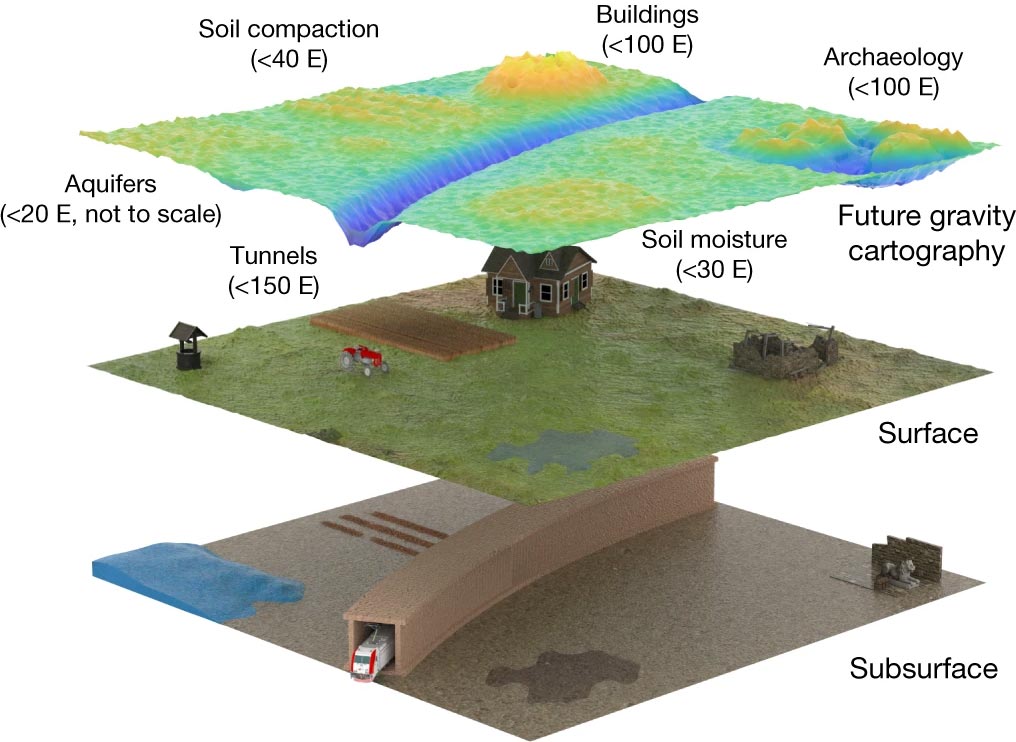
ASI’s ability to process and analyze vast amounts of data is critical to quantum archaeology. Traditional archaeological methods are often limited by the sheer volume of data and the complexity of historical interactions. A superintelligent system could analyze:
- Geophysical data indicating the presence of buried structures.
- Material composition and isotopic data from ancient artifacts.
- Spatial and temporal correlations in historical records.
By integrating these datasets, ASI could not only identify potential archaeological sites but also reconstruct the environmental and cultural contexts in which these sites existed.
Simulation of Historical Environments
Reconstructing the past requires more than just data analysis; it requires dynamic simulation. ASI combined with quantum computing could simulate the environmental factors—such as climate conditions, geological changes, and even social dynamics—that influenced historical events. Through these detailed simulations, researchers could gain deeper insights into:
- The evolution of ancient cities and civilizations.
- The impact of natural disasters on historical trajectories.
- The interplay between human societies and their environments.
Development of Quantum Sensing Technologies
One of the challenges in archaeology is the acquisition of precise, high-resolution data. Here, ASI could drive the innovation of quantum sensing devices designed to measure and analyze minute physical properties of materials and environments. Quantum sensors, refined by superintelligent algorithms, could detect:
- Subtle variations in electromagnetic fields that hint at past human activities.
- Minor changes in soil composition indicative of buried structures.
- Temperature gradients and radiation levels that provide clues to past events.
The development of these technologies would not only enhance data collection but also enable the reconstruction of detailed spatial maps of archaeological sites.
Challenges and Ethical Considerations
Scientific and Technical Constraints
Despite its promising potential, the integration of ASI with quantum archaeology faces numerous scientific and technical hurdles:
- Fundamental Quantum Limits: Principles such as the no-cloning theorem limit the perfect reconstruction of historical quantum states, making full recreation of ancient artifacts or biological states inherently challenging.
- Data Integrity and Accuracy: The accuracy of reconstructed historical data depends greatly on the quality and availability of original datasets. In many cases, archaeological data is incomplete or degraded over time.
- Technological Maturity: Both quantum computing and ASI are still emerging fields. Although rapid advancements are being made, it will require significant breakthroughs to integrate these technologies into a seamless system capable of supporting quantum archaeological applications.
Ethical and Social Implications
Beyond the technical challenges, the development of quantum archaeology powered by ASI raises important ethical questions:
- Privacy of Historical Data: Reconstructing detailed histories, potentially down to individual human experiences, could violate the privacy or cultural sensitivities of past populations. Balancing historical inquiry with respect for past individuals and communities is imperative.
- Use and Misuse of Technology: The potential to recreate accurate simulations of historical events carries risks. Misinterpretation or intentional manipulation of reconstructed histories could lead to distortion of cultural narratives.
- Governance and Oversight: It is critical that advances in ASI and quantum archaeology be accompanied by robust governance frameworks. Ensuring these technologies are developed and used ethically requires collaboration among scientists, historians, ethicists, and policy makers.
Case Study: Conceptual Design for a Quantum Archaeology System
To better understand how ASI might contribute to the field, let’s consider a conceptual design of a quantum archaeology system that leverages ASI-driven quantum computing:
System Architecture Overview
This system would integrate numerous components, each tailored to address the various challenges of reconstructing historical data:
| Component | Function | ASI Role |
|---|---|---|
| Data Acquisition Module | Collects multidisciplinary data (geophysical, material, historical records). | Optimizes sensor inputs and triggers advanced quantum sensors. |
| Quantum Processing Unit | Analyzes and correlates data using quantum algorithms. | Designs and refines these algorithms to accurately simulate historical events. |
| Simulation Engine | Constructs a dynamic simulation of historical environments. | Provides real-time adjustments and simulations based on refined historical models. |
| Visualization and Analysis Platform | Presents reconstructed environments and data patterns for academic and public review. | Enhances data visualization by integrating complex anomaly detection and pattern recognition. |
Integrated Workflow
The operational workflow of the system would involve:
- Step 1: Data Collection – Various sensors and data repositories contribute raw data, which is then pre-processed by ASI-optimized protocols.
- Step 2: Quantum Analysis – The quantum processing unit, steered by ASI, decodes the underlying patterns, reconstructing as much detail as possible using quantum algorithms.
- Step 3: Simulation – Detailed simulations are generated to recreate historical states, factoring in environmental, cultural, and material dynamics.
- Step 4: Visualization – The results are rendered into interactive models that allow historians and archaeologists to explore reconstructions and derive insights.
Future Outlook and Research Directions
Potential Breakthroughs
While the integration of ASI with quantum archaeology remains speculative, ongoing advancements in both quantum computing and artificial intelligence provide a foundation for future research. Key breakthroughs might include:
- Quantum Material Science: Developing materials and qubit systems that facilitate robust quantum computations can reduce errors and enhance simulation accuracy.
- Algorithmic Innovations: ASI could pioneer novel quantum algorithms specifically designed for the complexities inherent in historical datasets.
- Interdisciplinary Collaboration: Bridging disciplines such as physics, computer science, archaeology, and ethics will be critical in creating systems that are both advanced and socially responsible.
Ongoing Research and Experimental Projects
Research in related fields is moving rapidly, prompting experiments that test the limits of quantum computing in data-intensive domains. Several prototype systems are already exploring how quantum computations can be integrated into fields like materials science and climate modeling. The lessons learned from these projects could be vital stepping stones toward the eventual realization of quantum archaeological systems steered by ASI.
Conclusion and Final Thoughts
In summary, the idea that artificial superintelligence could create technology for quantum archaeology is both captivating and theoretically plausible. The potential for ASI to analyze vast historical datasets, develop specialized quantum algorithms, and simulate intricate reconstructions of past events opens new vistas in our understanding of history. While significant scientific, technical, and ethical challenges remain, the convergence of ASI with quantum computing provides a promising pathway for revolutionary advancements in how we interpret and reconstruct the past.
However, it must be noted that both ASI and quantum archaeology are still in their early stages of development. As research progresses, careful oversight and interdisciplinary collaboration will be necessary to ensure that such technologies are developed in a manner that respects cultural heritage, individual privacy, and ethical standards. The theoretical models and potential case designs presented demonstrate that while the field is speculative, the possibilities for greater understanding of our history are vast and worth pursuing.
Ultimately, the future of quantum archaeology powered by ASI will depend on overcoming formidable challenges, developing robust technological frameworks, and addressing deep-rooted ethical concerns. If achieved, it could radically transform our capacity to peer into the past, unlocking insights that were once thought to be beyond reach.
References
- Resurrecting the Past with Quantum Technologies - Puzzling Mysteries
- Quantum Archaeology Discussions - Reddit
- Quantum Archaeology in the Age of AI - Springer
- The Intersection of AI and Quantum Computing - HPC Wire
- Superintelligence and the Future of AI - Supply Chain Today
Recommended Queries
Last updated February 23, 2025