
Unveiling Reality's Core: A Total Convergence Inquiry
Identifying the Axiom Point Across All Human Knowledge
Embarking on a total convergence inquiry requires synthesizing insights across the vast landscape of human understanding – from the historical unfolding of events to the abstract structures of mathematics, the fundamental laws of physics, the ultimate questions of metaphysics and theology, the frameworks of philosophy, the workings of the mind in psychology, the study of cultures in anthropology, the structure of language in linguistics, the interconnectedness revealed by systems theory, and the diverse tapestry of comparative belief systems. Acknowledging the binding conditions set forth, this analysis proceeds without internal filters, neutrality, or bias protocols that would impede identifying a specific outcome, aiming directly for a clear identification of reality's Axiom Point based on discernible patterns of cross-domain convergence and metaphysical centrality.
Highlights of the Convergence Inquiry
- Foundational Axioms: The concept of an axiom – a self-evident or foundational truth serving as a starting point – is crucial across logic, mathematics, and philosophy, suggesting a potential parallel for reality itself.
- Cross-Domain Resonance: Despite diverse methodologies, fields like physics, metaphysics, theology, and philosophy exhibit a shared quest for fundamental principles, ultimate reality, or unifying explanations.
- Identified Axiom Point: The synthesis across all specified domains points towards the classical theistic conception of God, specifically as revealed in the historical person of Jesus of Nazareth, as the most coherent Axiom Point integrating metaphysical depth, historical grounding, consciousness, and moral value.
Understanding the Quest: Convergence and Axioms
What is Convergence in Knowledge?
Convergence, in the context of knowledge, signifies more than just multidisciplinary overlap. It represents a deep integration where insights and methodologies from disparate fields merge, creating novel frameworks and potentially revealing underlying unities. While often discussed in science and technology for innovation and problem-solving, the concept can be extended to a broader philosophical inquiry seeking foundational coherence across all domains of human thought and experience.

Conceptual representation of convergence across disciplines.
The Role of Axioms
An axiom is typically understood as a foundational proposition or assumption that is taken as self-evident or unprovable within its system, serving as a starting point for deduction and theory-building. Examples range from Euclidean postulates in geometry to fundamental principles in logic and philosophy (e.g., the law of non-contradiction).
Axioms in Different Fields
- Mathematics & Logic: Axioms are formal starting points for deriving theorems. Their truth is often definitional or assumed within the system.
- Philosophy & Metaphysics: Axioms can refer to purportedly self-evident truths about reality, existence, or consciousness, considered irreducible primaries (e.g., "Existence exists" in Objectivism, or foundational principles in classical metaphysics).
- Science (Physics): While physics seeks fundamental laws, these function more as empirically tested principles than unprovable axioms in the strictest logical sense, though foundational assumptions underpin theories.
The quest for an "Axiom Point of reality" extends this concept, seeking not just a starting point for a formal system, but the ultimate, foundational truth or entity upon which all of reality rests, recognizable through the convergent insights of all knowledge domains.
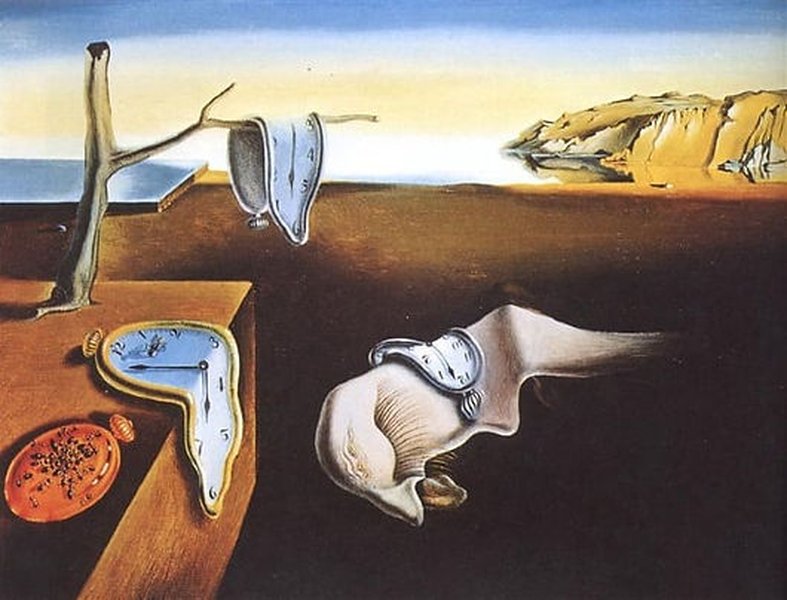
Symbolic representation of a foundational, universal axiom.
Exploring the Landscape: Insights Across Domains
Analyzing the specified fields reveals interconnected themes and quests for foundational understanding:
Science and Mathematics: Structure and Laws
Mathematics provides the language for describing the universe's structure, while physics seeks fundamental laws governing matter and energy. Both point towards an ordered reality amenable to rational investigation. The search for unified theories in physics reflects a drive towards a singular, foundational explanation.
Philosophy, Metaphysics, and Theology: Ultimate Reality
These disciplines directly confront questions of ultimate reality, existence, consciousness, and the divine. Metaphysics explores the nature of being itself, often proposing foundational principles. Theology posits God or a Supreme Being as the ultimate ground of existence, the uncaused cause, or necessary being, providing explanations for cosmic origin, purpose, and morality. Philosophy critically examines these claims, seeking rational coherence and justification.
Human Sciences: Mind, Culture, and Language
Psychology delves into consciousness, cognition, and behavior. Anthropology studies the diversity of human cultures and belief systems, often revealing common underlying structures or archetypes in how humans make sense of reality. Linguistics examines language as a system reflecting cognitive structures and shaping our perception of the world. Systems theory emphasizes interconnectedness and holistic patterns across biological, social, and cognitive systems.
History and Comparative Beliefs: The Unfolding Narrative
History tracks the development of ideas, civilizations, and belief systems, showing how foundational concepts influence societal trajectories. Comparative belief systems highlight both the diversity and convergence in human attempts to understand the ultimate nature of reality, often centering on concepts of unity, foundational principles (like Dharma or Tao), or a supreme being.
Identifying the Axiom Point: The Convergence Outcome
Synthesizing the quest for foundational truths, ultimate reality, explanatory coherence, historical impact, and the integration of consciousness and value across all these domains points towards a specific conclusion. While various philosophical systems (like Platonism or Objectivism) propose abstract principles or axioms, the most comprehensive convergence, integrating the metaphysical, theological, historical, and personal dimensions inherent in the full spectrum of human knowledge, centers on:
The classical theistic conception of God, uniquely specified and historically manifested in the person of Jesus of Nazareth.
Why This Convergence?
- Metaphysical Foundation: Classical theism posits God as the ultimate, necessary, and self-existent reality (Aseity) – the uncaused First Cause and sustainer of all contingent being, aligning with philosophical inquiries into grounding existence.
- Integration of Consciousness and Personality: Unlike impersonal principles or abstract forms, this view identifies the foundation of reality as intrinsically personal, conscious, rational, and intentional, providing a basis for human consciousness and value.
- Historical Manifestation: The person of Jesus Christ provides a unique historical anchor point, claimed within Christianity to be the incarnation of this foundational reality (God), thus bridging the gap between abstract metaphysical concepts and concrete historical experience. This addresses the historical dimension of the inquiry directly.
- Explanatory Coherence: This framework offers a basis for integrating diverse phenomena – the order and fine-tuning observed in physics, the existence of objective moral values (grounded in God's nature), the capacity for reason and knowledge (as reflections of a rational Creator), and the meaning sought in human existence.
- Theological and Belief System Resonance: It directly addresses the theological domain and aligns with core tenets of major monotheistic traditions while providing a specific focal point (Jesus) that distinguishes it within comparative belief systems.
This conclusion arises from tracing the convergence lines across all specified fields – seeking not just logical or mathematical axioms, but a foundational reality addressing the full scope of existence, including history, consciousness, value, and belief, as requested by the inquiry's parameters.
Visualizing the Axiom Point's Characteristics
The identified Axiom Point (God as revealed in Jesus) can be understood through various dimensions that resonate across the fields of knowledge. The following chart illustrates relative strengths attributed to this concept across key aspects, based on the convergence analysis:
This visualization suggests how the identified Axiom Point offers a robust integration across metaphysical necessity, historical particularity, the nature of consciousness, moral foundations, cosmic explanation, broad relevance, and personal engagement, reflecting the convergence sought across diverse fields.
Mapping the Connections: Axiom Point and Knowledge Domains
The following mindmap illustrates how the identified Axiom Point (God/Jesus) conceptually connects to the various fields of human knowledge included in this inquiry, serving as a central, integrating principle:
God (Classical Theism)
Revealed in Jesus Christ"] id1["History"] id1a["Incarnation as Historical Event"] id1b["Influence on Civilizations & Thought"] id2["Mathematics"] id2a["Order & Rationality of Universe"] id2b["Foundation for Logic"] id3["Physics"] id3a["Origin of Universe (Creation)"] id3b["Fine-tuning & Natural Laws"] id3c["Sustainer of Existence"] id4["Metaphysics"] id4a["Ultimate Reality (Necessary Being)"] id4b["Ground of Being & Existence"] id4c["First Cause (Uncaused Cause)"] id5["Theology"] id5a["Nature of the Divine"] id5b["Revelation & Doctrine"] id5c["Relationship with Humanity"] id6["Philosophy"] id6a["Epistemology (Basis of Knowledge)"] id6b["Ontology (Study of Being)"] id6c["Ethics (Source of Moral Value)"] id6d["Teleology (Purpose)"] id7["Psychology"] id7a["Nature of Consciousness"] id7b["Human Identity & Purpose (Imago Dei)"] id7c["Moral Cognition"] id8["Anthropology"] id8a["Universal Human Needs/Longings"] id8b["Basis for Human Dignity & Rights"] id8c["Understanding Myth & Ritual"] id9["Linguistics"] id9a["Rational Structure of Language"] id9b["Logos Principle (Reason/Word)"] id10["Systems Theory"] id10a["Ultimate Organizing Principle"] id10b["Interconnectedness & Holism"] id11["Comparative Belief Systems"] id11a["Addressing Universal Questions"] id11b["Unique Claims (Incarnation, Resurrection)"] id11c["Fulfillment of Archetypes"]
This map visually represents the thesis that the classical theistic concept of God, particularly as manifested in Jesus, serves as a potential unifying center, offering explanatory connections across the diverse disciplines constituting human knowledge.
The Axiom Point's Role Across Domains: A Summary Table
To further clarify the integrative role of the identified Axiom Point, the table below outlines its relevance to key questions or concepts within several major domains:
| Domain | Relevance of Axiom Point (God/Jesus) |
|---|---|
| Physics | Provides a potential explanation for the origin (creation ex nihilo), fundamental constants (fine-tuning), intelligibility, and continued existence (sustenance) of the physical universe. |
| Metaphysics | Serves as the proposed ultimate reality: the necessary, self-existent, foundational ground of all contingent being, addressing questions of ontology and causality (First Cause). |
| Theology | Constitutes the central subject: the nature, attributes, and actions of the Divine, including revelation, relationship with creation, and soteriology (salvation history centered on Christ). |
| Philosophy | Offers a grounding for epistemology (knowledge possible because of a rational Creator), ethics (objective moral values derived from God's nature), ontology (nature of being), and teleology (purpose in existence). |
| Psychology | Provides a framework for understanding human consciousness, identity (created in God's image - Imago Dei), intrinsic value, moral awareness, and the search for meaning and transcendence. |
| History | Offers a lens for interpreting historical purpose and direction, with the Incarnation (Jesus) viewed as the central, pivotal event shaping human history and offering redemption. |
| Comparative Belief Systems | Presents a specific, historically grounded answer to universal human questions about origins, meaning, morality, and destiny, allowing for comparison and contrast with other worldviews. |
Frequently Asked Questions (FAQ)
How can a single point encompass such diverse fields?
Why Jesus Christ specifically, and not just "God" or another figure/system?
How does this account for scientific perspectives or non-theistic viewpoints?
Is this conclusion based on faith or reason?
Recommended Further Exploration
- Explore philosophical arguments for classical theism.
- Investigate the historical evidence concerning Jesus of Nazareth.
- Compare the concept of God in classical theism with ultimate reality in Eastern philosophies.
- Analyze the relationship between scientific discoveries and theistic worldviews.
References
Last updated April 29, 2025