
Forge Your Own Path: Can You Really Become a Screenwriter Entirely By Yourself?
Unlock the secrets to independently mastering the craft of screenwriting, from blank page to polished script.
Embarking on a screenwriting career without formal training or connections might seem daunting, but it's a path many successful writers have navigated. Becoming a screenwriter "by yourself" primarily means taking initiative in your learning, practice, and portfolio development. It's about dedication, self-discipline, and a passion for storytelling. While collaboration often comes later in the production process, the foundational work of writing the script is frequently a solitary endeavor. This guide outlines how you can independently build the necessary skills and create compelling screenplays.
Essential Insights for the Solo Screenwriter
- Master the Format and Structure: Understanding the specific conventions of screenplay formatting (scene headings, action lines, dialogue) and foundational narrative structures (like the three-act structure) is non-negotiable. It's the language of the industry.
- Write Consistently and Prolifically: Skill development comes through relentless practice. Aim to write regularly, complete multiple scripts (starting with shorts can be helpful), and embrace rewriting as a core part of the process.
- Learn Through Immersion: Read professional screenplays voraciously and analyze films critically. Deconstruct how stories work visually, how characters are built, and how dialogue serves the narrative. This self-directed study is crucial.
Laying the Foundation: Mastering the Craft Independently
Building a screenwriting career on your own starts with a deep understanding of the fundamentals. You don't need a classroom, but you do need resources and dedication.
Decoding the Blueprint: Screenplay Format and Structure
Understanding the Standard Format
A screenplay has a unique and strict format designed for production efficiency. Familiarize yourself with these key elements:
- Scene Headings (Sluglines): Indicate location (INT./EXT.), setting, and time of day (DAY/NIGHT). Example:
INT. COFFEE SHOP - DAY - Action Lines: Describe the visual action, setting, and character movements. Written in the present tense.
- Character Names: Centered above dialogue, in uppercase.
- Dialogue: The words spoken by the characters.
- Parentheticals: Brief notes (usually under the character name, before dialogue) indicating tone or small action, used sparingly.
Adhering to this format isn't just about rules; it makes your script readable and demonstrates professionalism, even if you're initially writing just for practice.
Grasping Narrative Structure
While formats can vary slightly, most successful screenplays follow established structural principles, often the classic three-act structure:
- Act I: Setup: Introduces the main characters, the world they inhabit, and the inciting incident that launches the story's central conflict.
- Act II: Confrontation: Develops the conflict, raises the stakes, presents obstacles, and pushes the protagonist towards a point of no return or major crisis.
- Act III: Resolution: Features the climax where the central conflict is confronted, followed by the resolution and aftermath, showing the consequences of the protagonist's journey.
Understanding this (and other structures) helps you pace your story effectively and create a satisfying narrative arc.
Essential Resources for Self-Study
The internet and libraries are treasure troves for aspiring screenwriters. Leverage these resources:
Read Professional Screenplays
One of the most effective ways to learn is by reading the work of successful screenwriters. Analyze scripts from films you admire, paying attention to structure, pacing, character introductions, dialogue efficiency, and visual storytelling. Websites like IMSDb (Internet Movie Script Database) or SimplyScripts often host downloadable scripts.
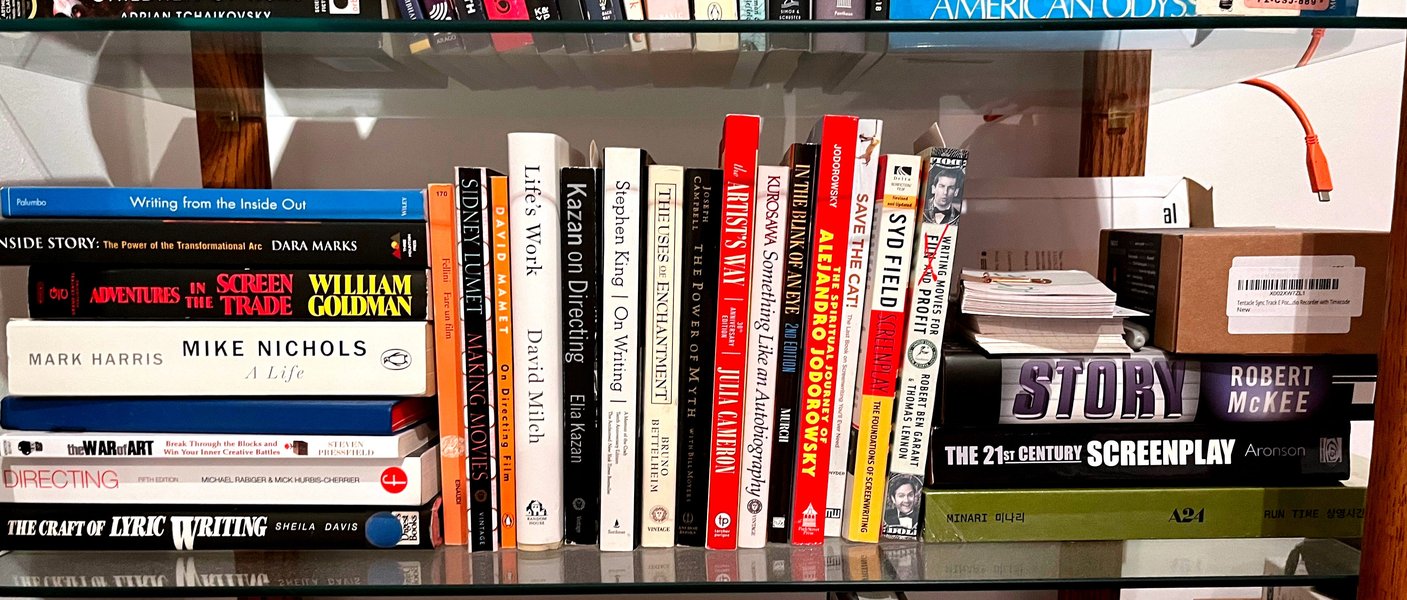
A collection of screenwriting books, essential tools for self-study.
Study Screenwriting Books and Online Guides
Many acclaimed books delve into the art and craft of screenwriting. Classics like Syd Field's "Screenplay," Blake Snyder's "Save the Cat!", or Robert McKee's "Story" offer valuable frameworks and insights. Additionally, numerous websites and blogs provide free, high-quality advice:
- No Film School (Screenwriting Section): Offers practical guides, industry news, and technique breakdowns.
- Script Magazine & Script Reader Pro: Feature articles, tips, and interviews with professionals.
- Celtx Blog: Provides helpful tips for beginners on formatting, structure, and software use.
Utilize Screenwriting Software
While you can technically format a script in a standard word processor, dedicated screenwriting software makes the process infinitely easier by automatically handling margins, capitalization, and element types. Popular options include:
- Final Draft: The industry standard (paid).
- Celtx: Offers free and paid plans, often good for beginners.
- WriterDuet: Cloud-based, offers free and paid tiers, good for collaboration (though you're starting solo!).
- Arc Studio Pro: Another modern option with free/paid tiers.
Using proper software ensures your script looks professional from the start.
The Writer's Forge: Practice, Refine, Repeat
Knowledge is foundational, but skill comes from doing. Becoming a screenwriter requires consistent writing and a willingness to revise.
Establishing Your Writing Discipline
Create a Routine
Consistency trumps sporadic bursts of inspiration. Set aside dedicated time for writing, even if it's just 30-60 minutes daily. Treat it like any other important commitment. Find a space where you can focus without distractions.
Start with a Spark: Loglines and Outlines
Before diving into pages, solidify your core idea:
- Logline: Craft a compelling one-sentence summary of your story (protagonist, goal, conflict). This tests the strength and clarity of your concept.
- Outline: Sketch out your story's structure. This can range from a simple bullet list of key events to a detailed scene-by-scene breakdown. An outline acts as your roadmap, preventing you from getting lost mid-script.
Write, Don't Edit (The First Draft)
Turn off your inner critic and get the story down. The goal of the first draft is completion, not perfection. Focus on translating your outline into script pages. It's okay if it's messy; that's what rewriting is for.
Start Small, Aim Big
Consider writing short scripts (5-15 pages) initially. They allow you to practice the entire process—concept, outline, writing, formatting, rewriting—on a manageable scale. Completing shorts builds confidence and provides samples for your portfolio.
A typical workspace for a screenwriter, emphasizing the tools of the trade.
The Art of Rewriting
Screenwriting is rewriting. Your first draft is just the beginning. Effective rewriting involves:
- Getting Distance: Set the script aside for a period (days or weeks) before rereading it. This allows you to approach it with fresh eyes.
- Critical Analysis: Evaluate the structure, pacing, character arcs, dialogue, and overall effectiveness of the story. Does it achieve your intentions?
- Seeking Feedback (Carefully): While working alone, you can still seek feedback. Share your script with trusted readers (friends with good story sense, online critique groups on platforms like Reddit's r/Screenwriting). Learn to filter constructive criticism from unhelpful opinions.
- Iteration: Be prepared to write multiple drafts, refining and polishing with each pass. Raise the stakes, clarify motivations, cut unnecessary scenes, and ensure every element serves the story.
Developing Key Screenwriting Skills
Becoming proficient involves honing several distinct skills. The chart below visualizes key areas to focus on during your self-directed learning and practice.
This radar chart highlights crucial screenwriting dimensions. "Importance for Beginners" suggests areas to prioritize early on, like formatting and structure. "Difficulty to Master Solo" indicates skills like character development and dialogue, which often benefit most from feedback and extensive practice, making them potentially more challenging to perfect entirely on your own without external input, but certainly not impossible.
Visualizing Your Solo Screenwriting Journey
The path to becoming a screenwriter by yourself involves several interconnected stages. This mindmap provides a visual overview of the typical progression, from initial learning to building a body of work.
This mindmap illustrates that becoming a screenwriter independently is a cyclical process involving continuous learning, writing, refining, and understanding the broader context of the film and television industry, even if you aren't actively seeking entry yet.
Independent Study: Learning from Experience
Many resources emphasize learning through doing and observing. The following video offers insights into how one individual approached studying screenwriting without formal schooling, a perspective highly relevant to the self-taught path.
This video, "How I Study Screenwriting Without Film School ✎ self taught screenwriter," shares practical tips and personal experiences relevant to anyone forging their own screenwriting path. It reinforces the idea that dedication to self-education, consistent practice, and analyzing existing works are key components of mastering the craft independently.
Key Resources for the Solo Screenwriter
Navigating the screenwriting world alone requires good tools and resources. Here's a table summarizing some highly recommended starting points, categorized for ease of use:
| Resource Type | Examples | Why It's Useful for Solo Writers |
|---|---|---|
| Screenwriting Books | "Screenplay" (Syd Field), "Save The Cat!" (Blake Snyder), "Story" (Robert McKee) | Provide foundational knowledge on structure, character, and theory at your own pace. |
| Online Guides & Blogs | No Film School, Script Reader Pro, Celtx Blog, Go Into The Story | Offer free, up-to-date tips, industry insights, technique breakdowns, and practical advice. |
| Screenplay Databases | IMSDb, SimplyScripts, The Script Lab | Allow you to read and analyze professional scripts, a core part of self-teaching. |
| Screenwriting Software | Final Draft, Celtx, WriterDuet, Arc Studio Pro (Free/Paid Tiers) | Ensure proper formatting, allowing you to focus on the creative aspects. |
| Online Communities | Reddit (r/Screenwriting), Stage 32 (forums), CoverflyX (peer exchange) | Offer opportunities for feedback, discussion, and motivation without formal groups (use discernment). |
Leveraging these resources effectively can significantly accelerate your learning curve as an independent screenwriter.
Frequently Asked Questions (FAQ)
Do I absolutely need a film degree to become a screenwriter?
No, a formal degree is not a strict requirement. Many successful screenwriters are self-taught. What truly matters is your ability to write compelling stories in the correct format, your dedication to honing the craft through practice and reading, and building a strong portfolio of scripts. While film school can offer structure and connections, self-discipline and utilizing available resources can lead to success independently.
How important is screenplay formatting?
Extremely important. Proper formatting is the standard language of the industry. A script that deviates significantly from standard format (sluglines, action, character cues, dialogue margins) signals amateurism and can be immediately dismissed by readers (agents, producers, contest judges). Learning and adhering to the format using screenwriting software is crucial, even when writing for yourself, as it builds good habits.
How can I get feedback on my scripts if I'm working alone?
Even working solo, you can find feedback avenues. Consider sharing scripts with trusted friends who are avid readers or viewers and can offer honest opinions. Online screenwriting communities (like Reddit's r/Screenwriting or dedicated forums) often have script exchange threads. Paid script coverage services exist, but start with free options. Critically, learn to evaluate feedback objectively and practice self-review by comparing your work to professional scripts.
Is it okay to just write for myself without trying to sell scripts?
Absolutely. Writing for yourself is a valid and valuable approach, especially when starting. It allows you to practice, explore ideas, develop your voice, and enjoy the creative process without the pressure of industry expectations or deadlines. Many writers find joy and fulfillment in writing purely for personal satisfaction or skill development. This practice can build a strong foundation if you later decide to pursue professional opportunities.
How many scripts should I write before trying to get noticed?
There's no magic number, but the general advice is to have at least 2-3 polished, high-quality scripts in your portfolio before seeking representation or entering major contests. This demonstrates that your first script wasn't a fluke, shows your range and ability to generate ideas, and proves your commitment to the craft. Focus on quality over quantity, but aim to build a body of work.
Recommended Next Steps
Explore these related topics to deepen your understanding:
- What is the best screenwriting software for beginners starting out?
- How can I effectively analyze movie scripts to improve my own writing?
- What are the most common mistakes beginner screenwriters make and how to avoid them?
- How do I develop a unique writing voice that stands out in screenwriting?
References
Last updated April 29, 2025