
Ultimate Guide to Crafting the Perfect Cold Brew with a French Press
Master the art of cold brewing for a smooth, refreshing coffee experience at home.
Key Takeaways
- Precision in Coffee-to-Water Ratio: Adjusting the ratio is crucial for achieving your desired strength and flavor.
- Optimal Steeping Time: Steeping between 12 to 24 hours ensures a rich and balanced brew.
- Quality Ingredients and Equipment: Freshly ground, high-quality beans and a clean French press enhance the overall taste.
Introduction to Cold Brew Coffee
Cold brew coffee has surged in popularity over recent years, celebrated for its smooth, sweet flavor and lower acidity compared to traditional hot-brewed coffee. Utilizing a French press simplifies the cold brewing process, making it accessible for coffee enthusiasts seeking a convenient way to enjoy their favorite beverage. This comprehensive guide will walk you through each step of crafting the perfect cold brew using a French press, ensuring a delightful and personalized coffee experience.
Essential Ingredients and Equipment
High-Quality Coffee Beans
The foundation of an exceptional cold brew starts with selecting fresh, high-quality coffee beans. Opt for beans that suit your taste preference—dark roasts for a bold flavor or medium roasts for a balanced profile. Grinding the beans just before brewing preserves their aromatic compounds, enhancing the depth and complexity of your cold brew.
Coarse Grind
A coarse grind is imperative to prevent over-extraction and minimize sediment in your final brew. The grind should resemble the consistency of raw sugar, allowing for efficient extraction of flavors without becoming bitter.
Filtered Cold Water
Using cold or room-temperature filtered water ensures a clean taste by eliminating impurities and chlorine that can affect the flavor profile of your cold brew.
French Press
A standard French press serves as both the brewer and a natural filter for your cold brew. Ensure that it is thoroughly cleaned before use to avoid any residual flavors from previous brews.
Optional Tools
- Burr Grinder: For achieving a consistent coarse grind.
- Digital Scale: For precise measurement of coffee and water.
- Stirring Utensil: To gently mix the coffee and water.
- Fine-Mesh Sieve or Cheesecloth: For additional filtering if desired.
Perfecting the Coffee-to-Water Ratio
The coffee-to-water ratio is a pivotal factor in determining the strength and flavor of your cold brew. Ratios typically range from 1:4 for a concentrate to 1:8 for a ready-to-drink brew. Adjusting this ratio allows you to customize the brew to your personal taste preference.
Standard Ratios Explained
| Type of Brew | Coffee to Water Ratio | Example Measurement |
|---|---|---|
| Concentrate | 1:4 | 1 cup coffee : 4 cups water |
| Ready-to-Drink | 1:8 | 1 cup coffee : 8 cups water |
| Flexible Ratio | 1:5 | 1 ounce coffee : 5 ounces water |
Adjusting Ratios for Customization
Start with a 1:8 ratio to produce a balanced cold brew. For those who prefer a stronger flavor, a 1:4 ratio can be used to create a concentrated brew, which can then be diluted with water or milk according to taste. Conversely, a 1:5 ratio offers a middle ground, providing a robust flavor without the intensity of a concentrate.
Step-by-Step Cold Brew Process
1. Preparation
Begin by ensuring that all equipment, especially the French press, is clean and free from any residual flavors. Measure out your desired amount of coarsely ground coffee using a digital scale for accuracy.
2. Combining Coffee and Water
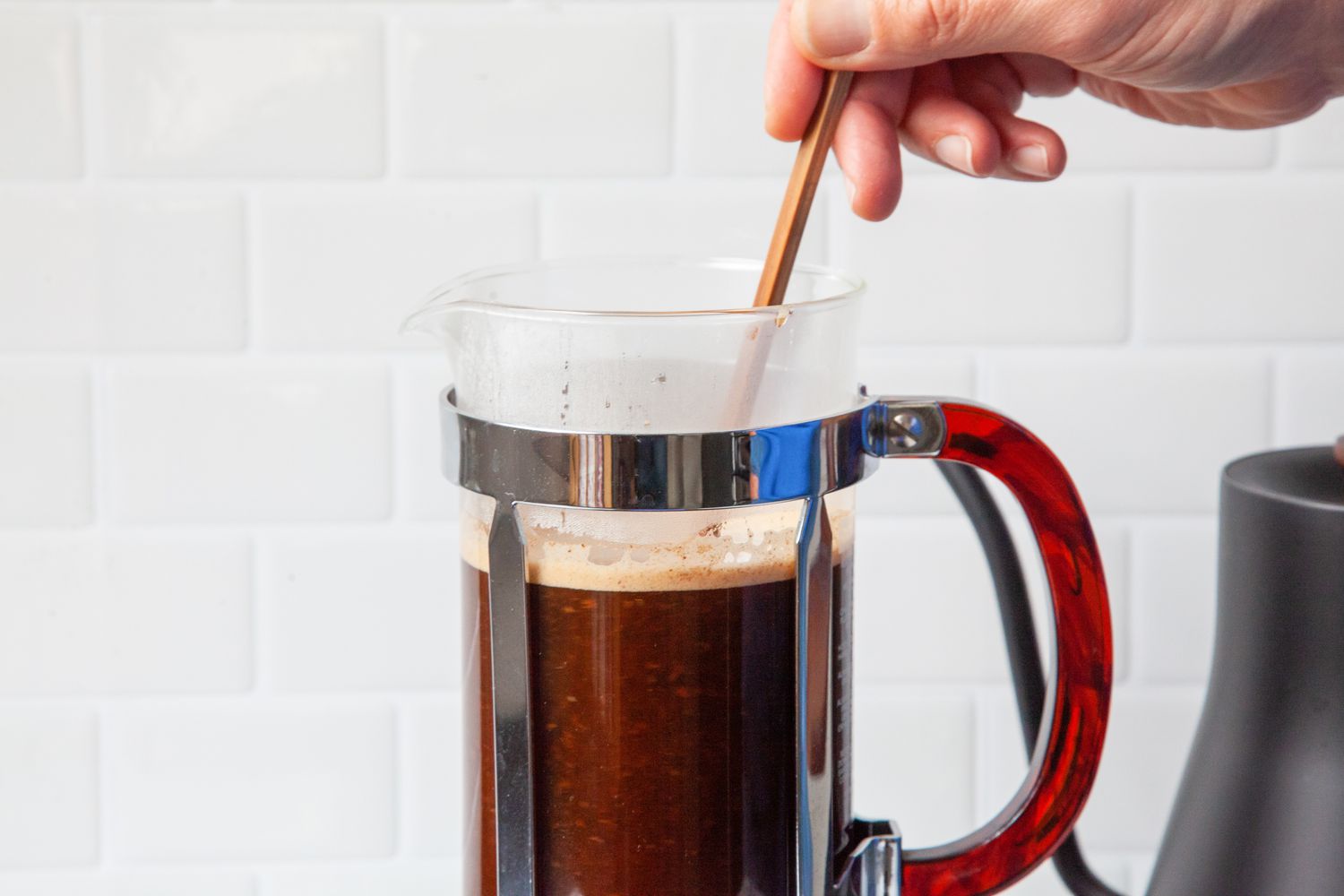
Add the measured coffee grounds to the French press. Slowly pour the cold or room-temperature filtered water over the grounds, ensuring that all coffee is saturated. Gently stir the mixture using a spoon or chopstick to eliminate any dry spots and promote even extraction.
3. Steeping
Place the lid on the French press without pressing down the plunger. Transfer the assembly to the refrigerator and allow it to steep for 12 to 24 hours. The length of steeping time can be adjusted based on the desired strength and flavor profile; longer steeping times typically result in a richer, more concentrated brew.
4. Pressing and Straining
After the steeping period, remove the French press from the refrigerator. Slowly press the plunger down to separate the coffee grounds from the liquid. For an even cleaner cup, pour the cold brew through a fine-mesh sieve or cheesecloth to remove any residual sediment.
5. Serving and Dilution
Depending on the concentration of your brew, you may choose to dilute it with water, milk, or a milk alternative. A common dilution ratio is 1 part concentrate to 1 or 2 parts liquid, but this can be adjusted based on your taste preferences. Serve the cold brew over ice for a refreshing experience.
6. Storage
Store any unused cold brew in an airtight container in the refrigerator. Properly stored, the cold brew can remain fresh for up to two weeks, although it is best enjoyed within the first week to maintain optimal flavor.
Customization and Flavor Enhancements
Adjusting Flavor Profiles
Personalizing your cold brew can elevate your coffee experience. Experiment with different coffee bean varieties and roast levels to discover unique flavor profiles. Incorporating add-ins such as brown sugar, cinnamon, vanilla beans, or flavored syrups during the steeping process can infuse additional layers of complexity and sweetness.
Creating Iced Coffee Variations
Beyond the classic cold brew, the French press allows for creative variations:
-
Vanilla Cold Brew: Add a split vanilla bean or a teaspoon of vanilla extract during steeping.
-
Cinnamon Spice: Incorporate a few cinnamon sticks or a dash of ground cinnamon for a warm spice note.
-
Mocha Cold Brew: Mix in cocoa powder or chocolate syrup to introduce a rich chocolate flavor.
Cold Brew Cocktails
Cold brew serves as an excellent base for coffee cocktails. Combine the concentrate with spirits such as vodka, rum, or bourbon, and complement with flavorings like simple syrup, liqueurs, or cream for a sophisticated beverage option.
Advanced Tips for the Perfect Cold Brew
Using a Digital Scale for Precision
Investing in a digital scale can significantly enhance the consistency of your cold brew. By accurately measuring the coffee and water, you ensure each batch maintains the desired strength and flavor profile.
Experimenting with Steeping Times
While 12-24 hours is the standard steeping duration, experimenting with shorter or longer times can yield different taste experiences. A shorter steep will produce a lighter, more acidic brew, whereas a longer steep tends to be smoother and more robust.
Optimizing Storage Practices
To prolong the freshness of your cold brew, store it in a glass container with a tight-fitting lid to prevent absorption of odors from the refrigerator. Avoid storing it near strong-smelling foods to maintain its pure flavor.
Maintaining Your French Press
Regularly clean your French press to prevent buildup of coffee oils and residue, which can adversely affect the taste of your cold brew. Dismantle the plunger and components for a thorough cleaning, using mild detergents and warm water.
Understanding the Science Behind Cold Brew
Extraction Process
Cold brewing involves a slow extraction process where water interacts with coffee grounds at low temperatures. This method favors the extraction of oils, sugars, and flavors while minimizing the extraction of acidic compounds and bitterness. The extended steeping time compensates for the lower temperature, ensuring a balanced and smooth beverage.
Acidity and Flavor Profile
Cold brew is renowned for its reduced acidity, making it gentler on the stomach and easier to enjoy for those sensitive to acidic beverages. The smoother flavor profile allows the nuanced notes of the coffee beans to shine through without the harshness often associated with hot brewing methods.
Serving Suggestions and Enjoyment
Classic Iced Cold Brew
Pour your cold brew concentrate over ice, and dilute with water or milk as desired. This classic presentation is both simple and refreshing, perfect for a quick pick-me-up.
Cold Brew Latte
Combine cold brew with steamed milk or a milk alternative, adding sweeteners or flavored syrups to taste. Garnish with a sprinkle of cinnamon or cocoa powder for an elegant touch.
Cold Brew Float
Top your cold brew with a scoop of vanilla ice cream or gelato for a decadent treat. The contrast between the cold brew and the creamy ice cream creates a delightful fusion of flavors.
Hot Coffee Option
Interestingly, your cold brew concentrate can be heated up to create a smooth hot coffee alternative. This flexibility allows you to enjoy your cold brew regardless of the weather.
Troubleshooting Common Issues
Over-Extraction and Bitterness
Over-extraction occurs when coffee grounds are steeped for too long, leading to a bitter taste. To avoid this, adhere to the recommended steeping times and consider using a coarser grind to slow down the extraction process.
Sediment in the Brew
Fine coffee particles can sometimes pass through the French press filter, resulting in sediment. To minimize this, use a double filtration method by pouring the brew through a fine-mesh sieve or cheesecloth after pressing. Additionally, ensuring a coarse grind helps prevent excessive sediment.
Inconsistent Flavor
Inconsistent measurements of coffee and water can lead to varying flavor profiles between batches. Utilizing a digital scale for precise measurement ensures uniformity and helps in dialing in the perfect ratio suited to your taste.
Enhancing Your Cold Brew Experience
Exploring Different Coffee Varieties
The type of coffee bean significantly influences the flavor of your cold brew. Ethiopian beans often bring floral and fruity notes, while South American beans may offer a nutty or chocolatey profile. Experimenting with single-origin beans can uncover unique and desirable flavor characteristics.
Incorporating Natural Sweeteners
Instead of traditional syrups, consider using natural sweeteners like honey, agave nectar, or maple syrup to add sweetness to your cold brew. These alternatives can introduce subtle flavor nuances and reduce the reliance on refined sugars.
Cold Brew Ice Cubes
Freezing cold brew into ice cubes is an innovative way to prevent dilution when adding ice to your drink. Simply pour concentrated cold brew into ice cube trays and freeze. Use these cubes in your beverages to maintain the desired strength and flavor.
Health Benefits of Cold Brew
Lower Acidity
Cold brew's reduced acidity makes it less likely to cause stomach discomfort or acid reflux, making it a gentler option for those sensitive to acidic foods and beverages.
Higher Antioxidant Content
Coffee is rich in antioxidants, which help combat free radicals and reduce oxidative stress in the body. Cold brew preserves many of these antioxidants, contributing to overall health benefits.
Sustained Energy Boost
Cold brew typically offers a smooth and sustained energy boost without the jittery effects often associated with hot-brewed coffee. This makes it an excellent choice for maintaining focus and productivity throughout the day.
Environmental Considerations
Sustainable Coffee Practices
Choosing beans from sustainable and ethically sourced farms supports environmentally friendly practices and ensures fair treatment of coffee farmers. Certifications like Fair Trade and Rainforest Alliance are indicators of such commitment.
Reusing Coffee Grounds
After brewing, used coffee grounds can be repurposed as compost, providing valuable nutrients to gardens and reducing waste. Alternatively, they can be used as a natural exfoliant in beauty routines.
Minimizing Waste
Utilizing a French press for cold brew minimizes the need for single-use filters, promoting a more sustainable brewing method. Additionally, storing cold brew in reusable containers reduces plastic waste.
Conclusion
Crafting the perfect cold brew with a French press is both an art and a science, blending precise measurements, quality ingredients, and thoughtful techniques. By understanding and mastering each step—from selecting the right beans to perfecting the steeping process—you can consistently create a cold brew that suits your palate and elevates your coffee experience. Whether enjoyed simply over ice or as a versatile base for creative beverages, cold brew coffee offers a delightful and refreshing alternative to traditional brewing methods. Embrace the journey of exploration and personalization, and savor the rich, smooth flavors that only a well-crafted cold brew can deliver.
References
Last updated February 1, 2025