
Unlocking the Beauty of Urdu: Your Guide to Mastering Reading
Navigate the Elegant Script and Rich Literature of Urdu with Effective Resources and Strategies
Highlights for Your Urdu Reading Journey
- Mastering the Script First: The Nastaliq script, an extension of Persian-Arabic, is fundamental. Resources like Rekhta Learning's Rasm-ul-Khat course and "Teach Yourself Beginner's Urdu Script" are excellent starting points.
- Diverse Learning Avenues: Combine structured online courses (UrduPod101, Rekhta Learning, Aamozish), language exchange platforms (italki), and mobile apps (Duolingo, Memrise) for a well-rounded approach.
- Immersive Reading Practice: Engage with simple Urdu texts, children's books, poetry, and even news or drama serials to enhance comprehension, vocabulary, and cultural understanding.
The Path to Proficient Urdu Reading
Learning to read Urdu is a rewarding endeavor, opening doors to a rich literary and cultural heritage. Urdu, known for its elegance and poetic depth, utilizes the Nastaliq script, which requires dedicated practice to master. A comprehensive approach involves understanding the script, building vocabulary, grasping grammar, and consistent reading practice across various materials.
Understanding the Urdu Script: Nastaliq
The Urdu script, or Nastaliq, is a Perso-Arabic script known for its cursive and flowing nature. Unlike some other scripts, its letters often connect, and their forms can change depending on their position within a word. This unique characteristic makes it both beautiful and a specific challenge for new learners. Mastering the script is the foundational step to reading Urdu effectively.
Foundational Script Resources
- Rekhta Learning's Rasm-ul-Khat Course: This expert-led live-online course is specifically designed to help learners read and write Urdu in 12 weeks, providing a structured approach to the script.
- Aamozish: Offers interactive courses focused on learning the Urdu script and vocabulary, utilizing an unconventional yet scientific approach to help you master reading.
- "Teach Yourself Beginner's Urdu Script" by Richard Delacy: A highly recommended book for beginners focusing specifically on the script.
- Basic Urdu (Open Textbook Library): This interactive open-source online textbook includes a detailed section on Urdu letters and their forms.
Consistent practice in recognizing and writing individual letters, as well as their connected forms, is crucial. Pay attention to diacritics (harakaat) like Zabar (زبر), Zer (زیر), and Pesh (پیش), which indicate short vowel sounds, and Madd (مد) for extended vowel sounds, as these are vital for correct pronunciation and comprehension.
Comprehensive Online Platforms and Courses
Several online platforms offer structured courses that guide learners through the complexities of Urdu reading, from basic script recognition to advanced literary comprehension. These resources often integrate reading with other language skills like listening, writing, and speaking, providing a holistic learning experience.
Top Online Learning Platforms
- UrduPod101: Offers audio and video lessons that guide learners through real Urdu conversations, explaining every word and phrase. They also provide resources for focusing on reading, writing, grammar, or culture, and offer 1-on-1 tutoring.
- Rekhta Learning: Beyond script learning, Rekhta offers a vast range of online Urdu courses, including those focused on literature, poetry (like Ghalib's work), Ghazal writing, and pronunciation.
- Aamozish: In addition to script learning, Aamozish provides free online courses for beginners and advanced learners, emphasizing an interactive approach to mastering the language.
- Udemy: Offers comprehensive courses like "Urdu Language Full Reading & Writing Course for Beginners," which aims to take learners from beginner to intermediate levels in reading and writing.
- Transparent Language & Mango Languages: These platforms offer structured lessons, often focusing on vocabulary and grammar, which are essential for reading comprehension.
Leveraging Language Learning Applications and Tools
Mobile applications and various online tools offer convenient and often gamified ways to practice Urdu reading, vocabulary, and grammar. They can be excellent supplements to more structured courses or for quick, bite-sized learning sessions.
Recommended Apps and Tools
- Duolingo: A popular app that uses gamification to engage learners with bite-sized lessons covering vocabulary, grammar, and pronunciation, including Urdu.
- Memrise: Similar to Duolingo, Memrise utilizes spaced repetition and gamification to help with vocabulary acquisition, which is crucial for reading.
- italki: While primarily for connecting with language tutors, italki can be used for guided reading practice and receiving personalized feedback on your reading skills.
- LingoHut: Offers 125 free online Urdu lessons focused on useful vocabulary and pronunciation, with voice recordings to aid in accurate reading and speaking.
- 50LANGUAGES: Provides free Urdu lessons through practical sentences, helping beginners understand basic structures to efficiently learn the language.
Books and Textbooks for Structured Learning
Traditional books and textbooks provide a structured and in-depth understanding of Urdu grammar, vocabulary, and script. They are invaluable for building a strong foundation and progressing systematically.
This radar chart illustrates the perceived strengths of different resource types in aiding various aspects of Urdu reading proficiency. Online platforms excel in overall balance, offering strong support for script mastery, vocabulary, and fluency. Books and textbooks are particularly strong in script mastery, grammar, and providing cultural context. Mobile apps, while great for vocabulary and on-the-go learning, may offer less depth in grammar and cultural immersion compared to other resources.
Key Book Recommendations
- "Complete Urdu" by David Matthews: This book is highly regarded for providing a solid intermediate-level grounding in all four key skills: reading, writing, speaking, and listening. It uses a "Discovery Method" to help learners grasp rules and patterns.
- "Urdu: An Essential Grammar" by R.L. Schmidt: An invaluable resource for understanding the grammatical structures crucial for accurate reading comprehension.
- "Basic Urdu" (Open Textbook Library): An interactive online textbook designed for novice learners, using theme-based approaches and incorporating interactive activities and cultural notes.
- "Read and Write Urdu Script" by Richard Delacy: Provides advanced practice in reading and writing the script, ideal for intermediate learners.
- "Urdu Ki Pehli Kitab" or "Urdu Ki Akhri Kitab" by Ibn-e-Insha: Recommended for beginners to explore simple Urdu literature.
Many books come with accompanying audio, which is vital for connecting the written word with correct pronunciation and listening comprehension.
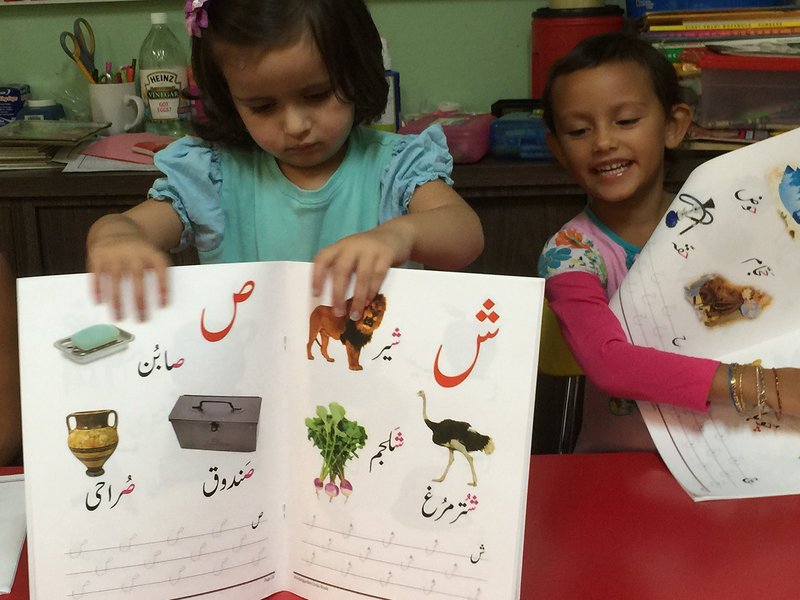
An example of a comprehensive Urdu learning kit for beginners, featuring books, posters, and flashcards.
Immersion and Practice Strategies
Beyond structured learning, consistent exposure and active practice are paramount to achieving reading fluency in Urdu. Immersion helps internalize the language and its cultural nuances.
Effective Practice Methods
- Read Simple Texts: Start with children's books, simple stories, or graded readers. Websites like Urdu Readings and Zubaan Training offer free texts, some with audio read-alongs.
- Engage with Poetry and Literature: Urdu has a rich poetic tradition. While challenging for beginners, exploring simplified poetry or poetry analysis courses on platforms like Rekhta Learning can be highly rewarding.
- Watch Urdu Media: Watch Pakistani drama serials and news with Urdu subtitles. This helps improve listening skills and familiarizes you with spoken Urdu, which aids in understanding written conversations.
- Online Dictionaries and Digital Libraries: Use resources like Forvo for pronunciation and digital libraries like Rekhta to access a vast collection of Urdu literature.
- Language Exchange Partners: Platforms like italki allow you to find native Urdu speakers who can help with reading practice, provide corrections, and answer questions.
- Practice Writing: Actively writing helps reinforce reading skills. Resources like Urdu Seekhiye offer lessons on improving Urdu handwriting.
The key is to make reading a consistent habit. Even short, daily reading sessions can significantly contribute to progress.
This video, "Lesson 1 | Easy Way to Learn Urdu Script in English," provides a foundational introduction to reading the Urdu alphabet. It is highly relevant for beginners as it directly addresses the initial and most crucial step in learning to read Urdu: mastering the script. The video breaks down the complexities of the Urdu script, making it accessible for English speakers.
The Importance of Consistency and Motivation
Learning any new language, especially one with a different script, requires dedication. A basic level of Urdu can be achieved in approximately 720 hours of dedicated study, with complete fluency requiring around 1100 hours. Maintaining motivation and consistency are critical throughout this journey.
Tips for Sustained Learning
- Set Realistic Goals: Break down your learning into manageable chunks, such as mastering a certain number of letters per week or reading a short story daily.
- Track Your Progress: Seeing how far you've come can be a powerful motivator.
- Find a Study Partner: Learning with someone else can provide accountability and make the process more enjoyable.
- Connect with Culture: Immerse yourself in Urdu music, cinema, and literature. Understanding the cultural context can deepen your appreciation for the language and keep you engaged.
- Don't Fear Mistakes: Language learning is an iterative process. Embrace errors as opportunities for growth.
Comparative Overview of Urdu Reading Resources
To help you choose the best resources for your learning style, here's a comparative table highlighting different types of resources and their primary benefits for Urdu reading.
| Resource Type | Key Benefits for Reading | Target Learner Level | Notable Examples |
|---|---|---|---|
| Online Courses/Platforms | Structured lessons, script practice, grammar explanations, interactive exercises, comprehensive skill development (reading, writing, listening, speaking). | Beginner to Advanced | UrduPod101, Rekhta Learning, Aamozish, Loecsen |
| Mobile Apps | Gamified learning, vocabulary building, quick daily practice, pronunciation guidance, portability. | Beginner to Intermediate | Duolingo, Memrise, LingoHut |
| Textbooks/Books | In-depth grammar, systematic script instruction, comprehensive vocabulary, cultural notes, foundational knowledge. | Beginner to Advanced | "Complete Urdu," "Teach Yourself Beginner's Urdu Script," "Urdu: An Essential Grammar," "Basic Urdu" |
| YouTube Channels | Visual script lessons, pronunciation guides, cultural content, free access, diverse teaching styles. | Beginner to Intermediate | "Learn Urdu with Sara," "Aamozish-e-Urdu by Azan," Urdu Seekhiye, UrduPod101 Channel |
| Digital Libraries/Reading Materials | Exposure to authentic texts, poetry, literature, news; vocabulary in context, cultural immersion. | Intermediate to Advanced | Rekhta.org, Urdu Readings, Zubaan Training (texts with audio) |
| Language Exchange Platforms | Personalized reading practice, direct feedback from native speakers, conversational context for reading. | All Levels | italki |
Frequently Asked Questions
What is the most challenging aspect of learning to read Urdu for English speakers?
How long does it take to become proficient in Urdu reading?
Can I learn to read Urdu for free?
Is it necessary to learn to write Urdu to read it effectively?
Conclusion
Learning to read Urdu is a deeply enriching experience that connects you to a vibrant culture and a profound literary tradition. The journey begins with mastering the unique Nastaliq script, which, while challenging, is highly rewarding. By combining structured online courses, interactive mobile applications, comprehensive textbooks, and immersive reading practices, you can build a strong foundation and progress towards fluency. Whether through engaging with poetry, watching drama serials, or utilizing language exchange partners, consistent effort and a diverse array of resources will be your greatest allies in unlocking the beauty of Urdu.
Recommended Further Exploration
- How to master Nastaliq script for Urdu reading?
- What are the best Urdu poetry collections suitable for beginner readers?
- What are effective strategies for building Urdu vocabulary specifically for reading comprehension?
- What is the cultural significance of Urdu literature and how does it influence the language?