
Unlock the Secrets to Chess Mastery: Your Ultimate Learning Guide
Discover the proven methods to effectively learn chess, from basics to strategic thinking.
Highlights of Effective Chess Learning
- Master the Fundamentals First: A solid understanding of rules, piece movements, and basic concepts like checkmate is non-negotiable.
- Consistent Practice is Key: Regular play, daily tactical puzzles, and dedicated analysis of your games are crucial for improvement.
- Balanced Approach: Combine playing experience with studying strategy, analyzing games, and leveraging diverse learning resources for optimal growth.
Embarking on Your Chess Journey
Learning chess is a rewarding endeavor that sharpens the mind and offers endless strategic possibilities. While there's no single magic bullet, a structured and multifaceted approach, combining foundational knowledge with consistent practice and study, is widely recognized as the most effective path to improvement. This guide synthesizes expert advice and community insights to provide a comprehensive roadmap for aspiring chess players.
Step 1: Build a Solid Foundation - Mastering the Basics
Before you can strategize or launch attacks, you must thoroughly understand the rules of the game. This is the bedrock upon which all future learning rests.
Know the Board and Pieces
Familiarize yourself with the 8x8 chessboard and how each piece moves:
- Pawn: Moves one square forward (two on its first move), captures diagonally one square forward.
- Knight: Moves in an 'L' shape (two squares in one direction, then one square perpendicular). It's the only piece that can jump over others.
- Bishop: Moves any number of unobstructed squares diagonally.
- Rook: Moves any number of unobstructed squares horizontally or vertically.
- Queen: Moves any number of unobstructed squares horizontally, vertically, or diagonally.
- King: Moves one square in any direction.
Ensure you understand how to set up the board correctly ("white on right," queen on her color).
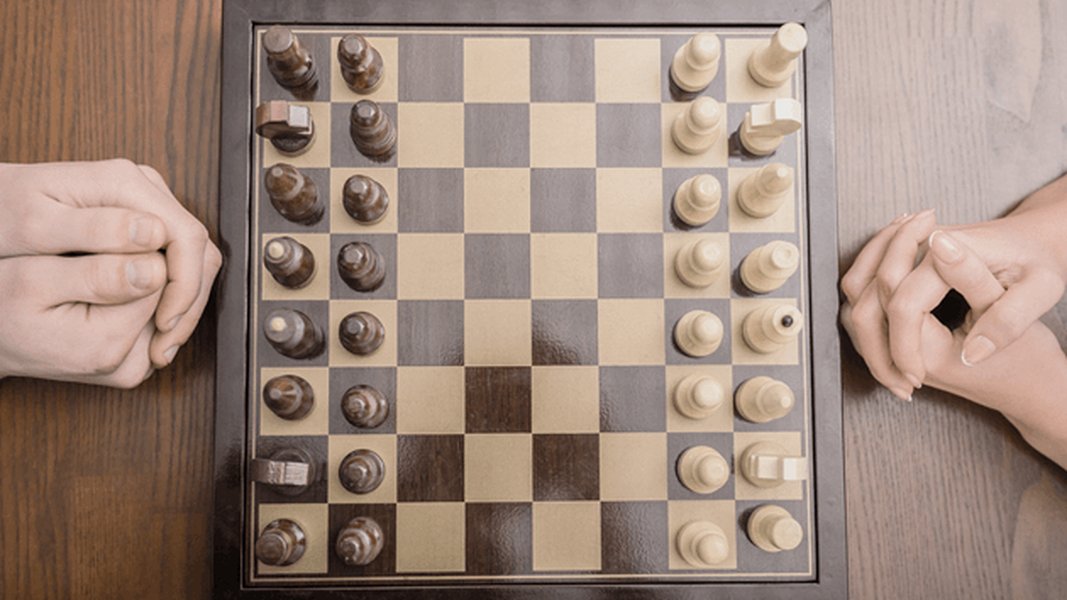
Standard chessboard setup at the beginning of a game.
Understand Core Concepts and Special Moves
Learn the objectives (checkmate) and key concepts:
- Check: When a king is under immediate attack.
- Checkmate: When a king is in check and cannot escape capture, ending the game.
- Stalemate: When a player whose turn it is has no legal moves, but their king is not in check. This results in a draw.
- Castling: A special move involving the king and one rook, used for king safety.
- En Passant: A special pawn capture rule.
- Pawn Promotion: When a pawn reaches the opposite end of the board, it can be promoted to any other piece (except a king).
Mastering these fundamentals prevents basic errors and provides the necessary tools for actual play.
Developing Strategic Thinking
Once the rules are clear, focus on fundamental strategic principles that guide good play, particularly in the opening phase.
Control the Center
The central squares (d4, e4, d5, e5) are crucial. Pieces placed in the center control more squares and have greater influence over the game. Aim to place pawns and pieces where they exert pressure on these key squares.
Develop Your Pieces Efficiently
Bring your knights and bishops off their starting squares early in the game (usually before moving your queen). Aim to develop each piece only once in the opening and get them to active squares where they contribute to the fight for the center or prepare for attack/defense. Avoid moving the same piece multiple times without a good reason.
Prioritize King Safety
Castle your king relatively early (usually within the first 10-15 moves). Castling tucks the king away behind a wall of pawns and brings a rook towards the center, activating it. An exposed king is a major liability.
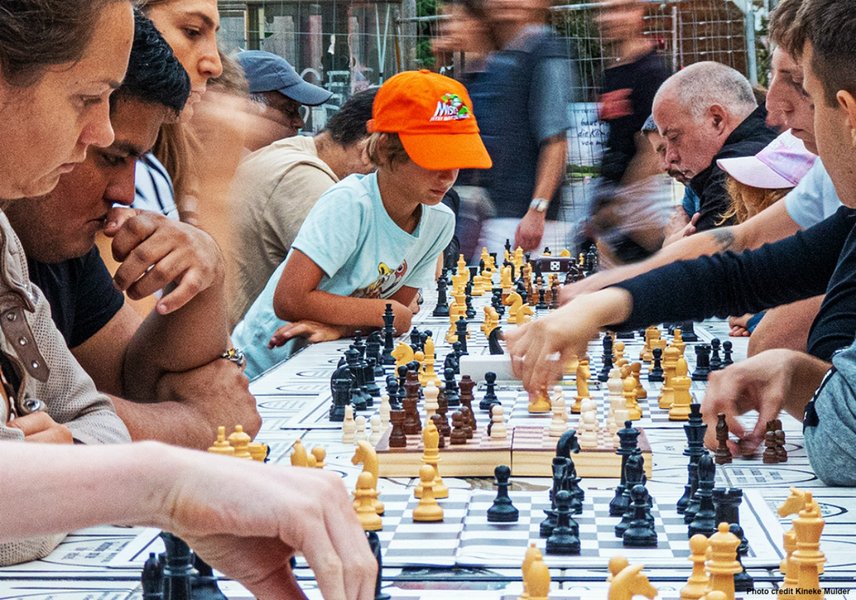
Chess being played in a public setting, highlighting its social aspect.
The Power of Practice and Analysis
Theoretical knowledge needs to be tested and refined through practical application and critical review.
Play Consistently
Playing games regularly is non-negotiable for improvement. Aim to play against a variety of opponents, both online (on platforms like Chess.com or Lichess.org) and, if possible, in person (e.g., at a chess club). Playing longer time control games (like 15 minutes per side with a 10-second increment per move, or 15+10) is highly recommended, especially for beginners. This allows time for thought, calculation, and applying learned concepts, rather than relying purely on intuition or reacting to immediate threats in faster games.
Analyze Your Games (Especially Losses)
Simply playing isn't enough; you must learn from your experiences. After each game, especially losses or draws, take the time to review your moves. Ask yourself:
- Where did I make mistakes (blunders)?
- What opportunities (tactics) did I miss?
- Could I have defended better?
- Why did my opponent's plan succeed?
Use the analysis tools available on online platforms, but also try to analyze on your own first. Understanding the 'why' behind your errors is key to avoiding them in the future. Dedicate significant time to this; some suggest spending almost as much time analyzing a game as playing it.
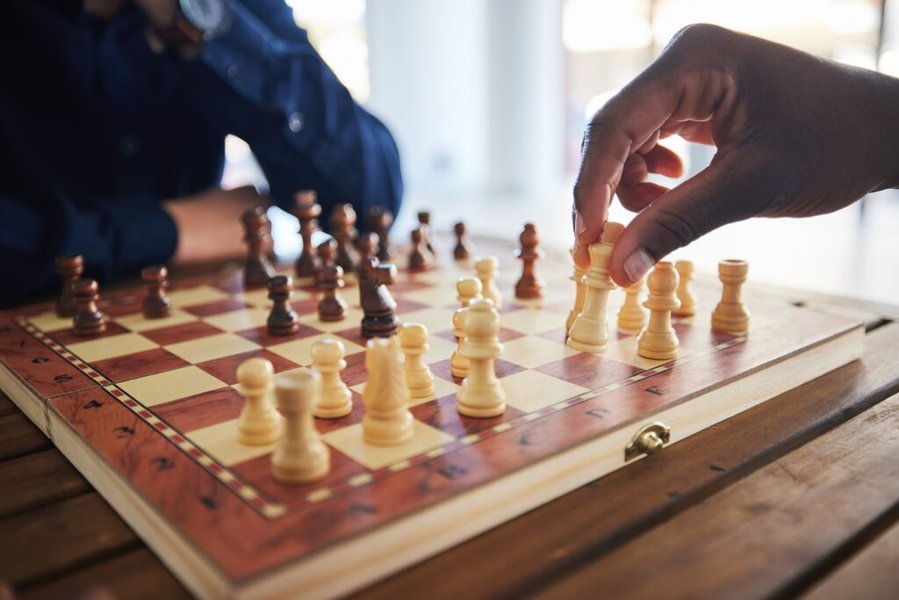
Analyzing the board during a game requires focus and strategic thinking.
Sharpening Your Tactical Edge
Chess is often decided by tactics – short-term sequences of moves that result in checkmate, material gain, or a positional advantage. Improving your tactical vision is one of the fastest ways to see concrete results.
Solve Puzzles Daily
Dedicate time each day to solving tactical puzzles. Start with basic motifs like forks, pins, skewers, discovered attacks, and simple checkmates (mate-in-one, mate-in-two). Platforms like Chess.com, Lichess, and Chessable offer vast collections of puzzles categorized by theme and difficulty. Consistent puzzle solving builds pattern recognition, making it easier to spot tactical opportunities and threats in your own games.
Focus on Pattern Recognition
The goal of puzzle solving isn't just to find the right move, but to internalize the underlying patterns. The more tactical patterns you recognize instinctively, the quicker you'll be able to calculate variations and evaluate positions during a game.
Comparing Chess Training Methods
Different activities contribute differently to chess improvement. The radar chart below provides a visual comparison of the perceived impact of various training methods on key chess skills, based on general consensus within the chess community. Note that the optimal mix depends on individual needs and skill level.
As the chart suggests, solving puzzles excels at developing tactical vision and pattern recognition, while studying theory enhances strategic understanding and specific phase knowledge (openings/endgames). Playing games is essential for practical application, and analysis ties everything together by identifying weaknesses across all areas.
Expanding Your Chess Knowledge
Beyond tactics and basic principles, delve deeper into strategic concepts and endgame techniques.
Study Strategy and Positional Play
Learn about key strategic ideas:
- Pawn Structures: Understand the strengths and weaknesses of different pawn formations (e.g., passed pawns, isolated pawns, doubled pawns).
- Piece Activity and Coordination: Learn how to activate your pieces and make them work together harmoniously.
- Prophylaxis: Thinking about and preventing your opponent's plans.
- Planning: Formulating long-term plans based on the positional features of the game.
Studying annotated classic games (like those in Irving Chernev's "Logical Chess: Move by Move") is an excellent way to see these concepts applied by strong players.
Master Basic Endgames
Many games are decided in the endgame. Learning fundamental endgame positions is crucial. Start with:
- Basic checkmates (King + Queen vs. King, King + Rook vs. King).
- King and Pawn endings (understanding opposition, key squares).
- Basic Rook endings.
Knowing these endings ensures you can convert winning advantages or salvage draws from difficult positions.
Visualizing the Path to Chess Improvement
The mindmap below illustrates the interconnected components of effective chess learning, showing how different activities contribute to overall mastery.
Piece Movement"] id1b["Board Setup"] id1c["Check, Checkmate,
Stalemate"] id1d["Special Moves
(Castling, En Passant,
Promotion)"] id2["Practice"] id2a["Play Regularly
(Longer Time Controls)"] id2b["Variety of Opponents"] id2c["Online Platforms
(Chess.com, Lichess)"] id2d["In-Person Play
(Clubs)"] id3["Tactics"] id3a["Daily Puzzles"] id3b["Pattern Recognition
(Forks, Pins, Skewers)"] id3c["Calculation Practice"] id4["Strategy"] id4a["Opening Principles
(Center, Development,
King Safety)"] id4b["Middlegame Concepts
(Pawn Structures,
Piece Activity)"] id4c["Planning"] id5["Endgame"] id5a["Basic Checkmates"] id5b["King & Pawn Endings"] id5c["Rook Endings"] id6["Analysis"] id6a["Review Own Games
(Especially Losses)"] id6b["Identify Blunders &
Missed Tactics"] id6c["Use Analysis Tools"] id6d["Study Master Games"] id7["Resources"] id7a["Books (Beginner &
Advanced)"] id7b["Online Courses &
Videos (YouTube)"] id7c["Coaching"] id7d["Chess Communities"]
This map highlights that a balanced approach, touching on fundamentals, practice, tactics, strategy, endgame study, analysis, and utilizing available resources, forms the core of efficient chess learning.
Leveraging Learning Resources
Numerous resources are available to aid your chess journey. Combining different types can cater to various learning styles.
Online Platforms and Apps
Websites like Chess.com and Lichess.org are invaluable. They offer:
- Online play against opponents worldwide.
- Extensive puzzle trainers and tactics drills.
- Video lessons and articles covering all aspects of the game.
- Game analysis tools.
- Forums and communities.
Mobile apps also provide convenient ways to play, solve puzzles, and study on the go.
Books and Courses
Classic books remain excellent learning tools. For beginners, "Bobby Fischer Teaches Chess" offers a simple, interactive approach to tactics. "Logical Chess: Move by Move" by Irving Chernev helps understand strategic reasoning. More advanced players might explore works by Nimzowitsch or Dvoretsky. Structured online courses (e.g., on Chessable or dedicated platforms) can provide a guided learning path.
Video Content
YouTube is a goldmine for free chess content. Channels hosted by Grandmasters and experienced coaches (like GothamChess, St. Louis Chess Club, GMHikaru, Chess Vibes) offer lessons, game analyses, opening explanations, and entertainment.
Coaching and Community
Joining a local chess club provides opportunities for over-the-board play, discussion, and learning from others. For personalized guidance and accelerated progress, consider hiring a chess coach who can identify your specific weaknesses and tailor a training plan.
Resource Comparison Table
This table summarizes the strengths of various learning resources:
| Resource Type | Primary Strengths | Best For | Examples |
|---|---|---|---|
| Online Platforms | Playing games, Tactics practice, Analysis tools, Lessons, Community | All levels, Comprehensive training | Chess.com, Lichess.org |
| Books | In-depth strategy, Annotated games, Structured learning | Understanding concepts deeply, Focused study | "Logical Chess", "Bobby Fischer Teaches Chess", Nimzowitsch's "My System" |
| Video Lessons (YouTube) | Visual explanations, Engaging content, Opening reviews, Game analysis | Visual learners, Quick concept overviews | GothamChess, St. Louis Chess Club, GMHikaru |
| Puzzle Websites/Apps | Tactical pattern recognition, Calculation improvement | Sharpening tactical skills | ChessTempo, Chessable Tactics, Platform Puzzles |
| Chess Clubs | Over-the-board practice, Social interaction, Peer learning | Practical experience, Community engagement | Local clubs |
| Coaching | Personalized feedback, Structured training plan, Identifying weaknesses | Accelerated improvement, Overcoming plateaus | Private coaches |
Visual Learning: Chess Fundamentals Explained
Watching experienced players explain concepts can significantly aid understanding. The video below by GothamChess (Levy Rozman) provides a comprehensive guide for beginners, covering piece movement, basic rules, and essential concepts to get started.
This video serves as an excellent starting point, visually demonstrating the fundamentals discussed earlier, such as how pieces move, special rules like castling, and the ultimate goal of checkmate. Watching such tutorials can complement reading and playing, making the initial learning phase more intuitive.
Frequently Asked Questions (FAQ)
How long does it take to get good at chess?
Improvement varies greatly depending on innate ability, age, time invested, and quality of study. Reaching a basic level of competency (understanding rules, basic tactics/strategy) can take weeks or months with consistent effort (e.g., 30-60 minutes daily). Becoming an intermediate player (e.g., 1200-1500 Elo rating online) might take 6 months to a few years. Mastery takes many years of dedicated practice and study.
Should I memorize openings?
For beginners, understanding opening principles (control the center, develop pieces, king safety) is far more important than memorizing specific opening lines. Memorizing moves without understanding the underlying ideas is often counterproductive. Focus on principles first, and gradually learn a few simple, solid openings as you improve.
What's more important: tactics or strategy?
For beginners and intermediate players, tactics are generally considered more crucial. Many games at lower levels are decided by tactical blunders or missed opportunities. Strong tactical vision prevents losing material unnecessarily and helps capitalize on opponent mistakes. However, strategy provides the long-term plans and positional understanding needed to create tactical opportunities. A balanced approach is ideal, but prioritize tactical sharpness early on.
What are the best online resources for learning?
Chess.com and Lichess.org are the two most popular and comprehensive platforms. Both offer playing zones, puzzles, lessons, analysis tools, and vast communities. Chess.com has a very structured lesson plan, while Lichess is completely free and open-source. Chessable is excellent for structured courses using spaced repetition. YouTube also offers countless free lessons from strong players.
Recommended Further Exploration
- How can understanding basic chess opening principles improve my game immediately?
- What are the most common chess tactical motifs every beginner should recognize?
- What is the best process for analyzing my own chess games to maximize learning?
- Which fundamental chess endgame positions are essential knowledge for beginners?
References
Last updated May 5, 2025