
Unveiling the Apex of Modern Scientific Breakthroughs
A deep dive into the most impactful discoveries shaping our understanding of the universe, life, and technology.
Key Highlights in Recent Scientific Discoveries
- AI's Transformative Role: Artificial intelligence is not merely a tool but a foundational element accelerating discovery across disciplines, from materials science to drug development, by enabling unprecedented data analysis and prediction.
- Revolutionizing Healthcare: Advances in gene-editing technologies like CRISPR, personalized medicine, and novel therapies for previously intractable diseases are redefining possibilities in human health.
- Pushing Cosmic Frontiers: The James Webb Space Telescope and other astronomical endeavors continue to unveil profound insights into exoplanets, galaxies, and the fundamental laws of the cosmos, challenging our perceptions of the universe.
The landscape of scientific discovery is ever-evolving, with groundbreaking advancements continually reshaping our understanding of the world and beyond. While identifying a single "biggest" discovery is subjective and depends on the criteria—be it societal impact, foundational shift in understanding, or technological potential—several areas have witnessed truly monumental progress in recent times, particularly as of late 2024 and early 2025. These breakthroughs often leverage interdisciplinary approaches, combining insights from biology, physics, chemistry, computer science, and engineering to tackle complex challenges.
The Ascendancy of Artificial Intelligence in Scientific Research
AI as the Catalyst for Accelerating Discovery
Artificial intelligence (AI) has emerged as a pervasive force, not just in technology and industry, but fundamentally in accelerating the pace of scientific discovery. The integration of "agentic AI" into the research and development process, as highlighted by initiatives like Microsoft Discovery, is revolutionizing how scientists approach problems. AI algorithms can analyze vast datasets, identify patterns, and even propose hypotheses with a speed and scale previously unimaginable. This capability is proving crucial in fields where data complexity is immense.
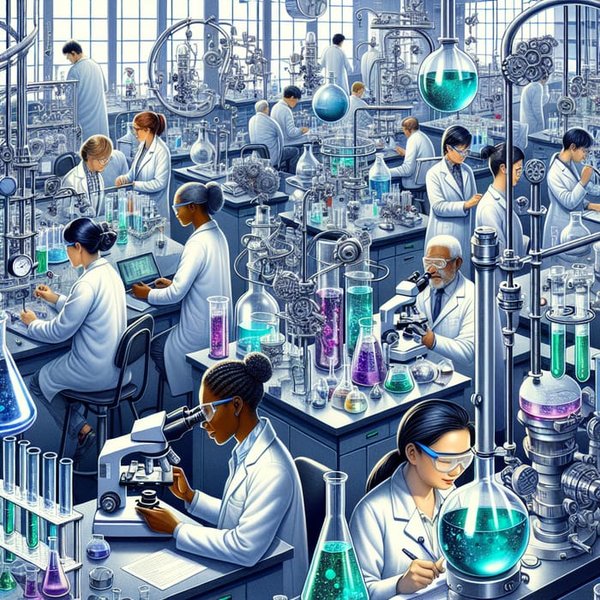
AI is transforming modern research labs, enabling scientists to process complex data and accelerate discovery.
AI's Impact on Materials Science and Drug Discovery
One of the most tangible impacts of AI is seen in materials science. AI has helped solve century-old mysteries, such as identifying new crystal structures that could lead to revolutionary battery technologies. By predicting material properties and guiding experimental design, AI significantly reduces the time and resources required for material discovery. Similarly, in drug discovery, AI is propelling the development of new therapeutics by optimizing drug candidates and accelerating preclinical development, with potential applications ranging from oncology to genetic disorders and even autoimmune diseases.
Ethical Considerations and Future of AI in Science
Despite the immense promise, the rapid adoption of AI also raises ethical concerns, particularly regarding data quality and the need for human oversight. Balancing innovation with responsible development is crucial as AI becomes more integrated into daily scientific life. The shift in discussion from mere algorithms to optimizing AI outcomes through robust data management underscores the maturation of AI's role in research.
Revolutionizing Healthcare: From Genes to Personalized Treatments
Breakthroughs in Biotechnology and Medicine
The biomedical sciences continue to be a hotbed of groundbreaking discoveries, offering new hope for treating a myriad of diseases. Personalized medicine, tailored to an individual’s genetic makeup, is rapidly moving from concept to mainstream application. Advances in gene-editing technologies, particularly CRISPR, are at the forefront of this revolution.
CRISPR Therapeutics Gaining Momentum
CRISPR's pipeline is gaining significant momentum, with new "tricks" like base editing and prime editing expanding its capabilities beyond simple gene knockout. These advancements hold immense potential for curing genetic disorders, developing more effective cancer therapies, and combating viral infections. The establishment of quantum computers dedicated to healthcare research, such as the one at Cleveland Clinic and IBM, further highlights the scale of ambition in tackling previously unanswerable drug discovery questions.
Novel Therapies and Disease Understanding
Beyond gene editing, other therapeutic breakthroughs are emerging. A non-opioid pain reliever that blocks pain signals at their source represents a significant step forward in pain management. Insights into complex diseases like Alzheimer's, lupus, and even the origins of metastasis are leading to more targeted and effective treatments. For instance, the discovery of Vitamin A's unexpected role in wound repair, mediated by hair follicle stem cells, opens new avenues for regenerative medicine and potentially cancer suppression.
Unveiling the Cosmos: New Perspectives on Space and Beyond
Astronomical Discoveries and Space Exploration
Our understanding of the universe is being constantly expanded by cutting-edge astronomical observations and ambitious space missions. The James Webb Space Telescope (JWST) continues to be a cornerstone of cosmic discovery, providing unprecedented views into the early universe and confirming significant findings.
Exoplanets and the Search for Life
The JWST has confirmed the presence of water ice in planetary systems beyond our own, a crucial ingredient for life, marking a major step in the search for habitable exoplanets. The discovery of new exoplanets, including a "Super-Earth" in a habitable zone, further fuels the excitement surrounding extraterrestrial life. These discoveries challenge our unique position in the cosmos and emphasize the vastness and diversity of planetary systems.
This video compilation explores major scientific discoveries about other galaxies, highlighting our expanding understanding of the universe in 2025.
The video above showcases the incredible strides made in understanding distant galaxies, including insights from the James Webb Space Telescope. Such compilations vividly illustrate how our telescopes are peering further into the cosmic dawn, revealing the intricate structures and compositions of other galaxies. This constant influx of data allows astronomers to refine models of galactic evolution, star formation, and the distribution of matter in the universe, profoundly influencing our cosmological theories.
Mars Exploration and Planetary Science
NASA's ongoing missions to Mars continue to yield significant data, shaking up the scientific world and shaping future missions dedicated to the search for life. While discoveries like "streaked slopes" on Mars were initially thought to be signs of water flow, further studies are refining our understanding of Martian geology. The X-59 quiet supersonic research aircraft's testing milestones also indicate advancements in aeronautical engineering, paving the way for future high-speed exploration.
Other Significant Scientific Advances
Diverse Discoveries Across Disciplines
Beyond the major themes of AI, healthcare, and space, numerous other scientific breakthroughs are pushing the boundaries of knowledge across various fields.
Quantum Science and Technology
2025 is proclaimed the International Year of Quantum Science and Technology, signaling the growing importance and progress in this field. While not yet widely commercialized, quantum computing is making steady advancements towards real-world applications, particularly in scientific R&D, promising to revolutionize data processing and solve complex problems in cryptography, materials science, and logistics optimization.
This radar chart illustrates the perceived impact and potential of recent scientific breakthroughs across various dimensions. It offers an opinionated analysis of how each major area—AI in Scientific Discovery, CRISPR & Personalized Medicine, Space & Exoplanet Discoveries, and Quantum Technologies—scores on factors like their impact on human health, technological transformation, fundamental understanding of the universe, environmental solutions, ethical and societal implications, and economic potential. For instance, while AI significantly drives technological transformation and economic potential, CRISPR and personalized medicine have a higher direct impact on human health. Space discoveries profoundly expand our fundamental understanding of the universe, and quantum technologies are emerging as powerful drivers for technological advancement and economic growth, though their direct environmental impact is still developing. This chart provides a nuanced perspective on the multifaceted contributions of these leading scientific fields.
Sustainability and Environmental Innovations
Addressing the climate crisis remains a global priority, and scientific innovation is crucial in this endeavor. Breakthroughs in carbon capture technology, green hydrogen production, and next-generation battery storage for renewable energy are scaling up. New materials science technologies are offering fresh ways to address environmental challenges, including the development of plastic-eating bacteria that improve recycling efficiency.
Anthropological and Biological Discoveries
New archaeological finds continue to shed light on human history, such as insights into the world of Homo erectus off the coast of Java, Indonesia. In biology, discoveries range from understanding mother-infant bonds in wild chimpanzees to the intricate mechanisms of anxiety and depression through dopamine receptors. The ongoing battle against "undruggable proteins" and the development of new antibiotics from fungi dwelling on human skin highlight the dynamic nature of biological research.
Comparative Overview of Recent Breakthroughs
Categorizing the Impact of Major Scientific Advancements
To better understand the breadth and depth of recent scientific discoveries, categorizing them by their primary domain and potential impact can be helpful. The following table summarizes some of the most significant recent breakthroughs.
| Category of Discovery | Specific Breakthroughs/Trends | Key Impact/Significance |
|---|---|---|
| Artificial Intelligence | Agentic AI in R&D, AI for materials discovery, AI in drug development | Accelerates research, optimizes processes, identifies novel solutions, enhances data analysis. |
| Biotechnology & Medicine | CRISPR advancements (base/prime editing), personalized medicine, non-opioid pain relief, pancreatic cancer vaccine, Alzheimer's treatments, lupus cause discovery, new antibiotics | Revolutionizes disease treatment, enables tailored therapies, improves pain management, offers potential cures for previously untreatable conditions. |
| Space Exploration & Astronomy | JWST water ice confirmation on exoplanets, new exoplanet discoveries, Mars mission data, galactic observations | Expands understanding of the universe, progresses search for extraterrestrial life, reveals cosmic origins and evolution. |
| Quantum Science | Advancements in quantum computing hardware and algorithms | Promises revolutionary data processing, impacts cryptography, materials science, and logistics. |
| Sustainability & Environment | Carbon capture, green hydrogen, next-gen batteries, plastic-eating bacteria, new materials for climate solutions | Addresses climate change, promotes renewable energy, improves recycling efficiency, fosters environmental resilience. |
| Anthropology & Earth Science | Homo erectus finds, Antarctic ice reversal, fungal antibiotics, ancient tool discoveries | Reveals human origins and past societies, uncovers unexpected natural phenomena, contributes to biodiversity and environmental health. |
Challenges and Public Perception
Navigating Innovation in a Complex World
While the pace of scientific discovery is exhilarating, it also presents challenges related to public readiness and ethical considerations. A significant concern revolves around the lack of human oversight in AI applications, especially in sensitive areas like medicine. Transparency from companies pursuing scientific innovation regarding risks and opportunities is vital for building public trust.
Translating complex scientific concepts into accessible communications is a crucial task. Despite a general high interest in science and technology, there's a risk of overwhelming the public with information, which can breed misinformation and resistance to potential breakthroughs. Therefore, effective science communication is paramount to ensure that technological advances are embraced and benefit all of humanity.
Conclusion
Defining the "biggest" recent scientific discovery is a multifaceted endeavor, as numerous breakthroughs are simultaneously transforming different aspects of our world. However, the overarching theme is the accelerating synergy between disciplines, particularly the transformative role of AI. From revolutionary advancements in gene editing and personalized medicine that are reshaping healthcare, to the breathtaking insights into exoplanets and distant galaxies that are expanding our cosmic perspective, and the crucial innovations addressing sustainability challenges, science continues to push the boundaries of what is possible. These discoveries not only deepen our understanding of fundamental principles but also pave the way for tangible solutions to global challenges, promising a future shaped by ever-increasing knowledge and innovation.
Recommended Further Exploration
- How is AI accelerating medical research and drug discovery?
- What are the latest advancements in CRISPR technology and gene editing?
- Recent James Webb Space Telescope discoveries and their implications?
- Future of quantum computing in scientific research?
References
Last updated May 21, 2025