
Exploring the Biggest Recent Scientific Discoveries
Delving into breakthroughs that are reshaping our understanding of the universe
Highlights of Recent Discoveries
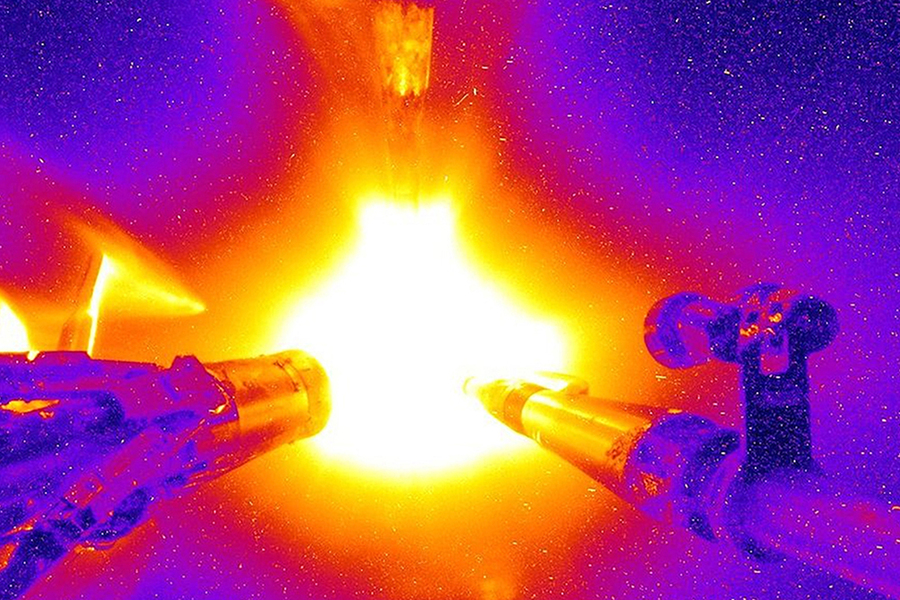
- Nuclear Fusion Breakthrough: Achieving net energy gain in fusion research marks a transformative leap towards sustainable energy.
- CRISPR and Gene-Editing Advancements: Groundbreaking gene therapies and diagnostic tools are paving the way for personalized medicine.
- Space Exploration Milestones: Revolutionary missions, including crewed polar orbit flights and lunar landings, are expanding humanity’s reach.
Introduction
Recent years have witnessed a multitude of scientific breakthroughs that touch on various fields – ranging from astrophysics and quantum computing to biotechnology and energy research. When considering the "biggest" scientific discovery, several key breakthroughs come to the forefront, each carrying transformative potential either through their immediate applications or by opening new frontiers for future exploration. Here, we analyze a spectrum of achievements including a landmark nuclear fusion experiment, advancements in gene-editing technologies such as CRISPR, and pioneering space exploration missions. By reviewing these breakthroughs, we aim to provide a comprehensive perspective on how these discoveries are redefining the boundaries of science.
Nuclear Fusion Breakthrough: A New Era in Energy Research
One of the most significant scientific milestones in recent times has been the achievement of a nuclear fusion breakthrough. In a controlled experimental setup, scientists managed to generate more energy from a fusion reaction than the energy input required to initiate it. This achievement is considered revolutionary as nuclear fusion has long been pursued as a potential solution to the world’s growing energy demands, offering a sustainable, almost inexhaustible, and environmentally friendly energy source.
Why Fusion is Transformative
Nuclear fusion mimics the processes that power the sun, merging light atomic nuclei to form heavier ones while releasing vast amounts of energy. The controlled fusion process promises several advantages:
- It offers a virtually limitless source of energy by using abundant fuels such as hydrogen isotopes.
- Fusion produces minimal radioactive waste compared to traditional nuclear fission processes.
- The inherent safety of fusion reactors—they lack the chain reaction hazards present in fission reactors—adds to their appeal.
- An efficient fusion mechanism could drive major innovations in various industries, from electricity generation to manufacturing and transportation.
The recent experimental breakthrough represents decades of research and underscores the critical role of international collaborations, advanced materials science, and highly sophisticated engineering. Although commercial fusion reactors might still be years away, this discovery marks a pivotal step towards creating clean and sustainable energy for the future.
Advances in CRISPR and Gene-Editing Technologies
Parallel to the strides made in energy research, the realm of biotechnology has experienced its own revolution through advances in CRISPR-based gene-editing. Notably, several gene therapies have recently received regulatory approval, signifying a new era in personalized medicine and offering hope for treatments of previously incurable genetic disorders.
Multiple Dimensions of CRISPR Innovations
The recent breakthroughs in CRISPR technology include:
- Therapeutic Developments: The first FDA-approved therapies leveraging CRISPR-Cas9 have set the stage for further clinical applications, particularly in treating genetic diseases.
- Diagnostic Tools: New CRISPR systems can not only edit genetic material but also be repurposed for diagnostic tools capable of detecting infections and mutations effectively.
- Tailored Treatments: Innovations are steering the direction toward precision medicine, where treatments can be customized to individual genetic profiles, potentially increasing efficacy and reducing side effects.
These advancements are built on the strong conceptual foundation provided by decades of genetic research. They exhibit the dual capability of using gene editing both as a therapeutic intervention and a diagnostic approach. Given the complexity and sensitivity of genetic diseases, these discoveries are critically important as they not only offer immediate clinical benefits but also open avenues for future preventive measures.
Space Exploration and Its Expanding Horizons
In addition to nuclear fusion and gene-editing innovations, significant progress in space exploration has equally captured global attention. The recent surge in ambitious space missions is redefining humanity’s capacity to explore and understand the universe.
Key Milestones in Space Exploration
Several space exploration missions have achieved historic milestones:
- Artemis Program: Marking a new era in lunar exploration, this program aims to land the first woman and the first person of color on the Moon, emphasizing inclusivity and global participation in space endeavors.
- Crewed Polar Orbit Missions: Private companies and government agencies have partnered to design missions that push the limits of human adaptability in space, including the first crewed polar orbit flight.
- Mars and Beyond: Missions like NASA's EscaPADE are providing deeper insights into Mars’ magnetosphere, enhancing our understanding of planetary systems and paving the way for future manned missions.
These explorations are accelerating our astronomical knowledge and fostering technological innovations in materials science, robotics, and artificial intelligence. The data gathered from these missions is invaluable for refining our models of planetary formation, understanding cosmic phenomena, and developing technologies that could one day support human colonization of other planets.
Comparison Table of Major Scientific Breakthroughs
| Breakthrough | Field | Key Impact |
|---|---|---|
| Nuclear Fusion | Energy | Enhanced sustainable energy potential with minimal waste and safety advantages. |
| CRISPR Advancements | Biotechnology | Development of gene therapies and diagnostic tools enabling personalized medicine. |
| Space Exploration Missions | Aerospace | New insights into planetary science and expanding human spaceflight capabilities. |
| Quantum Computing | Technology | Innovative quantum algorithms driving progress in research and complex problem-solving. |
| Antimatter Discovery | Astrophysics | Insights into early universe conditions and the nature of matter. |
Additional Noteworthy Discoveries
While the breakthroughs in nuclear fusion, CRISPR, and space exploration represent some of the most headline-grabbing advancements, it is important to recognize the broader landscape of scientific inquiry. Researchers continue to push boundaries in several other areas, leading to discoveries that have profound implications:
Quantum Computing and AI Integration
Quantum computing is steadily advancing, with improvements in quantum algorithms that promise to revolutionize how computations are performed. International efforts have even designated recent years as a celebration of quantum science and technology. Additionally, the integration of artificial intelligence in scientific research, especially in modeling complex processes, is accelerating discovery across multiple fields.
Advances in Single-Cell Analysis
Tools like single-cell metabolomics are transforming our understanding of cellular processes. These advances allow for the precise identification of unique metabolic profiles in individual cells, a critical advancement for early disease detection, especially cancers. The potential here is immense, as the data gathered at such a granular level could lead to more accurate diagnostics and novel therapeutic targets.
Pancreatic Cancer Therapies and Immune Response
In medical research, breakthroughs such as developing mRNA vaccines for pancreatic cancer have spurred innovative approaches in immunotherapy. These vaccines work by targeting specific genetic mutations, generating prolonged immune responses, and thereby reducing the risk of cancer recurrence. This approach exemplifies how biotech innovations are translating complex science into tangible health benefits.
Interdisciplinary Impact and Future Potential
The significance of these discoveries extends far beyond their immediate applications. Collectively, they underscore the importance of cross-disciplinary research and collaboration. Whether it is the pursuit of a cleaner energy source through nuclear fusion or the tailored treatment of diseases via gene-editing, the progress achieved across these fields exemplifies humanity’s collective ingenuity and determination.
A notable point is that innovations in one domain often catalyze advances in another. For instance, improvements in computational power resulting from quantum computing and AI integration are instrumental in processing vast amounts of data generated by space missions and biomedical research. Similarly, breakthroughs in materials science necessary for fusion reactors can spur innovations in engineering and manufacturing.
As we move into a future that demands problem-solving capabilities across intertwined domains, these scientific breakthroughs represent not a conclusion but a transformation in our approach to research and discovery. The potentials for improved quality of life and deeper cosmic understanding make these advancements key pillars for both current and future generations.
References
- A New Plant Species: Discovery in Big Bend National Park - KUT
- Discovery of a Massive Black Hole - Times of India
- Incredible Scientific Discoveries Made in 2024 - Israel21c
- New-to-Science Poison Dart Frog - Forbes
- Scientific Breakthroughs and Emerging Trends - CAS Insights
- Top 7 Scientific Events in 2025 - Interesting Engineering
- Predictions for the Biggest Research Breakthroughs - Study Finds
- Scientific Discoveries and Research Breakthroughs - ScienceDaily
- Latest Discoveries in the Scientific Field - Nature
- Breakthrough Technologies 2025 - KingY
Recommended for Further Exploration
Last updated March 3, 2025