
Exploring the Forefront of Scientific Discovery
Recent breakthroughs that are shaping our understanding of the universe and ourselves.
Key Highlights in Recent Scientific Discoveries
- Lenacapavir's Impact: The drug lenacapavir has been recognized as a significant breakthrough for its remarkable success in HIV prevention (PrEP).
- Astrophysical Insights: Discoveries related to exoplanets, particularly K2-18b with the detection of molecules potentially linked to life, are pushing the boundaries of our search for life beyond Earth.
- Advancements in AI for Science: Artificial intelligence is increasingly playing a pivotal role in accelerating scientific research and discovery across various fields, from drug development to climate modeling.
The world of science is constantly advancing, with researchers across the globe making discoveries that expand our knowledge and pave the way for future innovations. While identifying a single "biggest" discovery can be subjective and depend on the field of science, several recent breakthroughs have garnered significant attention due to their potential impact and novelty. These range from medical advancements to insights into the cosmos and the fundamental workings of life.
Breakthroughs in Health and Medicine
The field of health and medicine consistently sees significant breakthroughs with the potential to improve human lives. Recent developments have offered new hope in the fight against diseases and a deeper understanding of biological processes.
Promising Advancements in Disease Prevention and Treatment
One of the most notable recent breakthroughs is related to the drug lenacapavir. This medication has shown exceptional results in preventing HIV (as PrEP), leading it to be named as a significant scientific breakthrough in 2024. Its success marks a crucial step forward in the ongoing efforts to control and eventually eradicate HIV.
Beyond HIV, researchers are making strides in tackling other challenging diseases. For example, there are exciting developments in the creation of a simple, affordable, and room-temperature-stable Covid-19 vaccine administered as a nasal spray. This approach could revolutionize vaccine distribution and administration, particularly in regions with limited infrastructure.
Furthermore, lung cancer research is seeing significant progress with new inhalable therapies that represent a big step forward in treatment strategies. Understanding how cancer infiltrates the body is also a key area of focus, with new insights potentially leading to more effective interventions.
Understanding the Human Body and Aging
Beyond treating diseases, scientists are also unraveling the mysteries of the human body itself. Research into memory and aging is providing new insights into these complex processes. Studies suggest that a healthy diet is linked with a slower pace of aging and reduced dementia risk, reinforcing the importance of lifestyle choices for long-term health.
Peering into the Cosmos: Astronomical Discoveries
Our understanding of the universe continues to grow with remarkable astronomical discoveries, aided by powerful telescopes and advanced observational techniques.
The Search for Life Beyond Earth
A truly captivating area of recent scientific endeavor is the search for life beyond our planet. Astronomers have made significant strides in studying exoplanets – planets orbiting stars outside our solar system. A particularly intriguing discovery involves the exoplanet K2-18b, located 124 light-years away. Using the James Webb Space Telescope, scientists have detected molecules in its atmosphere, including dimethyl sulfide (DMS), which on Earth is primarily produced by living organisms. While this is not definitive proof of life, it represents a significant step and provides tantalizing clues in the quest for alien life.
The James Webb Space Telescope is also helping to reveal the secrets of other exoplanet atmospheres and has identified rare celestial objects, such as an ultra-hot Neptune 262 light years away.
Other discoveries in space include the detection of the highest-ever concentration of noble gas in the solar corona by NASA's Solar Orbiter, which helps scientists better predict space weather that affects satellites and power grids on Earth.
Exploring Our Own Solar System
Closer to home, probes and rovers are providing new insights into our solar system. NASA's Perseverance rover on Mars has discovered unusual "float" rocks on the rim of Jezero Crater while searching for signs of ancient microbial life. Studies of Mars also suggest that the early planet had a climate warm enough to support rain and that a carbon cycle operated there, indicated by the discovery of carbonate minerals.
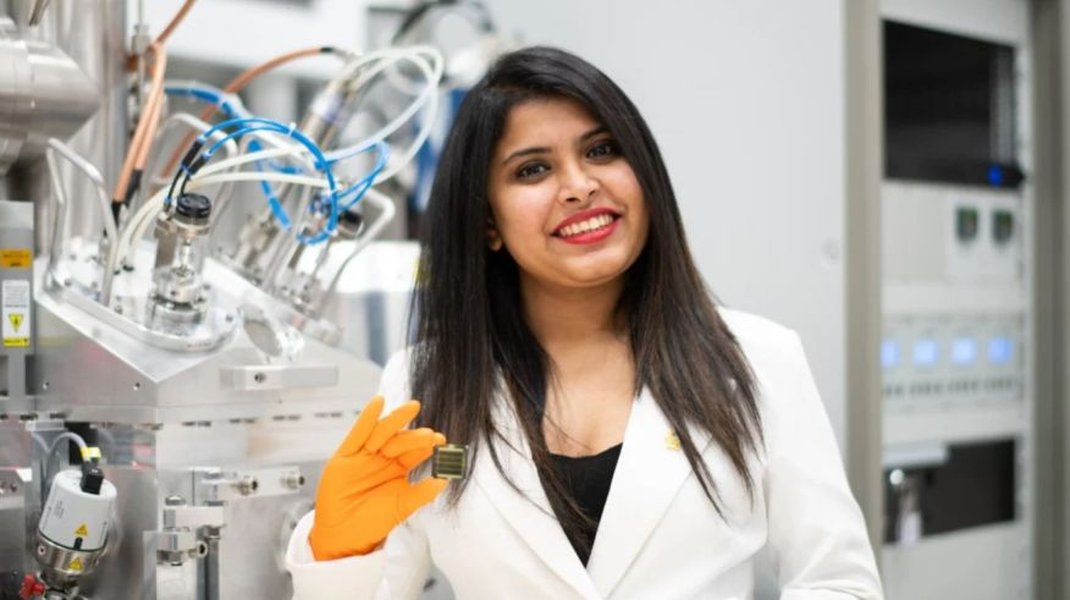
Perovskite solar cells are a focus of research for next-generation energy.
Advancements in Fundamental Science and Technology
Beyond health and space, breakthroughs in fundamental science are expanding our understanding of the natural world and driving technological innovation.
Materials Science and Energy
Materials science is a key area of progress. Researchers are developing new high-entropy alloys that maintain strength and flexibility across extreme temperatures, from –196 °C to 600 °C. This has potential applications in various industries.
In the realm of energy, scientists are working on improving the efficiency and lifespan of perovskite solar cells, which could be crucial for developing next-generation solar energy technologies. There is also research into converting natural gas to liquid fuel at low temperatures and creating a prototype reactor that can harvest hydrogen fuel using only sunlight and water.
The Growing Role of Artificial Intelligence in Science
Artificial intelligence (AI) is increasingly becoming a powerful tool in scientific discovery. AI is rapidly revolutionizing fields from drug discovery to climate modeling by analyzing vast amounts of data and accelerating research that would be significantly slower using traditional methods. AI models are being developed to predict drug properties, speeding up the development process.
Robotics powered by AI are also being used in scientific research, with new frameworks allowing robots to learn tasks through imitation.
This video explores major scientific discoveries in biology in 2024, highlighting advancements in understanding life.
Exploring Earth and Life
Scientists are also making crucial discoveries about our own planet and the life it harbors.
Geological Insights
Beneath the surface of the Earth, significant geological events are being studied. Recent discoveries suggest that the vast rocky plate supporting India is slowly breaking apart beneath the Himalayas. This hidden geological shift could have significant implications for the landscape and earthquake risk in the region.
Biological Discoveries and Evolution
In the field of biology, researchers are illuminating the mysteries of how cancer infiltrates the body and the role of specific neurons. There are also new insights into the origins of metastasis. CRISPR technology continues to be explored for new applications in gene editing.
Understanding evolution is another area of active research. Scientists are uncovering key mechanisms in evolution, such as how whole-genome duplication drives long-term adaptation. This work represents an important step in understanding how life on Earth has diversified.
Researchers are also delving into ancient history, with studies shedding light on when and where humans and Neanderthals interbred.

Scientific photography captures the intricate world of research and discovery.
Notable Discoveries Across Various Fields in 2024
To provide a broader overview of the significant scientific advancements, here is a table summarizing some of the key discoveries and areas of progress highlighted in 2024:
| Field | Key Discovery/Advancement | Potential Impact |
|---|---|---|
| Medicine/Health | Lenacapavir as PrEP for HIV | Significant step in HIV prevention and control. |
| Medicine/Health | Inhalable Lung Cancer Therapy | New treatment approach for a challenging disease. |
| Neuroscience | Completed Map of Fruit Fly Brain | Insights into brain function and neurological disorders. |
| Astrophysics | Molecule detection on Exoplanet K2-18b | Clues in the search for extraterrestrial life. |
| Astrophysics | Discovery of New Super-Earth | Expanding the catalog of potentially habitable planets. |
| Materials Science | Low-temp conversion of natural gas to liquid fuel | More efficient energy conversion. |
| Biology | Growing a Spine (in research) | Potential for regenerative medicine. |
| Technology/AI | AI in Drug Discovery | Accelerating the development of new medicines. |
| Paleontology | Discovery of Tyrannosaurus mcraeensis | New understanding of dinosaur evolution. |
Frequently Asked Questions
What is considered the biggest scientific discovery of 2024?
While subjective, Science magazine named the drug lenacapavir as its 2024 Breakthrough of the Year due to its unprecedented success in preventing HIV (PrEP).
Have there been recent discoveries related to alien life?
Yes, astronomers detected molecules, including dimethyl sulfide, in the atmosphere of exoplanet K2-18b using the James Webb Space Telescope. On Earth, DMS is associated with life, making this a significant, though not conclusive, finding in the search for life beyond Earth.
How is AI impacting scientific discovery?
AI is accelerating scientific research by enabling the analysis of vast datasets, predicting properties of molecules and materials, and assisting in complex simulations across various fields like drug discovery, climate modeling, and materials science.
What are some recent breakthroughs in health and medicine?
Recent breakthroughs include advancements in HIV prevention with lenacapavir, development of potential nasal spray Covid-19 vaccines, new inhalable therapies for lung cancer, and deeper insights into the mechanisms of aging and metastasis.
Are there any significant recent geological discoveries?
Yes, recent research suggests that the Indian tectonic plate is slowly breaking apart beneath the Himalayas, a discovery that has implications for understanding seismic activity in the region.
References
Last updated April 23, 2025