
Biggest Recent Scientific Discovery
Exploring groundbreaking innovations reshaping our future
Key Highlights
- Integration of AI in Science: Advanced AI tools are transforming research, providing transparency and efficiency in hypothesis generation, experimental design, and data analysis.
- Revolution in Gene Editing and Medicine: CRISPR-based therapies and novel genetic technologies are expanding therapeutic frontiers, tackling diseases from pancreatic cancer to genetic disorders.
- Frontier Discoveries in Space and Deep Earth: Recent discoveries from space explorations and deep ocean studies are challenging long-held assumptions about our universe and extreme environments.
Integrating the Latest Developments in Scientific Discovery
The current scientific landscape is witnessing a rapid accumulation of discoveries that are redefining the boundaries of knowledge in multiple disciplines. Researchers and innovators are leveraging breakthrough technologies and methodologies that span from the application of artificial intelligence in experimental research to profound achievements in gene-editing and space exploration. While individual discoveries have their own significance, the synthesis of key innovations across various scientific fields is particularly noteworthy.
AI-Powered Research and Transparent Scientific Discovery
One of the most influential trends in recent scientific progress is the extensive use of artificial intelligence in scientific discovery. Advanced generative AI tools, such as those capable of explaining the reasoning behind predictions, have become essential in transforming how researchers approach data analysis and hypothesis testing. These AI systems are not only accelerating the pace of discovery but are also enhancing transparency by revealing the underlying logic of their outputs.
The role of AI in science goes beyond mere data crunching. By assisting in the design of experiments, identifying synthetic pathways in drug development, and even managing massive biological datasets, AI-driven approaches are a pivotal force in deepening our understanding of the natural world. The ability to harness machine learning algorithms to predict molecular behavior, analyze genomic sequences, and explore astronomical data collectively sets the stage for numerous breakthroughs. As evidenced by emerging AI models that correlate genetic mutations with disease pathways, the intersection of AI and biomedicine is a potent combination that promises to improve diagnostic methodologies and therapeutic strategies.
Gene Editing and Medical Innovation: CRISPR and Beyond
A defining moment in molecular biology and medicine has been marked by significant advancements in CRISPR gene editing technologies. This innovative approach—pioneered by CRISPR-Cas9 systems—has evolved to include systems that can not only correct genetic anomalies but also generate molecules capable of acting against infections by functioning similarly to fumigants. For instance, recent breakthroughs include the FDA’s approval of Casgevy, an innovative therapy developed through CRISPR-based methods. By targeting the genetic underpinnings of diseases such as pancreatic cancer, these therapies have initiated a new era in precision medicine.
In addition to direct gene editing, the research exploring the transformation of specialized cells into pluripotent stem cells has opened promising avenues for regenerative medicine. Studies demonstrating the conversion of giant panda skin cells into stem cells—even suggesting potential applications in species conservation—further illustrate the multidisciplinary impact of these advancements. The confluence of CRISPR technology with single-cell metabolomics, which is enabling a detailed analysis of cellular metabolism, is further transforming diagnostic capabilities, particularly in identifying and treating oncological disorders.
Frontiers in Space Exploration and Deep Ocean Biodiversity
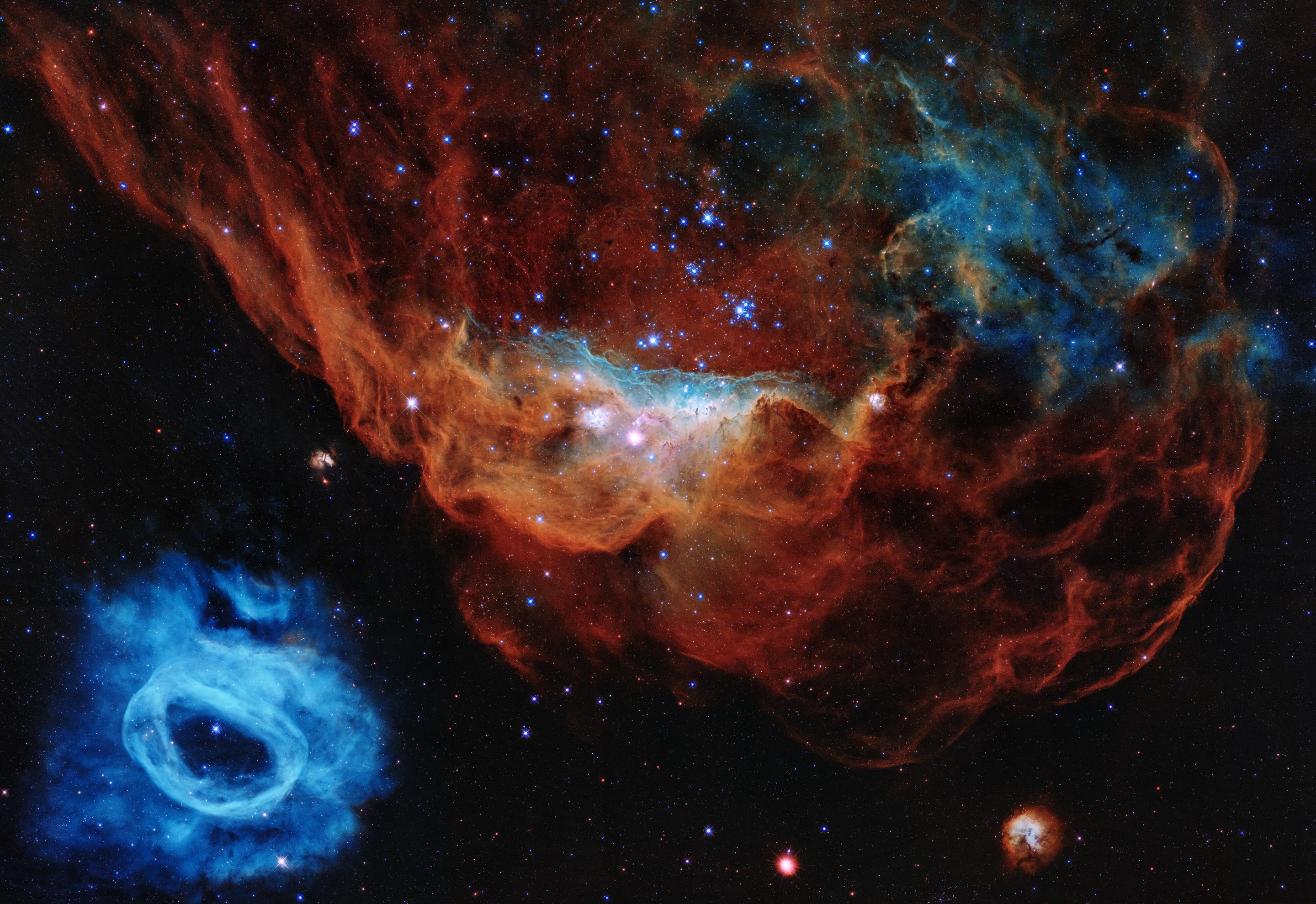
Complementing developments in medical sciences are pivotal discoveries in space exploration and deep ocean research, which are expanding our horizons both outward and inward into our planet’s lesser-known environments. NASA's advanced missions, such as the ongoing SPHEREx telescope campaign and the EscaPADE mission examining Mars’ magnetosphere, have provided unprecedented insights into cosmic phenomena. Among the notable outcomes is the detection of features like ancient Martian beaches that suggest Mars once harbored water bodies, ultimately enriching our understanding of planetary evolution and the possibility of past life.
On a more terrestrial yet equally profound scale, explorations in the Mariana Trench have revealed overwhelming biodiversity where life was once presumed to be sparse. Research led by organizations like the BGI Group has uncovered myriad species thriving in complete darkness and extreme pressures, challenging traditional paradigms about where and how life can exist on Earth. These discoveries not only have implications for our ecological understanding but also inform astrobiological studies, particularly concerning the adaptability and resilience of organisms in extreme environments.
Noteworthy Scientific Discoveries: A Comprehensive Overview
To delve deeper into the breakthroughs that have captivated the scientific community, it is useful to examine a range of discoveries across several important areas. Below is an HTML table summarizing some of the major scientific breakthroughs that are reshaping modern science.
| Discovery | Field | Impact |
|---|---|---|
| AI-Driven Research Tools | Artificial Intelligence / Data Science | Facilitates hypothesis generation, enhances transparency in experiments, and accelerates scientific discoveries. |
| CRISPR-Based Therapies (e.g., Casgevy) | Genetics / Medicine | Enables precise gene editing for treating a variety of genetic disorders, including applications in cancer treatment. |
| Deep Ocean Biodiversity in the Mariana Trench | Marine Biology / Ecology | Challenges previous assumptions about life in extreme environments and uncovers new species diversity. |
| Space Exploration Missions (e.g., SPHEREx, EscaPADE) | Astronomy / Planetary Science | Offers critical insights into planetary evolution, cosmic phenomena, and the history of water on Mars. |
| Novel CRISPR Applications and Single-Cell Metabolomics | Molecular Biology / Diagnostic Technology | Enhances our ability to diagnose and treat diseases through advanced analysis at the cellular level. |
| Nuclear Fusion Breakthrough | Physics / Energy | Represents a significant step toward practical fusion energy, potentially revolutionizing energy production. |
| Pancreatic Cancer mRNA Vaccine | Immunology / Oncology | Stimulates the immune system to target and destroy cancer cells, marking a new era in vaccine therapy for cancer. |
Advanced Insights into Scientific Methodologies and Their Impact
Integration of Computational and Experimental Approaches
The incorporation of advanced computational techniques into experimental science has redefined the approach to discovery. AI tools are now embedded within laboratories, not just as data processors but as active agents that suggest novel experiments and simulate outcomes before physical testing. This paired methodology reduces trial and error and accelerates the cycle from hypothesis to validated conclusion.
By using advanced simulation techniques, researchers are better equipped to predict outcomes in complex systems, such as in molecular dynamics, climate modeling, and even astrophysical phenomena. This synergy between machine learning algorithms and experimental designs has led to more efficient use of laboratory resources, increased data accuracy, and faster implementation and scaling of new technologies. Moreover, the ability of AI to manage large datasets is indispensable in fields where data volume can be overwhelming, such as genomics and environmental science.
Medical Breakthroughs: Enhancing Treatment Through Innovation
In the realm of medicine, breakthroughs such as CRISPR gene editing and mRNA vaccines are emblematic of a deeper trend towards personalization and precision in healthcare. The careful manipulation of genetic material to prevent and treat diseases holds immense promise. The development of CRISPR therapies has not only unfolded new paths in treating complex diseases but also offers hope for overcoming conditions previously thought untreatable, such as certain neurodegenerative disorders and genetic abnormalities.
Furthermore, the emergence of single-cell metabolomics as an analytical tool has dramatically improved diagnostic precision. This technology allows scientists to detect metabolic variations at the individual cell level—a critical advancement for early diagnosis of cancers and other diseases where subtle metabolic changes can be the first sign of pathology. The concentration on these methods underscores the importance of individualized treatment protocols that aim to tailor medical interventions precisely to genetic and cellular profiles.
Pushing the Boundaries of Space and Natural Sciences
Space exploration continues to be an inspiration and a driver for scientific advancements that extend far beyond our planet. Current missions are uncovering details that challenge our understanding of celestial mechanics and the potential for life on other moons, planets, and even asteroids. The discovery of evidence for ancient Martian beaches, for instance, sparks renewed discussions about the historical climate and hydrology of Mars, posing important questions about where life might have originated.
In parallel, research into deep ocean environments has revolutionized biological sciences. The deep-sea ecosystems, once considered barren, have revealed vibrant biomes rich in diversity. These ecosystems not only provide insights into evolutionary processes in isolated habitats but also offer potential analogs for understanding life in extreme conditions on other planets. The interface between deep-sea biology and astrobiology is a rapidly growing field, promising to contribute significantly to our overall comprehension of life.
Emerging Innovations and Future Directions in Science
Nuclear Fusion Energy
A landmark achievement in physics and energy research is the recent breakthrough in nuclear fusion, where a controlled experiment delivered more energy output than the input by the laser system—a crucial step in overcoming the challenges of sustainable fusion power generation. Although practical applications remain under development, this achievement has reinvigorated research efforts towards harnessing fusion as a long-term energy solution that could provide a clean and nearly inexhaustible energy source.
Investigating Novel Antimatter and Particle Discoveries
Cutting-edge research into antimatter has also resulted in remarkable findings, such as the detection of the heaviest antimatter nucleus. This discovery not only expands our understanding of fundamental particle interactions but also deepens our insight into the differences between matter and antimatter—a question that has fascinated scientists since the earliest days of quantum mechanics and cosmology. Such discoveries pave the way for advancements in particle physics and contribute to our fundamental understanding of the universe.
Mind-Body Connection and Neuroscience
An increased focus on the interplay between chronic stress and physical health has opened new avenues in neuroscience, particularly regarding the mind-body connection. Recent studies emphasize that the communication between our nervous system and the rest of our body is far more intricate than previously understood. The evolving research into stress biomarkers and their influence on physiological outcomes is setting the stage for innovative mental health therapies that are informed by a deeper understanding of biological processes.
References
-
Top 7 Scientific Events 2025 - Interesting Engineering
- Scientific Breakthroughs 2025 - CAS Insights
- Biggest Research Breakthroughs 2025 - Study Finds
- AI Breakthroughs in Health and Science - Microsoft News
- Deep Ocean Discoveries - FinanzNachrichten
- New Titanosaur Discovery - Popular Science
- Brain Health Flavonoid - Rolling Out
-
Martian Beaches and Cosmic Discoveries - Devdiscourse
Recommended Further Queries
Last updated March 7, 2025