
Pandemic Horizon: Why Scientists Are Alarmed About Future Global Outbreaks
From climate-driven pathogens to zoonotic spillovers, the converging factors creating a perfect storm for devastating future pandemics.
Critical Pandemic Risk Factors
- Zoonotic Transmission: Approximately 60% of emerging infectious diseases originate in animals, with increased human-wildlife contact accelerating viral spillovers.
- Climate Change: Rising temperatures and altered precipitation patterns are expanding the range of disease vectors and creating new pathogen transmission patterns.
- Globalization: Our interconnected world allows diseases to spread across continents within hours, while antimicrobial resistance continues to rise globally.
The Changing Landscape of Pandemic Threats
Future pandemics represent one of the most significant threats to global health security, economic stability, and social cohesion. Understanding the primary risk factors is crucial for developing effective prevention and mitigation strategies. These risks arise from complex interactions between environmental, biological, and social systems.
Zoonotic Disease Emergence
Zoonotic diseases—pathogens that jump from animals to humans—account for approximately 60-75% of emerging infectious diseases. Wildlife, particularly rodents and bats, serve as significant reservoirs for potential pandemic pathogens. Nipah virus, various coronaviruses, and novel influenza strains represent high-risk pathogens with pandemic potential that originate in animal hosts.
The interface between humans and wildlife has expanded dramatically due to several factors:
- Deforestation and habitat fragmentation forcing wildlife into human-populated areas
- Agricultural expansion into previously wild areas
- Wildlife trade and wet markets bringing multiple species into close contact
- Changing land use patterns that create new ecological niches for pathogens
Climate Change as a Disease Multiplier
Climate change represents a significant amplifier of pandemic risk through multiple mechanisms:
Vector Expansion
Rising temperatures are expanding the geographic range of disease vectors like mosquitoes, ticks, and flies. Areas previously unsuitable for these vectors due to cold temperatures are becoming viable habitats, introducing diseases to immunologically naive populations.
Altered Pathogen Lifecycles
Climate change affects the lifecycle and virulence of pathogens. Warmer temperatures can accelerate viral and bacterial replication rates, increase the duration of transmission seasons, and alter host-pathogen interactions in ways that may favor increased transmission.
Ecosystem Disruption
Extreme weather events, changing precipitation patterns, and rising sea levels disrupt ecosystems, forcing species migrations and creating new opportunities for disease transmission between previously separated species.
Global Interconnectedness and Pandemic Spread
Rapid International Travel
Modern transportation networks allow infections to spread globally in hours rather than weeks or months. The COVID-19 pandemic demonstrated how quickly a novel pathogen could circle the globe before containment measures could be implemented effectively. International air travel volumes continue to increase, creating more opportunities for rapid disease spread.
Urbanization and Population Density
By 2050, nearly 70% of the world's population is projected to live in urban areas. High-density living conditions facilitate person-to-person transmission of respiratory pathogens and create perfect conditions for disease amplification. Many rapidly growing urban centers in developing regions lack adequate infrastructure for sanitation, healthcare, and disease surveillance.
This radar chart compares current pandemic risk factors with projected risks for 2035 and the potential impact of enhanced prevention measures. Without intervention, nearly all risk factors are expected to increase, while comprehensive preparedness efforts could substantially reduce future threats.
Antimicrobial Resistance
Antimicrobial resistance (AMR) represents a silent pandemic that undermines our ability to treat common infections. The overuse and misuse of antibiotics in human medicine and agriculture accelerate the evolution of resistant pathogens. By 2050, AMR could cause 10 million deaths annually if current trends continue, potentially making even minor infections life-threatening during future pandemics.
Biological and Technological Threats
Emerging Infectious Diseases
New infectious diseases continue to emerge at an accelerating rate. These include:
| Pathogen Type | Examples | Primary Reservoir | Pandemic Risk Factors |
|---|---|---|---|
| Novel Coronaviruses | SARS-CoV-2, SARS-CoV, MERS-CoV | Bats, intermediate hosts | High mutation rate, respiratory transmission, asymptomatic spread |
| Influenza Viruses | H5N1, H7N9, H1N1 | Birds, pigs | Antigenic shift, high transmissibility, multiple host species |
| Hemorrhagic Fever Viruses | Ebola, Marburg, Lassa | Bats, rodents | High fatality rate, urban outbreaks, healthcare transmission |
| Encephalitic Viruses | Nipah, Hendra, Eastern Equine Encephalitis | Bats, birds | Severe clinical outcomes, multiple transmission routes |
| Drug-Resistant Bacteria | MDR-TB, CRE, MRSA | Human population | Limited treatment options, healthcare transmission, long persistence |
Synthetic Biology and "Disease X"
Advances in biotechnology have dramatically reduced the barriers to engineering biological systems. While these technologies offer tremendous benefits, they also create the possibility of engineered pathogens with enhanced transmissibility, virulence, or treatment resistance. The hypothetical "Disease X"—a pathogen with no existing countermeasures—could arise naturally or through deliberate creation.
Misinformation and Vaccine Hesitancy
The spread of health misinformation through social media and other channels has contributed to declining vaccine confidence in many regions. Vaccine hesitancy threatens herd immunity for existing diseases and could seriously undermine pandemic response efforts for novel pathogens. During COVID-19, infodemics of misinformation reduced adherence to public health measures and vaccination campaigns.
Socioeconomic and Geopolitical Factors
Fragmented Global Health Governance
Effective pandemic prevention and response require coordinated international action. However, geopolitical tensions, vaccine nationalism, and weakened multilateral institutions have undermined global health security. International cooperation is essential for early warning systems, pathogen sharing, and equitable distribution of medical countermeasures.
Underinvestment in Preparedness
Despite the enormous economic and human costs of COVID-19, there remains significant underinvestment in pandemic preparedness. Healthcare systems in many countries lack surge capacity, stockpiles of essential supplies, and robust surveillance networks. The pattern of panic-then-forget following outbreaks has repeatedly stalled sustained investments in preparedness infrastructure.
Interconnected Nature of Pandemic Risks
This mindmap illustrates the complex interconnections between various pandemic risk factors. The multifaceted nature of these risks requires comprehensive, systems-based approaches to prevention, early detection, and rapid response.
Key Video Insights on Pandemic Prevention
This video from leading experts explores how modifiable factors can reduce the risk of severe outbreaks. It examines the lessons learned from COVID-19 and presents evidence-based strategies for preventing future pandemics.
Visual Evidence of Pandemic Risk Factors
Wildlife-Human Interfaces
This image shows the wildlife-human interface in live animal markets, which represent significant zoonotic spillover risk points where multiple species come into close contact under stressful conditions. These environments create opportunities for pathogens to jump between species and potentially to humans.

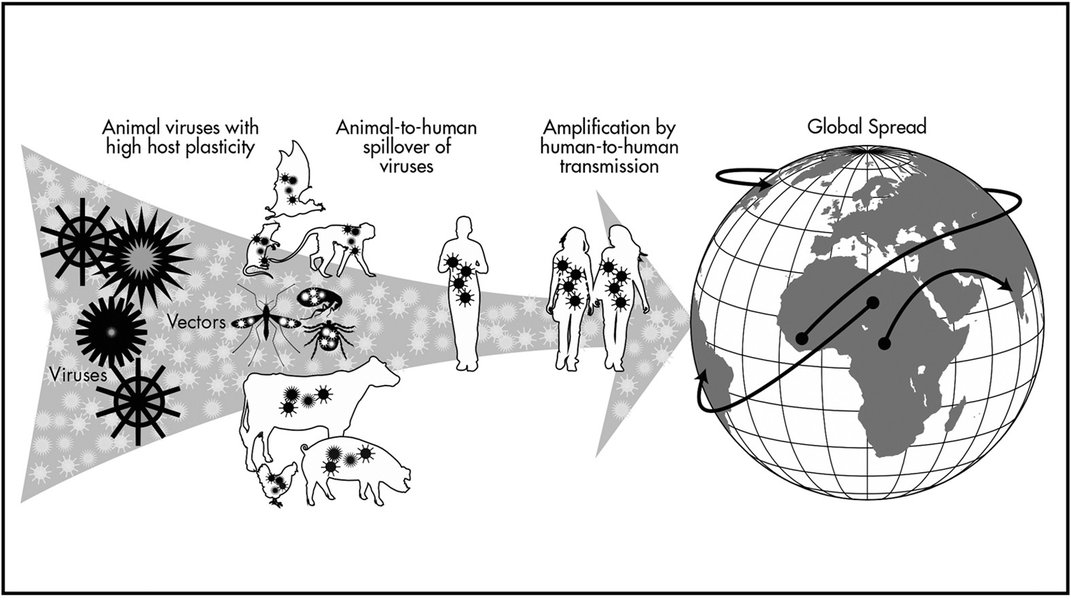
Pathogen Transmission Pathways
This diagram illustrates the complex pathways through which zoonotic viruses with high pandemic potential can spread from wildlife reservoirs to human populations. Understanding these transmission chains is crucial for developing targeted prevention strategies at critical control points.
Frequently Asked Questions
References
- Emerging Infectious Diseases: Origins and Dynamics - PMC
- Factors in Emerging Infectious Diseases - CDC
- Climate Change Unleashing Torrent of Infectious Disease Threats - CIDRAP
- Bird Flu Monitor: Emerging Infectious Diseases Warning - STAT News
- The Changing Face of Pandemic Risk - Global Preparedness Monitoring Board
- Pandemic Preparedness in a Post-COVID-19 World - Nature Journal
- Emerging Zoonotic Diseases: Should We Rethink Interactions Between Humans and Wildlife? - Frontiers
Recommended Explorations
Last updated April 3, 2025