
Unveiling the Shadows: What Are the Gravest Risks for Future Pandemics?
Exploring the complex web of biological, environmental, and societal factors increasing global vulnerability to widespread disease outbreaks.
The experience of the COVID-19 pandemic brought the threat of global health crises into sharp focus. As we look ahead, understanding the factors that could trigger the next pandemic is crucial for preparedness and mitigation. Several interconnected risks stand out, driven by changes in our environment, societies, and interactions with the natural world. Identifying these risks allows for targeted efforts to build resilience and protect global health.
Highlights: Key Drivers of Pandemic Risk
- Zoonotic Spillover: The increasing frequency of pathogens jumping from animals to humans, driven by habitat destruction and changes in human-animal interactions, remains a primary source of novel infectious diseases.
- Globalization and Urbanization: Unprecedented global travel and densely populated urban centers enable infectious diseases to spread rapidly across continents, turning local outbreaks into global crises.
- Preparedness Gaps and Systemic Weaknesses: Deficiencies in global surveillance, healthcare capacity, equitable access to resources, and international cooperation hinder effective prevention and response efforts.
The Ever-Present Threat: Pathogen Emergence and Evolution
The biological origins of pandemics lie in the emergence and spread of infectious agents. Understanding these sources is fundamental to anticipating future threats.
Zoonotic Origins: Where Animal Diseases Become Human Threats
The vast majority of emerging infectious diseases, including those with pandemic potential, originate in animals before spilling over into human populations. This process, known as zoonotic spillover, is becoming more frequent due to several human-driven factors:
- Habitat Destruction: Deforestation and land-use changes for agriculture or development bring humans and livestock into closer contact with wildlife, increasing opportunities for pathogens to jump species.
- Wildlife Trade: Both legal and illegal trade in wild animals creates high-risk interfaces where diverse species are mixed under stressful conditions, facilitating pathogen transmission. Live animal markets can be potent amplifiers.
- Intensive Agriculture: Large-scale livestock farming can create environments where pathogens can evolve and spread easily among animals, sometimes adapting to infect humans (e.g., avian influenza strains).
Diseases like SARS, MERS, Ebola, avian influenza (like H5N1), and potentially the virus responsible for COVID-19 all have zoonotic origins, highlighting this critical pathway.
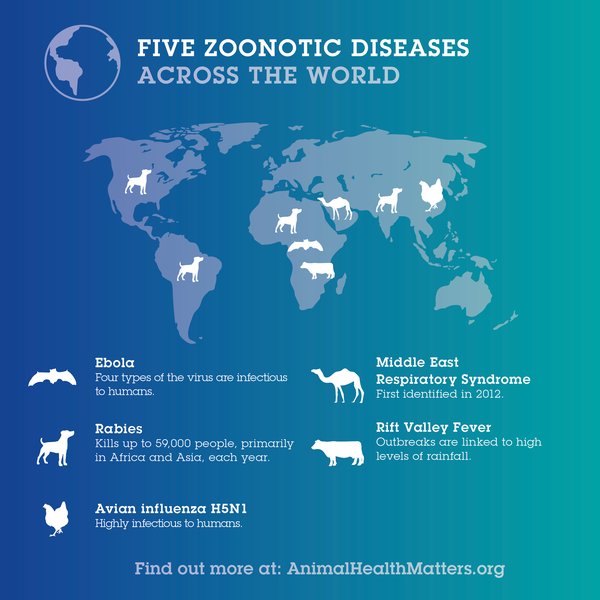
Examples of significant zoonotic diseases impacting global health.
Novel and Re-emerging Diseases: An Evolving Landscape
The world constantly faces threats from both entirely new pathogens ("Disease X") and known diseases that re-emerge or evolve. Recent examples like Mpox and Marburg virus outbreaks, alongside persistent threats like various influenza strains (especially avian H5N1 with its potential for human adaptation), underscore the dynamic nature of infectious diseases. Preparedness efforts must account for the unexpected emergence of pathogens for which we have no existing immunity or specific treatments.
Viral Evolution and Mutation
Viruses naturally mutate as they replicate. While most mutations are harmless, some can lead to increased transmissibility, virulence (severity of disease), or the ability to evade existing immunity (from past infection or vaccination). This evolutionary potential means that even familiar pathogens can pose new threats, necessitating continuous surveillance and research.
Accelerators in a Connected World
Biological emergence is only part of the equation. Modern societal structures significantly influence how quickly and widely diseases can spread.
Globalization and Rapid Travel
International air travel allows a person infected with a pathogen in one part of the world to be on another continent within hours, long before symptoms might even appear. This unprecedented speed of human movement means that geographic barriers are less effective at containing outbreaks than ever before. Global trade networks can also inadvertently transport vectors (like infected mosquitoes) or contaminated goods.
Urbanization and Population Density
More than half the world's population now lives in urban areas, often in high-density settings. Crowded living conditions, reliance on public transportation, and centralized social hubs create ideal environments for the rapid transmission of respiratory and other infectious diseases. Unplanned urbanization in low-resource settings can exacerbate these risks through inadequate sanitation and healthcare infrastructure.
Mass Migration and Displacement
Conflict, climate change, and economic instability can force large populations to move, often leading to displacement into temporary settlements or refugee camps. These settings frequently lack adequate sanitation, clean water, nutrition, and healthcare, making inhabitants highly vulnerable to infectious disease outbreaks that can then spread further.
Environmental Catalysts: How Global Changes Fuel Disease
Changes to the planet's ecosystems and climate are increasingly recognized as significant drivers of pandemic risk.
Climate Change Impacts
Global warming is altering weather patterns and expanding the geographic range of disease vectors like mosquitoes (carrying malaria, dengue, Zika) and ticks (carrying Lyme disease). Changing temperatures and precipitation can also affect pathogen survival rates in the environment and influence animal migration patterns, potentially bringing disease-carrying wildlife into new areas or increasing contact with domestic animals and humans.
Biodiversity Loss and Habitat Destruction
As discussed under zoonotic origins, the destruction of natural habitats (like forests) for human activities is a major driver of pandemic risk. It forces wildlife into closer proximity with humans and livestock. Furthermore, reduced biodiversity can sometimes lead to an increase in the populations of species that are particularly effective hosts for certain pathogens (an effect known as dilution effect reversal), potentially increasing disease transmission risk.
This video explores the link between deforestation and the increased risk of pandemics, highlighting how environmental destruction brings humans closer to novel pathogens harbored by wildlife.
Water, Sanitation, and Hygiene (WASH) Issues
Lack of access to clean water and adequate sanitation facilities remains a major global health challenge. It facilitates the spread of numerous infectious diseases, particularly waterborne illnesses like cholera, which can cause large-scale outbreaks, especially in vulnerable communities or during humanitarian crises.
Systemic Weaknesses and Social Vulnerabilities
Beyond biological and environmental factors, human systems and societal issues play a critical role in determining pandemic risk and response effectiveness.
Global Preparedness Deficits
Despite lessons from past outbreaks, including COVID-19, many experts warn that the world remains insufficiently prepared for the next pandemic. Gaps exist in several key areas:
- Surveillance: Early detection is crucial. Weaknesses in disease surveillance systems, particularly at the human-animal interface and in low-resource settings, mean outbreaks may go undetected until they are widespread.
- Response Capacity: Insufficient laboratory capacity, shortages of healthcare workers, and inadequate stockpiles of essential supplies (like personal protective equipment or diagnostics) can hamper rapid response efforts.
- International Coordination: Effective pandemic response requires strong international cooperation, data sharing, and coordinated strategies. Political tensions and nationalism can undermine these efforts. Initiatives like the WHO's Preparedness and Resilience for Emerging Threats (PRET) aim to improve coordination.
Healthcare System Strain and Worker Shortages
Even well-resourced healthcare systems can be overwhelmed by a major pandemic. Chronic underinvestment in public health infrastructure and shortages of trained healthcare professionals in many parts of the world represent significant vulnerabilities. Burnout among healthcare workers, exacerbated by recent crises, further weakens capacity.
Antimicrobial Resistance (AMR)
The rise of bacteria, viruses, fungi, and parasites resistant to existing treatments is a slow-burning global health crisis that complicates pandemic response. While often distinct from the primary pandemic pathogen (which might be viral), AMR makes treating secondary bacterial infections (like pneumonia following influenza or COVID-19) much harder, leading to increased morbidity and mortality during pandemics.
Public Trust, Misinformation, and Equity
Effective public health measures during a pandemic rely heavily on public trust and adherence to guidance (e.g., vaccination, masking, social distancing). The rapid spread of misinformation and disinformation, often amplified by social media, can undermine trust, fuel vaccine hesitancy, and hinder collective action. Furthermore, socioeconomic inequalities often mean that marginalized communities bear the brunt of pandemics due to factors like poorer access to healthcare, crowded living conditions, and inability to work remotely, highlighting the critical need for equitable responses.
Visualizing the Landscape of Pandemic Risks
To better understand the relative prominence and interplay of these factors, we can visualize them. The following radar chart offers a perspective on the perceived level of risk associated with key drivers, based on current expert consensus and observed trends. Note that these are qualitative assessments for illustrative purposes.
This chart highlights the high perceived risk from zoonotic spillover, global connectivity, and preparedness gaps, while also acknowledging significant threats from climate change, urbanization, AMR, social factors, and emerging biosecurity concerns.
Interconnected Risks: A Mindmap View
The factors contributing to pandemic risk are not isolated; they interact in complex ways. This mindmap illustrates the key categories of risk and their sub-components, emphasizing the interconnected nature of the challenge.
(Transmissibility, Virulence)"] id1b2["Antimicrobial Resistance (AMR)"] id1c["Novel Pathogens (Disease X)"] id1d["Re-emerging Diseases
(Flu, Coronaviruses, etc.)"] id2["Environmental Factors"] id2a["Climate Change"] id2a1["Vector Range Expansion"] id2a2["Altered Ecosystems"] id2b["Biodiversity Loss"] id2c["Land Use Change"] id2c1["Deforestation"] id2d["Water & Sanitation Issues"] id3["Socio-Economic Factors"] id3a["Globalization & Travel"] id3a1["Rapid International Spread"] id3b["Urbanization & Density"] id3b1["Overcrowding"] id3c["Preparedness Gaps"] id3c1["Weak Surveillance"] id3c2["Healthcare Capacity Limits"] id3c3["Inequitable Resource Access"] id3d["Social & Behavioral Issues"] id3d1["Misinformation / Disinformation"] id3d2["Public Trust Deficits"] id3d3["Vaccine Hesitancy"] id3e["Population Movements"] id3e1["Migration & Displacement"] id4["Technological & Security Factors"] id4a["Biotechnology Risks"] id4a1["Engineered Pathogens"] id4a2["Laboratory Accidents"] id4b["Cybersecurity Threats"] id4b1["Attacks on Health Infrastructure"]
This mindmap shows how biological drivers like zoonotic spillover are amplified by environmental changes, socio-economic factors like globalization and preparedness gaps, and potentially by technological risks, creating a complex web of vulnerability.
Summarizing the Key Risk Factors
The following table provides a concise overview of the major categories of pandemic risk, specific examples, and their potential impact:
| Risk Category | Specific Risk Factor | Examples / Drivers | Potential Impact |
|---|---|---|---|
| Biological | Zoonotic Spillover | Deforestation, wildlife trade, agricultural intensification | Emergence of novel infectious diseases (e.g., new coronaviruses, influenzas) |
| Biological | Pathogen Evolution / AMR | Natural mutation, overuse of antimicrobials | Increased transmissibility/virulence, treatment failures, prolonged outbreaks |
| Environmental | Climate Change | Global warming, extreme weather | Expanded vector ranges (malaria, dengue), disrupted ecosystems forcing human-animal contact |
| Environmental | Habitat Destruction | Deforestation, land conversion | Increased human-wildlife interface, biodiversity loss |
| Socio-Economic | Globalization & Mobility | Air travel, international trade | Rapid global spread of pathogens |
| Socio-Economic | Urbanization & Density | Growth of cities, crowded living | Accelerated local transmission |
| Socio-Economic | Preparedness Gaps | Weak surveillance, insufficient healthcare capacity, lack of coordination | Delayed detection, overwhelmed health systems, ineffective response |
| Socio-Economic | Misinformation & Trust Issues | Social media, political polarization | Reduced adherence to public health measures, vaccine hesitancy, social division |
| Technological | Biosecurity Risks | Advanced biotechnology, lab accidents | Accidental or deliberate release of dangerous pathogens |
Frequently Asked Questions (FAQ)
What is "Disease X"?
"Disease X" is a placeholder name used by the World Health Organization (WHO) and other health bodies to represent a hypothetical, unknown pathogen that could emerge in the future and cause a serious international epidemic or pandemic. The concept emphasizes the need for preparedness plans and research and development efforts that are flexible enough to handle pathogens we haven't encountered before, rather than solely focusing on known threats.
How does climate change increase pandemic risk?
Climate change increases pandemic risk in several ways: 1) It expands the geographic range of disease-carrying vectors like mosquitoes and ticks into new areas. 2) It alters animal migration patterns and habitats, potentially increasing contact between wildlife, domestic animals, and humans, facilitating zoonotic spillover. 3) Extreme weather events (floods, droughts) can displace populations, damage sanitation infrastructure, and create conditions favorable for disease outbreaks.
What is zoonotic spillover?
Zoonotic spillover is the event where a pathogen (like a virus, bacterium, or parasite) naturally transmits from its animal host reservoir (e.g., bats, rodents, birds) to humans. This often occurs through direct contact, consumption of contaminated food/water, or bites from vectors (like mosquitoes or ticks) that have fed on infected animals. Many major human diseases, including HIV, Ebola, Influenza, and likely COVID-19, originated through zoonotic spillover.
Why is global cooperation so important for pandemic preparedness?
Infectious diseases do not respect borders. Global cooperation is essential for: 1) Early detection through shared surveillance data. 2) Rapid sharing of pathogen samples and genetic sequences for research and development of diagnostics, treatments, and vaccines. 3) Coordinated response strategies to manage travel and trade. 4) Equitable distribution of resources like vaccines and therapeutics based on need. Lack of cooperation can lead to delayed responses, mistrust, and ultimately, a more severe and prolonged pandemic.
Recommended Further Exploration
- How is global surveillance for emerging diseases being improved?
- What role does the WHO pandemic agreement play in future preparedness?
- Explore the link between biodiversity loss and infectious disease risk.
- What are effective strategies to combat health misinformation during pandemics?
References
Last updated May 5, 2025